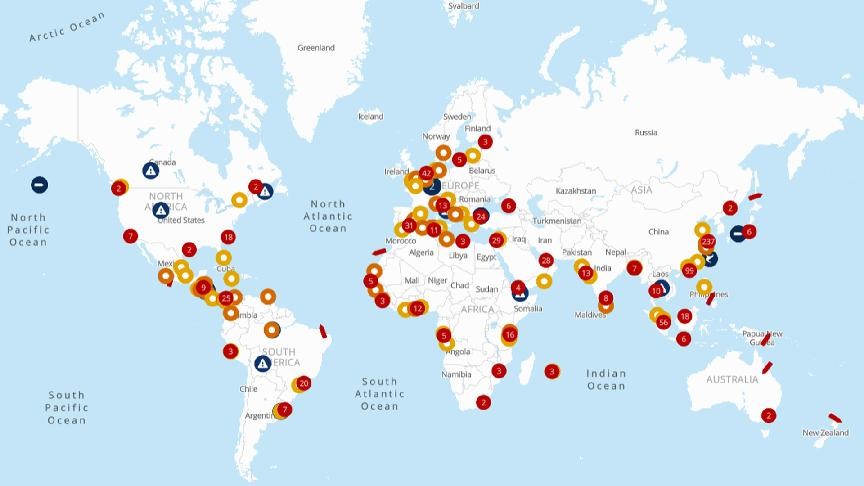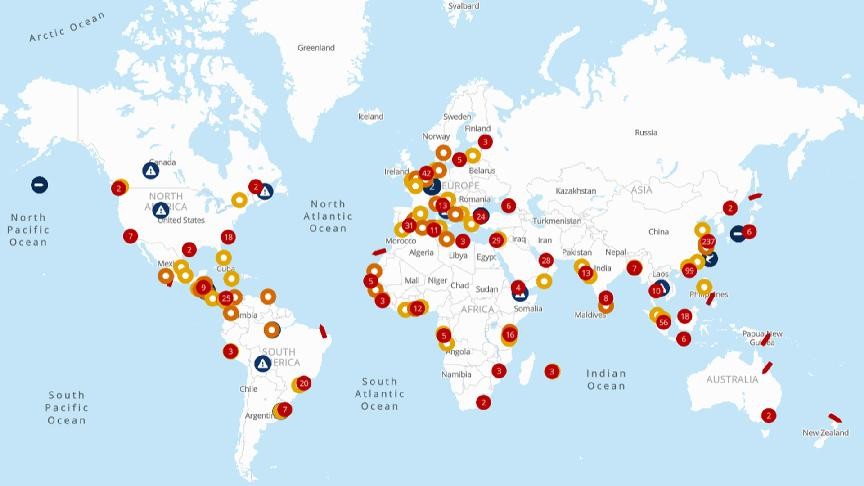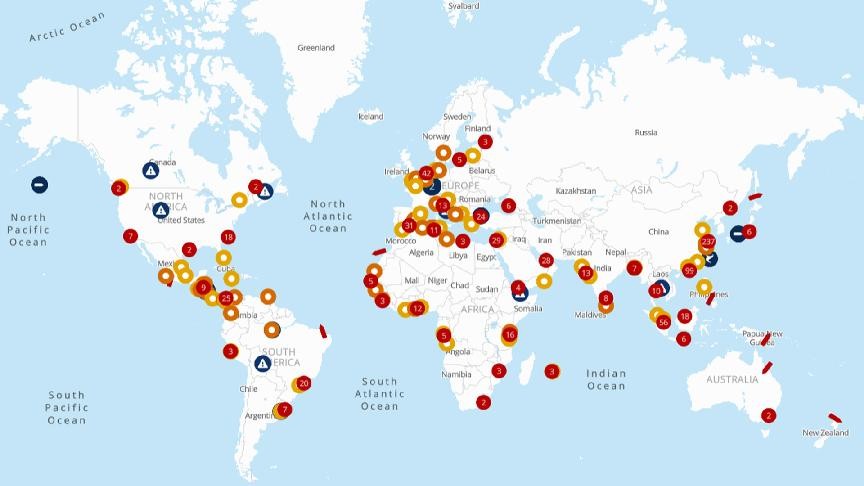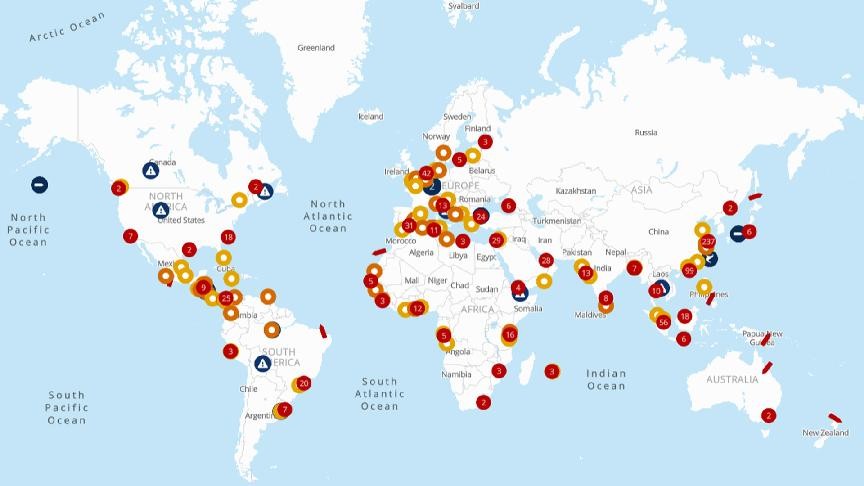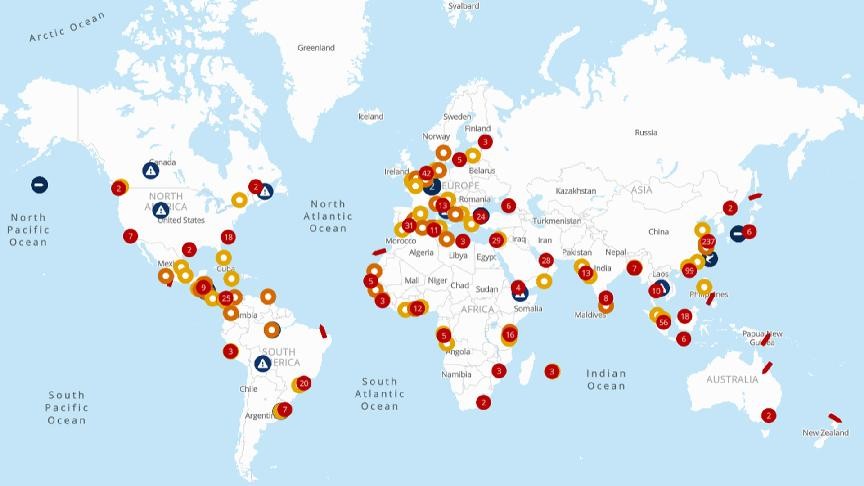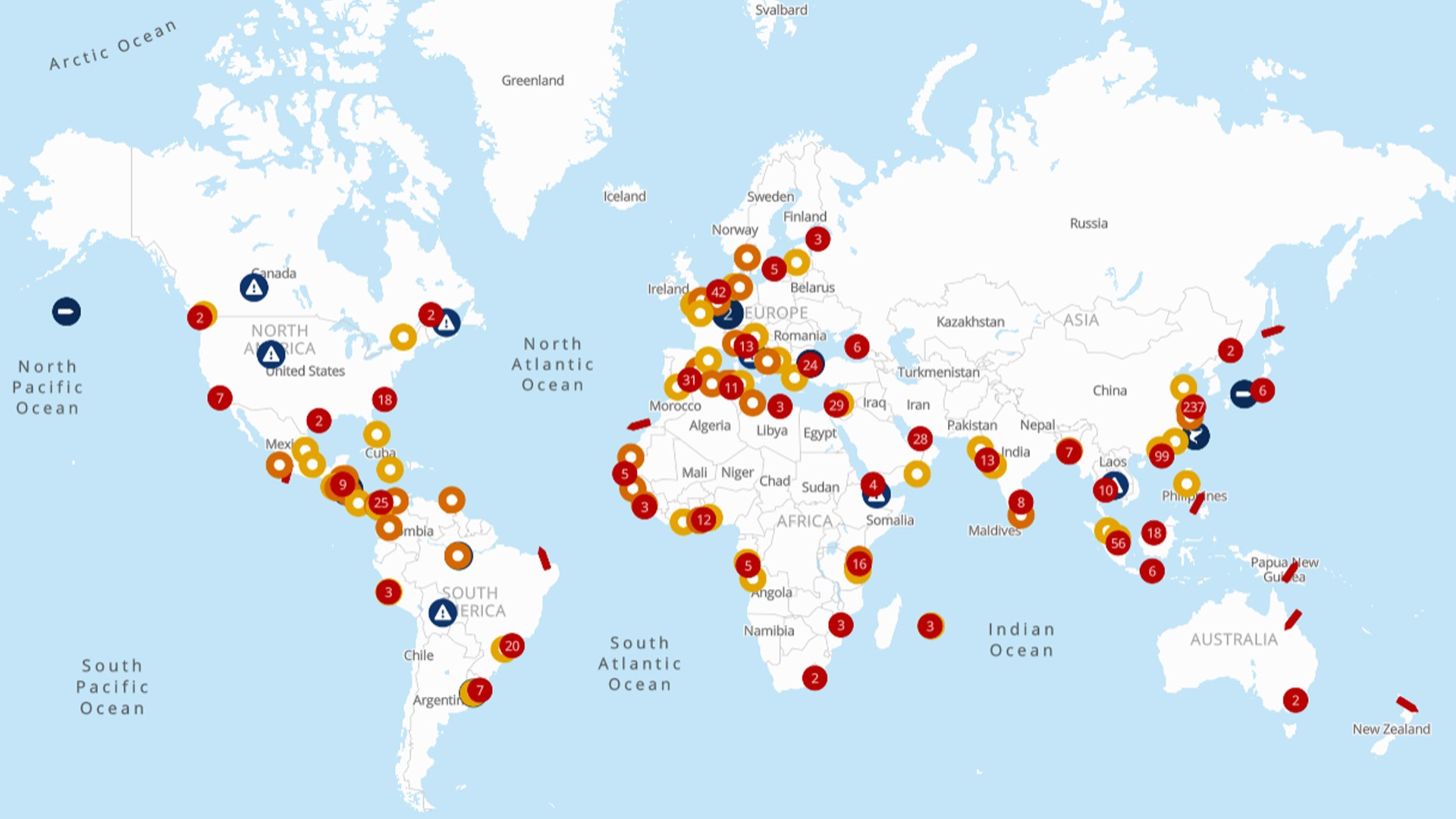

- Stay ahead of supply chain disruptions and port congestion with Kuehne+Nagel’s weekly port operational update.
- Find out the latest vessel waiting times and status of ports in Africa, Asia Oceania, Europe, Middle East-Indian Subcontinent, North America, and South and Central America.
Africa
Ghana
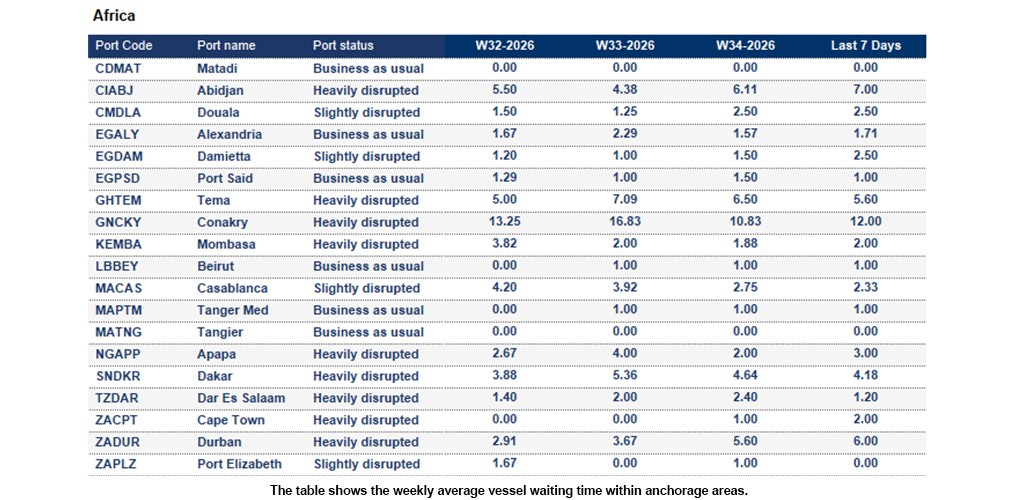
Tema: The 7-day average vessel waiting time is around 5.6 days. Severe congestion continues with delays of approximately 7 days. Crane outages, elevated import volumes, empty container accumulation and landside congestion are impacting vessel berthing and cargo evacuation.
Guinea
Conakry: The 7-day average vessel waiting time is around 12.0 days. Port congestion remains high due to limited dry, reefer and empty container storage capacity. The 24/7 truck circulation initiative has improved cargo flows, but backlog recovery remains ongoing.
Ivory Coast
Abidjan: The 7-day average vessel waiting time is around 7.0 days. Severe terminal congestion persists, with delays of up to 11 days. Yard saturation, vessel bunching and slower cargo processing continue to impact schedule reliability and feeder connectivity.
Kenya
Mombasa: The 7-day average vessel waiting time is around 2.0 days. Congestion remains a major concern, with elevated yard utilisation, trucking disruptions and customs bottlenecks contributing to delays and reduced schedule reliability.
Mozambique
Beira: The 7-day average vessel waiting time is around 18.86 days. Significant disruption persists, with delays of up to 30 days. Terminal recovery efforts remain ongoing, while adverse weather continues to impact operations.
Nigeria
Apapa: The 7-day average vessel waiting time is around 3.0 days. Berth congestion and landside challenges continue to impact operations. Vessel delays remain significant, with some carriers reporting extensive waiting times and increased exposure to demurrage and detention costs.
South Africa
Cape Town: The 7-day average vessel waiting time is around 2.0 days. CTCT: Port operations remain under pressure from exceptionally strong reefer export demand. Carriers continue to prioritise reefer cargo, resulting in an increased risk of dry and dangerous goods cargo rollovers and delays of up to 6 days.
Durban: The 7-day average vessel waiting time is around 6.0 days. Port operations remain under pressure due to ongoing vessel and terminal backlogs. Pier 1 is experiencing delays of 3 to 4 days, while significant congestion at Pier 2 (DGT) continues to result in delays of 8 to 12 days due to productivity constraints and landside bottlenecks. Point Terminal remains largely stable with minimal delays of up to 1 day.
Port Elizabeth: Operations remain largely stable, with PECT reporting minimal delays of up to 1 day. However, forecast strong winds may cause temporary disruptions. At NCT, ongoing terminal maintenance continues to impact operations, resulting in delays of up to 5 days. Overall port performance remains steady despite weather and maintenance-related constraints.
Asia Oceania
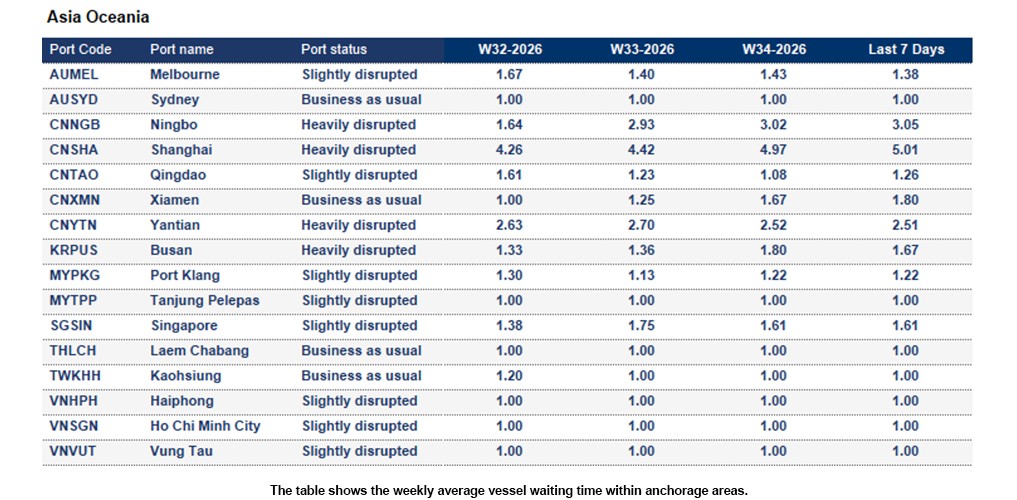
Australia:
DAFF has announced its 2026/27 Brown Marmorated Stink Bug (BMSB) measures for cargo shipped between 1 September 2026 and 30 April 2027. Key changes include the approval of Ethyl Formate as an additional onshore treatment option, the removal of the Rolled Goods Policy, and the discontinuation of the Safeguarding Arrangement Scheme. Importers should review treatment and documentation requirements carefully to avoid clearance delays. Read more here
China/Japan:
Typhoon SAUDEL is expected to affect Japan's Ryukyu Islands around 26 August, potentially disrupting port operations in Naha. Forecast uncertainty remains high, but if the storm tracks towards eastern China, additional impacts on Shanghai and Ningbo cannot be ruled out. As both ports continue recovering from recent typhoon-related congestion, any further weather disruption could exacerbate vessel delays and schedule instability across regional shipping networks. Read more here
Hong Kong
Hong Kong: The 7-day average vessel waiting time is around 1.4 days. Congestion remains elevated due to vessel bunching, omissions and diversions from other ports.
South Korea
Busan: The 7-day average vessel waiting time is around 1.67 days. Heavy berth congestion continues with delays of around 2 days, driven by additional transshipment volumes and volatile vessel schedules.
Europe
Belgium
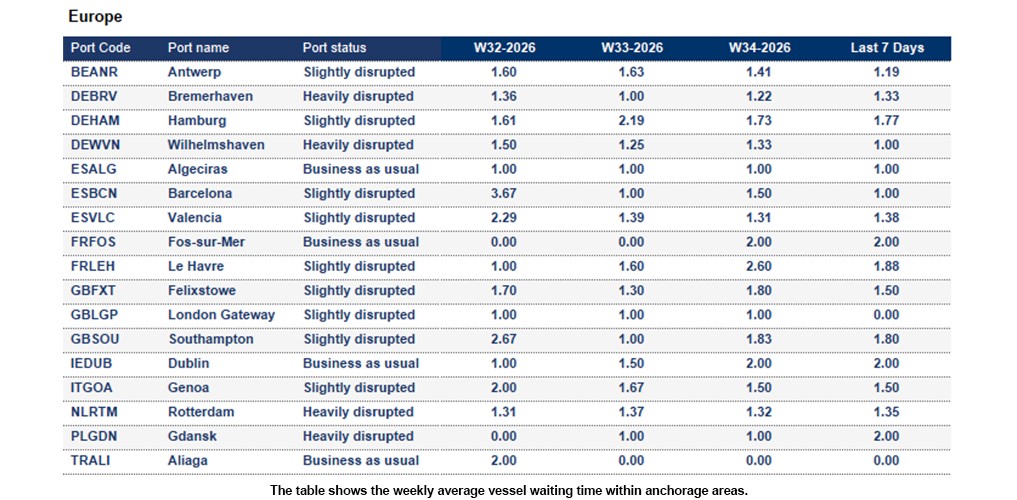
Antwerp: The 7-day average vessel waiting time is around 1.19 days. Yard utilisation remains manageable, with truck turnaround times of 30–59 minutes. Pilot shortages due to holidays and rest-hour requirements continue to cause vessel scheduling delays.
Germany
Hamburg: The 7-day average vessel waiting time is around 1.77 days. Yard occupancy remains stable at 73–83%, but the recent 24-hour strike caused vessel delays and operational disruptions. While recovery is underway, back-to-back vessel calls, planned berth capacity reductions and the risk of further strike action following upcoming labour negotiations may continue to challenge operations in the coming weeks.
Italy
Genoa: The 7-day average vessel waiting time is around 1.5 days. Delays of approximately 2 days persist as transshipment and inland transport challenges continue across Mediterranean networks.
La Spezia: The 7-day average vessel waiting time is around 1.4 days. Operations remain under moderate pressure due to feeder disruptions and ongoing crane maintenance.
Netherlands
Rotterdam: The 7-day average vessel waiting time is around 1.35 days. Operations remain generally stable, but yard occupancy is high at 89% (ECT) and 90% (MVII). Barge delays, high import dwell times and low Rhine water levels continue to impact inland cargo flows. Read more here
United Kingdom
London Gateway Port: The 7-day average vessel waiting time is around 0.0 days. Yard occupancy remains moderate at 63% dry and 57% reefer. Berth clashes caused by delayed vessels continue to require planning adjustments, while stable labour availability supports recovery efforts. A planned IT outage on 22 August did temporarily halt operations.
Indian Subcontinent and the Middle East
Middle East:
Middle East maritime risks remain mixed. Iran has identified 46 vessels as “non-compliant”, raising detention and compliance risks in the Strait of Hormuz. Meanwhile, major carriers, including Maersk, CMA CGM, and MSC, are cautiously increasing Suez/Red Sea transits to cut voyage times and fuel costs. Suez capacity is rising but remains well below pre-crisis levels, while security concerns continue to impact routing decisions. Read more here
India
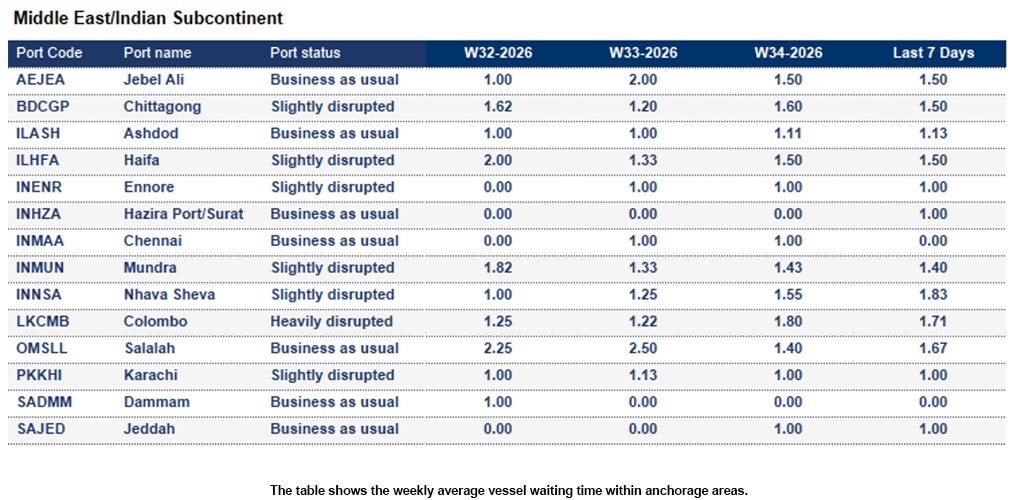
Ennore: The 7-day average vessel waiting time is around 1 day.
Mundra: The 7-day average vessel waiting time is around 1.4 days. Delays of around 2 days persist as additional transshipment volumes and equipment shortages place pressure on terminal operations.
Nhava Sheva: The 7-day average vessel waiting time is around 1.83 days. The port continues to experience delays due to equipment shortages, longer dwell times and truck collection bottlenecks.
Pakistan
Karachi: The 7-day average vessel waiting time is around 1 day. Delays continue due to empty container congestion and monsoon-related disruptions affecting trucking operations and port access.
Sri Lanka
Colombo: The 7-day average vessel waiting time is around 1.71 days. Elevated transshipment volumes and schedule disruptions continue to create connection risks.
North America
Canada
Average import rail dwell time for Canadian cargo (Vessel arrival to departure rail ramp):
- Halifax: 3 days
- Montreal: 6 days
- Prince Rupert: 6 days
- Saint John: 9 days
- Vancouver: 6 days
Mexico
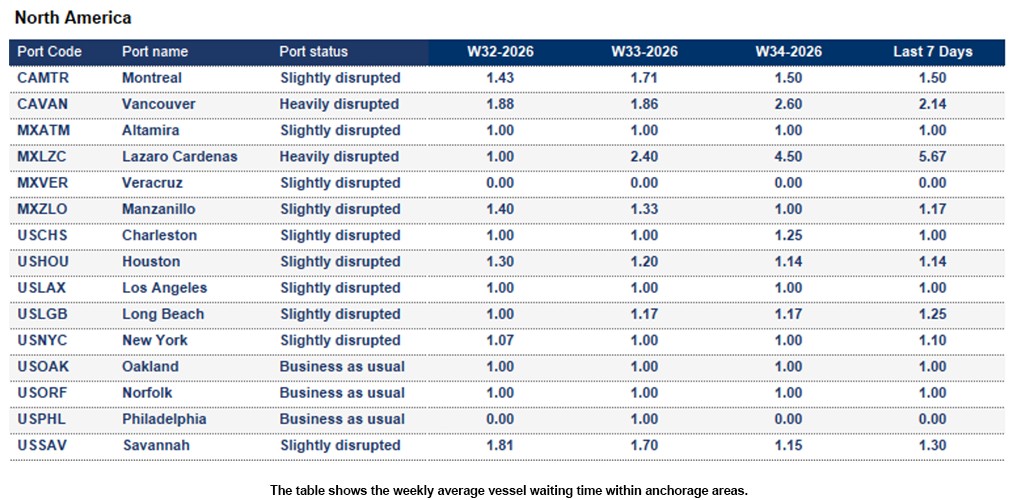
Manzanillo: The 7-day average vessel waiting time is around 1.17 days. Yard congestion, customs delays and inland evacuation bottlenecks continue to drive delays.
United States
Los Angeles: The 7-day average vessel waiting time is around 1 day. Operations remain functional but under pressure from high utilisation levels, cargo rollover risks and inland transport constraints.
New York: The 7-day average vessel waiting time is around 1.1 days. Elevated terminal utilisation and inland transport constraints continue to generate delays.
South America and Central America
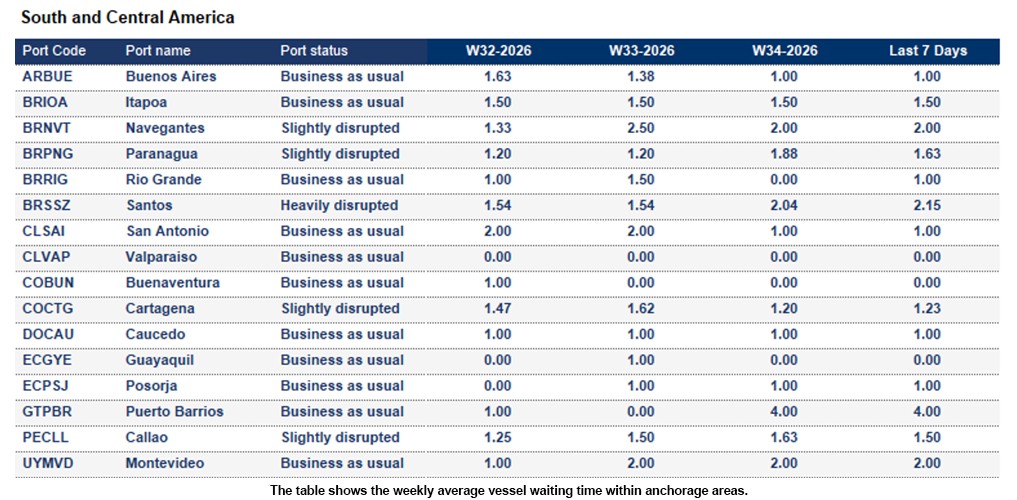
Brazil
Paranagua: The 7-day average vessel waiting time is around 1.63 days. Elevated agricultural export volumes continue to place pressure on terminal capacity.
Santos: The 7-day average vessel waiting time is around 2.15 days. Operations remain relatively stable despite high export demand.
Panama
Panama Canal restrictions tighten as drought conditions worsen. Daily vessel transits will fall from 36 to 34 on 3 September and to 32 on 15 September due to low rainfall and a strengthening El Niño. Delays of over a week, record auction prices, and rising transport costs are increasing pressure on global supply chains, with further restrictions possible if conditions deteriorate. Read more here
How Kuehne+Nagel estimates port disruption statuses
Seaexplorer has four port statuses that are estimated based mainly on the 7-day average vessel waiting time. Other factors include yard congestion, labour strikes, natural disasters or intermodal disruptions. Slightly different rules are applied to major ports, or ports that are hubs in their region, as they are typically more efficient.
- Business as usual means the port is currently operating without any significant disruption.
- Slightly disrupted is used if the 7-day average vessel waiting time exceeds 2 days.
- Heavily disrupted if the 7-day average vessel waiting time exceeds 4 days.
- Port closure is used when the port suspends operations due to a major disruptive event.
How Kuehne+Nagel calculates the 7-day average vessel waiting time
Mainline container vessels may spend a certain number of days waiting at designated anchorage areas before their scheduled port call. To calculate the 7-day average waiting time, we consider the waiting days of these vessels, excluding:
- Waiting times for feeder vessels,
- Idle ships without an announced next port,
- Slow steamers heading toward the anchorage, but not actively waiting within the designated area
- Vessels passing through the anchorage area without intending to call at the port.
This rolling average is based on the last 7 days of data and is updated daily in seaexplorer. To find the latest waiting time for a port, enter the port name or code in the search bar and select the relevant option.
Stay Ahead, Stay Informed: Register for seaexplorer for the latest disruptions and vessel waiting times at global container ports.