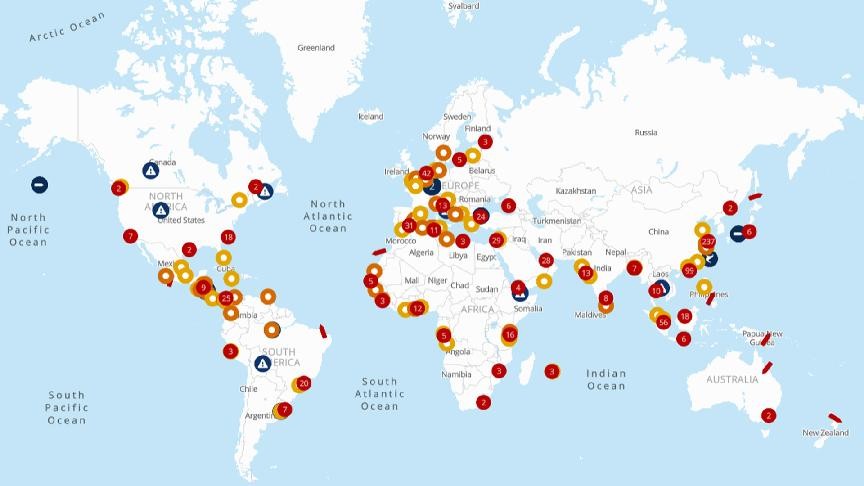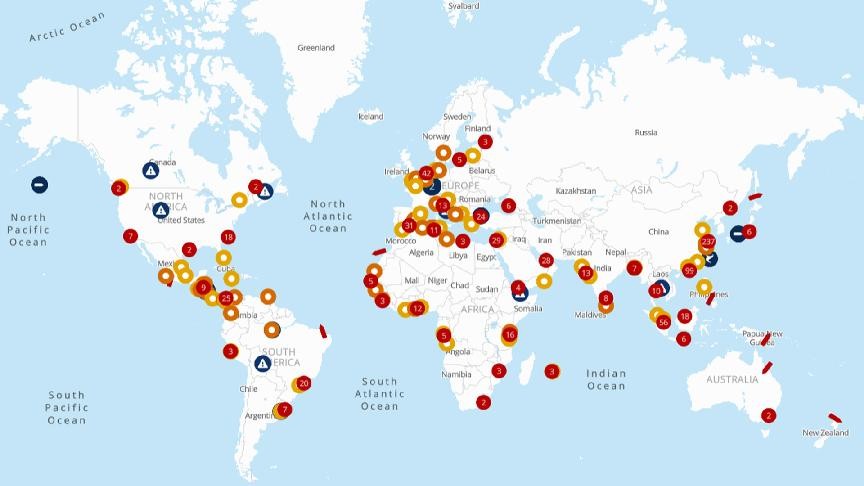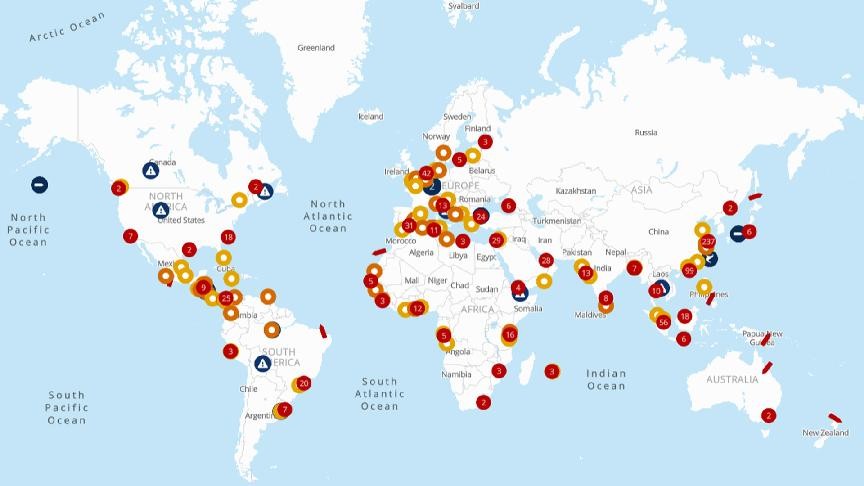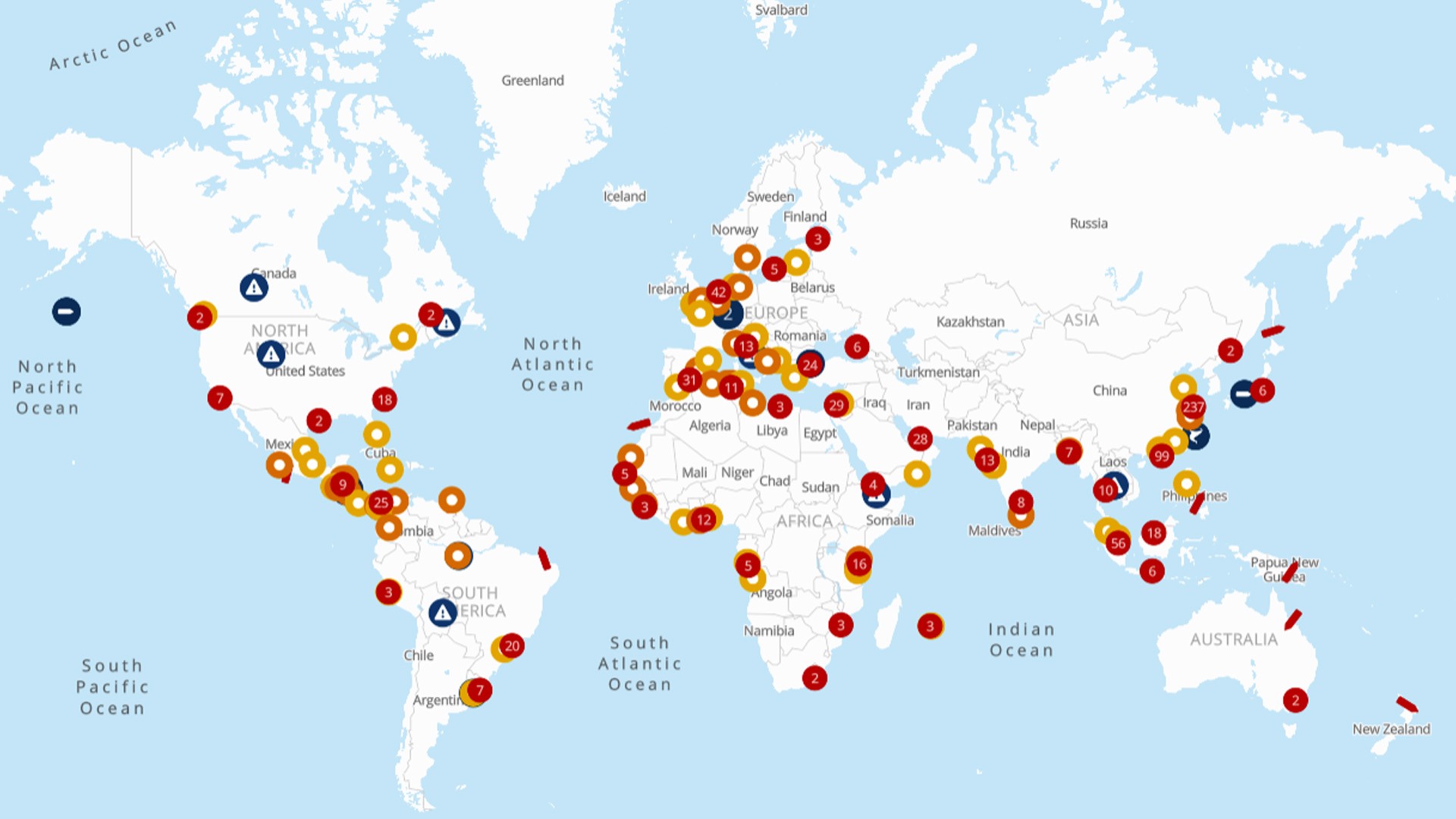

- Stay ahead of supply chain disruptions and port congestion with Kuehne+Nagel’s weekly port operational update.
- Find out the latest vessel waiting times and status of ports in Africa, Asia Oceania, Europe, Middle East-Indian Subcontinent, North America, and South and Central America.
Africa
Benin
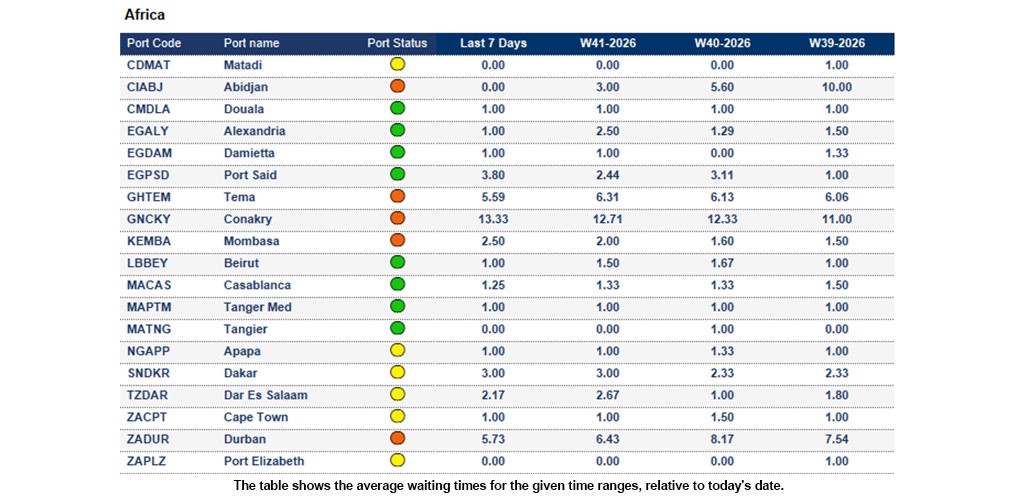
Cotonou: The 7-day average vessel waiting time is around 4.0 days. Window vessels are experiencing delays of up to two days, subject to documentation readiness. Out-of-window vessels continue to be handled based on berth availability and document completion under a first-ready, first-served approach.
Ghana
Tema: The 7-day average vessel waiting time is around 5.59 days. Tema continues to face significant operational pressure. Congestion is being driven by high yard utilisation, trucking shortages, strong import demand and reefer-related congestion, while non-window berthing remains dependent on berth availability.
Guinea
Conakry: The 7-day average vessel waiting time is around 13.33 days. Congestion remains severe, with berth allocation managed on a first-come, first-served basis and limited to one vessel per shipping line.
Ivory Coast
Abidjan: Abidjan remains one of the region's most congested ports. High yard occupancy, equipment reliability issues and inadequate trucking capacity continue to constrain terminal productivity and cargo flows. A terminal recovery programme remains in progress and is expected to continue through the end of October, with the aim of reducing yard congestion and improving vessel turnaround times.
Kenya
Mombasa: The 7-day average vessel waiting time is around 2.5 days. Mombasa remains under pressure from berth congestion, high yard density and empty container imbalances. Trucking productivity and equipment repositioning continuing to be adversely affected. Customs and documentation processing delays are also contributing to disruption.
Mozambique
Beira: The 7-day average vessel waiting time is around 9.33 days. Beira remains one of the most heavily congested ports. Recovery efforts are ongoing, although adverse weather conditions continue to present operational challenges.
Republic of the Congo
Pointe Noire: The 7-day average vessel waiting time is around 3.77 days. The terminal remains heavily congested, with yard occupancy reaching approximately 95%. Current delays are around three days. Fixed window and FIFO berthing systems have been suspended, with priority now given to vessels carrying larger cargo volumes to accelerate yard recovery. Feeder vessels continue to experience extended waiting times, particularly those dependent on mainline connections.
South Africa
Coega: The 7-day average vessel waiting time is around 2.33 days. Adverse weather conditions continue to disrupt operations, with delays of 2-3 days currently reported.
Durban: The 7-day average vessel waiting time is around 5.73 days. Severe congestion continues, with delays of 7-10 days at Pier 1 and 10-16 days at DGT due to equipment failures, yard congestion and reduced operational capacity.
Asia Oceania
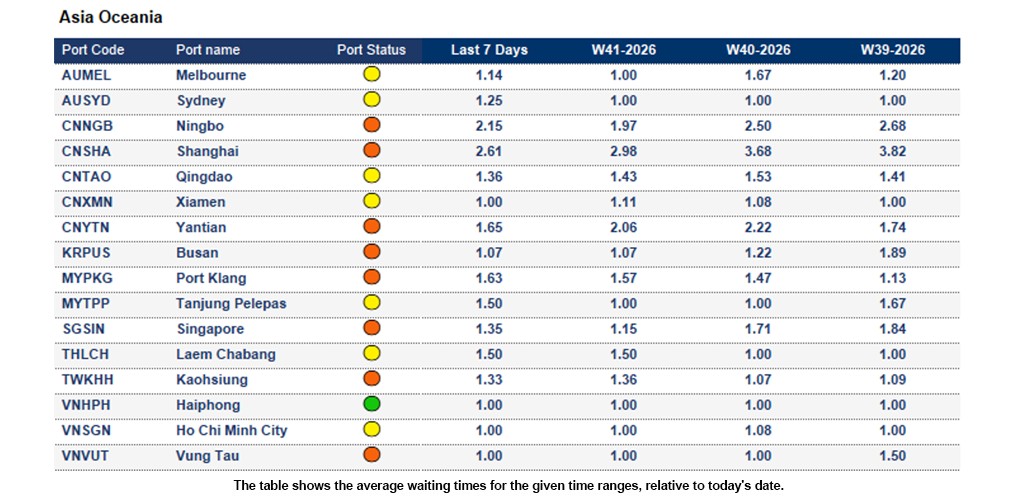
China
Shanghai: The 7-day average vessel waiting time is around 2.61 days. Congestion improved across terminals with reduced vessel waiting times, although some terminals continue to experience higher delays.
Shekou: The 7-day average vessel waiting time is around 1.29 days. Yard density remains above 90%, with heavy discharge vessels being deprioritised due to limited yard space.
Yantian: The 7-day average vessel waiting time is around 1.65 days. Yard congestion and gate restrictions continue, with large vessels experiencing berth delays of 3-5 days.
Indonesia
Belawan, Sumatra: The 7-day average vessel waiting time is around 2.8 days. Berth congestion persists, causing delays for off-window vessels.
Jakarta: The 7-day average vessel waiting time is around 1.4 days. Heavy berth congestion continues following berth closures and equipment commissioning activities.
Japan
Tokyo: The 7-day average vessel waiting time is around 2.0 days. High yard occupancy and weather disruptions are driving berth delays.
Malaysia
Port Klang: The 7-day average vessel waiting time is around 1.63 days. Yard density remains high at approximately 85-90%. Ongoing dredging activities continue to limit berth availability and operational flexibility.
Philippines
Manila: The 7-day average vessel waiting time is around 2.59 days. Congestion persists across both North and South Manila terminals, with berth delays of up to three days and high yard utilisation.
Singapore
Singapore: Severe congestion persists across PSA Singapore, with berth waiting times of 3-5 days and longer delays for vessels carrying large transhipment volumes. Yard utilisation remains near full capacity, prompting priority berthing for export-heavy vessels. Strong demand ahead of Golden Week and accumulated rolled cargo continue to pressure operations. Average vessel arrival and departure delays currently exceed four days. Read more here
South Korea
Busan: The 7-day average vessel waiting time is around 1.07 days. Critical yard congestion above 90% is severely affecting productivity and berth operations.
Taiwan
Kaohsiung: The 7-day average vessel waiting time is around 1.33 days. Severe yard congestion persists, with terminal utilisation exceeding 95%.
Vietnam
Vung Tau: The 7-day average vessel waiting time is around 1 day. Congestion has worsened and yard utilisation is exceeding 100%, impacting terminal efficiency.
Europe
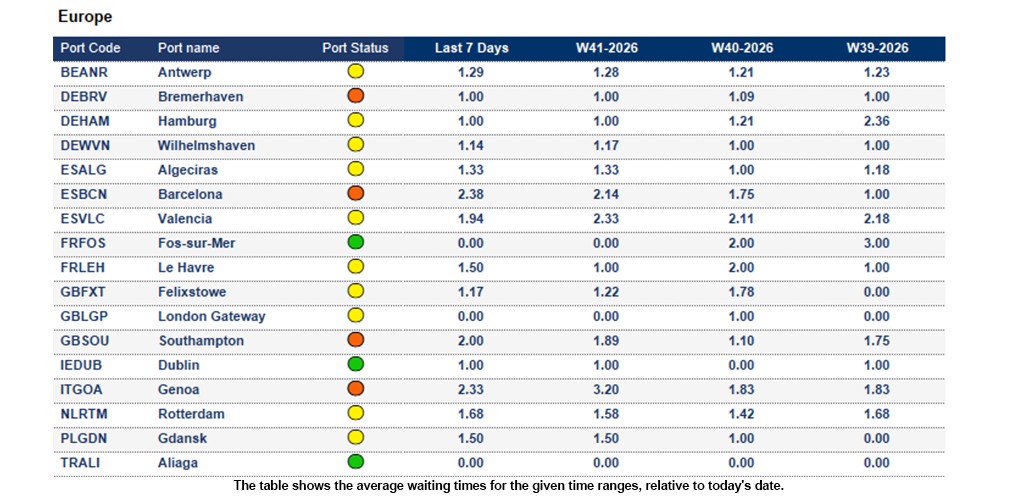
Belgium
Antwerp: The 7-day average vessel waiting time is around 1.29 days. Elevated yard utilisation and inland transport bottlenecks remain the primary operational challenges, although port performance is otherwise stable.
Germany
Hamburg: The 7-day average vessel waiting time is around 1 day. Hamburg is experiencing delays due to vessel bunching, schedule disruption and increasing pressure on inland logistics networks.
Netherlands
Rotterdam: The 7-day average vessel waiting time is around 1.68 days. Terminal operations remain stable; however, inland evacuation challenges associated with low Rhine water levels continue to delay cargo movements into European hinterland markets.
Spain
A nationwide 24-hour general strike is planned for 11 November 2026. Disruptions to transport, logistics and supply chain operations are possible, with potential impacts on trucking, rail freight, cargo handling and port operations. The extent of disruption will vary by region and level of worker participation. Read more here
Indian Subcontinent
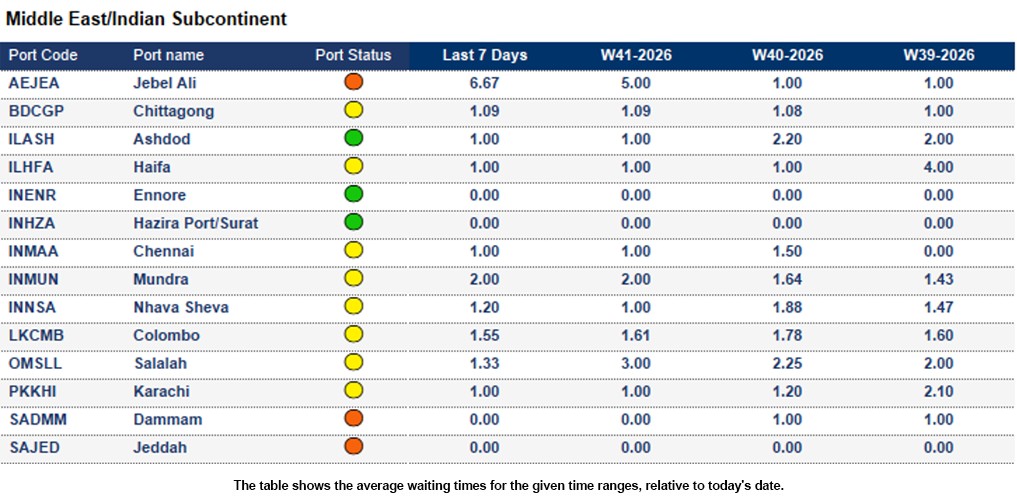
Middle East:
Containership traffic through the Bab el Mandeb Strait and Suez Canal reached its highest level since late 2023, driven by a growing number of carriers returning to Red Sea routings. The increase has been led by larger vessels, supporting shorter Asia-Europe transit times and improving schedule efficiency. Major carriers continue to reroute services via Suez, indicating a sustained recovery in canal utilisation and vessel traffic through the corridor.
Cargo diversions continue to drive congestion at Khor Fakkan and Fujairah, while improving conditions at Jeddah are expected to support a gradual redistribution of volumes towards Jeddah, Aqaba and Salalah. Congestion, longer dwell times and lead-time volatility remain across regional supply chains, particularly for transhipment and cross-border cargo movements.
Sri Lanka
Colombo: The 7-day average vessel waiting time is around 1.55 days. Colombo continues to experience transshipment-related challenges, including inter-terminal transfer congestion, berth delays, yard pressure and feeder vessel shortages. These issues are impacting schedule reliability across regional trades.
North America
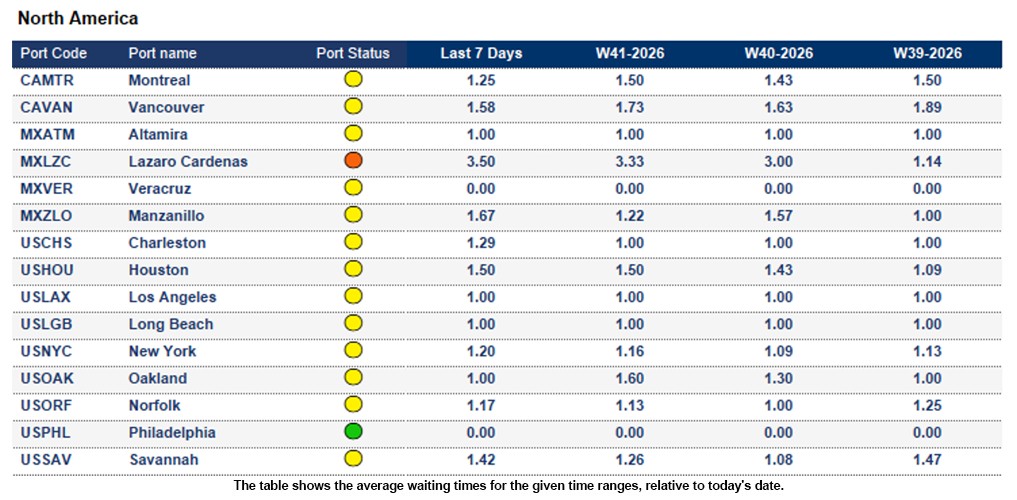
Canada
Average rail dwell times:
- Halifax: 4
- Montreal: 6
- Prince Rupert: 8
- Saint John: 5
- Vancouver: 5
Montreal: The 7-day average vessel waiting time is around 1.25 days. Low water levels continue to impact vessel loading capacities, contributing to delays and creating additional pressure across supply chains.
Vancouver: The 7-day average vessel waiting time is around 1.58 days. Vancouver (DP World Centerm) Operating conditions remain elevated, with terminal utilisation at 95% due to increased import volumes and a high number of empty containers on the terminal. Severe weather disruptions in Asia and ongoing congestion across key gateways continue to affect vessel schedules. Despite these challenges, rail operations remain stable, with average import rail dwell times of approximately four days and consistent railcar availability.
Mexico
Manzanillo: The 7-day average vessel waiting time is around 1.67 days. Nearshoring-led cargo growth and sustained import demand from Asia continue to pressure operations. Inland connectivity constraints and customs clearance delays remain key concerns.
United States
Average rail dwell times:
- Halifax - 2 days
- Montreal - 6 days
- Prince Rupert - 5 days
- Saint-John - 8 days
- Vancouver - 5 days
- Baltimore - 6 days
- Charleston - 2 days
- Newark - 3 days
- Houston - 6 days
- Wilmington - 9 days
- Jacksonville - 14 days
- Los Angeles - 8 days
- Long Beach - 9 days
- Mobile - 2 days
- New York - 4 days
- New Orleans - 5 days
- Oakland - 4 days
- Norfolk - 3 days
- Philadelphia - 2 days
- Savannah - 2 days
- Seattle - 5 days
- Tacoma - 5 days
Long Beach & Los Angeles: The 7-day average vessel waiting time is around 1 day. Strong Asian import demand continues to drive congestion across Southern California. The port gateways are managing elevated cargo volumes and operational pressures.
Norfolk: The 7-day average vessel waiting time is around 1.17 days. Import dwell times and equipment availability has been impacted by crane outages at both Norfolk International Terminal and Virginia International Gateway.
Savannah: The 7-day average vessel waiting time is around 1.42 days. Drayage infrastructure remains under pressure during peak demand periods, contributing to operational delays.
South America
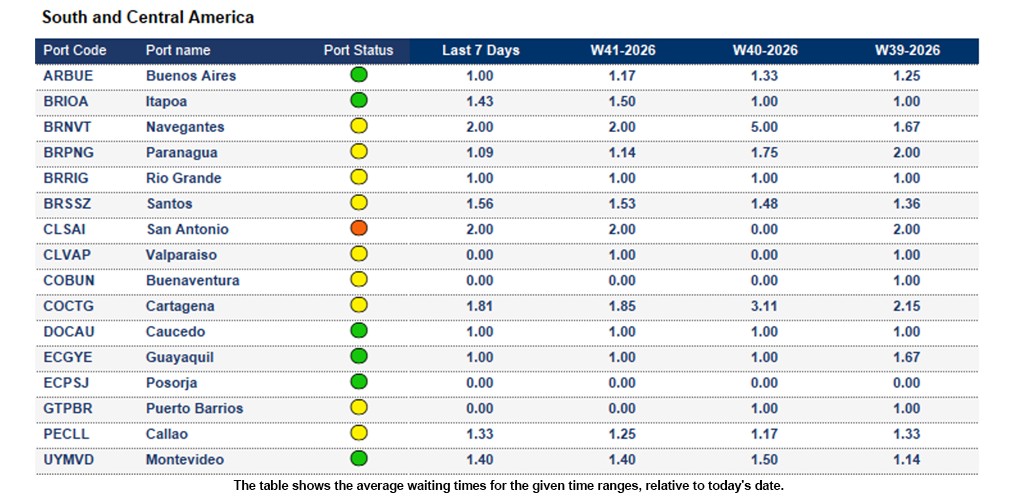
Brazil
Paranagua: The 7-day average vessel waiting time is around 1.09 days. Operational performance has weakened slightly, with dwell times exceeding target levels despite strong berth productivity.
Pecem: The 7-day average vessel waiting time is around 1 day. Terminal productivity remains strong; however, dwell times continue to exceed target levels. Operational performance has softened slightly week-on-week.
Salvador: The 7-day average vessel waiting time is around 2.5 days. Operational performance continues to weaken despite favourable weather conditions.
Chile
Antofagasta: Productivity remains at critical levels despite stable week-on-week performance.
How Kuehne+Nagel estimates port disruption statuses
Seaexplorer has four port statuses that are estimated based mainly on the 7-day average vessel waiting time. Other factors include yard congestion, labour strikes, natural disasters or intermodal disruptions. Slightly different rules are applied to major ports, or ports that are hubs in their region, as they are typically more efficient.
- Business as usual means the port is currently operating without any significant disruption.
- Slightly disrupted is used if the 7-day average vessel waiting time exceeds 2 days.
- Heavily disrupted is used if the 7-day average vessel waiting time exceeds 4 days.
- Port closed is used when the port suspends operations due to a major disruptive event.
How Kuehne+Nagel calculates the 7-day average vessel waiting time
Mainline container vessels may spend a certain number of days waiting at designated anchorage areas before their scheduled port call.
To calculate the 7-day average waiting time, we consider the waiting days of these vessels, excluding:
- Waiting times for feeder vessels,
- Idle ships without an announced next port,
- Slow steamers heading toward the anchorage, but not actively waiting within the designated area
- Vessels passing through the anchorage area without intending to call at the port.
Stay Ahead, Stay Informed: Register for seaexplorer for the latest disruptions and vessel waiting times at global container ports.