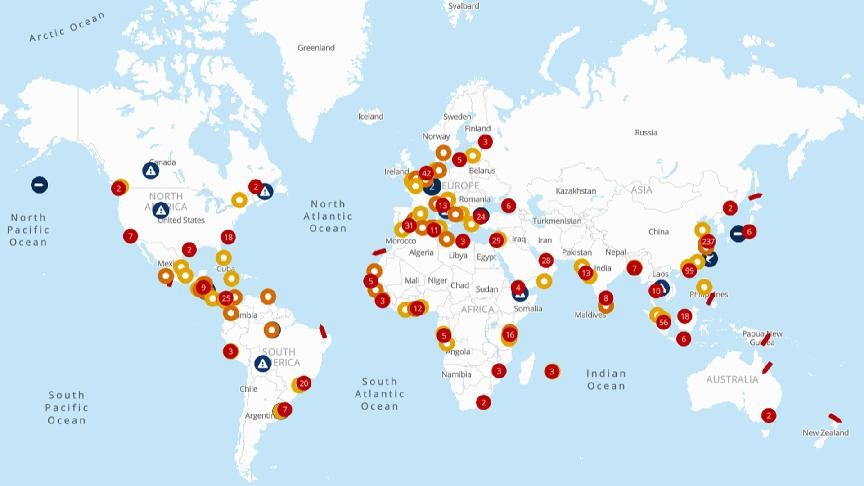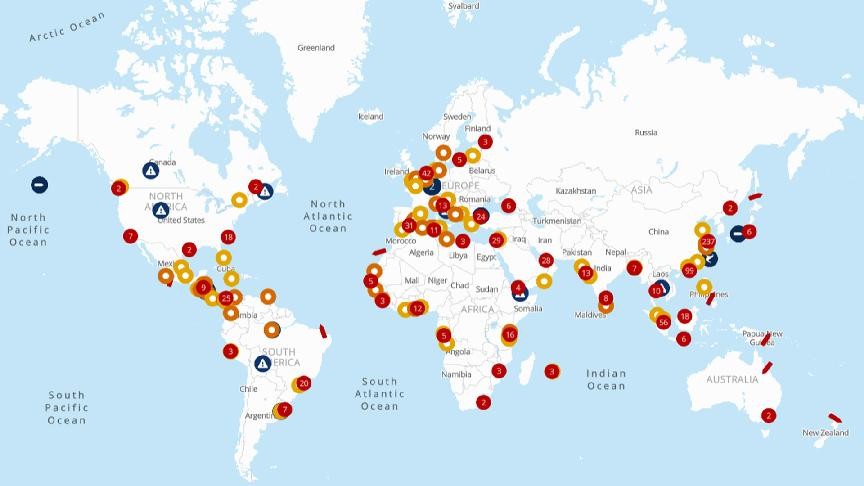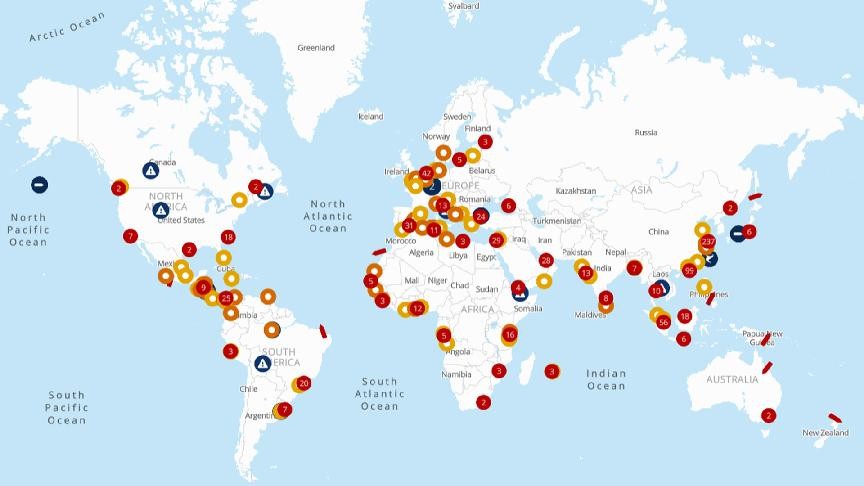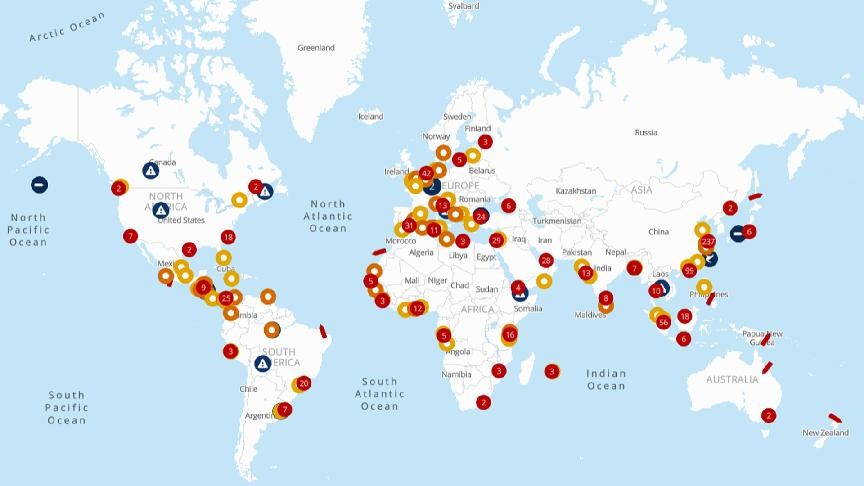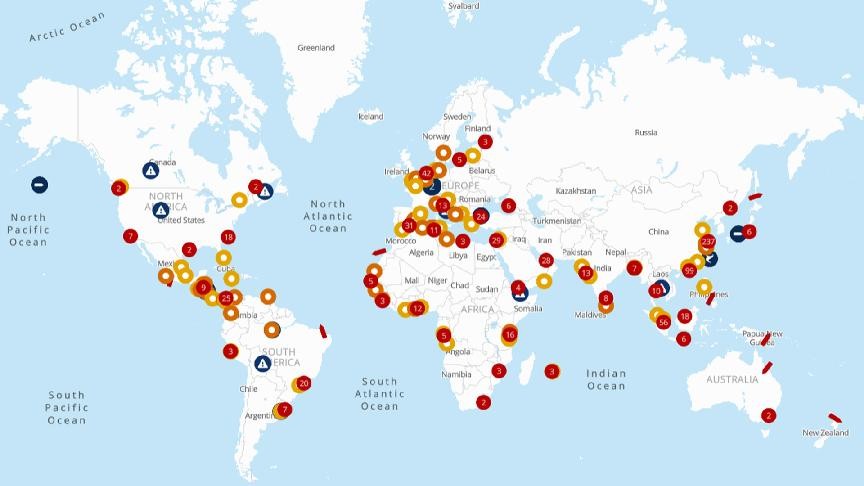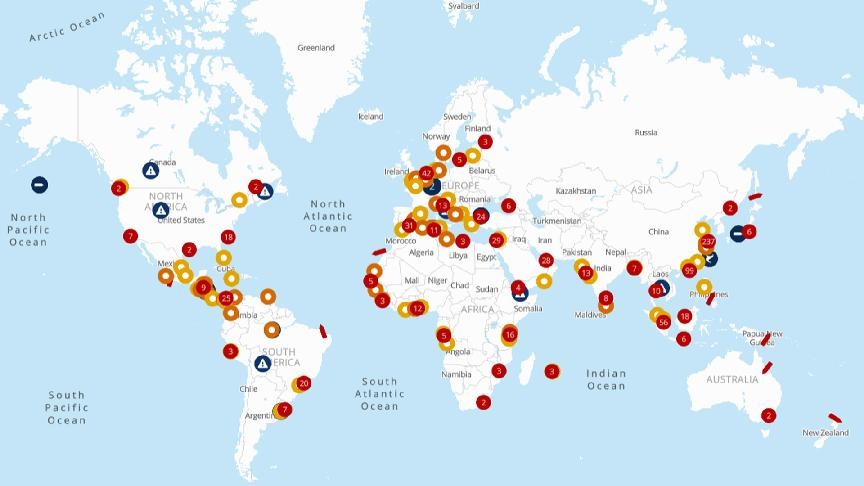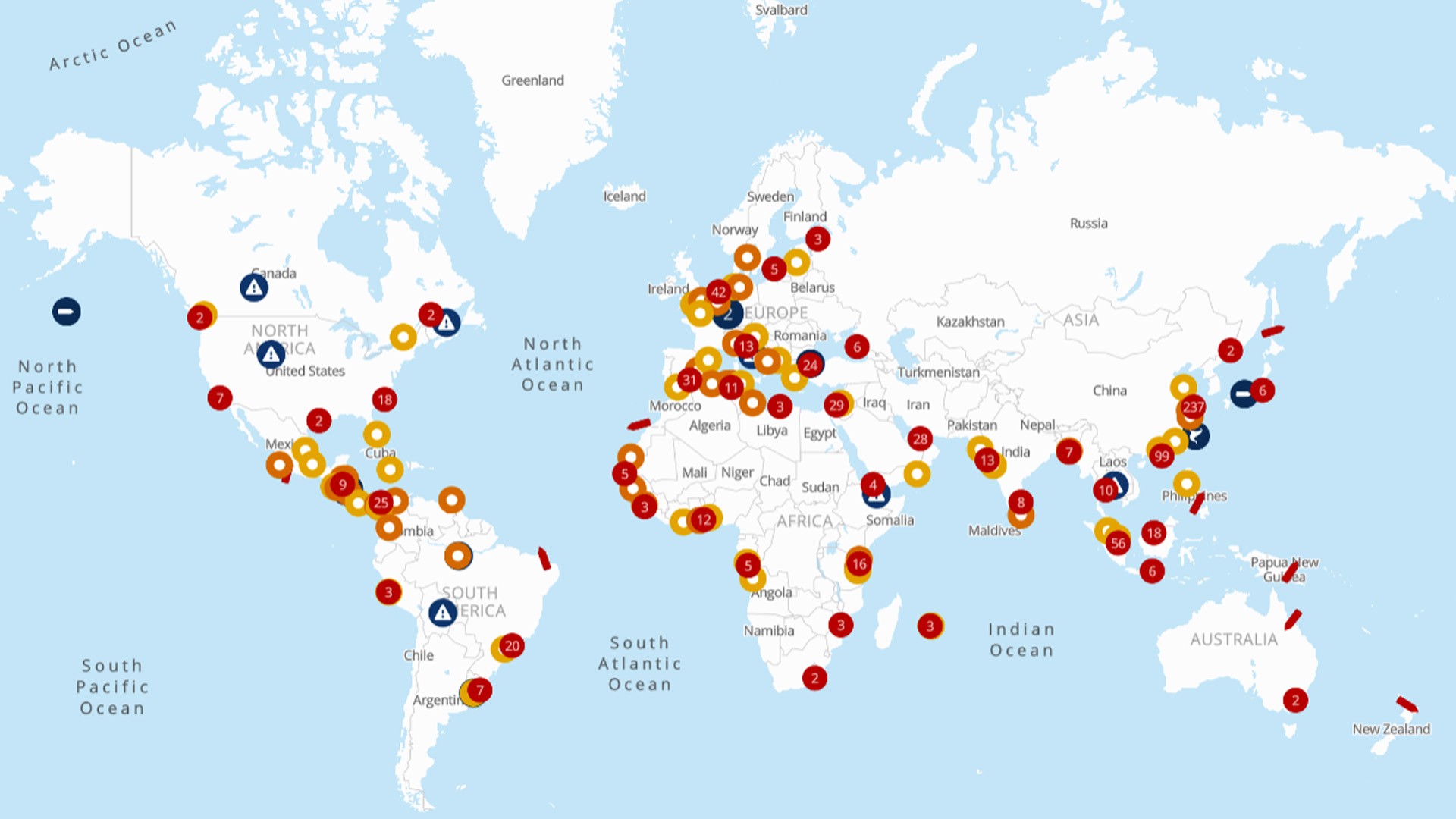

- Stay ahead of supply chain disruptions and port congestion with Kuehne+Nagel’s weekly port operational update.
- Find out the latest vessel waiting times and status of ports in Africa, Asia Oceania, Europe, Middle East-Indian Subcontinent, North America, and South and Central America.
Africa
Angola
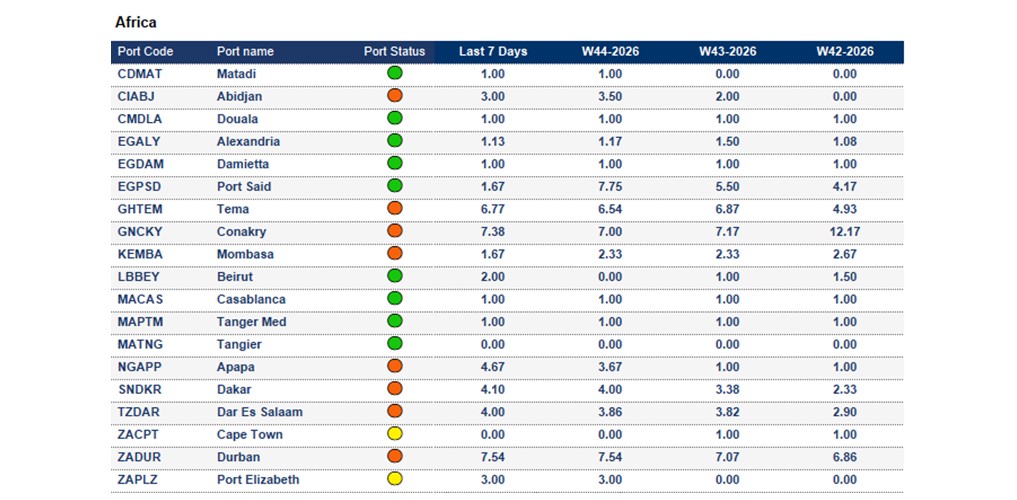
Luanda: The 7-day average vessel waiting time is around 2.75 days. Inland logistics rather than terminal performance are the main constraint, with customs clearance, border procedures and regional road connectivity delaying cargo movement.
Ghana
Tema: The 7-day average vessel waiting time is around 6.77 days. Vessel waiting times remain elevated amid strong import demand, high yard occupancy and high reefer utilisation. Truck shortages are slowing container evacuation and congestion is expected to remain elevated through November.
Guinea
Conakry: The 7-day average vessel waiting time is around 7.38 days. Congestion remains severe, with berth allocation managed on a first-come, first-served basis and limited to one vessel per shipping line.
Ivory Coast
Abidjan: The 7-day average vessel waiting time is around 3.0 days. High yard density is reducing terminal productivity, while limited truck capacity, equipment reliability problems and slow cargo evacuation are contributing to vessel delays.
Kenya
Mombasa: The 7-day average vessel waiting time is around 1.67 days. Elevated vessel waiting and high yard utilisation are affecting terminal fluidity. Customs processing and cargo-release delays remain evident, alongside difficulties repositioning empty containers.
Mauritius
Port Louis: The 7-day average vessel waiting time is around 1 day. High transshipment volumes are placing pressure on berth planning and the yard, although terminal productivity remains relatively stable. Connections remain exposed to schedule disruption at major Asian hubs, while equipment repositioning is also challenging.
Mozambique
Beira: The 7-day average vessel waiting time is around 9.71 days. Conditions remain critical. Terminal recovery is ongoing, while intermittent wind gusts and rainfall may add further operational pressure.
Nigeria
Apapa: The 7-day average vessel waiting time is around 4.67 days. Vessel queues and port congestion remain evident, while landside trucking limitations and customs procedures are additionally restricting cargo flows.
Republic of the Congo
Pointe Noire: The 7-day average vessel waiting time is around 3.77 days. The terminal remains heavily congested, with yard occupancy reaching approximately 95%. Current delays are around three days. Fixed window and FIFO berthing systems have been suspended, with priority now given to vessels carrying larger cargo volumes to accelerate yard recovery. Feeder vessels continue to experience extended waiting times, particularly those dependent on mainline connections.
South Africa
Durban: The 7-day average vessel waiting time is around 7.54 days. Conditions remain severely constrained, with elevated yard utilisation, vessel bunching, peak-season imports, long import dwell times and road congestion. Pier 1 is experiencing delay, with two cranes on long-term breakdown and further equipment failures affecting productivity. DGT/Pier 2 faces delays, with waterside gangs being reduced to support landside clearance, potentially adding further vessel delays. Read more here
Asia Oceania
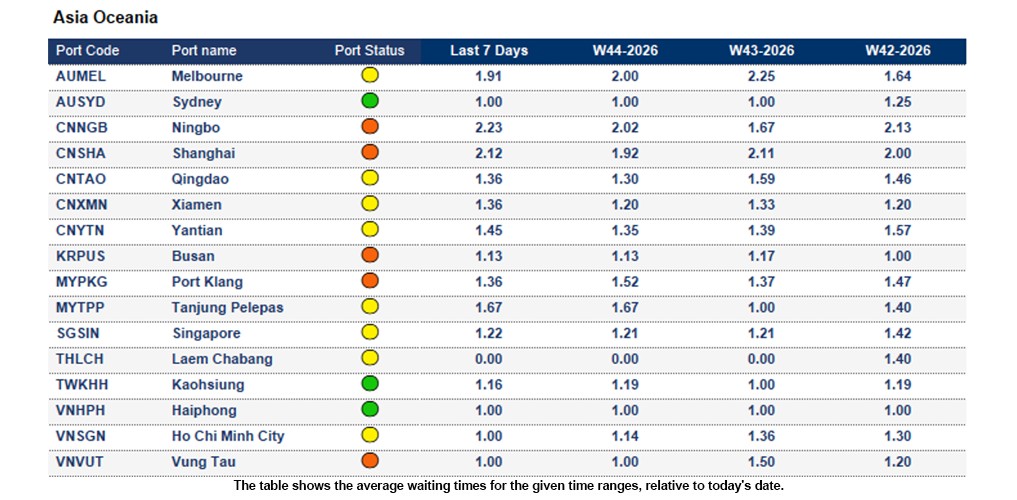
China
Ningbo: The 7-day average vessel waiting time is around 2.23 days. Significant congestion following the 30-hour typhoon closure. MSICT waiting times have risen to around 3 days, with high yard density, while YZCT is experiencing delays of around 4 days amid vessel problems and post-typhoon bunching. Improvement is not expected before Week 46.
Shanghai: The 7-day average vessel waiting time is around 2.12 days. Operations returned to normal from 26 October following Typhoon Champi, but congestion remains. Waiting times are elevated with high yard density and post-typhoon vessel bunching.
Shekou: The 7-day average vessel waiting time is around 1.09 days. Yard density remains above 90%. Heavy-discharge vessels may be deprioritised or require split calls until sufficient yard capacity becomes available
Yantian: The 7-day average vessel waiting time is around 1.45 days. Post-typhoon vessel bunching has increased waiting times for mega-vessels to 1-1.5 days. Conditions are expected to normalise in Week 45.
Hong Kong
Hong Kong: The 7-day average vessel waiting time is around 1.03 days. Capacity constraints and vessel schedule unreliability are affecting operations.
Indonesia
Jakarta: The 7-day average vessel waiting time is around 1.62 days. JICT congestion has improved, with average waiting times of 1-1.5 days. Five new RTGs remain under commissioning and are expected to become operational in early November. Read more here
Japan
Tokyo: The 7-day average vessel waiting time is around 1.3 days. Yard density is exceptionally high at 97% at OHI and 96% at AOM, although berth delays have stabilised.
Yokohama: The 7-day average vessel waiting time is around 1 day. Yard density remains high at 93%. Delays of up to 3 days are expected during Weeks 45-46 due to high call volumes.
Malaysia
Port Klang: The 7-day average vessel waiting time is around 1.36 days. Yard density remains high at 85-90%, with average waiting times of around 2 days. Berth restrictions related to dredging and the delivery of eight new RTGs are reducing berth flexibility, with heavy congestion expected to continue in Week 45.
Philippines
Manila: The 7-day average vessel waiting time is around 2.1 days. Congestion remains significant at both North and South terminals. MICT yard utilisation remains high at 80-85%
South Korea
Busan: The 7-day average vessel waiting time is around 1.13 days. BNCT remains under severe pressure, with average yard density around 93%. Planned ARMG maintenance will remove approximately 1,700 TEU of yard capacity for two weeks. With vessel bunching and high move counts expected, waiting times could exceed 2 days in Week 45.
Vietnam
Vung Tau: The 7-day average vessel waiting time is around 1 day. GML waiting times have improved slightly, although off-window vessels may wait 2-3 days. Yard utilisation remains very high at 90-95%.
Europe
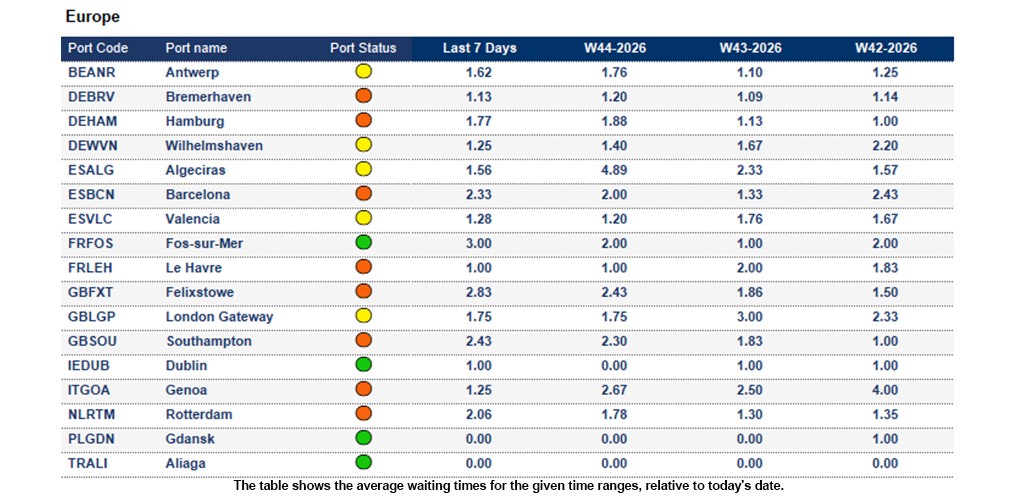
Belgium
Antwerp: The 7-day average vessel waiting time is around 1.62 days. Fourteen new hybrid straddle carriers are due on 31 October, temporarily blocking one berth for 24 hours. New crane commissioning is also nearing completion.
France
Le Havre: The 7-day average vessel waiting time is around 1 day. TNMSC has returned to normal operations following the cyberattack, but vessel arrivals are affected by the strike.
Germany
Bremerhaven: The 7-day average vessel waiting time is around 1.13 days. Yard occupancy has increased to a critical 95%, with particular pressure on IMO and OOG capacity. Minor vessel delays remain manageable, although dense fog is causing operational challenges.
Hamburg: The 7-day average vessel waiting time is around 1.77 days. Yard occupancy at CTA and CTH has risen to 85%, with a further peak over last weekend. Delayed vessel arrivals, dense fog, crane maintenance and urgent repairs are slowing operations. Fog-related Elbe restrictions are also affecting LNG bunkering, while NE2 and NE4 calls will be shifted to another berth next week.
Italy
Genoa: The 7-day average vessel waiting time is around 1.25 days. Vessel traffic at Sampierdarena will be restricted on 4-5 November between 09:00 and 13:00 for the disposal of unexploded WWII ordnance, with 6 November reserved as a backup date. Vessel delays may occur.
Trieste: The 7-day average vessel waiting time is around 1.5 days. Trieste Marine Terminal is closed due to strong winds until 07:00 on 4 November, with vessel and cargo-handling delays possible.
Turkey
Istanbul: The 7-day average vessel waiting time is around 1 day. Strong export volumes are contributing to operational pressure.
Izmir: The 7-day average vessel waiting time is around 2.0 days. Conditions remain challenging due to inland truck capacity constraints.
United Kingdom
London Gateway Port: The 7-day average vessel waiting time is around 1.75 days. High yard density is affecting terminal operations, with slower truck turnaround times expected for deliveries and collections. Traffic diversions will be implemented as required, while VBS booking tolerances will be extended where necessary. Several calls are being omitted, while earlier weather and IT disruption have pushed vessels into weeks 45-46. Berth restrictions are expected to remain until mid-December.
Indian Subcontinent
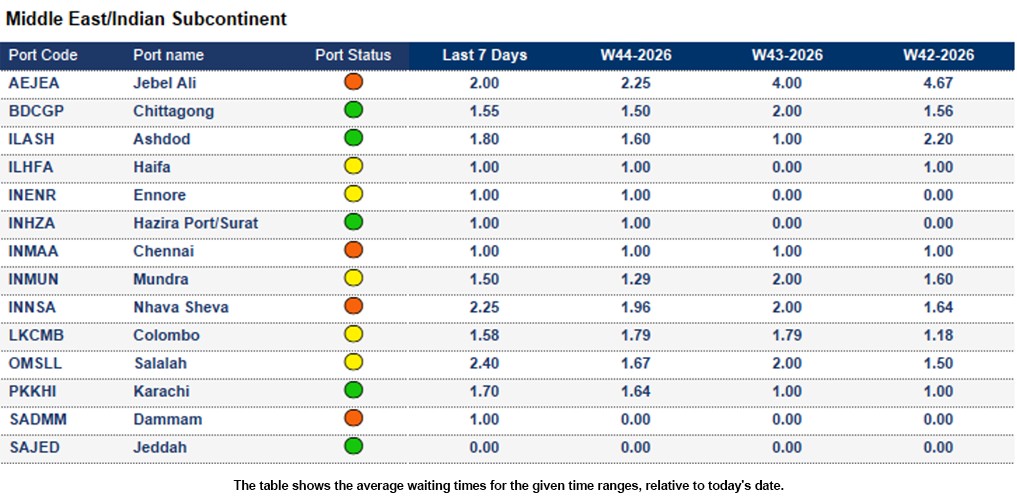
India
Chennai: The 7-day average vessel waiting time is around 1 day. The port remains exposed to transshipment-related schedule disruption, while road congestion can constrain cargo flows during peak periods. The wider eastern coast of India has also recently been affected by Cyclone Arnab.
Nhava Sheva: The 7-day average vessel waiting time is around 2.25 days. Vessel delays remain above historical norms, with peak-period gate congestion and strong exports putting pressure on yard capacity. Equipment availability fluctuates and inland transport congestion persists. Carrier schedule changes and dependency on transshipment hubs add further uncertainty.
Sri Lanka
Colombo: The 7-day average vessel waiting time is around 1.58 days. Persistent transshipment congestion continues to disrupt Indian import and export connections. Missed feeder connections, vessel omissions and cargo rollovers continue, while carriers are working on schedule recovery.
Middle East
Congestion remains severe across key UAE gateways, particularly Khor Fakkan, Fujairah and Sharjah, with pressure now extending beyond vessel operations to terminal transfers, yard capacity and inland cargo flows.
Khor Fakkan: Heavy congestion continues, with a growing number of vessels at anchor. Average vessel waiting time has reached 7.25 days. Over the past 30 days, vessels arrived an average of 7.4 days late and departed 5.7 days behind schedule.
Fujairah: Conditions remain particularly challenging, with average containership waiting times reaching 8.86 days over the past seven days. Vessels arrived an average of 7.58 days late and departed 7.65 days behind schedule. Restrictions on foreign cargo, dangerous goods and special equipment remain in place, while diverted cargo is adding pressure on the terminal.
Sharjah: Heavy congestion is also reported, with vessels waiting around 3 days for a berth. Average arrival and departure delays have both exceeded 4 days over the past 30 days.
Terminal transfers from Khor Fakkan and Fujairah to Jebel Ali, Sharjah and Abu Dhabi are taking approximately 12–15 days, compared with around 5 days previously, adding further pressure to yard capacity and cargo dwell times.
Some carriers are reducing allocations at affected UAE ports, although widespread port omissions have not yet been reported. With strong Middle East demand, constrained yard capacity and additional cargo volumes entering alternative gateways, further deterioration is expected in the coming weeks.
Where suitable, Salalah and Duqm may provide alternative gateway options, while additional lead time should be factored into shipment planning. Read more her
North America
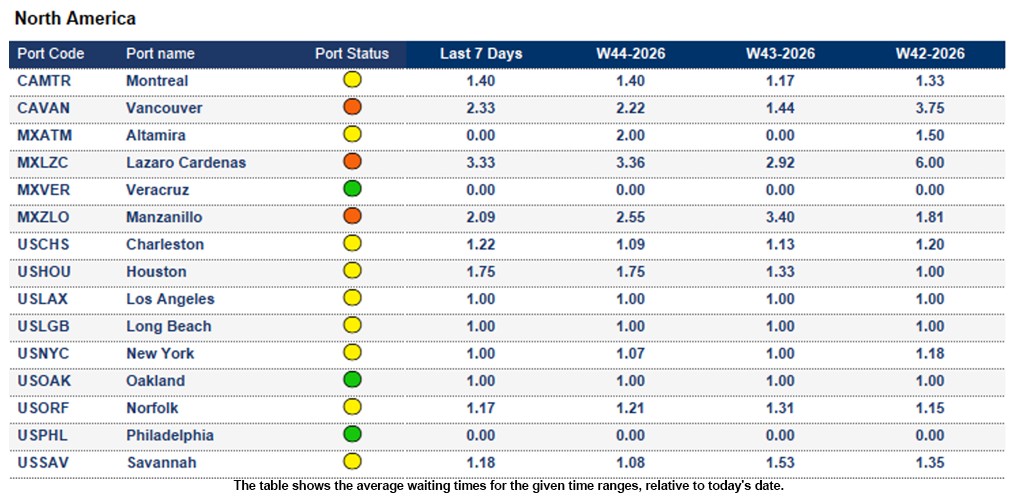
Canada
Average rail dwell times:
- Halifax: 4
- Montreal: 5
- Prince Rupert: 6
- Saint John: 6
- Vancouver: 5
United States
Average rail dwell times:
- Halifax - 2 days
- Montreal - 6 days
- Prince Rupert - 6 days
- Saint-John - 8 days
- Vancouver - 5 days
- Baltimore - 6 days
- Charleston - 3 days
- Newark - 3 days
- Houston - 6 days
- Wilmington - 8 days
- Jacksonville - 8 days
- Los Angeles - 9 days
- Long Beach - 10 days
- Miami - 13 days
- Mobile - 2 days
- New York - 4 days
- New Orleans - 3 days
- Oakland - 7 days
- Norfolk - 4 days
- Port Everglades - 7 days
- Philadelphia - 3 days
- Savannah - 2 days
- Seattle - 5 days
- Tacoma - 5 days
South America
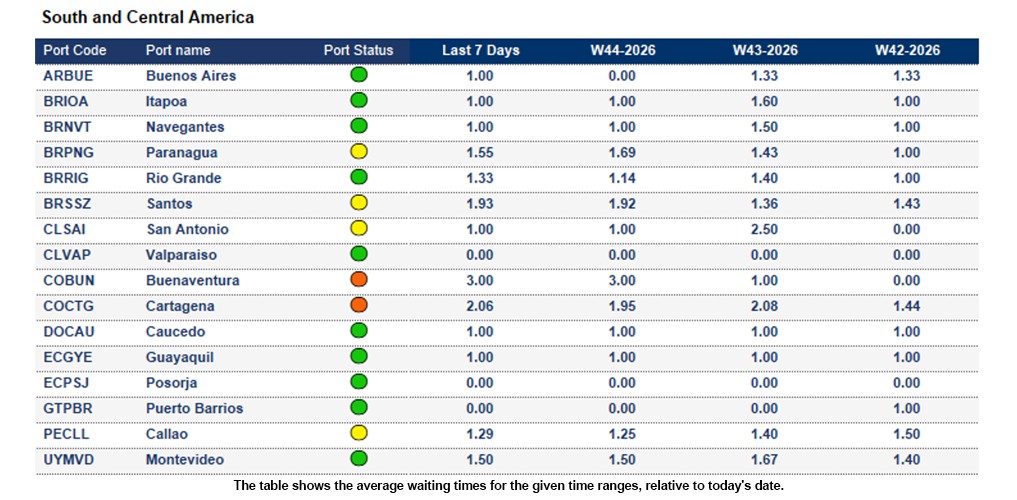
Brazil
Santos: The 7-day average vessel waiting time is around 1.93 days. Strong agricultural exports are generating additional pressure. Inland truck capacity is constrained, reefer-equipment demand is high and yard utilisation is elevated. Global carrier schedule instability is also affecting vessel reliability.