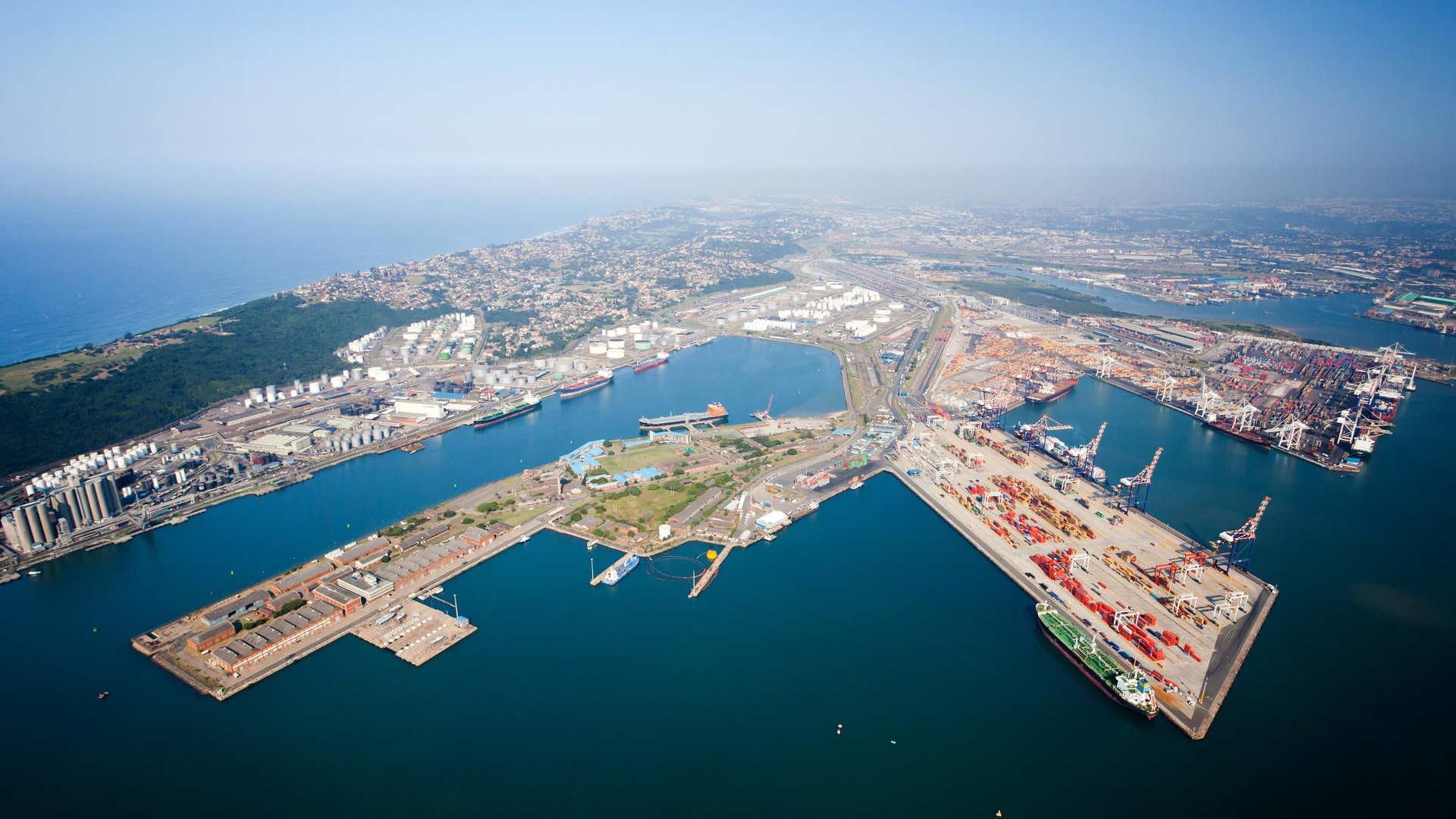

Port congestion in Durban remains severe, with container vessels facing prolonged waiting times, significant schedule delays and a substantial queue of capacity offshore.
Over the past seven days Kuehne+Nagel data shows, container vessels have spent an average of 7.46 days waiting at anchorage before calling Durban. Schedule reliability is also under pressure: over the last 30 days, container vessels recorded an average arrival delay of 6.02 days, while average departure delays reached 5.59 days. GoComet even reports a median vessel delay of 15 days.
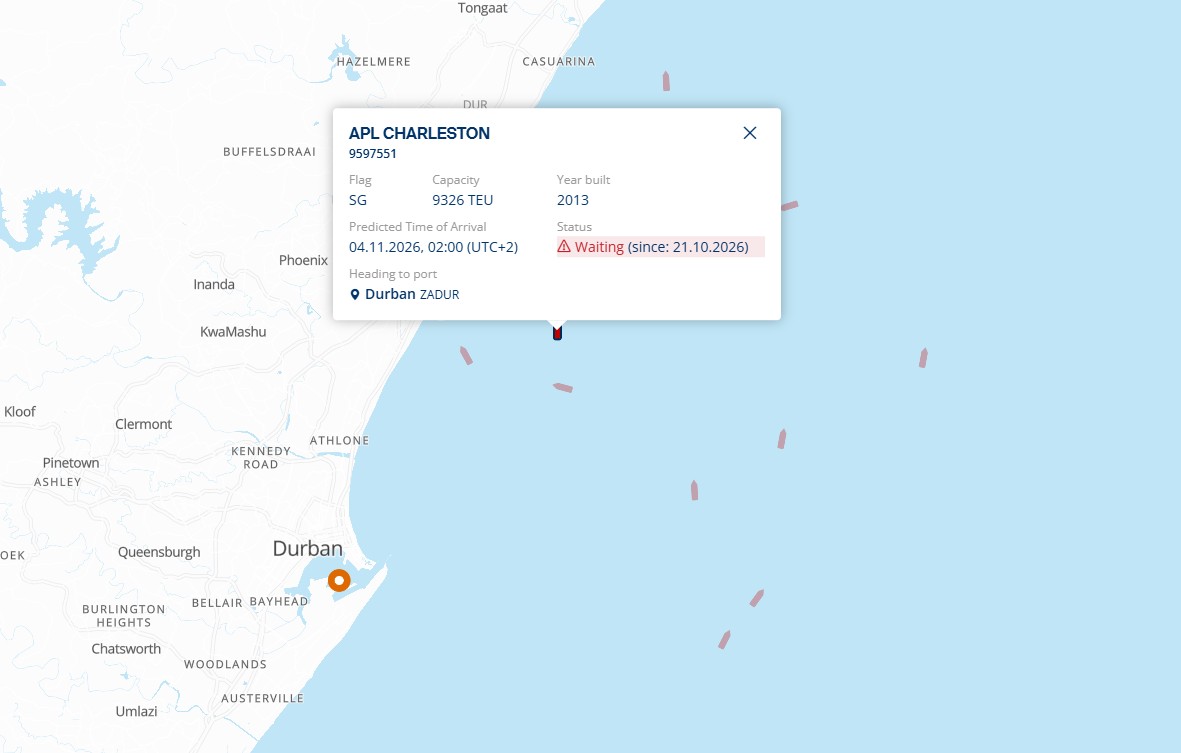
The current vessel queue illustrates the scale of the disruption. As of 2 November, six container vessels are waiting within Durban's designated anchorage areas, with another 11 vessels waiting further offshore. Combined, these vessels represent almost 85,000 TEU of container capacity awaiting access to the port.
AIS data provides a particularly striking example. The APL Charleston, a 9,326-TEU container vessel, has been waiting off Durban since 21 October. Its latest predicted arrival in Durban is 4 November, around two weeks after it joined the queue.
The figures indicate that congestion in Durban remains a structural challenge rather than a short-lived disruption. While conditions may fluctuate from week to week, meaningful improvement is currently not expected until towards the end of Q1 2027.
What shippers shoud watch
The current situation is unusual for this time of year. Historically, market demand has eased towards the end of October and throughout November. This year, however, ongoing supply constraints are expected to keep market conditions elevated for longer than typically observed.
For cargo owners, the result is continued uncertainty around transit times, delivery dates and equipment availability. Importers and exporters should therefore plan around the congestion rather than assume schedules will normalise in the near term.
With average vessel waiting times above seven days, 17 vessels currently waiting offshore and almost 85,000 TEU of capacity caught in the queue, Durban remains a critical congestion hotspot for South African container supply chains.
For shippers, the priority over the coming months should therefore be resilience rather than reliance on published schedules: build additional buffer into lead times, monitor vessel movements closely and evaluate alternative gateways before delays become critical.
Importers should also prepare for terminals and depots to remain active for receivals throughout the December holiday period. While many businesses traditionally scale down festive-season operations once most cargo has been delivered by mid-December, continued supply constraints and cargo volumes could extend activity well beyond the usual year-end slowdown.
Importers should therefore plan staffing, transport and receiving capacity accordingly.