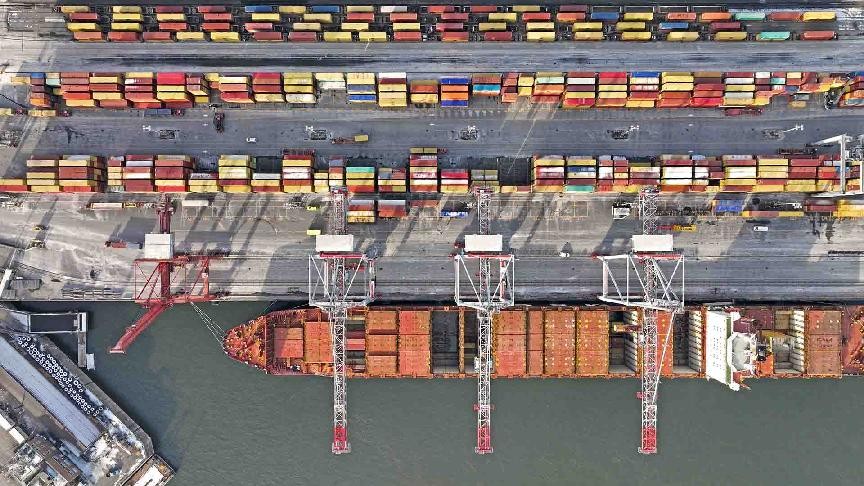

Dockworkers at Port Saint John in New Brunswick, Canada, have authorised strike action after rejecting a proposed labour agreement, as negotiations between their union and maritime employers enter another phase ahead of a possible strike in January.
International Longshoremen’s Association (ILA) Local 273, representing 160 dockworkers at the port, voted against the contract offered by the Port Saint John Employers Association (PSJEA), according to the Journal of Commerce.
The union subsequently authorised a strike as the parties continue efforts to secure an agreement.
The two sides entered conciliation after earlier mediated negotiations failed to produce a settlement. The previous four-year agreement between ILA Local 273 and the PSJEA expired at the end of 2025.
ILA Local 273 President Terry Wilson told the Journal of Commerce that wages, scheduling and the introduction of new technology remain unresolved.
The previous agreement required employers and dockworkers to discuss new technology that could negatively affect union members’ working hours. DP World is planning further automation at Port Saint John.
A strike or employer lockout could only occur after the conciliation process, followed by a further 21-day cooling-off period and 72 hours’ notice from either side.
The negotiations at Saint John come as a prolonged labour dispute at the Port of Montreal reaches a resolution.
A new five-year collective agreement between the Maritime Employers Association (MEA) and the union representing more than 1,200 longshore workers covers the period from 2024 to 2028.
Negotiations began in 2023 and were followed by strikes and work stoppages that disrupted port operations and supply chains.
Talks continued until mid-March 2025, when federal mediators ended mediation and the dispute moved to final and binding arbitration, according to the MEA. Neither the MEA nor CUPE Local 375 has disclosed further details of the agreement.
The Montreal Port Authority said the agreement provides renewed stability and predictability for port operations and the wider supply chain, enabling businesses, customers and partners to plan operations and investments with greater confidence.
The resolution also ends the uncertainty associated with the negotiations and service disruptions while supporting the continuation of reliable and competitive port services with growth potential.