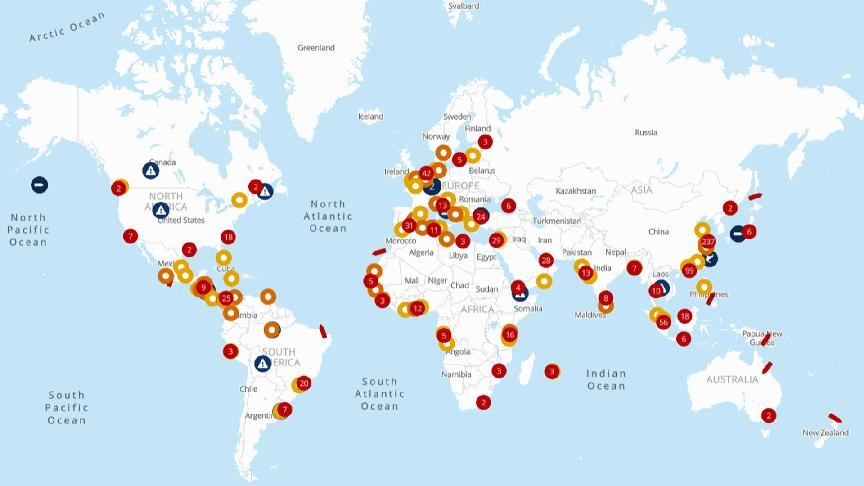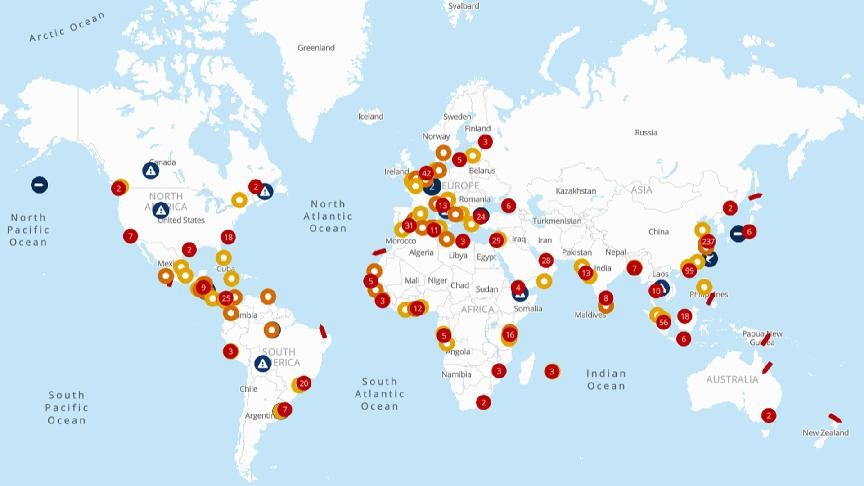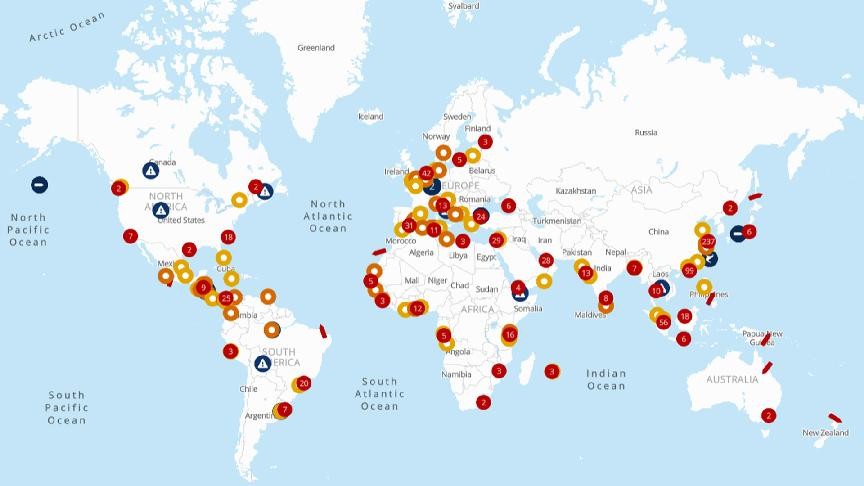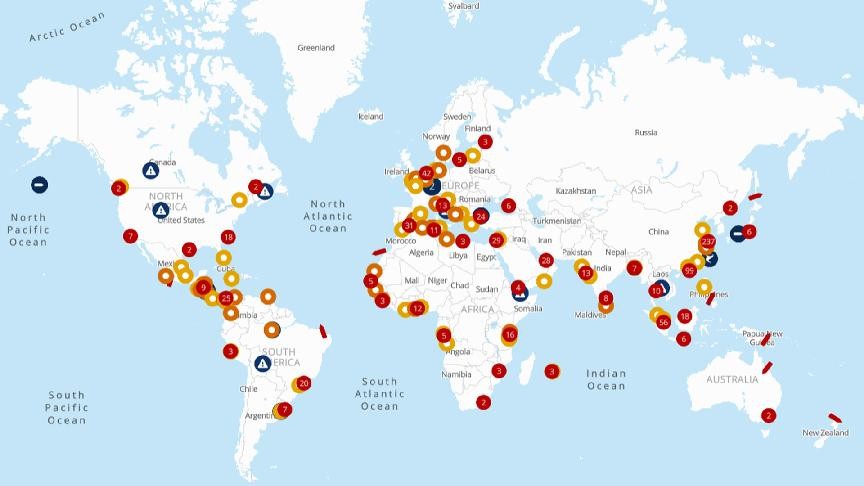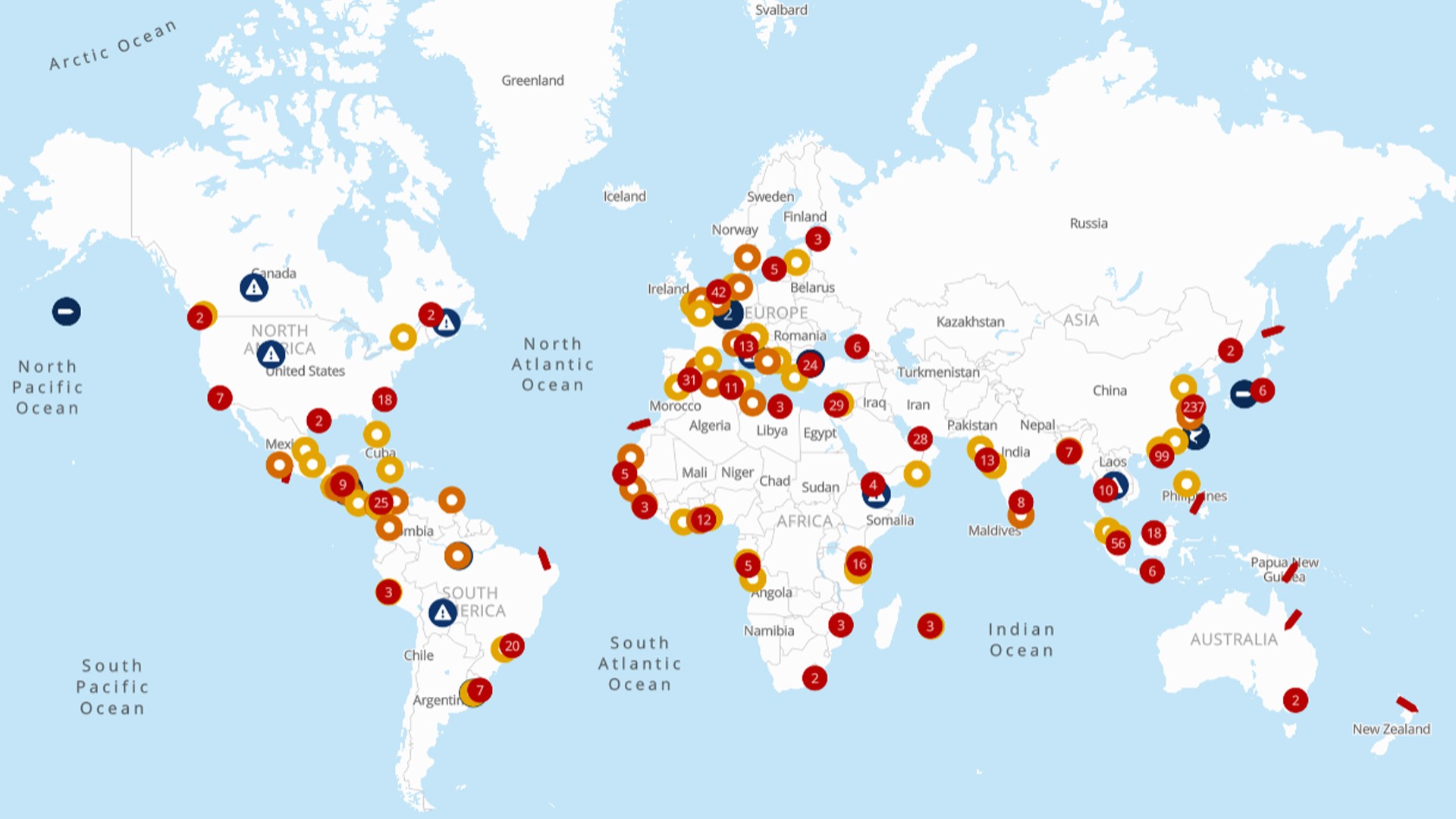

- Stay ahead of supply chain disruptions and port congestion with Kuehne+Nagel’s weekly port operational update.
- Find out the latest vessel waiting times and status of ports in Africa, Asia Oceania, Europe, Middle East-Indian Subcontinent, North America, and South and Central America.
Africa
Ghana
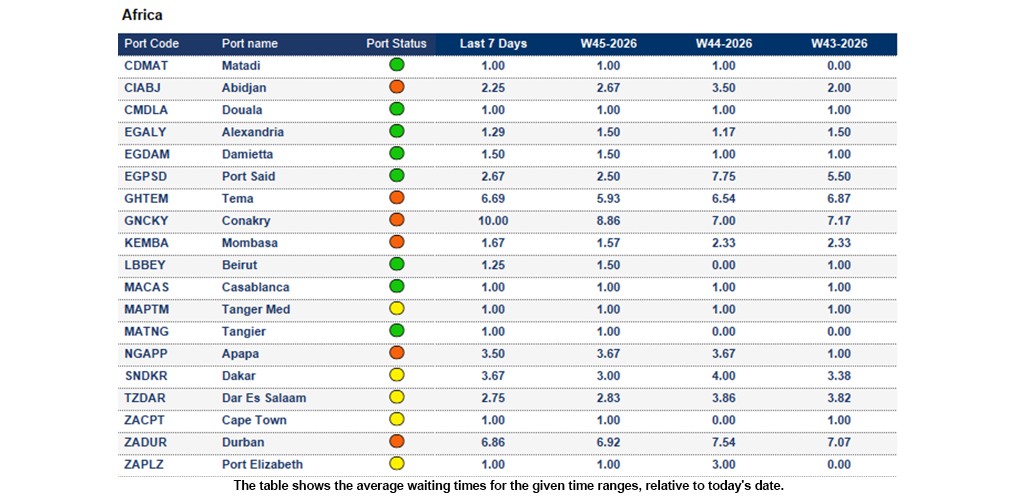
Tema: The 7-day average vessel waiting time is around 6.69 days. Heavy volumes, elevated yard occupancy, high reefer utilisation and trucking shortages are slowing cargo evacuation. Durban–Tema service frequency has increased to weekly.
Guinea
Conakry: The 7-day average vessel waiting time is around 10.0 days. Congestion remains severe, with berth allocation managed on a first-come, first-served basis and limited to one vessel per shipping line.
Ivory Coast
Abidjan: The 7-day average vessel waiting time is around 2.25 days. High yard density, berth delays, limited trucking capacity and slow cargo evacuation continue to restrict terminal productivity.
Kenya
Mombasa: The 7-day average vessel waiting time is around 1.67 days. Elevated vessel waiting, high yard utilisation, customs clearance delays and empty-container repositioning are affecting cargo flows, with wider delays into inland markets.
Mozambique
Beira: The 7-day average vessel waiting time is around 11.75 days. Conditions remain critical. Intermittent rain and wind are expected to create further operational risk. Waiting Time: 11.75 days.
Nigeria
Apapa: The 7-day average vessel waiting time is around 3.5 days. Delay occur, with vessel queues and congestion compounded by landside trucking and customs constraints.
Senegal
Dakar: The 7-day average vessel waiting time is around 3.67 days. Out-of-window vessels are experiencing delays of up to 72 hours. Yard utilisation remains elevated at over 82%, requiring close monitoring as cargo volumes increase.
South Africa
Container operations improved significantly, with throughput rising in Cape Town, Coega and Port Elizabeth. Cape Town vessel waiting times are now below one day, while inland transport capacity remains constrained. Durban continues to face congestion, although average vessel waiting times have improved to around six days. Read more here
Asia Oceania
China
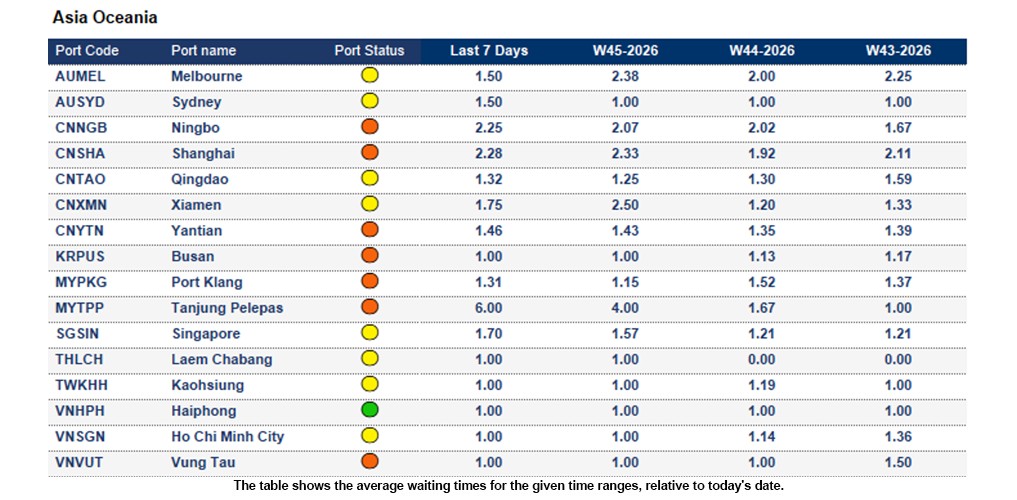
Ningbo: The 7-day average vessel waiting time is around 2.25 days. Congestion remains significant, mostly due to heavy vessel bunching, MSICT dredging has been suspended due to high berth occupancy. Improvement is expected from Week 46.
Shanghai: The 7-day average vessel waiting time is around 2.28 days. Congestion remains elevated, with high yard density and limited resources for inter-terminal transfers.
Shekou: The 7-day average vessel waiting time is around 1.21 days. Waiting times have improved, but yard density remains above 90%. Heavy-discharge vessels may be deprioritised or require double calls until sufficient yard space is available.
Yantian: The Maersk Cincinnati struck a ship-to-shore crane while berthing at Yantian Port on 9 November, causing the crane to collapse towards the container yard. The extent of the damage and cause remain unclear, although strong winds may have contributed. The vessel operates on the AE3/NE3 service, with Ningbo Port as its next call. Read more here
Hong Kong
Hong Kong: The 7-day average vessel waiting time is around 1.14 days. Capacity constraints and vessel schedule unreliability are affecting operations. Waiting Time: 1.14 days.
Indonesia
Jakarta: The 7-day average vessel waiting time is around 1.48 days. The port remains congested, following vessel bunching. Five new RTGs remain under commissioning and are expected to become operational next week. Surabaya: The 7-day average vessel waiting time is around 1.5 days. Waiting Time: 1.5 days.
Japan
Tokyo: The 7-day average vessel waiting time is around 1.88 days. Yard conditions are extremely tight, reaching 97% at OHI and 113% at AOM.
Yokohama: The 7-day average vessel waiting time is around 1.25 days. Yard density remains above 100%, with slow import collection contributing to severe congestion. D5 operations will be suspended from 21–23 November for office relocation and TOS migration. One damaged crane is due for repair on 10 November, leaving only two cranes available until restoration.
Malaysia
Port Klang: The 7-day average vessel waiting time is around 1.31 days. Yard density remains high at 85–90%. A deep-water berth has returned to service following completion of maintenance dredging, while new RTGs have also been delivered. Minor improvement is expected in Week 46 as berthing demand eases.
Philippines
Manila: The 7-day average vessel waiting time is around 2.31 days. Congestion remains significant at both North and South terminals. MICT yard utilisation remains high at 80–85%.
Singapore
Singapore: The 7-day average vessel waiting time is around 1.7 days. Operational pressure persists across PSA terminals, although vessel waiting times have improved slightly. Carrier demand remained broadly flat in Week 45.
South Korea
Busan: The 7-day average vessel waiting time is around 1 day. BNCT remains severely congested, with average yard density around 95% and laden density reaching approximately 100%. Berth waiting has increased, while heavy-discharge vessels may be deprioritised until yard space becomes available.
Taiwan
Kaohsiung: The 7-day average vessel waiting time is around 1 day. CCKT yard utilisation has stabilised at a still-high 85–90%. Heavy-discharge vessels may be delayed or deprioritised until sufficient yard capacity becomes available.
Thailand
Laem Chabang: The 7-day average vessel waiting time is around 1 day. Delays occur, with strong export demand, flood-related disruption in some areas, capacity constraints and vessel schedule unreliability.
Europe
Black Sea: Security risks are escalating as attacks on merchant shipping extend further into the western Black Sea and closer to Romanian and Bulgarian waters. Some owners are reportedly considering refusing port calls due to safety concerns. Recent incidents have increased uncertainty for regional shipping, with potential implications for vessel availability, insurance and freight costs. Read more here
Belgium
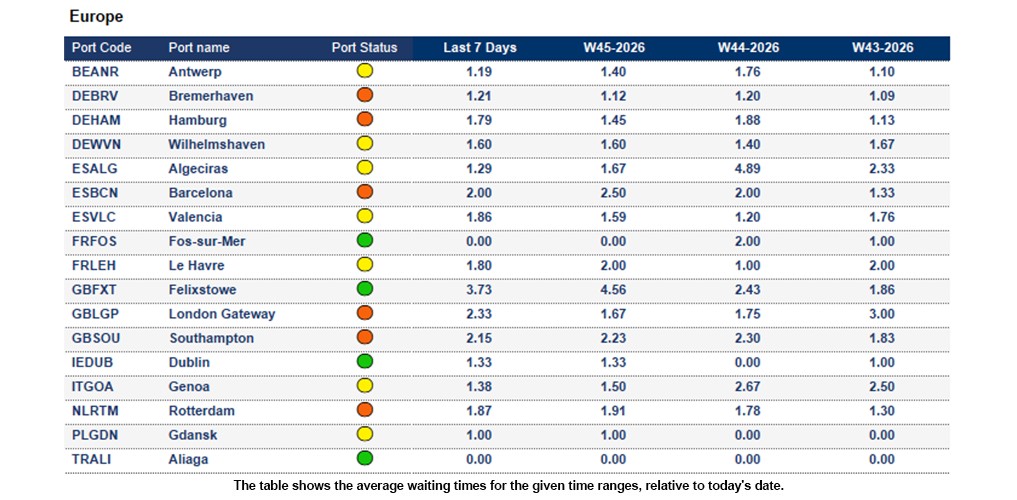
Antwerp: The 7-day average vessel waiting time is around 1.19 days. PSA 869 and 913 report yard occupancy of 67% and 80% respectively. Operational backlogs remain following recent storm and fog disruption, while continued shortages of sea and river pilots are placing significant pressure on vessel line-ups and recovery efforts.
France
Le Havre: The 7-day average vessel waiting time is around 1.8 days. Yard occupancy is around 60%, with reefers at 55%. Terminal operations resumed on 6 November following the 24-hour national dockers’ strike. A subsequent Boluda tug strike from 6–7 November affected vessel departures.
Germany
Bremerhaven: The 7-day average vessel waiting time is around 1.21 days. NTB yard occupancy has reached 93%, with capacity increasingly constrained, particularly for IMO and OOG cargo. Earlier vessel loading and faster container collections are encouraged to relieve pressure. Manila Maersk is expected to discharge approximately 280 boxes originally destined for Wilhelmshaven.
Hamburg: The 7-day average vessel waiting time is around 1.79 days. CTA yard occupancy stands at 71%, with operations slowed by electrical upgrades and crane maintenance, while efforts continue to increase empty container discharge. CTH occupancy is higher at 90%, with delayed arrivals and additional imports adding pressure. Berth N2 maintenance in CW47 will further restrict berthing flexibility.
Wilhelmshaven: The 7-day average vessel waiting time is around 1.6 days. CTW yard density has eased to 85% and is no longer limiting operations. However, the 4 November river closure caused around 2,400 lost moves and the resulting backlog remains unresolved. Recovery measures include cargo diversions, empty cuts and vessel rescheduling, with another river closure expected next week.
Netherlands
Rotterdam: The 7-day average vessel waiting time is around 1.87 days. ECT remains under significant pressure at 94% yard occupancy, with critical reefer plug availability, barge and feeder delays of up to 48 hours and one Gemini berth crane unavailable. MVII is averaging 80% occupancy with only minor delays, while Delta II remains stable at 26% with operations under control.
Spain
A nationwide 24-hour general strike is planned for 11 November, with potential disruption to freight transport. Rail freight will operate at a minimum service level of 26%, while no equivalent protection applies to road freight. The extent of truck disruption remains uncertain, with possible impacts on domestic and international cargo movements. Read more here
Barcelona: The 7-day average vessel waiting time is around 2.0 days. Elevated utilisation linked to network realignments and vessel schedule unreliability continue.
Valencia: The 7-day average vessel waiting time is around 1.86 days. Due to ongoing congestion at APM Terminals Valencia, the export container acceptance window has been temporarily reduced from 14 to 9 days before the vessel’s ETA. The restriction is effective immediately and will remain in place until further notice.
Turkey
Istanbul: The 7-day average vessel waiting time is around 1 day. High import/export volumes and periodic trucking congestion are affecting cargo evacuation.
Izmir: The 7-day average vessel waiting time is around 2.0 days. Conditions remain challenging due to inland truck capacity constraints.
United Kingdom
London Gateway Port: The 7-day average vessel waiting time is around 2.33 days. Yard occupancy stands at 81% for dry containers, peaking at 90%, while reefer occupancy is 43%. Empty returns and exports are being restricted to support import evacuation. Vessel delays, congestion, weather disruption and berth restrictions continue to affect the lineup, while minor TOS issues persist.
Southampton: The 7-day average vessel waiting time is around 2.15 days. Dry yard occupancy remains high at 76%, with reefers at 65%, driven by an imbalance of empties and exports. Tug and pilot shortages have required berth and vessel rotation adjustments. Labour has normalised at 9–10 gangs, with the berth schedule expected to recover following reduced yard density.
Indian Subcontinent/Middle East
India
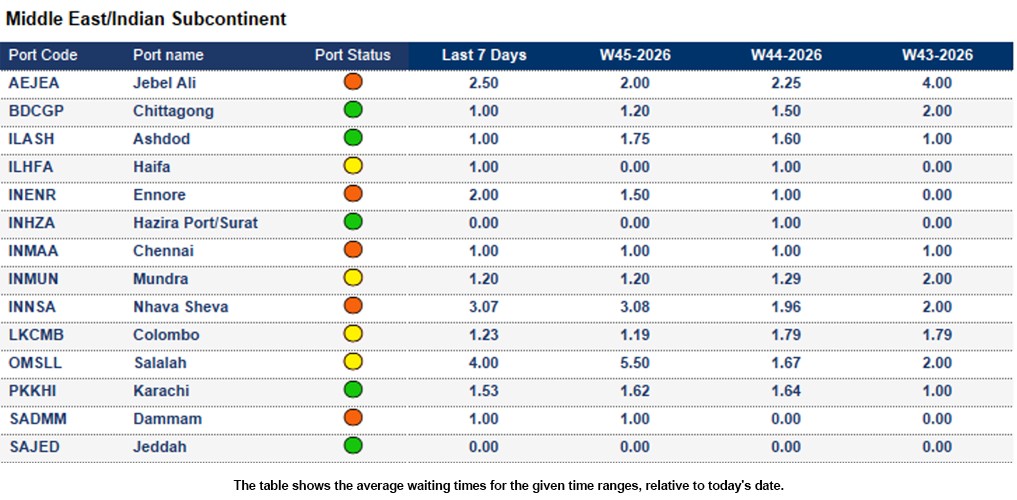
Chennai: The 7-day average vessel waiting time is around 1 day. Moderate congestion persists alongside exposure to disruption at Colombo and peak-period road congestion.
Nhava Sheva: The 7-day average vessel waiting time is around 3.07 days. Strong exports are pressuring gates and yards, while road and rail interfaces remain key constraints. Vessel delays and container dwell times remain above normal levels.
Sri Lanka
Colombo: The 7-day average vessel waiting time is around 1.23 days. Persistent transshipment congestion continues to cause missed feeder connections, vessel omissions and cargo rollovers.
North America
Canada
Average rail dwell time
- Halifax: 5
- Montreal: 6
- Prince Rupert: 9
- Saint John: 7
- Vancouver: 6
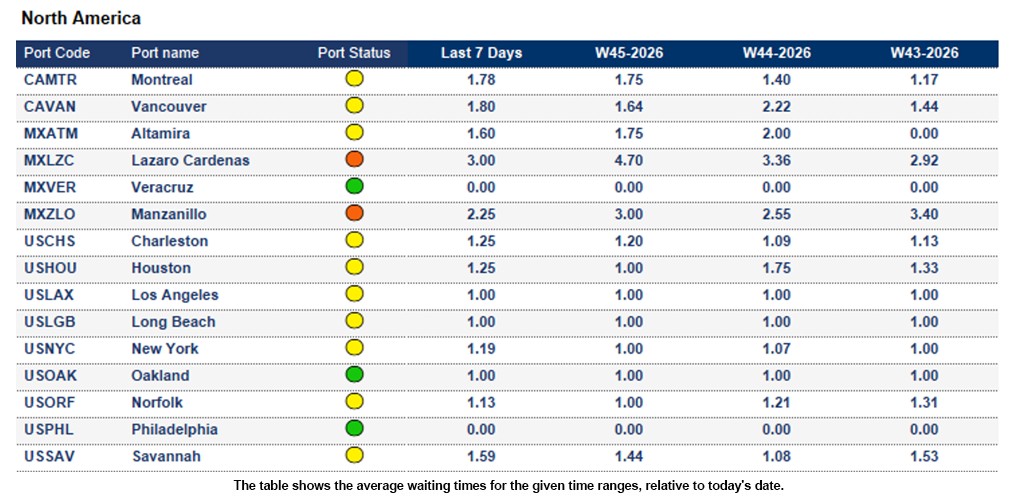
Montreal: The 7-day average vessel waiting time is around 1.78 days. Moderate congestion persists, with inland performance remaining a key consideration.
Vancouver: The 7-day average vessel waiting time is around 1.8 days. Rail capacity constraints and pressure on inland terminal fluidity are the main issues.
Mexico
Lazaro Cardenas: The 7-day average vessel waiting time is around 3.0 days. Performance remains mixed between terminals. LC Terminal T2 is experiencing declining productivity, while APM Terminals Lázaro Cárdenas continues to show strong operational improvement.
Manzanillo: The 7-day average vessel waiting time is around 2.25 days. Cargo backlogs from recent hurricane disruption continue, with vessel bunching, yard pressure and customs/landside operations working through accumulated volumes.
United States
Average rail dwell times:
- Halifax - 3 days
- Montreal - 5 days
- Prince Rupert - 6 days
- Saint-John - 8 days
- Vancouver - 5 days
- Baltimore - 6 days
- Charleston - 3 days
- Newark - 4 days
- Houston - 6 days
- Wilmington - 10 days
- Jacksonville - 8 days
- Los Angeles - 10 days
- Long Beach - 11 days
- Miami - 13 days
- Mobile - 2 days
- New York - 4 days
- New Orleans - 3 days
- Oakland - 7 days
- Norfolk - 4 days
- Port Everglades - 7 days
- Philadelphia - 3 days
- Savannah - 2 days
- Seattle - 5 days
- Tacoma - 6 days
BNSF operations continue to recover following severe flooding in New Mexico and Arizona. Main routes on the Gallup and El Paso Subdivisions have reopened and the El Paso embargo has been lifted. Additional resources are clearing the remaining backlog, although some Southern Transcon lanes may experience extended transit times into next week. Read more here
Los Angeles/Long Beach: The contract deadline for around 250 port security workers has been extended to 20 November, allowing operations to continue. A strike remains possible if no agreement is reached and could disrupt several terminals, as other ILWU port workers may support the action. Negotiations remain ongoing with federal mediation. Read more here
South America
Brazil
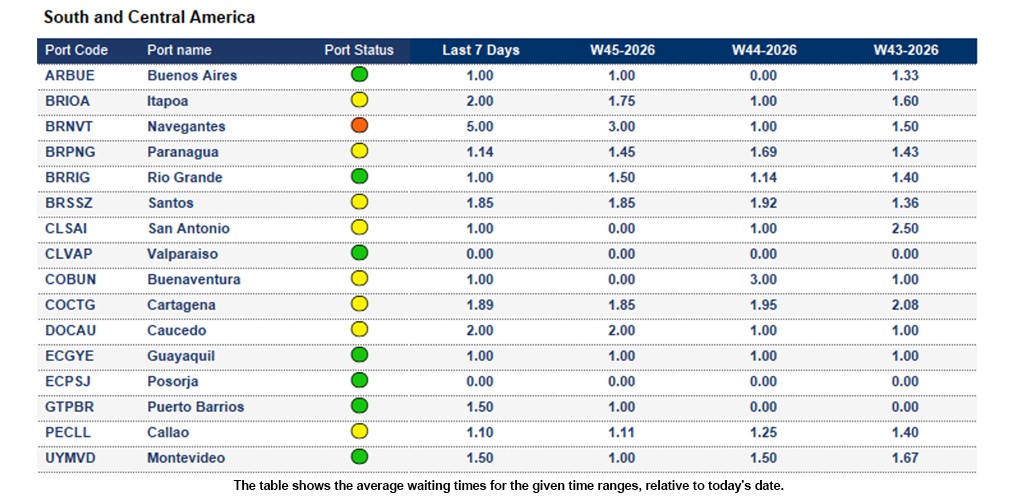
Itapoa: The 7-day average vessel waiting time is around 2.0 days. The yard is currently operating at 72% capacity. The berth window at Itapoa is fully occupied, leaving no gaps between scheduled services. Vessels that arrive within their assigned berth window experience minimal waiting time, while those arriving outside the window may face significantly longer delays.
Santos: The 7-day average vessel waiting time is around 1.85 days. Strong agricultural and commodity exports are supporting high throughput, while vessel schedules remain vulnerable to wider network disruption.
Chile
Demonstrations and traffic restrictions are affecting key transport routes across northern, central and southern Chile. Disruptions have been reported on Route 5 North near Pozo Almonte, Route 68 towards the coast, and Route 5 South, with potential impacts on truck movements. Access to the Port of Iquique and nearby container depots may also be affected. Delays in container pickups and deliveries, longer transit times and adjustments to dispatch schedules are possible. Read more here