RUSSIA’S rapidly improving ability to attack merchant ships across the western Black Sea is pushing the shipping conflict into a more dangerous phase, with some owners now seeking to refuse charterers’ orders to call at Romanian and Bulgarian ports.
Merchant vessels that only weeks ago were emerging from the Black Sea draped in anti-drone nets, improvised cages and water-filled containers are now appearing with burnt accommodation blocks and extensive strike damage.
The deterioration is already beginning to test the contractual limits of commercial shipping in the region.
Two analysts have separately told Lloyd’s List, speaking off the record, that they have been approached regarding potential charterparty disputes involving owners seeking to refuse charterers’ orders to call at ports in Romania and Bulgaria.
The approaches are an important indication of how far perceptions of Black Sea risk have shifted. Until recently, Romanian and Bulgarian waters offered a relative refuge from the highest-risk areas around Ukraine and Russia. The latest attacks are challenging that distinction and raising questions over whether owners can be required to proceed under existing charterparty terms.
The change reflects a significant escalation in both the capability and geographical reach of the maritime war.
Russia demonstrated during October that it could deploy increasingly destructive weapons, including uncrewed surface vessels, against Ukraine-serving shipping across the western Black Sea, while conducting attacks within or close to the territorial waters of Nato states.
Further escalation is considered likely in the short term, according to security analysts, despite incentives on both sides eventually to de-escalate as disruption threatens global food supplies, and risks alienating allies and neutral countries.
Concerns over the expanding threat are now being raised formally by European and Nato governments.
An IMO submission dated October 2 was backed by 35 governments and the European Commission, including Black Sea states Bulgaria, Romania and Georgia, alongside the UK, France, Germany, Italy, Poland and most EU members. It describes the attacks as a “sustained and expanding pattern” threatening commercial navigation serving Ukraine.
The document warns that the frequency and geographic spread of attacks risks making Ukraine’s maritime corridor effectively unavailable to shipowners, charterers, insurers and masters without any formal closure.
That concern is particularly acute for Romania and Bulgaria as the violence moves progressively westwards.
The submission said an attack had already been reported in Romania’s contiguous zone by July, while the threat subsequently extended to navigation on the Danube. Its sponsors warned the danger had spread from port facilities and anchorages to maritime routes and vessels under way.
The governments have asked the IMO council to condemn Russian attacks, reaffirm freedom of navigation in the Black Sea and call for coordinated action by member states. While that amounts to little more than an extension of existing diplomatic efforts, they also want neighbouring countries to strengthen contingency transit arrangements and port capacity, including through the EU-Ukraine Solidarity Lanes.
The October 28 sinking of Contship Jet (IMO: 9348625) could mark a further expansion of the threat.
Three naval drones struck and sank the boxship off Bulgaria while it was sailing towards Romania and then Bulgaria, without a planned Ukrainian port call. Moscow did not claim responsibility.
Analysts caution that the incident does not necessarily indicate Russia is preparing to target general commercial shipping serving Romania, Bulgaria or Türkiye.
But the incident raises the possibility of an expanding target profile encompassing vessels Moscow assesses to be carrying military equipment bound for Ukraine through neighbouring states, even where those ships do not call at Ukrainian ports.
Such vessels face a very high risk of attack, analysts assess, while Russia’s demonstrated ability to strike targets close to Nato coastlines means all Black Sea voyages increasingly require vessel and voyage-specific assessments.
For owners and charterers, that uncertainty is significant.
The emerging charterparty disputes suggest the industry’s response is moving beyond higher premiums and additional security measures towards a more fundamental question: whether owners consider orders to some western Black Sea ports safe enough to comply with at all.
That represents a notable extension of the commercial fallout. Major international operators had largely withdrawn services before the latest escalation.
Maersk suspended Chornomorsk services in July and diverted vessels to Romania, while Hapag-Lloyd feeder operators subsequently suspended Ukrainian Black Sea calls. MSC later suspended new bookings to and from Novorossiysk after one of its ships was hit by a drone.
Turkish operator Akkon Lines stopped calling at Russian ports after one of its containerships was struck in August.
Arkas has gone further. When Lloyd’s List visited the Turkish operator in Izmir, its risk analysis specialist said the company was no longer sending vessels into the Black Sea beyond Turkish waters.
The autumn escalation has deepened that wider retreat, even where companies have stopped short of publicly announcing withdrawals.
The deteriorating security environment is simultaneously being documented at the IMO by both sides.
A fresh Ukrainian communication circulated to IMO members on November 2 describes increasing violence directed towards merchant shipping, and argues that attacks are intended to intimidate seafarers, owners, charterers and insurers away from commercial routes.
Russia’s October 27 submission presents the worsening security picture from the opposite perspective.
Moscow accuses Ukraine of deliberately escalating the maritime conflict and systematically attacking civilian merchant ships carrying oil, grain and other commercial cargoes to and from Russian ports. It cites the August 1 sinking of Russian-flagged containership Yanina (IMO: 9301304) and has asked the IMO council to condemn Ukrainian attacks on civilian shipping.
The competing submissions nevertheless point towards the same conclusion for shipping: commercial vessels are becoming increasingly central to the Black Sea battlefield.
Only two months ago, Lloyd’s List documented at least 15 tankers transiting the Bosporus with improvised anti-drone protection.
Vessels were emerging draped in netting, with cages, tyres and even water-filled containers positioned around accommodation blocks and other vulnerable areas.
Security analysts cautioned at the time that such measures might provide some protection against small drones, but would offer little defence against larger one-way attack drones, missiles or uncrewed surface vessels carrying substantially heavier explosive payloads.
Those limitations are now increasingly evident.
The October 2 IMO submission said attacks had already resulted in cancelled or delayed voyages, higher insurance and freight costs, restrictive contractual terms and reduced willingness to use Ukraine’s maritime corridor.
Its sponsors also stressed the implications beyond shipping, arguing that disruption of Ukraine’s maritime exports poses a wider threat to food supply chains.
There is now an uncomfortable symmetry in the warnings being delivered to the IMO.
Kyiv says Russian attacks are systematically making its maritime corridor unsafe and driving commercial shipping away. Moscow says Ukrainian attacks against merchant vessels serving Russian trade are producing broadly the same threat to freedom of navigation.
For shipping, the distinction is becoming increasingly academic.
The geographical boundaries that previously helped owners price and manage Black Sea exposure are becoming less reliable as attacks move away from Ukrainian ports, and closer to the coastlines and territorial waters of Nato members.
What began with mines, port strikes and navigation interference has evolved through drone cages and improvised vessel hardening into direct attacks capable of sinking merchant ships and killing crews.
The fact that owners are now considering whether they can legally refuse orders even to Romanian and Bulgarian ports shows how dramatically that risk calculation has changed.
The Black Sea shipping war is no longer primarily about whether additional risk can be priced through insurance, absorbed through higher freight rates or mitigated with physical protection.
It is increasingly about whether owners, charterers and crews are prepared to accept the risk at all.
Black Sea shipping war escalates as owners challenge Romania and Bulgaria calls
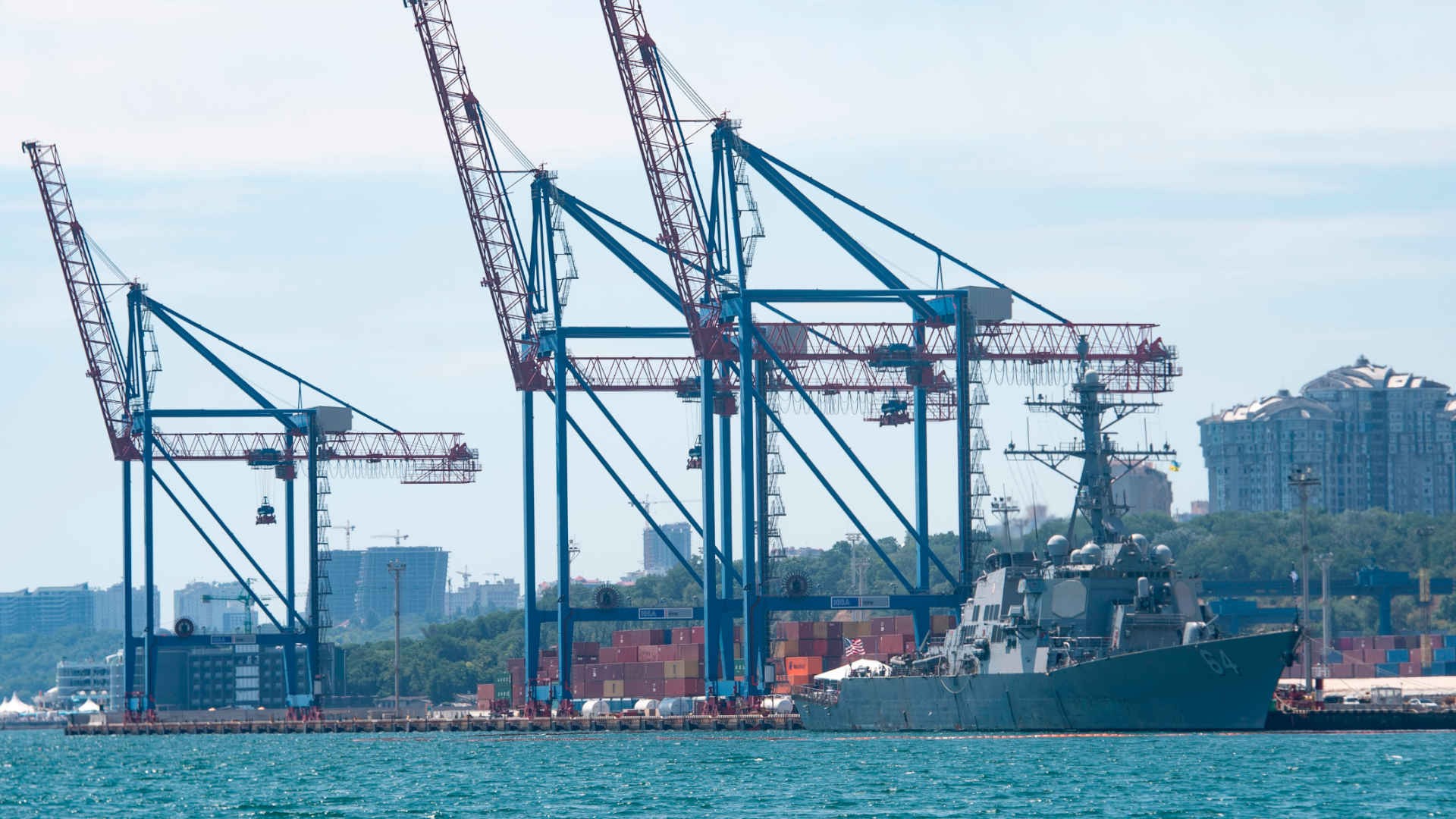
Black Sea attacks are escalating and spreading closer to Nato coastlines. Owners are challenging orders to call at Romanian and Bulgarian ports.

Source: Lloyd's List

Related articles
Sea newsPort operational updates from around the world (27 Oct - 3 Nov 2026)
Sea newsHMM Platinum continues firefighting efforts, seeks refuge in South Africa
Sea newsChina port congestion forces carrier schedule changes as vessel delays mount

Sea newsDecreasing Rhine water levels and rail challenges tighten transport capacity in Europe
Sea newsLow water levels drive fresh carrier measures for Montreal services

Sea newsStrait of Hormuz – Situation update 28 July