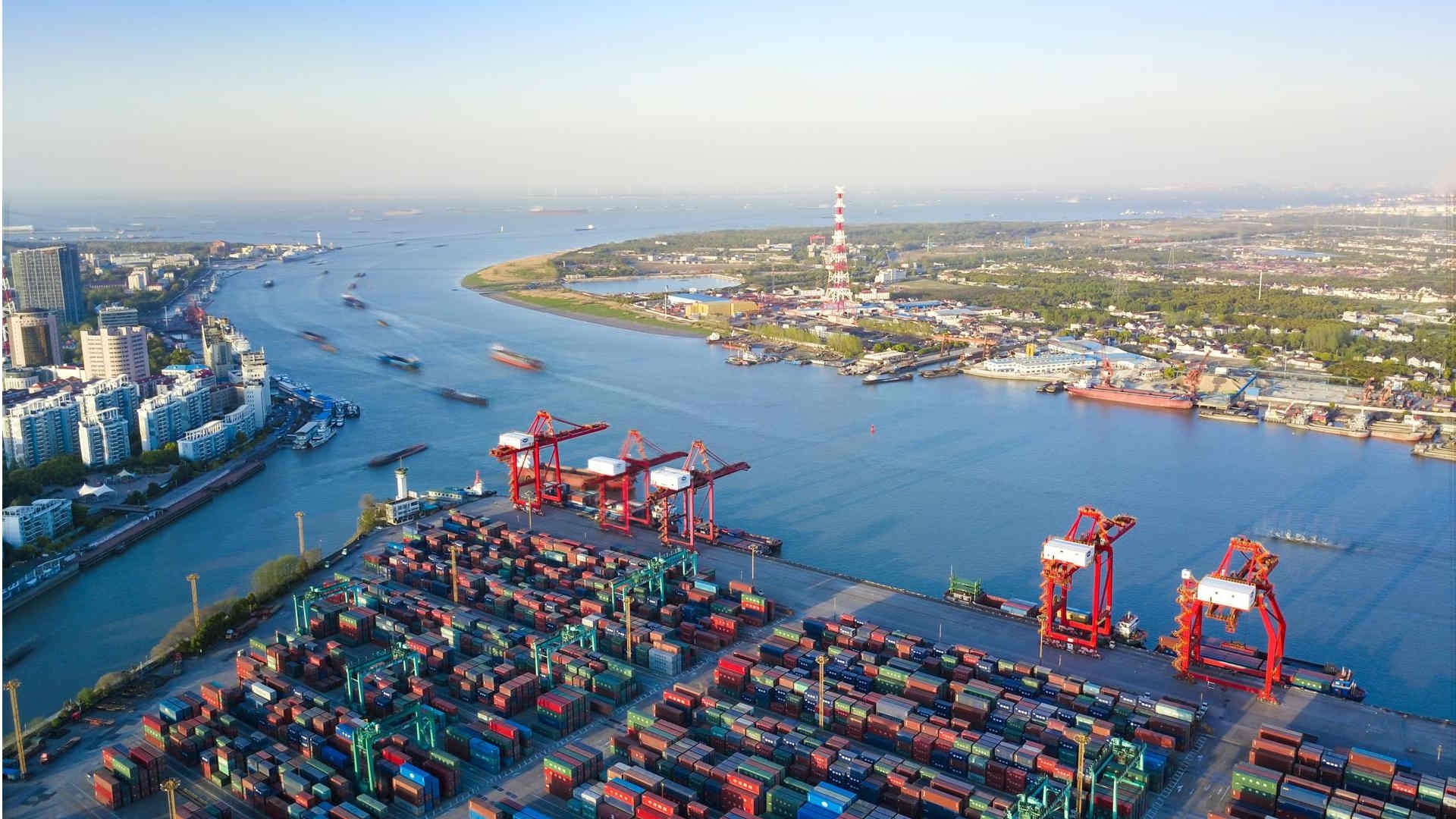

Congestion remains severe at Ningbo and Shanghai following further operational disruption caused by the cascading effect of multiple typhoons in the past month, the latest being Typhoon Saudel.
On 1 September, Ningbo’s seven-day average vessel waiting time stood at about 3.45 days, while Shanghai’s reached approximately 5.21 days. Yard occupancy at Ningbo was between 92% and 95%. Vessel bunching, berth delays and pressure on trucking continued to affect the port.
Conditions reported on 3 September showed longer waits at individual terminals.
According to CNC Line, Ningbo’s MSICT recorded average delays of five to six days, although vessels longer than 366 metres were waiting three to four days. Waiting times exceeded nine days at Shanghai's WGQ2 and WGQ5 terminals after reopening, while delays at YS12 surpassed seven days.
In addition, tight barge availability meant vessels arriving with high inter-terminal transfer volumes would receive lower berthing priority.
Typhoon closures deepen operational pressure
Typhoon Saudel, which made landfall in the region around 26 August, severely disrupted terminal operations at Ningbo and Shanghai.
Ningbo was reportedly closed for 78 hours during the seven days preceding the 3 September update because of the typhoon and the impact of fishing boats. In Shanghai, YS closed for 54 hours and WGQ for 48 hours for the same reasons.
The closures added to existing operational pressure. Ningbo continued to face high yard density, vessel bunching and elevated berth waiting times.
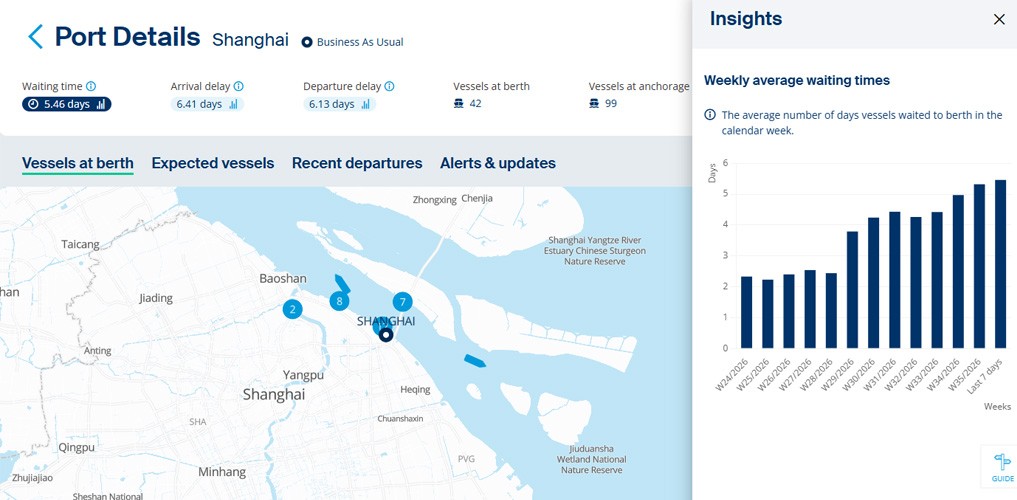
According to Seaexplorer data from 4 September, congestion at Shanghai remains elevated, with an average vessel waiting time of 5.46 days, alongside 6.41 days of arrival delay and 6.13 days of departure delay.
The port currently has 42 vessels at berth and 99 vessels at anchorage, highlighting the scale of the backlog.
The trend has steadily worsened over recent weeks, with average waiting times rising from around 2.3 days in week 24 to more than 5.4 days over the last seven days, indicating sustained pressure on terminal operations following the recent typhoon-related disruptions.
Carriers adjust schedules and port calls
Carriers have responded by omitting affected Chinese ports and changing individual vessel schedules.
According to the Journal of Commerce, OOCL’s containership OOCL Lilac skipped Shanghai during its current voyage and travelled west through the Indian Ocean. The change was intended to enable the vessel to complete a transit of almost 30 days and reach the Port of New York and New Jersey by the end of September.
CMA CGM also changed the current voyage of the CMA CGM Leo, which departed Shanghai on Monday. The vessel was scheduled to make a one-off passage through the Suez Canal and arrive at Norfolk by 1 October, within roughly 30 days.
The situation prompted Ningbo terminals to introduce additional controls. Shipping lines were asked to keep the rolling ratio for local exports below 10% and maintain an average international transhipment dwell time of less than seven days.
Hapag-Lloyd chief sees a structural problem
During an update call on Tuesday, Rolf Habben-Jansen, chief executive of Hapag-Lloyd, said he expects congestion to remain a feature of major ports for at least several years.
If we look at the amount of disruption that we see and also the congestion that we see in a number of ports, quite a bit of that seems to be fairly structural
Chief Executive Officer, Hapag-Lloyd
Habben-Jansen noted that cargo flows had been expected to expand by 3% to 4% annually, while China’s export volumes had grown by 10%, 6% and 7% over successive years.
Sea-Intelligence estimates impact of delay globally
In a new analysis, Sea-Intelligence reported on 30 August that worsening port congestion globally had made 6.6% of the fleet unavailable.
The firm estimated that returning to the low recorded in June 2025 would take between four and a half and six months. Reaching the position seen at the end of 2025 would require between two and three and a half months.
Its assessment was based on previous congestion cycles, which showed monthly improvements of between 0.5 and 0.6 percentage points.
Sea-Intelligence described typhoon-related operational disruption in Asia as seasonal and temporary, while also noting carriers’ argument that structural shortages, particularly in port hinterland capacity, could make part of the congestion permanent.