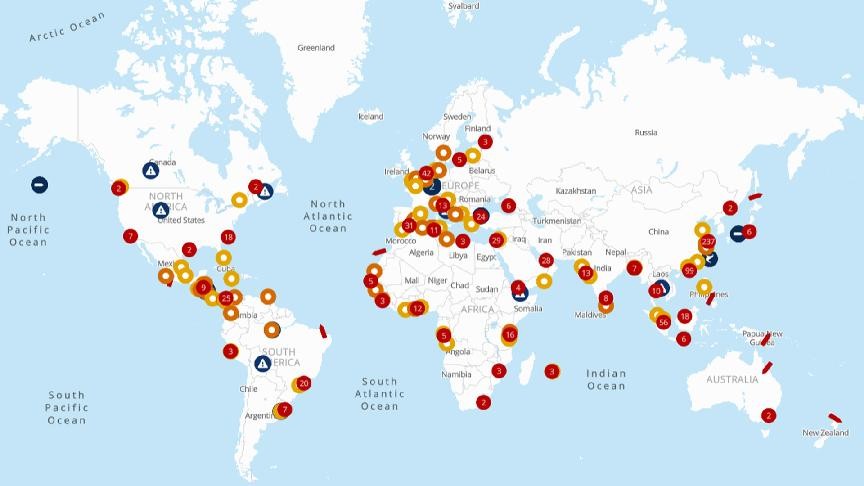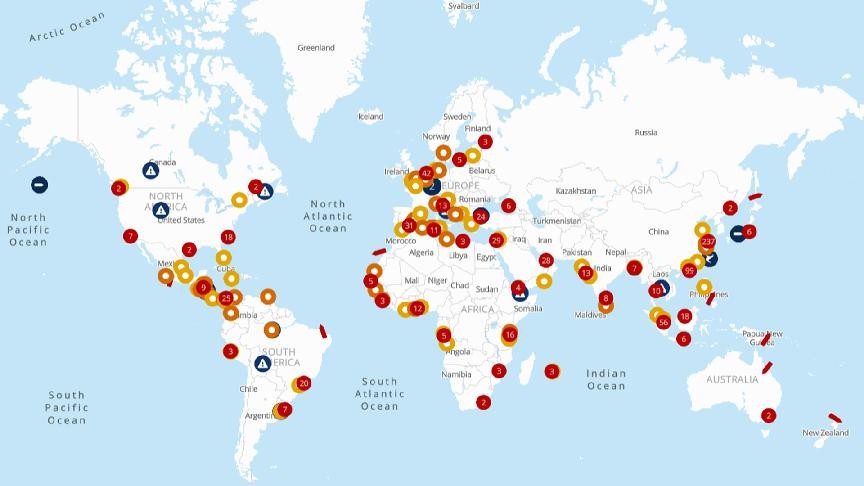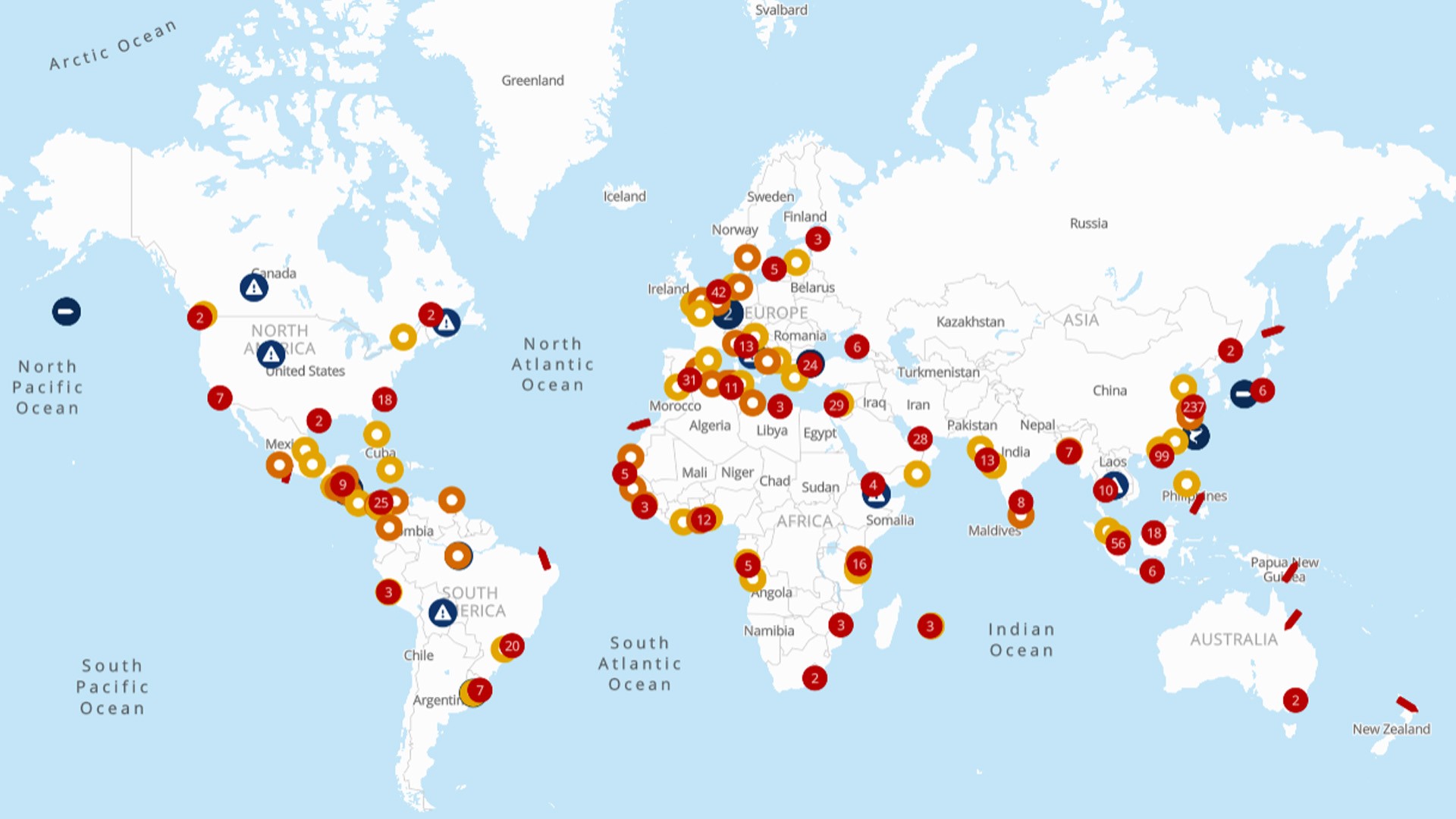

- Stay ahead of supply chain disruptions and port congestion with Kuehne+Nagel’s weekly port operational update.
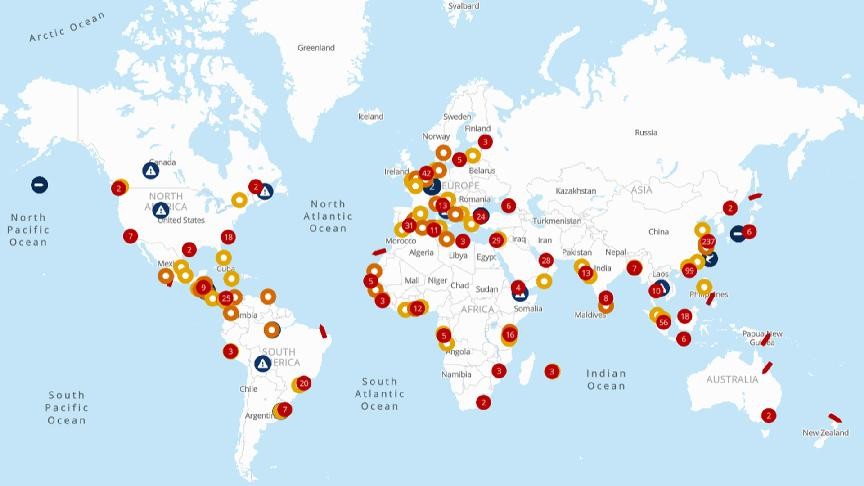
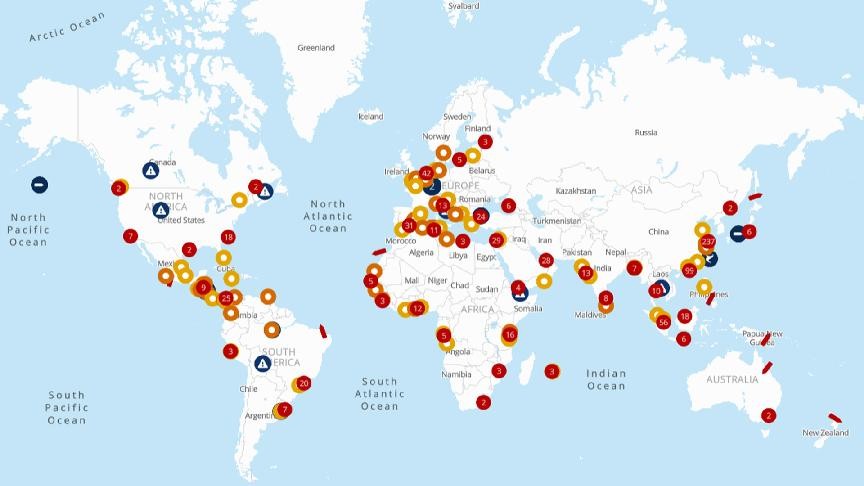
- Find out the latest vessel waiting times and status of ports in Africa, Asia Oceania, Europe, Middle East-Indian Subcontinent, North America, and South and Central America.
Africa
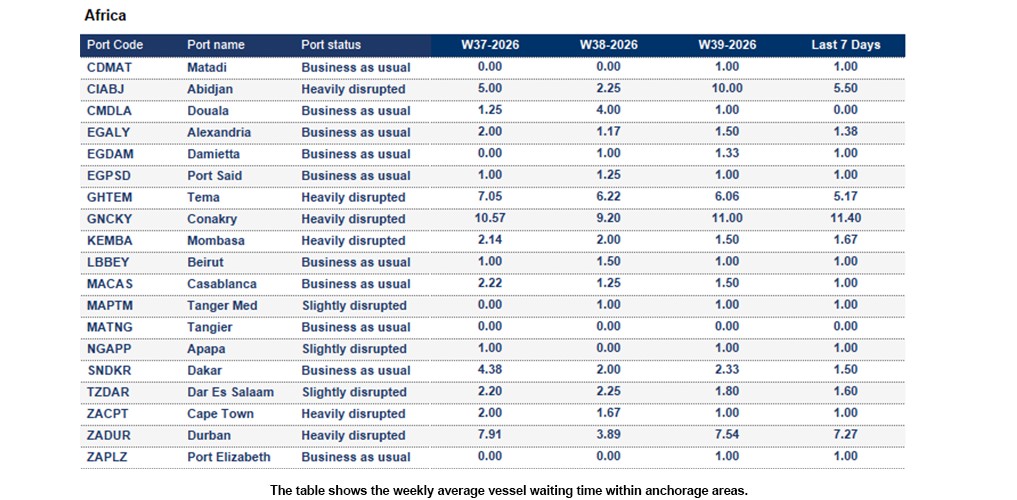
Mauritius
Port Louis: The 7-day average vessel waiting time is around 2.0 days. Strong winds, high swells and rising transhipment volumes continue to pressure operations. Although delays remain limited, increasing throughput is pushing the port closer to long-term capacity limits and causing periodic truck queues.
Morocco
Tanger Med: The 7-day average vessel waiting time is around 1 day. Vessel operations remain largely stable. Recent strong winds caused container stack disruption within the yard, with clean-up operations currently underway.
Asia Oceania
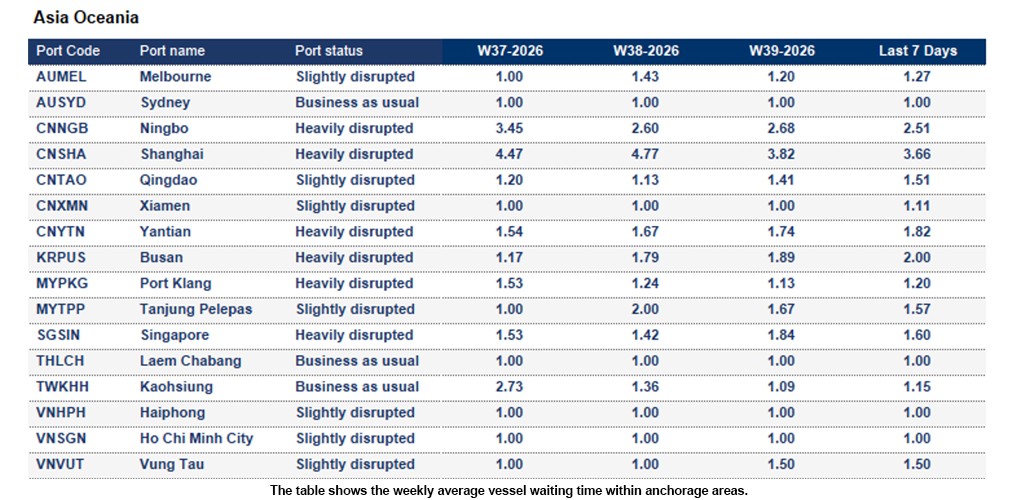
China
Ningbo: The 7-day average vessel waiting time is around 2.51 days. Ningbo continues to experience high yard density ahead of Golden Week, significantly impacting terminal productivity. Average waiting times at MSICT have reached around four days, while maintenance dredging has reduced berth availability through the temporary closure of one berth for two months. Conditions are expected to improve gradually during the holiday period.
Shanghai: The 7-day average vessel waiting time is around 3.66 days. Shanghai terminal congestion remains elevated, with waiting times of approximately four to seven days depending on the terminal. High yard density and strong cargo volumes continue to impact operations, particularly at YGS12. Minor improvements are anticipated from next week as Golden Week reduces overall port activity.
Shekou: The 7-day average vessel waiting time is around 1.44 days. Shekou is experiencing high yard density, with pure discharge vessels facing increased berth delays. Congestion levels are expected to persist until the commencement of the Golden Week holiday period.
Yantian: The 7-day average vessel waiting time is around 1.83 days. Yantian remains heavily congested, with gate-in restrictions still in force. Large vessels continue to experience berth waiting times of three to four days, while smaller vessels face delays of 1.5 to 2 days. Congestion is expected to remain until the Golden Week holiday period.
Hong Kong
Hong Kong: The 7-day average vessel waiting time is around 1.17 days. Congestion has eased as backlog cargo and vessels are cleared. However, terminal yard utilisation remains high at 80-85%, continuing to affect overall operational efficiency
Japan
Yokohama: The 7-day average vessel waiting time is around 1.2 days. Yokohama is recovering from Typhoon Dujuan-related disruptions and consecutive public holidays. The port was closed for 45 hours, resulting in yard density rising to around 90% and vessel waiting times reaching 1.5 to 2 days. Operational recovery is ongoing.
Malaysia
Port Klang: The 7-day average vessel waiting time is around 1.2 days. Port Klang continues to operate with high yard utilisation of 85-90%. Emergency dredging works have reduced berth availability through the temporary loss of a deep-water berth, limiting flexibility for larger vessels until the expected completion on 1 October.
Tanjung Pelepas: The 7-day average vessel waiting time is around 1.57 days. Terminal operations have largely recovered from the previous cybersecurity incident. However, berth congestion persists. Overall operational performance continues to improve.
Philippines
Manila: The 7-day average vessel waiting time is around 3.42 days. Congestion remains evident across both Manila North and Manila South terminals. Manila South is experiencing the greatest pressure. Operational conditions remain challenging.
Singapore
Singapore: The 7-day average vessel waiting time is around 1.6 days. Strong carrier demand ahead of Golden Week and accumulated roll pools have increased congestion across PSA terminals. Elevated operational pressure expected to continue into Week 40.
South Korea
Busan: The 7-day average vessel waiting time is around 2.0 days. Busan remains congested, with yard density at BNCT reaching 85%. A one-day port closure for Chuseok is expected to further increase operational pressure, with vessel waiting times forecast to rise during Week 40.
Thailand:
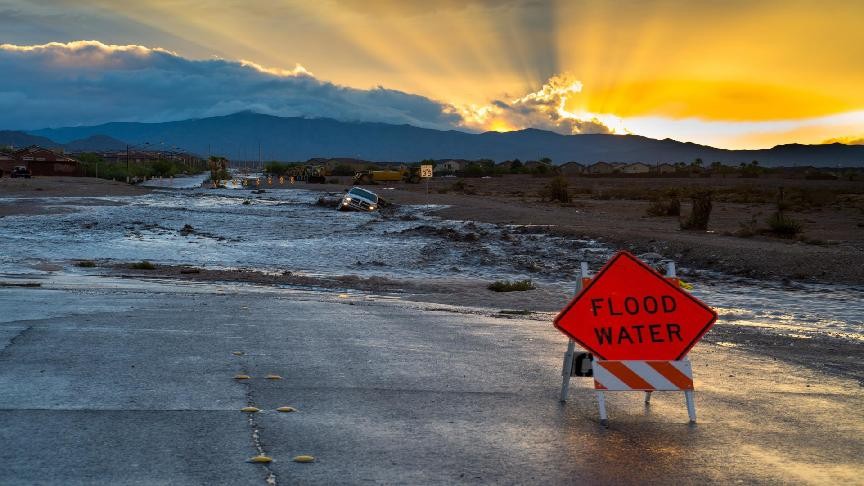
Severe flooding across Bangkok, particularly in the eastern districts of Lat Krabang, Prawet and Bang Kapi, is causing significant disruption to inland transport operations. Flooding of up to 60 cm has impacted road access, container movements and rail connectivity between ICD Lat Krabang and Laem Chabang Port. Extended pickup, delivery, gate-in and container return times should be expected, while further thunderstorms may lead to additional operational delays. Read more here
Europe
Belgium
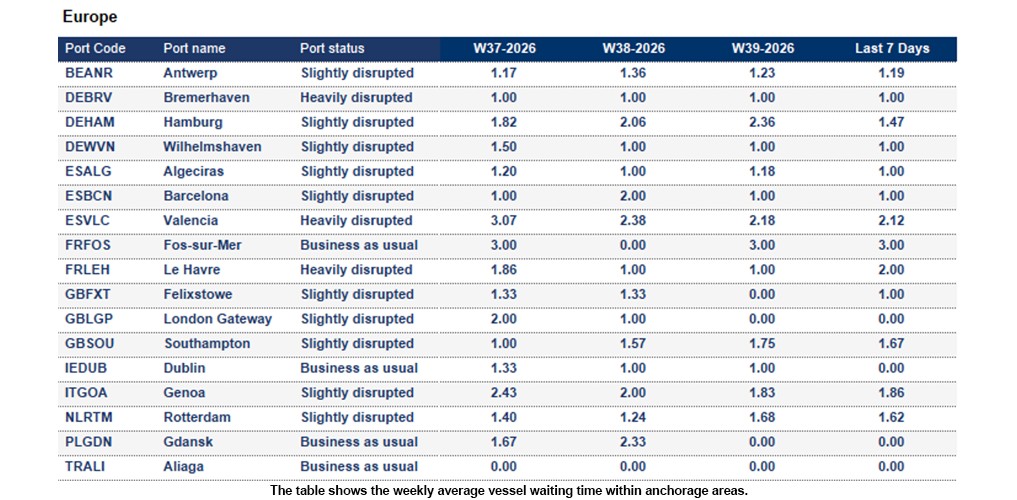
Antwerp: The 7-day average vessel waiting time is around 1.22 days. Antwerp continues to operate under mixed yard utilisation levels, with Q913 experiencing very high occupancy and empty container density exceeding practical capacity levels. A crane track repair programme at Q913 commenced on 28 September and is expected to continue until 2 October, potentially creating localised operational constraints.
France
Le Havre: The 7-day average vessel waiting time is around 2.0 days. Yard occupancy remains low at around 50%, supporting stable operations. Labour availability has returned to normal following the end of school holidays, with only minor berth conflicts affecting isolated vessel calls.
Germany
Bremerhaven: The 7-day average vessel waiting time is around 1 day. Bremerhaven continues to experience high yard occupancy at 90%, with capacity constraints particularly affecting IMO and OOG cargo. Accelerated vessel loading and container collection might help ease pressure.
Hamburg: The 7-day average vessel waiting time is around 2.29 days. Hamburg terminals are operating under challenging but manageable conditions, with yard occupancy between 79% and 83%. Wind-related closures of the Elbe caused delayed vessel arrivals and disrupted the start of the weekly line-up, while isolated crane breakdowns created further operational pressure. Despite these challenges, vessel schedules have largely been protected.
Italy
Genoa: The 7-day average vessel waiting time is around 1.86 days. Delays reaching up to 5 days continue as rising import volumes, trucking constraints and limited rail capacity pressure terminal operations. Port terminals announced that operations were suspended on 28 September due to a nationwide maritime employees' strike.
Netherlands
Rotterdam: The 7-day average vessel waiting time is around 1.68 days. Rotterdam terminals show mixed yard utilisation, ranging from 22% at Delta II to 90% at MVII. Overall operations remain stable, with reefer capacity and deep-sea activities under control. Barge and feeder services continue to face delays of 24 to 48 hours, while selected vessels at ECT are expected to perform cut-and-run operations.
United Kingdom
London Gateway Port: The 7-day average vessel waiting time is around 1 day. Berth 4 is closed for the installation of new cranes and will reopen in phases from 4 October. A major terminal operating system upgrade is planned for 31 October and may affect operations.
Southampton: The 7-day average vessel waiting time is around 1.67 days. Southampton is operating with moderate yard occupancy and normal labour availability. Terminal capacity is being impacted by an extensive crane relocation and repair programme, including temporary berth closures and a seven-day shutdown of SCT5 from 4 October to facilitate the delivery of new cranes.
Indian Subcontinent and the Middle East
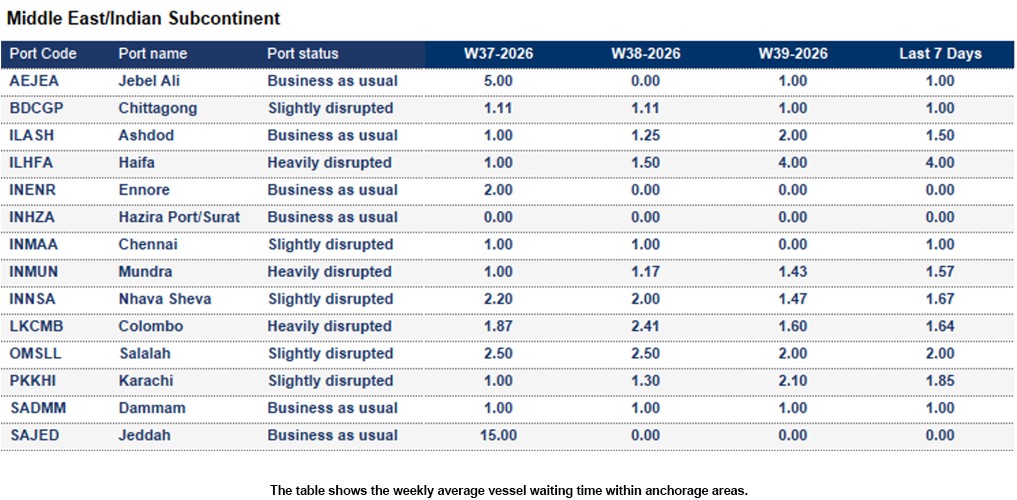
Middle East:
Diplomatic efforts to resolve the Strait of Hormuz crisis have intensified, with reports of a new Iranian proposal and broad international calls for the reopening of the waterway. While this offers cautious optimism, major liner operators continue to avoid direct transits, relying instead on alternative gateways such as Jeddah and Khor Fakkan, supported by feeder and inland networks. Cargo flows continue, but supply chains remain disrupted and costs elevated. Increased security measures in the Red Sea further highlight the region's ongoing operational uncertainty. Read more here
North America
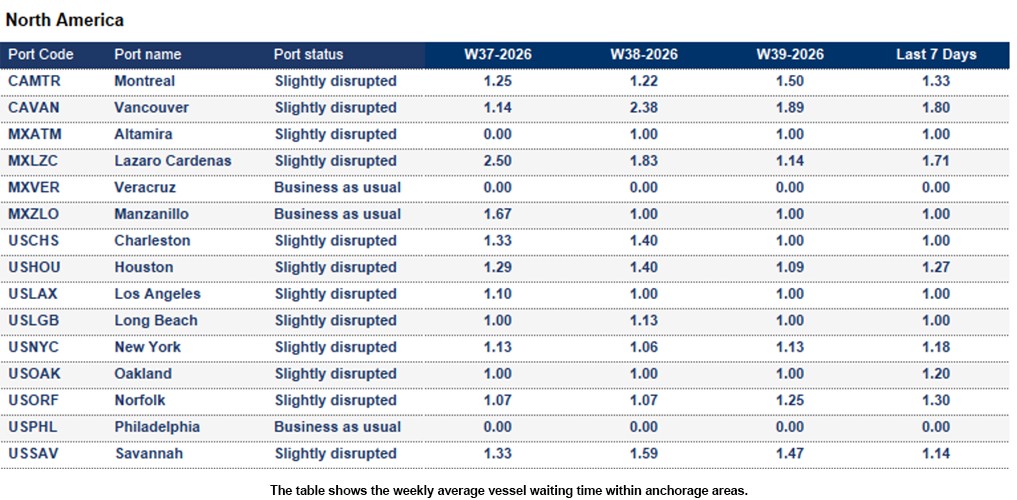
Canada
Average rail dwell times:
- Halifax: 4 days
- Montreal: 5 days
- Prince Rupert: 5 days
- Saint John: 6 days
- Vancouver: 5 days
Mexico
United States
Average rail dwell times:
- Halifax - 2 days
- Montreal - 6 days
- Prince Rupert - 5 days
- Saint-John - 8 days
- Vancouver - 5 days
- Baltimore - 6 days
- Charleston - 3 days
- Newark - 3 days
- Houston - 6 days
- Wilmington - 8 days
- Jacksonville - 9 days
- Los Angeles - 8 days
- Long Beach - 5 days
- Mobile - 2 days
- New York - 4 days
- New Orleans - 5 days
- Oakland - 4 days
- Norfolk - 3 days
- Philadelphia - 2 days
- Savannah - 2 days
- Seattle - 5 days
- Tacoma - 4 days
Central and South America
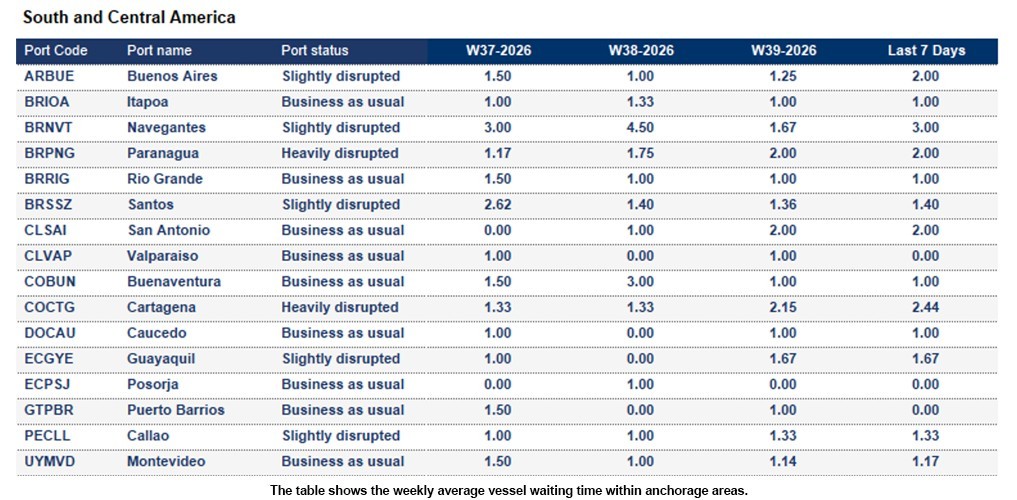
Argentina
Buenos Aires: The 7-day average vessel waiting time is around 2.0 days. Operations remain stable, although administrative processes may extend lead times.
Panama
Balboa: The 7-day average vessel waiting time is around 2.0 days.
How Kuehne+Nagel estimates port disruption statuses
Seaexplorer has four port statuses that are estimated based mainly on the 7-day average vessel waiting time. Other factors include yard congestion, labour strikes, natural disasters or intermodal disruptions. Slightly different rules are applied to major ports, or ports that are hubs in their region, as they are typically more efficient.
- Business as usual means the port is currently operating without any significant disruption.
- Slightly disrupted is used if the 7-day average vessel waiting time exceeds 2 days.
- Heavily disrupted is used if the 7-day average vessel waiting time exceeds 4 days.
- Port closed is used when the port suspends operations due to a major disruptive event.
How Kuehne+Nagel calculates the 7-day average vessel waiting time
Mainline container vessels may spend a certain number of days waiting at designated anchorage areas before their scheduled port call.
To calculate the 7-day average waiting time, we consider the waiting days of these vessels, excluding:
- Waiting times for feeder vessels,
- Idle ships without an announced next port,
- Slow steamers heading toward the anchorage, but not actively waiting within the designated area
- Vessels passing through the anchorage area without intending to call at the port.
Stay Ahead, Stay Informed: Register for seaexplorer for the latest disruptions and vessel waiting times at global container ports.