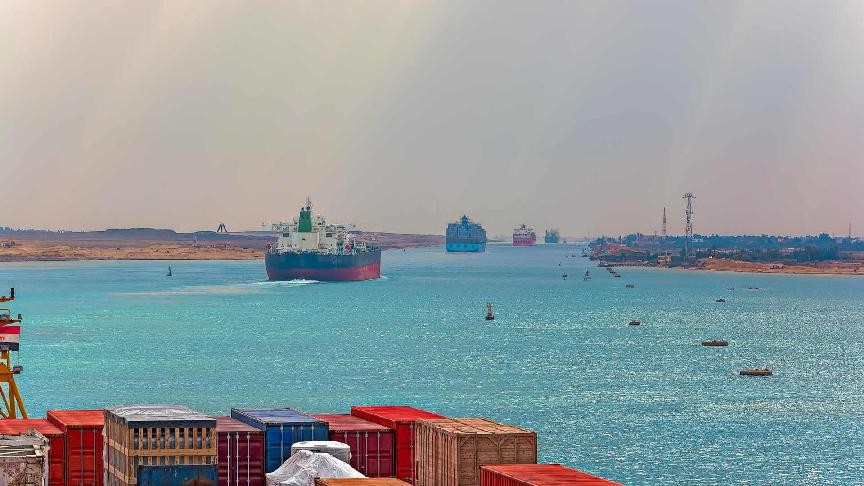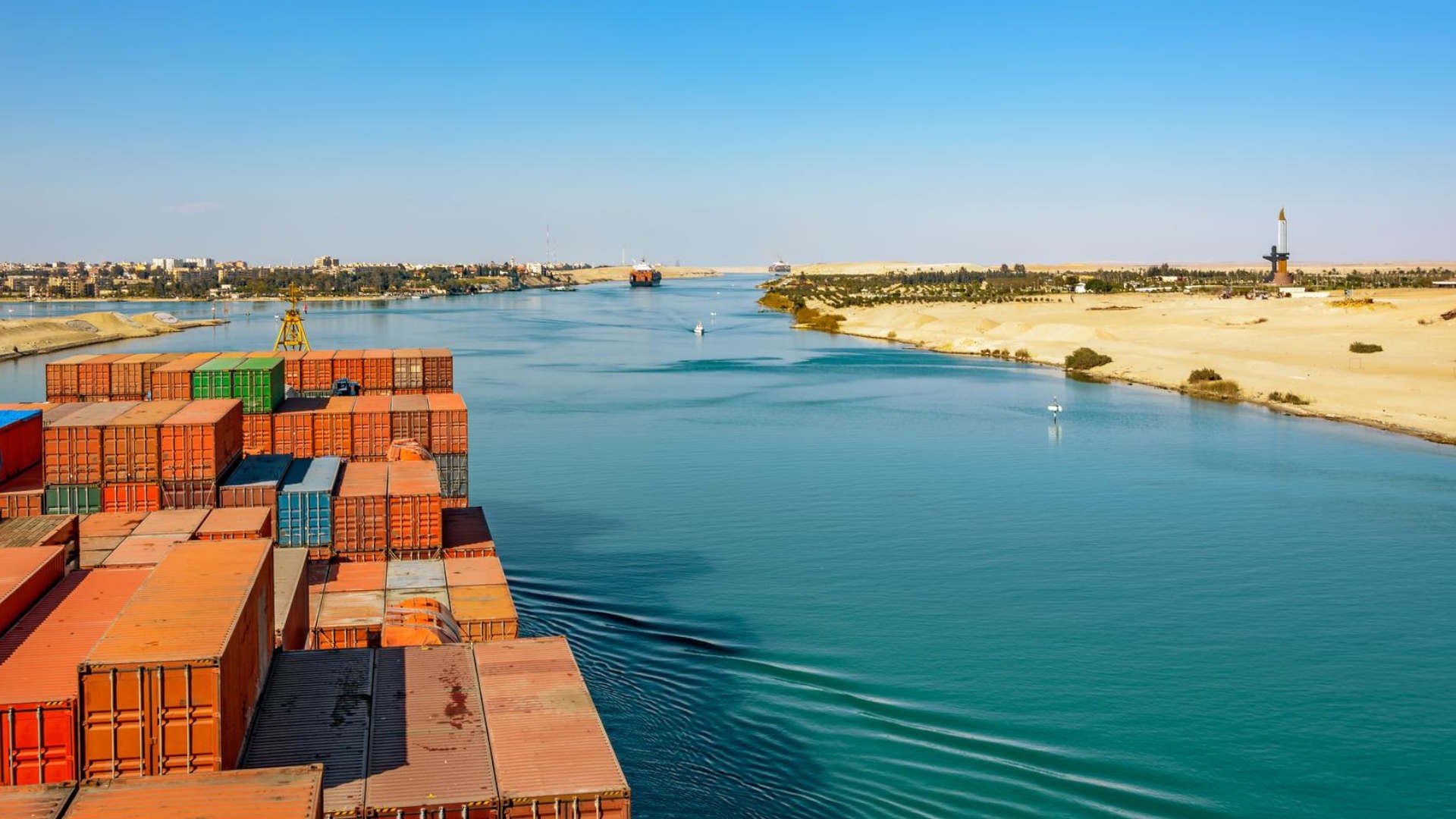

While Iran’s latest threat list adds a new compliance risk in the Strait of Hormuz, major container lines are cautiously increasing Suez and Red Sea transits to shorten voyages and reduce pressure from Cape of Good Hope diversions.
The security picture across the Middle East’s key maritime chokepoints remains complex. In the Strait of Hormuz, Iran has published a list of 46 “non-compliant” vessels (tankers, bulkers and gas carriers) that could face fines, detention or confiscation if they attempt future transits. According to Lloyd’s List, the move marks a shift from broad disruption towards a more targeted form of market pressure, as Tehran publicly identifies vessels it considers in breach of its rules and extends the risk to companies trading with them.
This escalation comes as ocean carriers are moving in the opposite direction in the Red Sea. Despite the continued threat environment, including recent attacks linked to the Houthis, several major container lines are increasing their use of the Red Sea and Suez Canal, driven by shorter transit times, high bunker costs and the operational need to release tonnage tied up on longer Cape of Good Hope routings.
Suez capacity rises, but remains far below pre-crisis levels
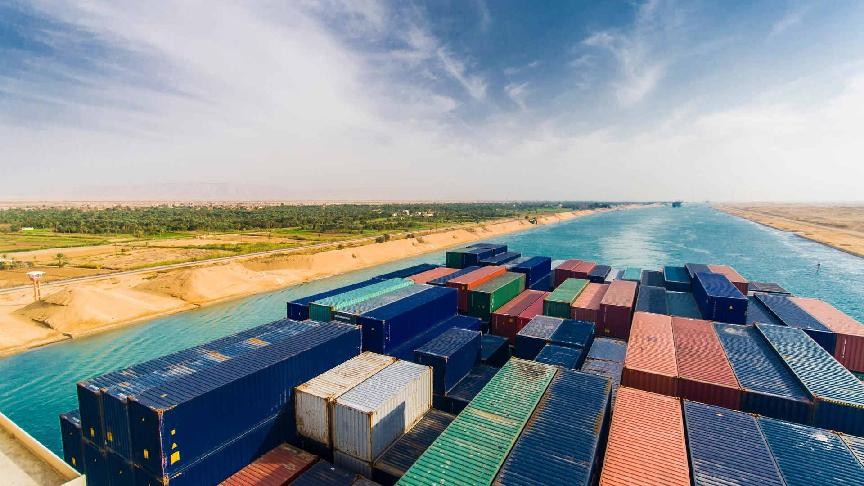
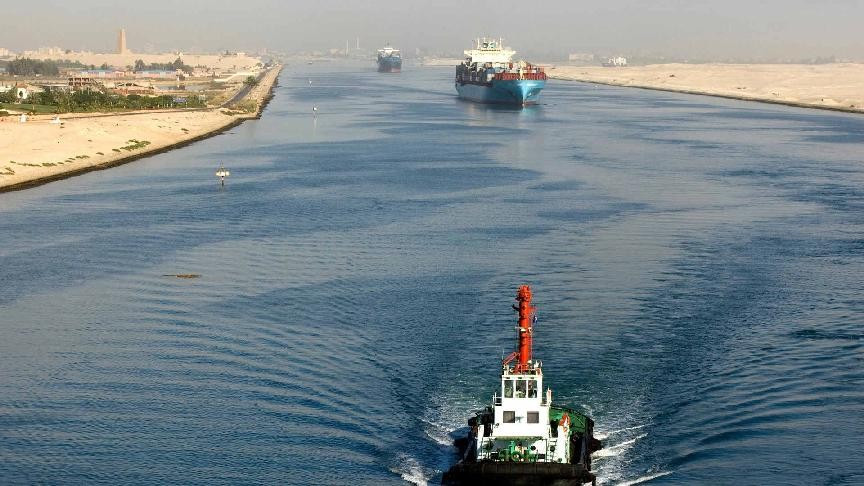
Journal of Commerce (JOC) reported that scheduled capacity through the Suez Canal is increasing quickly, although from a low base. Xeneta data cited by JOC shows average monthly capacity scheduled to pass through Suez from July to October at 1.3 million TEU, up 60% compared with the monthly average in the first half of the year. However, this is still only around one-fifth of the level seen before Houthi attacks forced most carriers to divert around southern Africa in late 2023.
The return is being managed cautiously. Carriers are seeking to avoid sudden schedule overlaps at European ports, where shorter Suez transit times could coincide with delayed vessels still arriving via the Cape route. Analysts warn that even a gradual recovery in Suez sailings could create localised congestion if services are not closely managed.
Maersk, CMA CGM and MSC lead selective return
Linerlytica reported that CMA CGM, Maersk and MSC continue to push for an early return to the Red Sea.
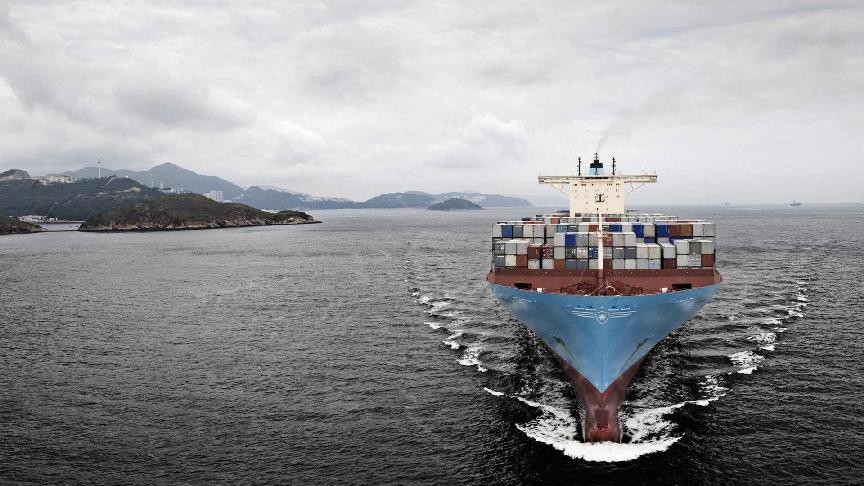
Maersk recorded 11 transits through Bab el Mandeb in both directions last week, just behind CMA CGM with 15 transits. Maersk has also returned more than 30% of its former Cape-routed volume to the trans-Suez corridor.
MSC, which had largely stayed away from the route, has also started sending ships through Suez since the end of July. Linerlytica noted that seven MSC vessels crossed Bab el Mandeb in the past two weeks, including its first northbound voyage since 2024 on the revised Himalaya Express connecting India with the Mediterranean.
Hapag-Lloyd remains more cautious. Although its Gemini Cooperation partner Maersk is increasing Suez sailings, Linerlytica reported that Hapag-Lloyd had not sent ships through the Red Sea in the past three weeks, reflecting the more conservative stance still taken by several mainstream Asian carriers.
Operational benefits weighed against security risk
For carriers, the commercial logic is clear: the Suez route reduces voyage distance, transit time, fuel consumption, and vessel requirements compared with the Cape of Good Hope route.
The diversions around southern Africa absorbed roughly 8% of global tonnage, helping to cushion the market from overcapacity.
However, the improving momentum in the Red Sea is occurring alongside rising uncertainty in the Strait of Hormuz. Iran’s vessel list effectively introduces a compliance-style risk for owners, charterers, traders and insurers, as exposure may extend beyond the listed ships to commercial partners and ship-to-ship activity connected to them.
The result is a fragmented risk environment: carriers are becoming more willing to test the Red Sea corridor, while the Strait of Hormuz is moving deeper into a sanctions-like risk framework.
This means Asia-Europe routing may gradually become faster again, but reliability will still depend heavily on security developments, war-risk assessments and how quickly carriers decide to restore services.