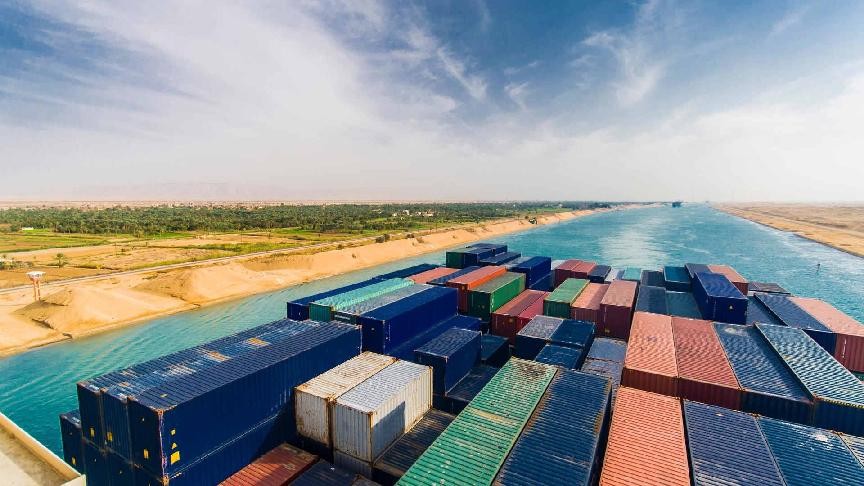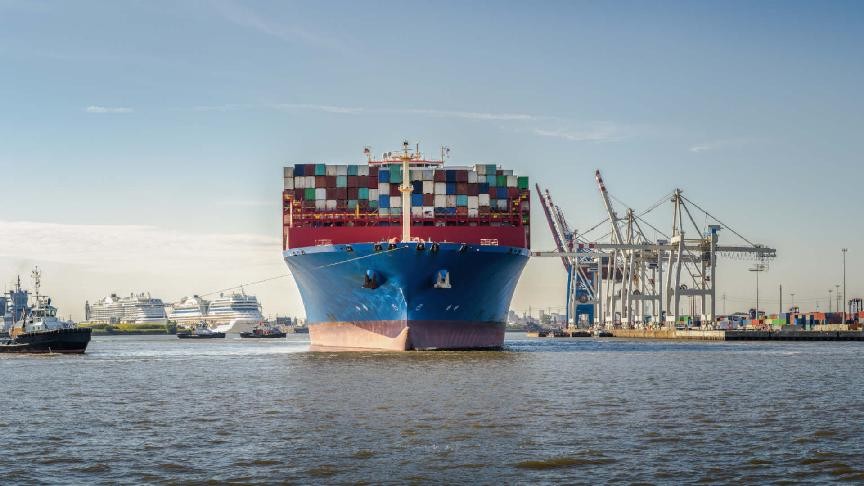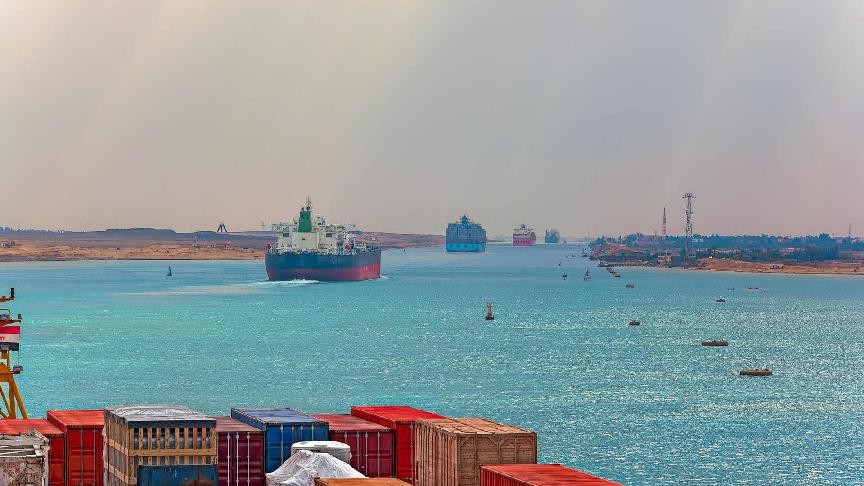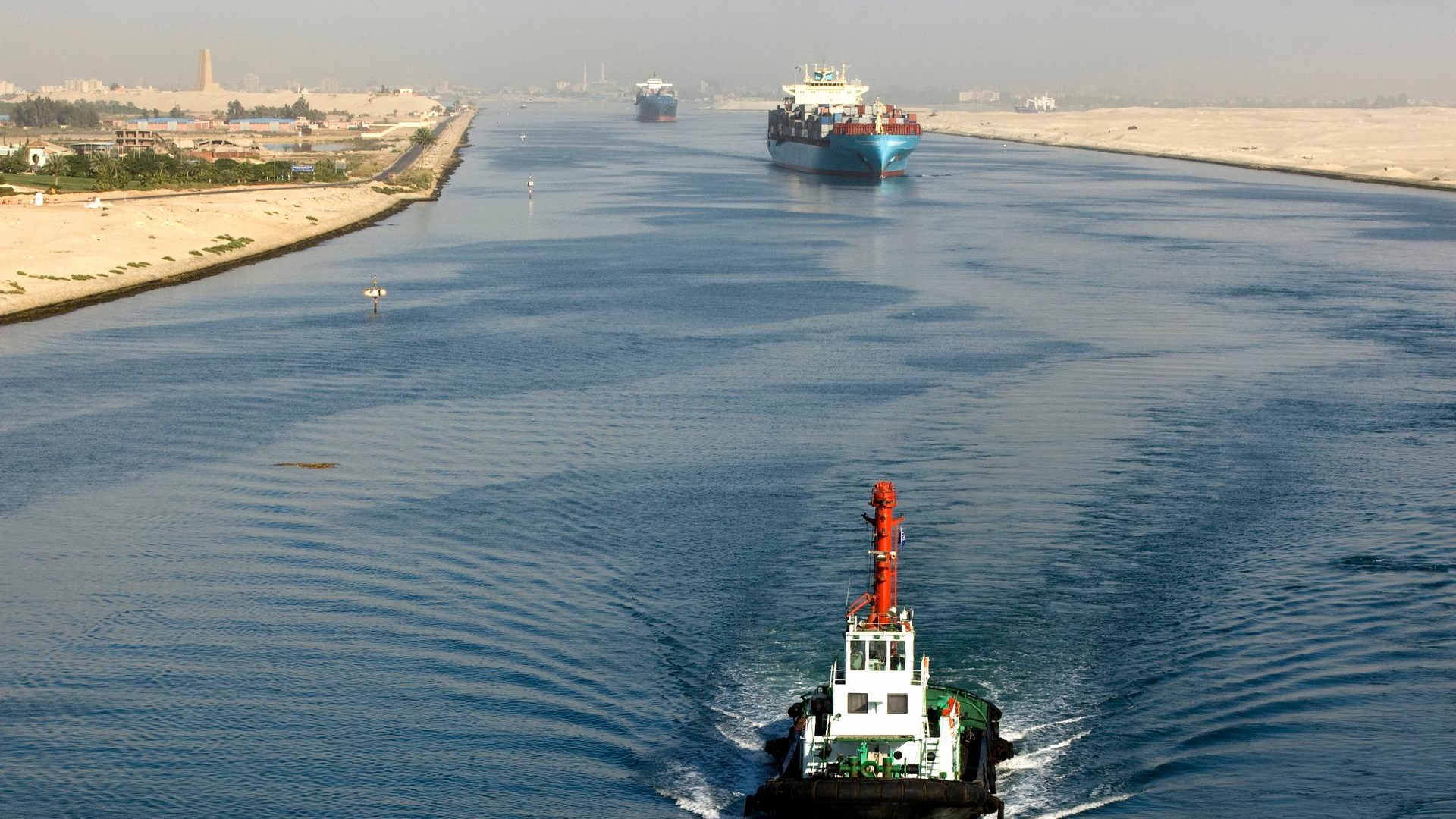

Container shipping lines are increasingly returning services to the Suez Canal as congestion in Asia and the need to free up vessel capacity encourage the use of the shorter route between Asia and Europe.
The shift has gathered pace in recent weeks, with CMA CGM, Maersk, MSC, Wan Hai and Cosco Shipping all operating services through the Bab el Mandeb Strait and the Suez Canal.
Linerlytica reported that CMA CGM, Maersk, MSC and Wan Hai maintained their trans-Suez operations during the final week of August, sending a combined 30 ships through the Bab el Mandeb.
Sea-Intelligence Maritime Analysis said competitive pressures are likely to drive a broader return to the route. Chief Executive Alan Murphy stated that 19% of Asia-Europe westbound services are currently routed through Suez and said this share is likely to rise substantially by the end of the year.
We would contend that the carriers are highly likely to shift all of their services on the head-haul trades to a Suez routing
Sea-Intelligence Chief Executive
Operators expand their use of the route
CMA CGM has been among the most active users of the route, completing 15 Suez transits compared with 11 by Maersk. Together with MSC, the French and Danish carriers have operated both northbound and southbound sailings through the corridor. Wan Hai and Cosco have so far undertaken northbound transits only.
MSC confirmed on 25 August that it had begun restoring Suez Canal transits on selected East-West services following a review of operational and security conditions.
The carrier stated that the process would be implemented on a service-by-service basis and that contingency arrangements remained available to adjust individual voyages where required.
According to subsequent reports, MSC has continued to expand its activity. Seven MSC vessels crossed the Bab el Mandeb in mid-August, while the company later announced the return of the Albatros, Jade, Himalaya and Tiger services to Red Sea transits. Maersk has also shifted more than 30% of its around-Africa volume back to the trans-Suez route.
Not all major carriers have followed the same approach. Linerlytica reported that Hapag-Lloyd has not joined Gemini Cooperation partner Maersk in adopting the shorter route.
Traffic increases but remains below previous levels
Recent data shows a significant increase in activity through the Suez Canal compared with earlier periods of the Red Sea crisis.
Consultant MDS Transmodal recorded 1,186 vessel transits between January and August 2026, compared with 1,230 during the corresponding period in 2025.
Although the number of ships declined slightly, the capacity carried by those vessels increased substantially. Total container capacity moving through the route during the first eight months of 2026 reached 7.2 million TEU, while average vessel size increased from 3,800 TEU to 6,000 TEU.
This resulted in 55% more container capacity transiting the route despite the lower number of vessel movements.
MDS Transmodal highlighted August as a particularly strong month. A total of 196 ships used the route, representing a year-on-year increase of 36%. Aggregate vessel capacity reached 1.68 million TEU, up 184% compared with August 2025.
The largest vessel transiting during the month had a capacity of 24,232 TEU, the biggest ship recorded on the route since the crisis began. The consultant also identified nine vessels exceeding 20,000 TEU, together with another vessel just below that threshold, passing through the canal during August alone.
Capacity shifts from the Cape route
The return of carriers to the Red Sea corridor has been reflected in declining numbers on the Cape of Good Hope diversion. Linerlytica reported that between 5% and 7% of global vessel capacity, equivalent to between 1.7 million and 2.4 million TEU, had been absorbed by diversions around southern Africa.
By the end of August, the number of ships using the Cape route had fallen to 280 vessels carrying 4.0 million TEU, compared with a peak earlier in the year of 380 ships with 5.5 million TEU.
Despite the recent growth, activity remains below pre-crisis levels. MDS Transmodal noted that vessel numbers in August were still around 65% lower than in August 2023, while capacity remained approximately 74% below the levels handled before the disruption to Red Sea shipping began.