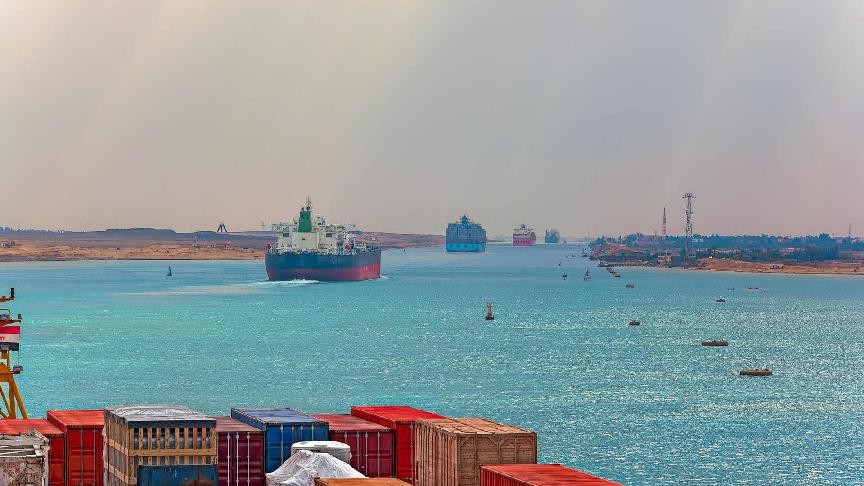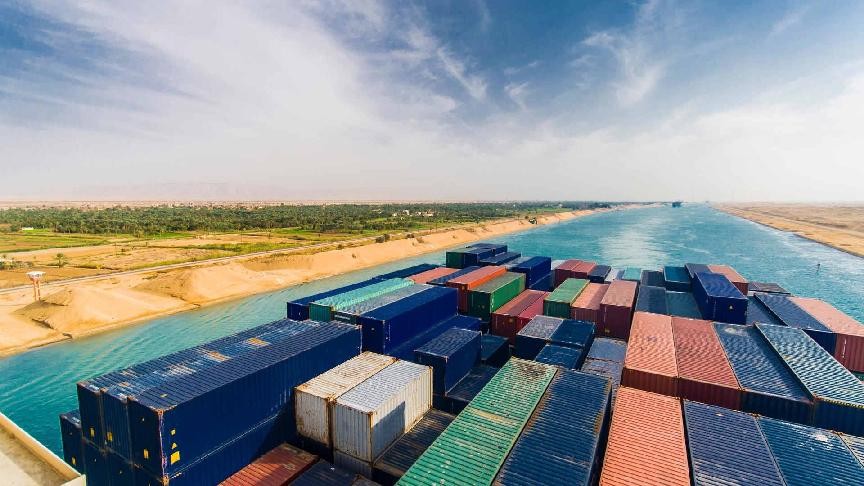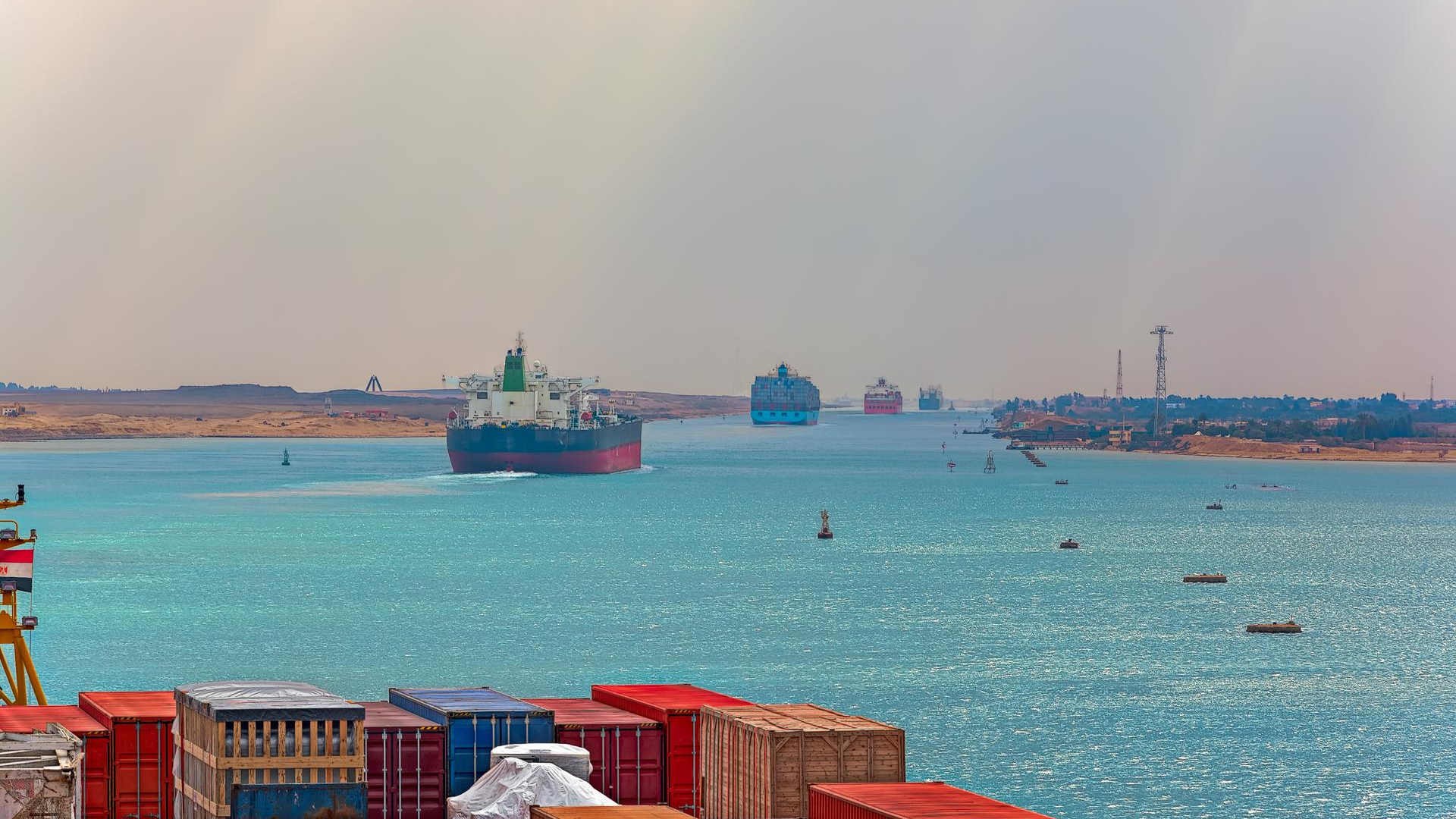

THE Suez Canal’s recovery accelerated in July and continued into August as disruption in the Strait of Hormuz and changes to Saudi oil export routes pushed traffic through the Egyptian waterway to its highest level since the Red Sea crisis began.
A total of 1,232 ships transited the canal in August, equivalent to 102.4m dwt, according to Lloyd’s List Intelligence vessel-tracking data. That marked the second consecutive month in which transits exceeded 1,200 and represented a 28% increase in traffic volumes and a 43% rise in tonnage compared with a year earlier.
The improvement helped lift canal revenues, which rose 44% year on year to $505m in July, according to Egyptian statistics agency CAPMAS. It was the strongest monthly revenue performance since December 2023, before vessels began abandoning the Red Sea in large numbers following seemingly indiscriminate Houthi attacks on commercial shipping.
The recovery in overall traffic which has been slowly building during the past six months has been helped by a shift in tanker traffic trends. Saudi Arabia, which had already shifted much of its crude export programme from Middle East Gulf terminals to its Red Sea port of Yanbu during the Strait of Hormuz crisis, has been forced to reroute further following Houthi threats against Saudi-linked shipping in the southern Red Sea and Bab el Mandeb.
Rather than passing through the Bab el Mandeb en route to Asia, increasing volumes of Saudi crude are being moved north through the Red Sea to Ain Sukhna before being transferred via Egypt’s SuMed pipeline to the Mediterranean port of Sidi Kerir.
The result has been a sharp rebound in tanker movements through Suez. A total of 283 crude tankers transited the canal in August, up from 210 last year.
In tonnage terms, crude tanker traffic is now running just 10% below pre-Houthi attack levels and is 50% higher than the same period last year.
Overall, however, the canal remains some distance from full recovery.
Despite recent gains, August traffic was still 39% below pre-crisis levels in vessel numbers and 44% lower in tonnage than August 2023. Canal revenues also remain far below the record $10.2bn generated in 2023.
Nevertheless, the trend remains positive. Average monthly Suez traffic between June 2024 and May 2025, when traffic was at its slowest, stood at just 884 transits equivalent to 66m dwt, meaning current volumes are substantially above the depths of the disruption.
The recovery pre-dates the latest crisis, as owners and operators have slowly started returning to the beleaguered shipping lane at the start of 2025. Vehicle carrier transits are up 120% year on year, although volumes remain 56% below pre-crisis norms.
Containership movements rose 35% from a year earlier but remain 66% below August 2023 levels.
There are also growing indications that some container operators are becoming more comfortable returning to the route despite lingering security concerns.
Hapag-Lloyd recently resumed selected Suez transits on its Asia-Mediterranean network, with the 14,993 teu Al Jmeliyah (IMO: 9732357) making a westbound voyage through the Red Sea. While the move remains limited, Maersk has already resumed regular westbound sailings on several Gemini Cooperation services as the partners assess a broader return to the Suez route.
Mandeb disrupted
While Suez has benefited from geopolitical disruption elsewhere, the picture is very different at the Bab el Mandeb.
Preliminary August data shows 1,165 vessel transits through the southern Red Sea chokepoint, equivalent to 92.4m dwt. The figures suggest that renewed Houthi threats against Saudi shipping have effectively erased much of the traffic growth generated by the Strait of Hormuz crisis.
Even so, traffic through the Bab el Mandeb remains above the worst levels seen during the Red Sea crisis as there has been a broader return to the chokepoint. August volumes were 6% higher year on year and tonnage was up 24%, although both remain roughly half pre-Houthi norms.
The divergence highlights how the latest phase of regional instability is reshaping trade flows across the Middle East. The Suez Canal is benefiting from the rerouting of oil exports and a cautious return of commercial shipping, while renewed security concerns in the southern Red Sea continue to suppress traffic through one of the world's most important maritime chokepoints.