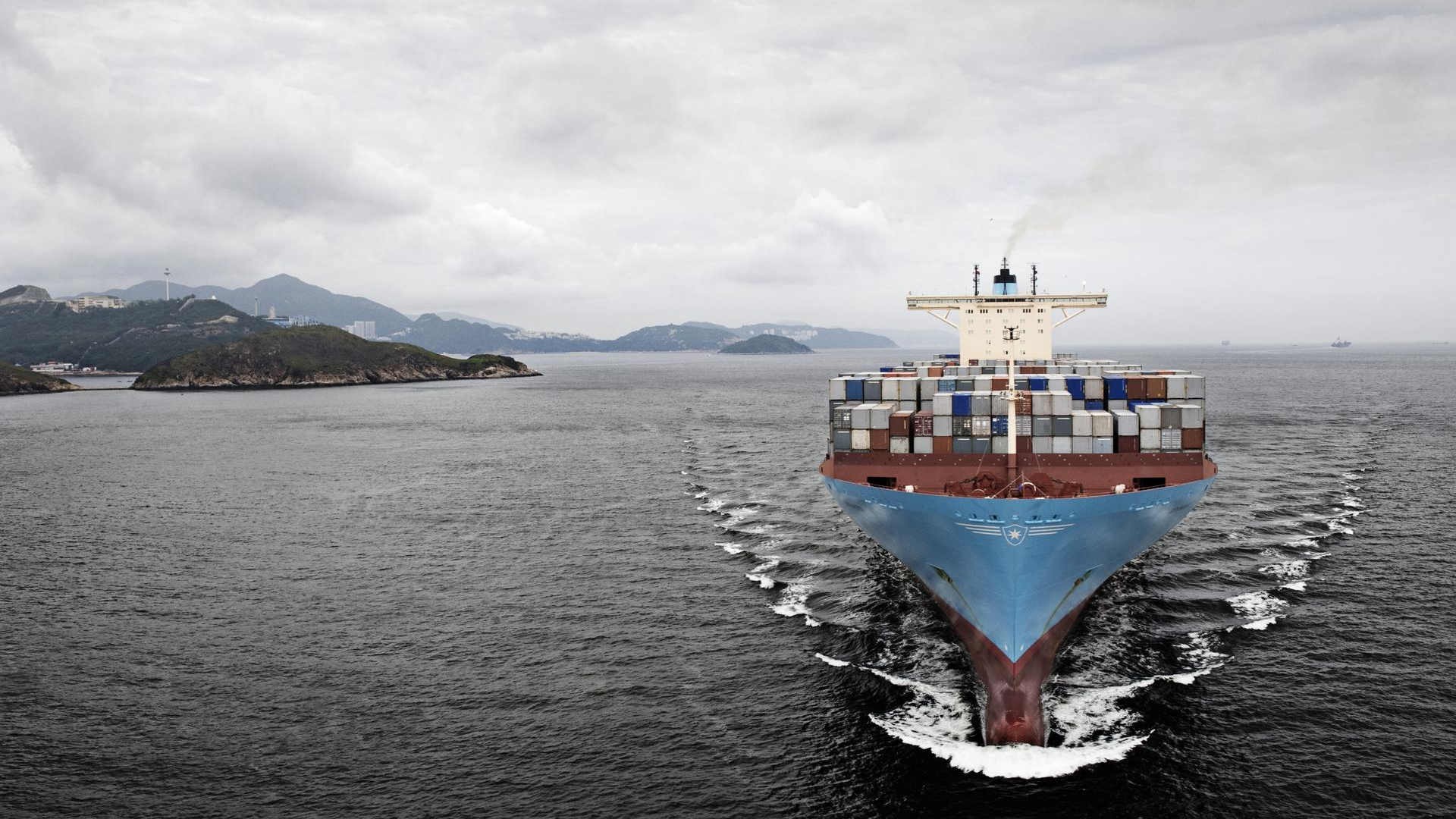
MAERSK chief executive Vincent Clerc expects the Danish container to progressively restore more Asia-Europe services to the Suez Canal, saying security conditions are improving but the company will not compromise the safety of its vessels, crews or customers’ cargo.
Maersk has already moved three services back from the longer Cape of Good Hope route to the Suez Canal since July.
Its AE15 Asia-Mediterranean service resumed Suez transits in July, followed by the MECL service linking the Middle East and Indian Subcontinent with the US East Coast.
Earlier this month, Maersk also announced that its AE19 service between Asia and Port Tangier would return to the Suez route.
AE15 and AE19 are operated jointly with Hapag-Lloyd under the Gemini Cooperation.
Clerc said around one-third of Maersk’s services that would normally use the Suez Canal have now returned, with the company preparing for an eventual full restoration of Red Sea routings.
“Our intelligence suggests security conditions for a full return have been met, but we won’t compromise on the safety of our ships and customers’ cargo,” Clerc said today on an investors call. “Bab el Mandeb remains a very volatile situation, but we will move to a gradual full return to Red Sea routings.”
A return to the Suez Canal would reduce sailing distances and fuel consumption compared with the Cape of Good Hope diversion, providing Maersk with a positive impact on unit costs. Clerc does not, however, expect a widespread return to the shorter route to result in a significant long-term decline in freight rates.
“Our opinion is a return to the Red Sea will have very little pricing impact but will provide a positive cost impact from shorter sailing distances,” he said.
Maersk is expected to take a measured approach because shorter transit times could release additional effective capacity into an already congested supply chain.
Clerc said bottlenecks at container terminals worldwide, particularly in Europe, mean that capacity freed by shorter voyages is likely to be absorbed by persistent port congestion.
He warned that moving too many services back to Suez at once could cause vessels to bunch up at European ports, exacerbating existing bottlenecks.
“You need to adjust one service at a time otherwise this would put us at a serious disadvantage compared to our competition,” Clerc said.
The phased approach will allow Maersk to monitor the impact of each service change before making further adjustments.
Clerc also played down concerns over the container shipping industry’s huge newbuilding orderbook, which is equivalent to around 40% of the existing fleet.
Despite the prospect of a large influx of new tonnage, he said the strength of container demand has repeatedly exceeded expectations.
“The strength and resilience of demand has been surprising,” Clerc said. “Despite years of talk about de-globalisation and uncertainty around oil prices, demand is shrugging off all of that — the market is so resilient it can keep pumping volumes up.”
Three consecutive years of stronger than expected Asian export growth have exposed weaknesses in the wider logistics infrastructure, he said. Container terminals and trucking networks have failed to expand at the same pace as demand, creating constraints across the supply chain.
“The compounding effect of stronger than expected demand growth means there has not been enough terminal capacity and trucking capacity has not grown enough. This has tightened a noose around the supply chain,” Clerc said.
Clerc said the composition of Asian exports is also changing, with growth increasingly coming from industrial goods rather than traditional consumer merchandise.
“What we are moving in containers is gradually changing — the main growth of Asian exports is not from what we call ‘general department store goods’ but, since Covid, industrial exports from Asia have boomed,” he said.
Electrification-related equipment is a major source of growth, including solar panels, wind turbines and cooling equipment for data centres. Much of this equipment is manufactured in Asia and shipped to markets around the world.
The cargo mix is also less seasonal than traditional consumer goods, potentially providing a more consistent source of container demand.
“Asian companies are exporting these items around the world,” Clerc said.
He therefore believes the large containership orderbook could ultimately prove necessary to accommodate continued growth in Asian exports, although he acknowledged that the scale of new ordering may reflect an overly optimistic outlook.
Clerc said headhaul container volumes from Asia are currently growing at around 7% annually, while investment in ports and inland logistics infrastructure has lagged behind.
He pointed to bottlenecks at major gateways including Santos, Apapa and ports in the UK and wider Europe, warning that resolving capacity constraints will take time.
The industry, he suggested, is now paying the price for years of relatively pessimistic assumptions about container demand, which contributed to insufficient investment in new capacity.
With Asian industrial exports continuing to expand, Maersk expects both shipping capacity and landside infrastructure to remain under pressure even as the industry gradually returns to the shorter Suez Canal route.
Maersk planning for eventual full return to Suez Canal route
Maersk chief executive Vincent Clerc expects the company to gradually restore more Asia-Europe services through the Suez Canal as security conditions in the Red Sea improve.

Source: Lloyd's List

Related articles
Sea newsRed Sea container transits hit post-crisis high as carriers accelerate return
Sea newsRed Sea return gathers pace as Maersk restores another Suez service

Sea newsRisk to boxship demand rises ‘with every day’ Hormuz remains closed
Sea newsData shows attacks on ships in the Middle East do not follow a pattern
Sea newsLiner exodus accelerates as escalating Gulf conflict cripples Middle East services
Sea newsMiddle East war is ‘black swan’ for liner networks, ‘catastrophic’ for ports