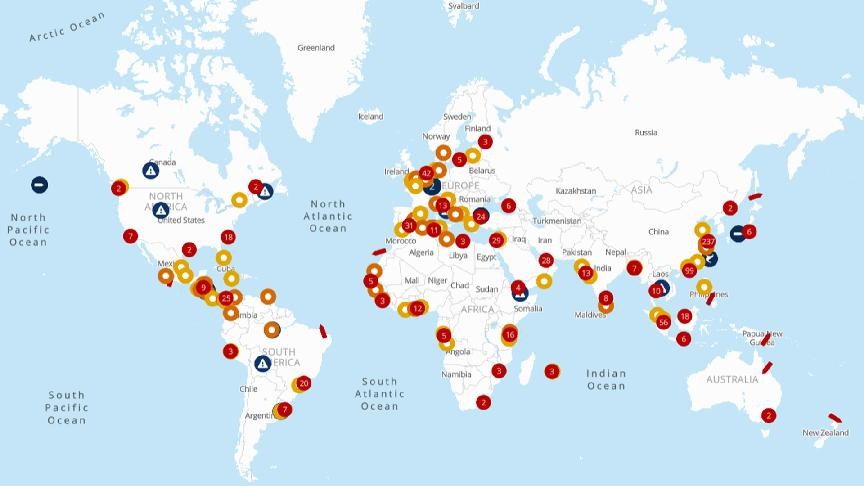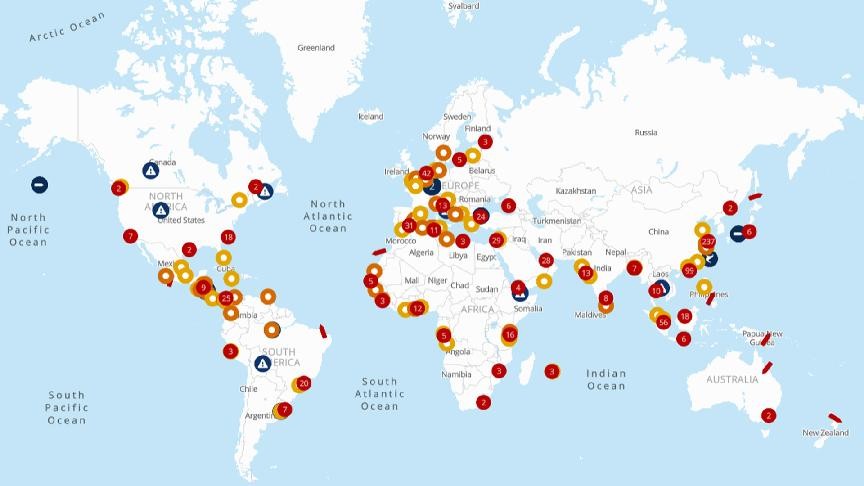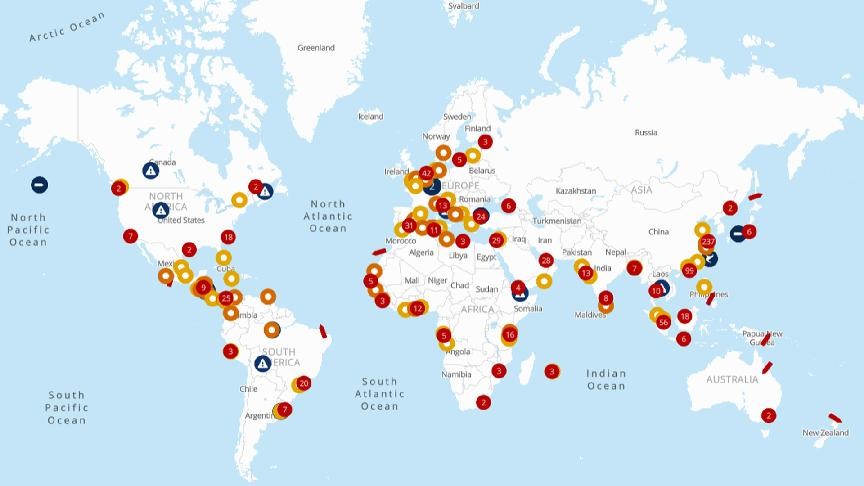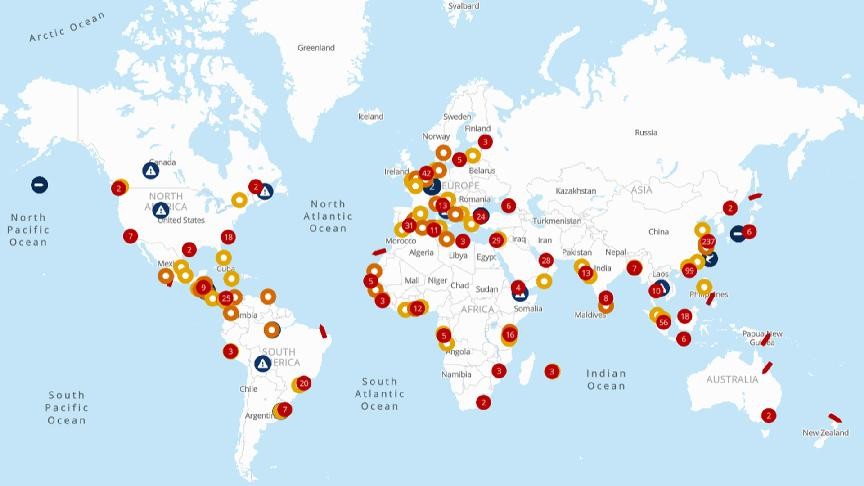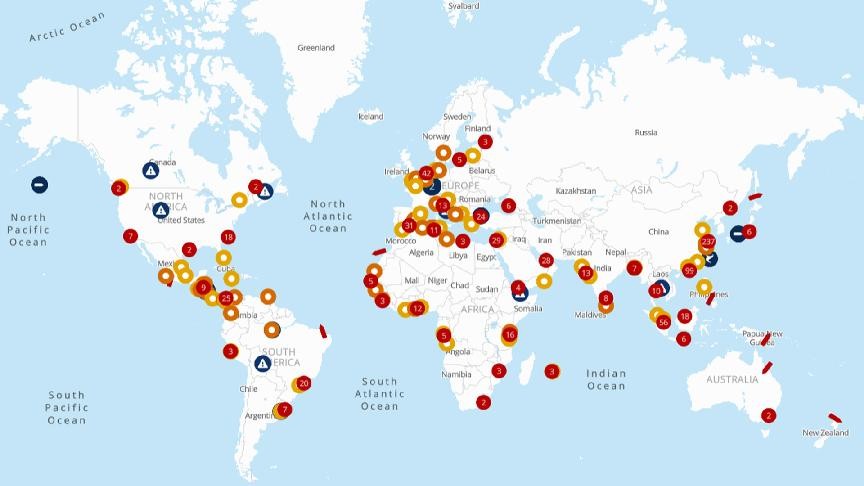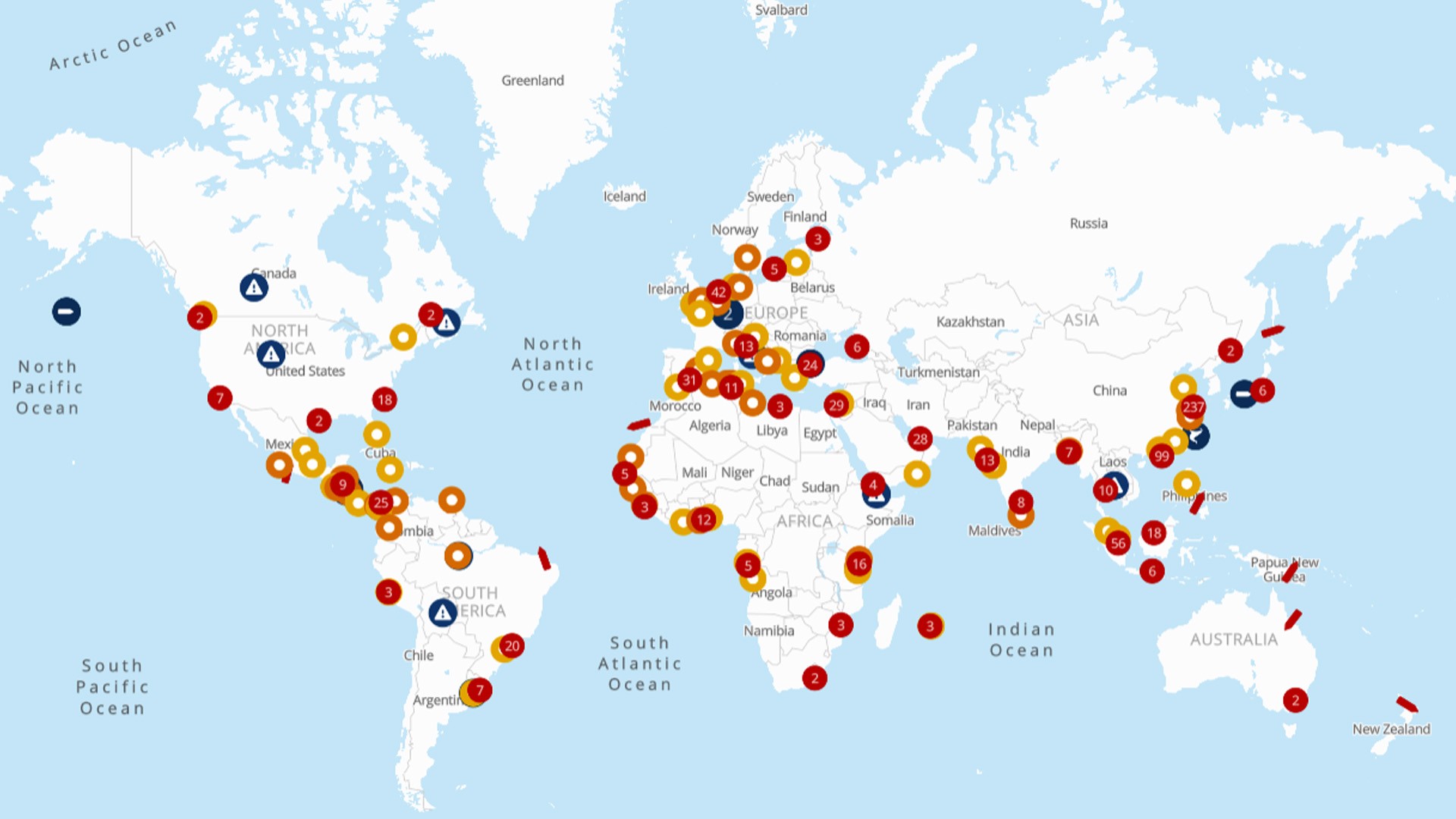

- Stay ahead of supply chain disruptions and port congestion with Kuehne+Nagel’s weekly port operational update.
- Find out the latest vessel waiting times and status of ports in Africa, Asia Oceania, Europe, Middle East-Indian Subcontinent, North America, and South and Central America.
Africa
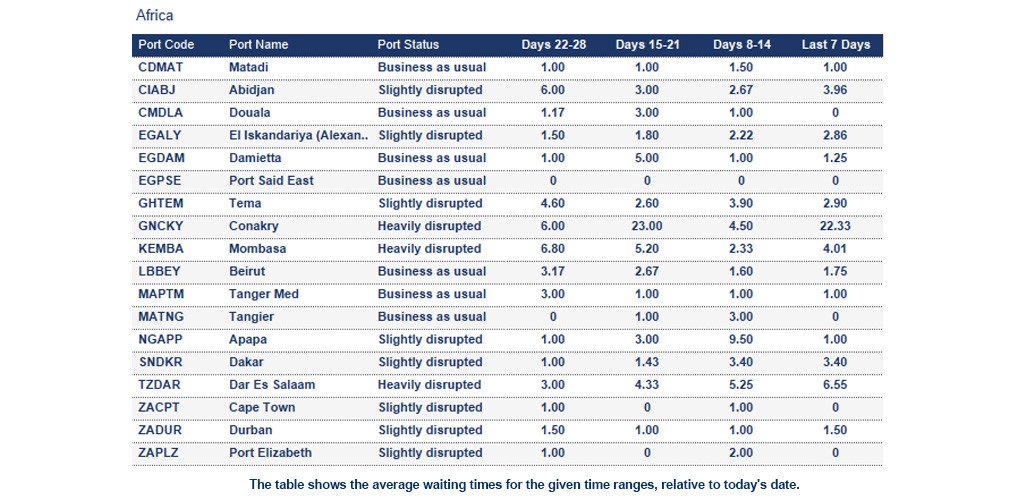
Angola
Luanda: The 7-day average vessel waiting time is around 1 days. The port is currently congested.
Ghana
Tema: The 7-day average vessel waiting time is around 2.9 days. Severe congestion is being experienced, compounded by recurring crane outages. Non‑window vessels are subject to berth availability, and no ad‑hoc vessel calls are currently being accepted.
Guinea
Conakry: The 7-day average vessel waiting time is around 22 days due to heavy congestion.
Ivory Coast
Abidjan: The 7-day average vessel waiting time is around 2.83 days. The terminal is slightly congested.
Kenya
Mombasa: The 7-day average vessel waiting time is around 4.01 days. The terminal is experiencing prolonged congestion and reduced productivity due to equipment shortages. Berth delays are further exacerbated by vessel bunching resulting from off‑window arrivals.
Mozambique
Beira: The 7-day average vessel waiting time is around 17.2 days. Carriers report some improvement in operations. Intermittent wind gusts and rain are expected for the remainder of the week.
Maputo: The 7-day average vessel waiting time is around 4.5 days. Intermittent periods of wind gusts are forecast throughout the week.
South Africa
Cape Town: Weather conditions may deteriorate over the weekend, with strong winds forecast. Terminal recovery efforts are ongoing; however, waiting times persist, particularly at CTCT. At CTCT, waiting times range between one and four days, although overall terminal operations are improving and the general weather outlook remains favourable. At MPT, waiting times are currently between zero and one day.
Asia Oceania
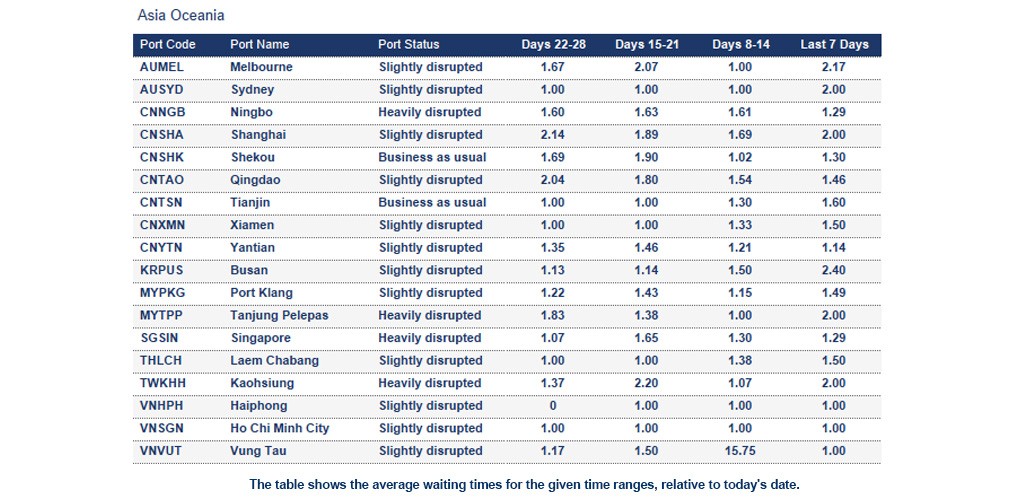
China
Ningbo: The 7-day average vessel waiting time is around 1.27 days. Yard occupancy stands at 50% at MSICT and 54% at other terminals, with reefer utilisation at 75% at MSICT. Empty container stock remains very high at Ningbo. CMICT is experiencing above‑average waiting times due to an OPS system update and bundled arrivals, with improvement expected next week. Dredging at MSICT is planned from late March for 2–3 weeks, while BLCT3 dredging is scheduled to commence on 13 March for around two weeks, weather permitting.
Shanghai: The 7-day average vessel waiting time is around 1.9 days. Yard occupancy stands at 52% at WGQ and 65% at YS12, with reefer utilisation at 19% at YS12. WGQ port waiting times have returned to around two days since last weekend as all services have resumed operations. YS12 has maintained very limited waiting times over the past week.
Japan
Yokohama: The 7-day average vessel waiting time is around 1.25 days. At YOK D5, heavy congestion is experienced in weeks 11 and 12 due to significant vessel bunching at the terminal.
Malaysia
Tanjung Pelepas: The 7-day average vessel waiting time is around 2.0 days. The berthing situation and congestion remain dynamic. High yard density is currently having a slight impact on operational efficiency. At Berth 4, approximately 300 metres will be unavailable for around seven days during weeks 11–12 due to new quay crane deliveries. Further crane commissioning is expected through weeks 15–16, during which an additional 150 metres of Berth 4 will be blocked.
Philippines
Manila: The 7-day average vessel waiting time is around 1.68 days. Heavy berth congestion persists at both Manila North and South terminals, with average waiting times and delays of approximately two to three days. Yard utilisation remains within normal levels at both terminals, with density ranging between 70% and 80%.
Singapore
Singapore: The 7-day average vessel waiting time is around 1.29 days. All PSA terminals remain busy, with general waiting times of approximately 1 to 1.5 days across all carriers. Overall yard utilisation is currently high, at around 80–85%, driven by the rolling pool build‑up across shipping lines.
Europe
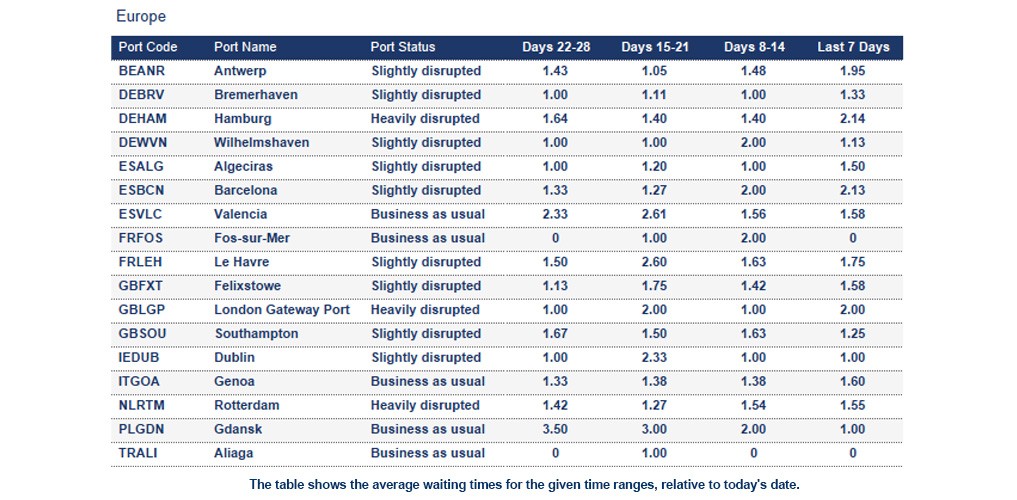
Belgium
Antwerp: The 7-day average vessel waiting time is around 1.95 days. Severe disruption is expected in Belgium following strike action by Belgian pilots, compounded by a nationwide strike which started on Thursday. Inbound and outbound vessel movements at Antwerp and Zeebrugge are heavily impacted, with only limited relief from Dutch pilots. Once operations normalise, a significant vessel backlog is anticipated. Yard utilisation at Q913 is critical at 88%, while Q869 stands at 74%, with truck turn times remaining manageable. Read more about the strike here.
Germany
Hamburg: The 7-day average vessel waiting time is around 2.14 days. CTA yard utilisation is critical at 89%, with construction works and block maintenance further straining capacity. High import dwell times are the main cause; as a countermeasure, truck deliveries for some vessels open only 2.5 days before ETA. Back‑to‑back mainliners continue without gaps. Ongoing crane rail maintenance limits berthing to two mainliners for at least three weeks, impacting the feeder programme and causing further delays, with additional risk from Easter closures. At CTH, yard utilisation has recovered to 73%, but adverse weather and possible Elbe restrictions may affect the weekend.
Netherlands
Rotterdam: The 7-day average vessel waiting time is around 1.55 days. The port is currently impacted by high winds. At ECT, yard utilisation remains stable at around 86%. Dense fog, traffic suspension and weaker terminal performance impacted the port earlier in the week. Reefer capacity remained manageable thanks to fast customer pick‑ups. Second‑modality delays range from 24–48 hours, with peaks up to 72 hours for feeders due to Quattro berth operations. At MVII, yard utilisation stands at 85% with feeder delays up to 10 hours and barge delays up to 20 hours; yard levels may rise due to forecasted storms. DELTA II remains uncongested with smooth operations. Strong winds later this week may impact terminals.
Ireland
Dublin: The 7-day average vessel waiting time is around 1 day. The port is currently under construction. Read more here.
United Kingdom
High winds have been disrupting terminal operations over the last few days. Although operations have resumed at London Gateway, Grangemouth and Liverpool remain disrupted.
London Gateway Port: The 7-day average vessel waiting time is around 2.0 days. At London Gateway, yard stack levels stand at 64% for dry and 53% for reefers, with empty stock around 4,565 TEU. Terminal productivity remains within expectations; however, fog‑related disruption and late vessel arrivals are pushing the berth plan. Ongoing tide restrictions for deep‑draft vessels continue to cause time losses.
Middle East - Indian Subcontinent
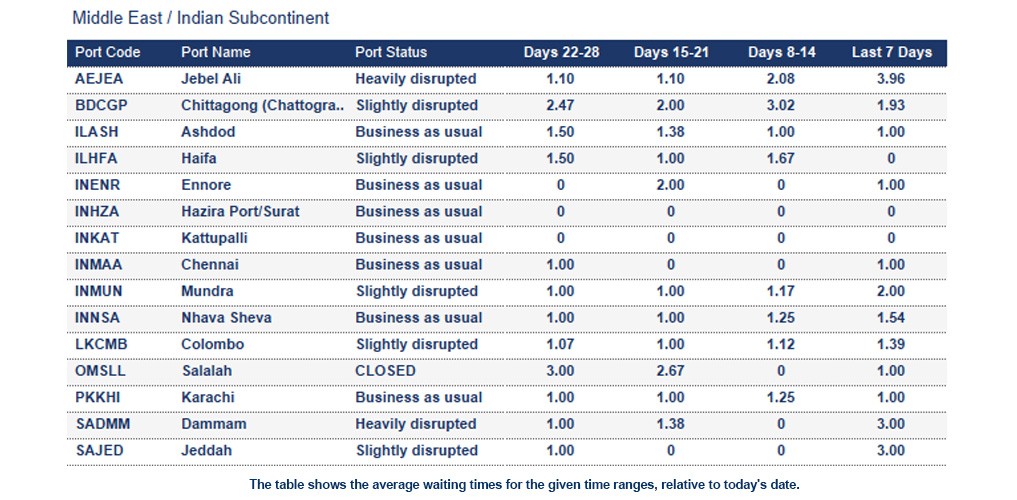
Port operations across the Middle East are significantly impacted by regional instability. The Strait of Hormuz remains closed, halting vessel transits, while disruptions at the Bab al‑Mandab Strait and Suez Canal have led to widespread route avoidance. Severe GPS jamming in the Gulf continues to affect navigation, with many vessels sheltering offshore. Most regional ports remain operational, including those in the UAE, Saudi Arabia, Kuwait, Qatar, Oman, Jordan (Aqaba), and Iraq, although Khor Al Fakkan is heavily congested. The ports of Bahrain and Salalah remain closed after being attacked in recent days. Read the latest update here. However, terminal operations at Bahrain's Khalifa Bin Salman Port will be resumed on 14 March 2026 at 6:00 AM.
Bangladesh
Chittagong (Chattogram): The 7-day average vessel waiting time is around 1.93 days. Overall conditions remain stable in week 11. Chittagong Port is currently experiencing berthing congestion of 1–2 days for both geared and gearless vessels. Operational efficiency is slightly impacted by daily prayer breaks. In observance of Shab‑e‑Qadr, port operations will be suspended for 15 hours from 16 March 17:00 to 17 March 08:00.
North America
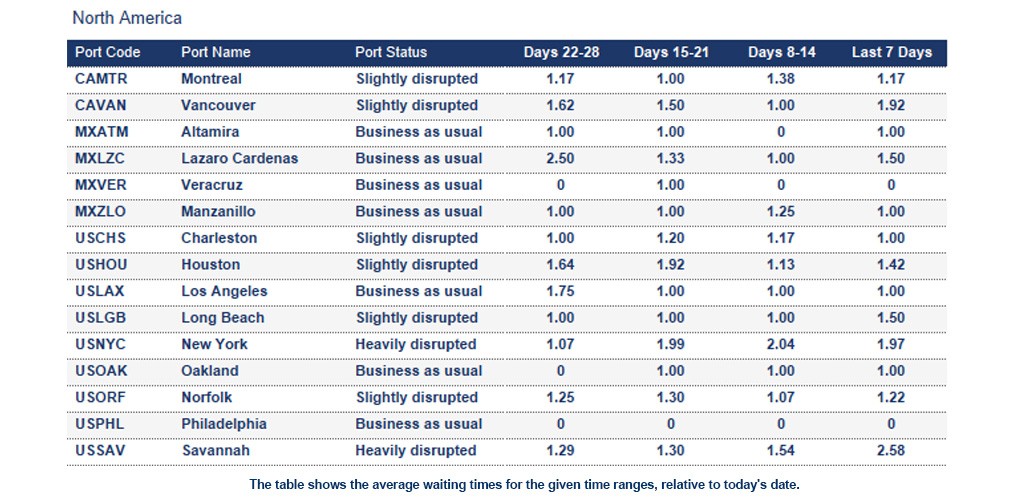
Canada
Average import rail dwell time for Canadian cargo (Vessel arrival to departure rail ramp):
- Halifax: 7 days
- Montreal: 7 days
- Prince Rupert: 10 days
- Saint John: 4 days
- Vancouver: 8 days
Montreal: The 7-day average vessel waiting time is around 1.17 days. The average rail dwell time is around 7 days.
Vancouver: The 7-day average vessel waiting time is around 1.92 days. The average rail dwell time is around 8 days.
United States
Miami: The 7-day average vessel waiting time is around 2.0 days.
Savannah: The 7-day average vessel waiting time is around 2.58 days.
South and Central America
Brazil
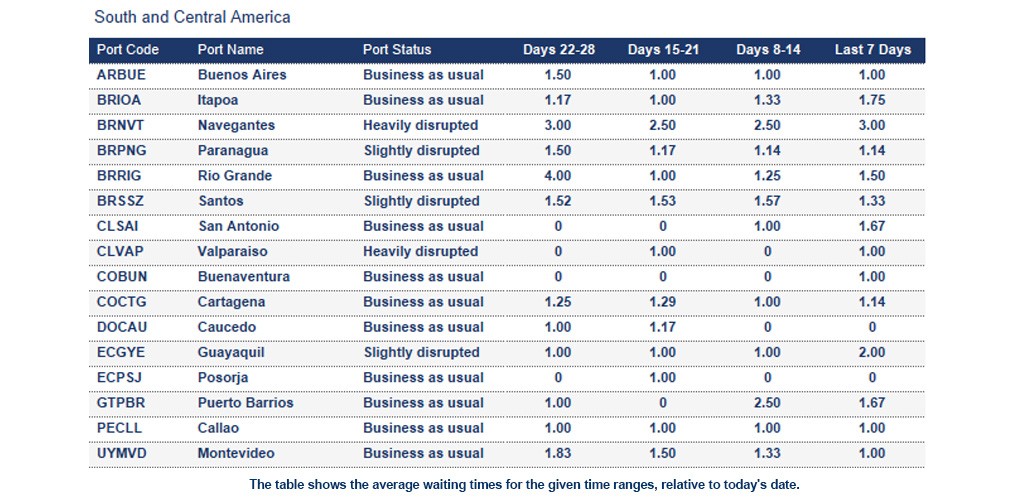
Navegantes: The 7-day average vessel waiting time is around 3 days.
Paranagua: The 7-day average vessel waiting time is around 1.14 days. The port is slightly congested.
Chile
Arica: The port is currently impacted by heavy swells.
How Kuehne+Nagel estimates port disruption statuses
Seaexplorer has four port statuses that are estimated based mainly on the 7-day average vessel waiting time. Other factors include yard congestion, labour strikes, natural disasters or intermodal disruptions. Slightly different rules are applied to major ports, or ports that are hubs in their region, as they are typically more efficient.
- Business as usual means the port is currently operating without any significant disruption.
- Slightly disrupted is used if the 7-day average vessel waiting time exceeds 2 days.
- Heavily disrupted is used if the 7-day average vessel waiting time exceeds 4 days.
- Port closed is used when the port suspends operations due to a major disruptive event.
How Kuehne+Nagel calculates the 7-day average vessel waiting time
Mainline container vessels may spend a certain number of days waiting at designated anchorage areas before their scheduled port call.
To calculate the 7-day average waiting time, we consider the waiting days of these vessels, excluding:
- Waiting times for feeder vessels,
- Idle ships without an announced next port,
- Slow steamers heading toward the anchorage, but not actively waiting within the designated area
- Vessels passing through the anchorage area without intending to call at the port.
This rolling average is based on the last 7 days of data and is updated daily in seaexplorer. To find the latest waiting time for a port, enter the port name or code in the search bar and select the relevant option.
Stay Ahead, Stay Informed: Register for seaexplorer for the latest disruptions and vessel waiting times at global container ports.