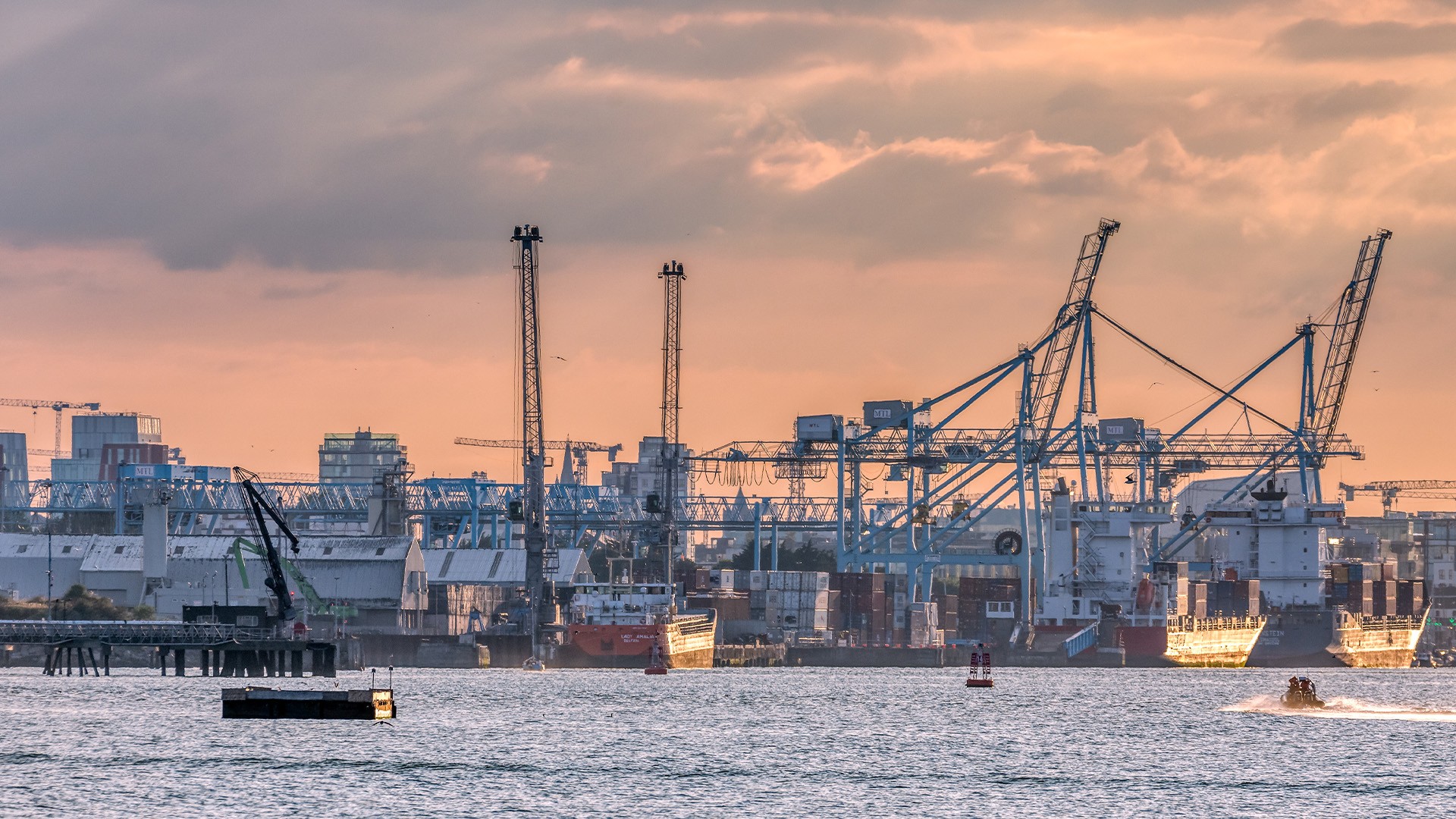

The Port of Dublin has been implementing an infrastructure development plan scheduled to extend to 2040. The Masterplan 2040, carried out by the Dublin Port Company, aims to provide sufficient capacity for the national economy.
The port had been operating close to its limits, and further development is considered essential to support future requirements.
According to the port, the Masterplan is structured around three phases. Much of the investment to date has centred on the first phase, which has included deepening the main approach channel to –10m, rebuilding quay walls, constructing new jetties and delivering additional yard space.
Land previously used for non-core purposes has also been converted into operational areas for unitised cargo.
Recent years have brought several improvements for users. These include a deepened approach channel with ongoing maintenance dredging, more than 14km of new internal roads, over 32ha of repurposed yards and more than 64ha of newly paved terminal areas.
The Port has also delivered Ireland’s first inland port, relocated empty container depots and hauliers, and completed more than 2.3km of quay wall construction.
Alongside expansion, the Port is responsible for strengthening and maintaining existing assets such as roads, quay walls and ramps.
While works have been running for a few years, some planning approval will be sought in 2026 to complete the remaining dredging at Alexandra Basin, extending ABR works to 2032.
The second phase of the project began in late 2024 and involves the construction of Berths 52 and 53.
Berth 53, located at the eastern end of the Port, is being built with an automated mooring system and engineering measures to safeguard the adjacent Special Protected Area.
During this phase, Terminals 1, 2 and 5 will be merged into a single passenger terminal through infill works at Berths 52 and 53, with each new berth receiving double‑tier linkspan ramps.
Completion of the first two phases will increase overall capacity and strengthen operational resilience, particularly as extreme weather events become more frequent.
The final phase is under review by the authorities. While detailed design work will continue in the coming years, investment in this phase is expected to remain limited until construction begins.