
The restrictions on merchant shipping in the Strait of Hormuz are creating uneven pressures across Europe, with several studies and assessments highlighting the countries most directly exposed.
Research by the Vienna Supply Chain Intelligence Institute, the Complexity Science Hub and the University of Delft indicates that a small number of European economies face heightened risk due to their trade relationships with Gulf states.
According to study author Stefan Thurner, the length of the Iranian blockade will shape the scale of global supply chain delays, particularly if it extends beyond four weeks.
Impact on goods and freight in Europe
Reports highlight that the disruption has already driven a rise of more than 6% in freight costs between Europe and Asia. This is particularly affecting countries that rely on the Strait of Hormuz for their commercial routes.
Italy emerges as one of the most affected EU members, both in terms of its imports from the Gulf and its export ties to the region.
The country brings in goods worth 9.8 billion US dollars per year from the blockaded states, including 4.4 billion US dollars of Qatari liquefied natural gas and 3.2 billion US dollars of propane.
Beyond fuel, basic goods such as cereals, meat and milk are predicted to become more expensive. Fertiliser supply chains are also strained, as a third of the raw materials used in production typically transit the strait.
Blockages have contributed to price increases of up to 30% globally and up to 49% in Italy.
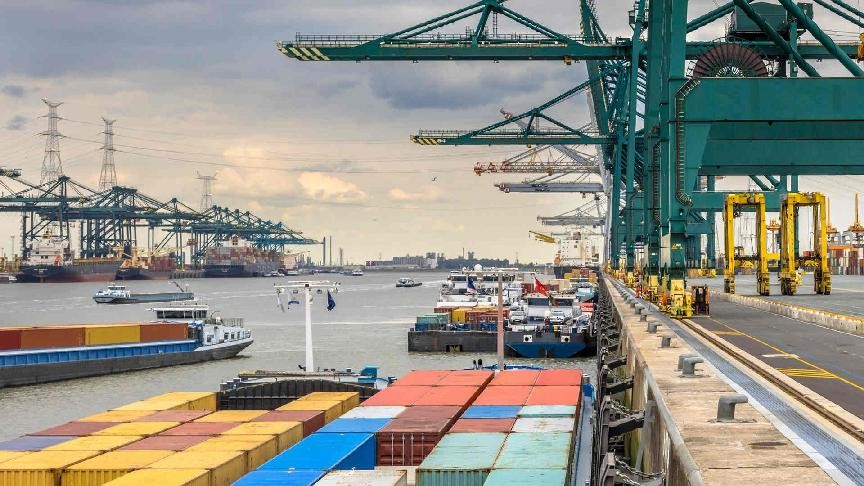
Belgium also faces significant risk, importing around 5.8 billion US dollars of LNG from Qatar, largely through Zeebrugge, alongside an extensive diamond trade with the United Arab Emirates via Antwerp.
The United Kingdom records the highest exposure in Europe, at 12.9 billion US dollars annually, including 5.9 billion US dollars of Qatari gas products.
Meanwhile, Germany and France are described as more diversified.
Germany’s yearly imports from the affected Gulf states amount to 5.7 billion US dollars, with 4.2 billion US dollars from the United Arab Emirates, primarily ships, yachts and industrial equipment, and 0.6 billion US dollars from Qatar in the form of propane and speciality gases.