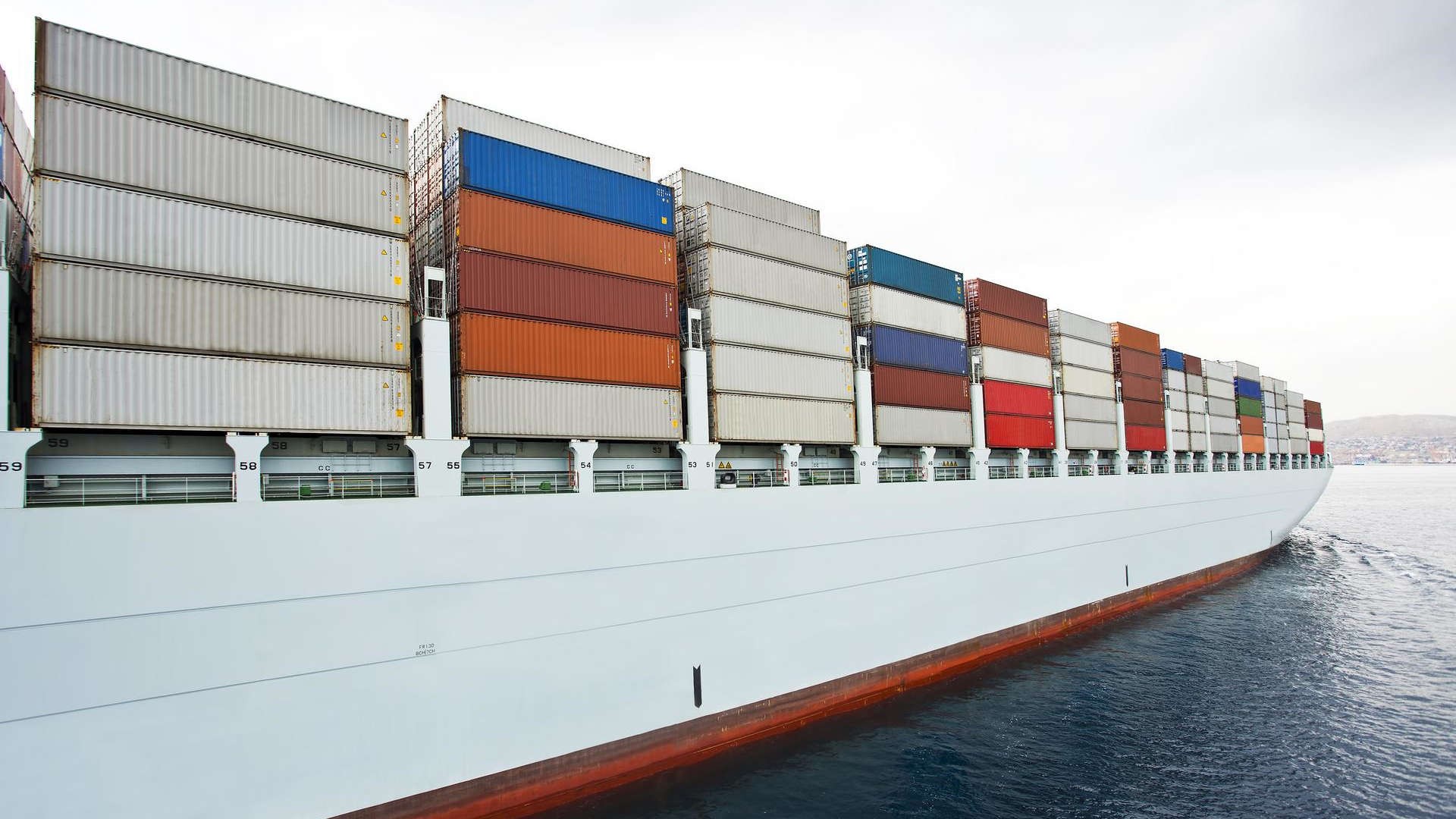

If we take a closer look at the number and capacity of container ships currently in the Persian Gulf, we see a significant concentration of vessels from the world’s largest liner operators.
As of 28 April 2026, seaexplorer figures show that the five leading global carriers together account for 34 container vessels currently positioned in the region.
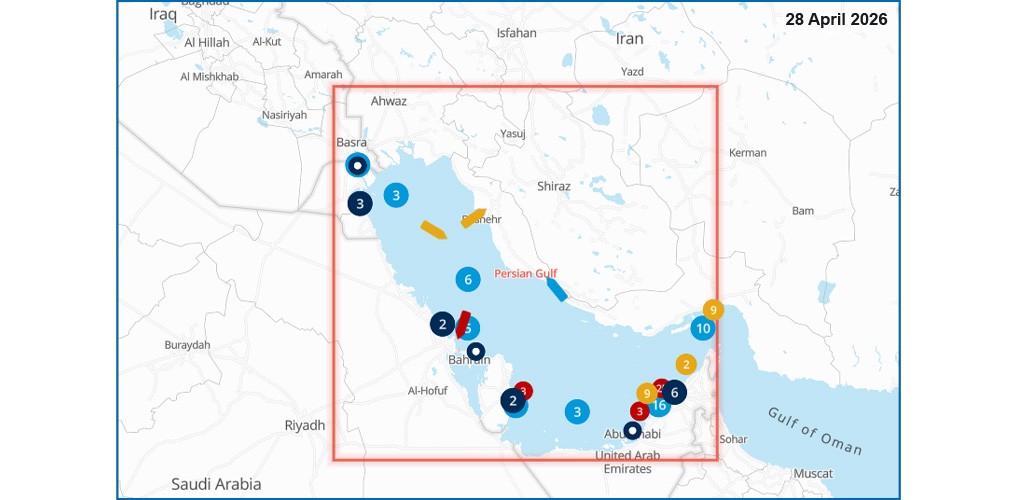
Even though 34 vessels out of 103 may seem like a relatively small share, they represent over 306,000 TEU out of 345,092 TEU, nearly 88% of the total container capacity stranded in the Persian Gulf.
Two of the top five container liners attempted to move ships out of the Gulf recently. However, the seizure of two MSC vessels halted exit efforts.
The incident led to renewed delays for multiple operators seeking passage through the Strait of Hormuz.
Hapag-Lloyd’s chief executive, Rolf Habben Jansen, said the carrier is waiting for a “window of opportunity” to transit the strait, after achieving only limited progress.
The German group has managed to extract a single-stranded vessel so far, the 4,253 TEU Tema Express, built in 2003.
According to Alphaliner, the Panamax vessel reappeared on 21 April after a month-long AIS blackout on the eastern side of the Strait of Hormuz.
Carrier-specific data highlights varying exposure levels
As of 28 April, available data points to 103 container ships in the Persian Gulf.
CMA CGM has 11 vessels immobilised, followed by MSC with 10, Maersk with six, Hapag-Lloyd with four, and COSCO Shipping Lines with three.
Among these, the largest ships by capacity include CMA CGM Everglade (15,254 TEU), CMA CGM Galapagos (15,254 TEU) and MSC's Express Rome (10,114 TEU).
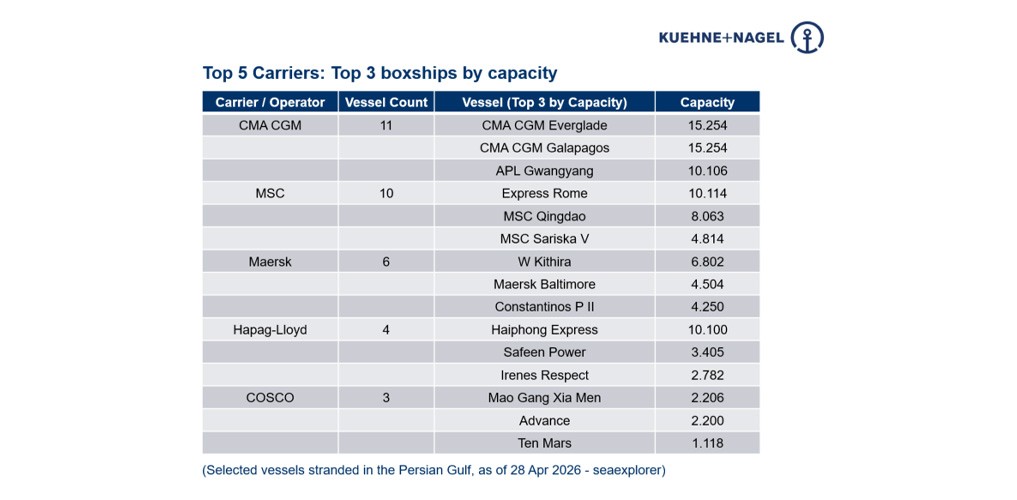
However, the largest vessel in the dataset by capacity is HMM Daon (16,010 TEU), operated by South Korea's liner HMM Company Limited.
Other major operators are also affected. Taiwan’s Evergreen has three vessels immobilised since early March, including sister ships Ever Lotus and Ever Lovely.
Carriers set up alternative transport arrangements
If the situation remains unresolved, shipping executives and analysts believe there will be potential operational consequences in the months ahead.
A report by the Journal of Commerce highlights that potential oil shortages in the long term could "significantly affect global manufacturing, curtailing container volumes."
Hapag-Lloyd CEO said alternative transport arrangements had been agreed so that “92% of cargo that was stuck now has a clear delivery date.”
These arrangements are likely to include blank sailings, service cancellations and routing adjustments.
On the other hand, the current challenges could lead to investments in ports and inland infrastructure in the Middle East as part of alternative transport routes to avoid chokepoint limitations.
Impact on the market so far
While the Hormuz crisis has had a major impact on the movement of vessels in the region, maritime consultancy Drewry believes the volatility in the market is "not comparable" to the rate inflation during the COVID pandemic.
“Unlike the airfreight market, the container shipping market has not seen a significant fall in capacity after the start of the Iran war, with the exception of capacity to and from the Gulf,” said Philip Damas, Head of Drewry’s logistics practice.
Overall, industry observers indicate that although regional disruption is significant, wider market conditions have not shifted to the extent seen in previous global crises.