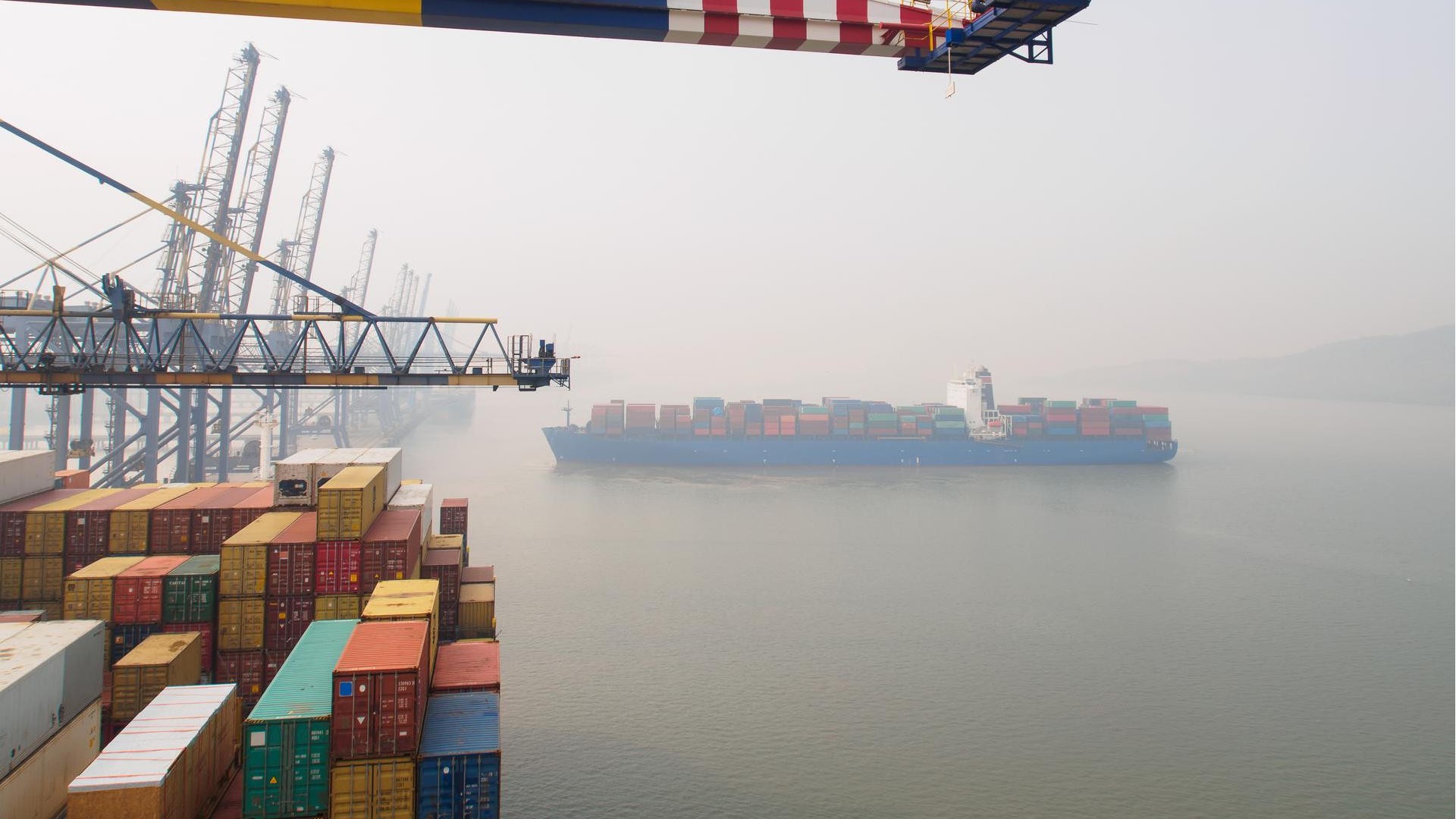

India's ports are experiencing sustained disruption at Nhava Sheva and Mundra, where shortages in trucking capacity have constrained cargo movement and created operational challenges for carriers.
This shortage is impacting inter-terminal transfers linked to transhipment. Reports mention that the transfers have slowed, compounding inland bottlenecks caused by a reduced driver workforce.
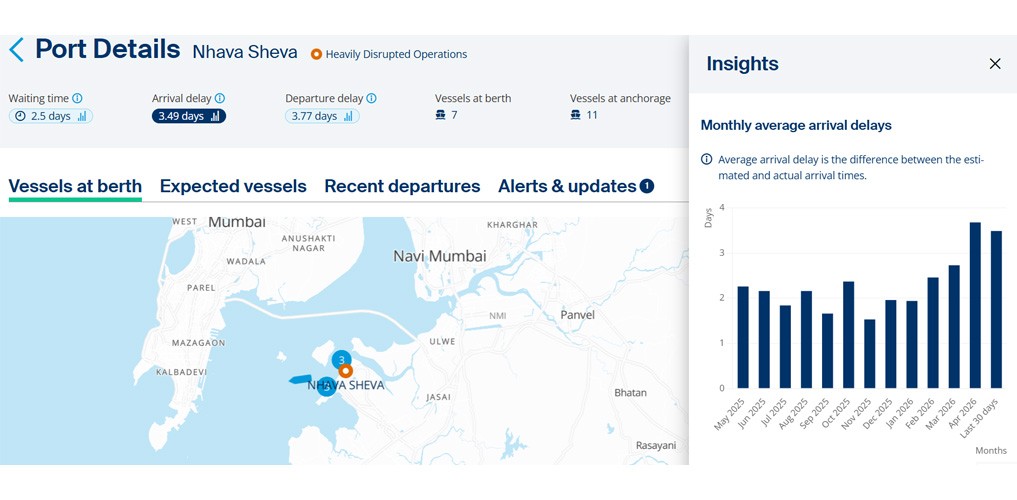
According to a report by the Journal of Commerce, berthing performance has also deteriorated, with delays averaging around two days for scheduled services and reaching up to five days for unscheduled calls.
Late arrivals from prior ports are adding pressure, particularly at Mundra. In response, busier terminals at Mundra have begun refusing ad-hoc vessels to manage congestion.
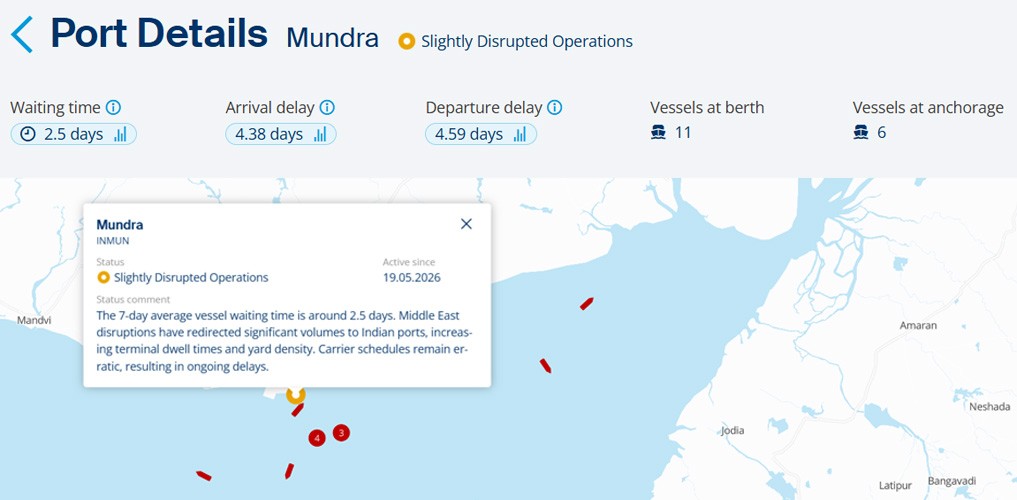
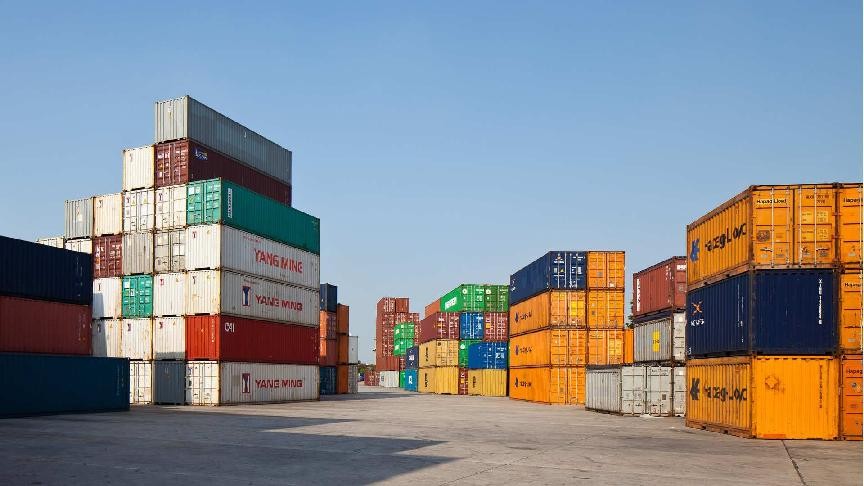
Seaexplorer's latest data further shows that container yards at both ports are heavily congested, with terminals intermittently closing gates to manage intake. Export gate windows are limited and frequently adjusted, complicating truck availability and scheduling.
Port operator Adani Logistics recently stated: “There has been an acute shortage of drivers, coupled with disruptions at the port, due to which we anticipate that first- and last-mile movement of containers may get impacted.”
As of 19 May, the seven-day average vessel waiting time at Nhava Sheva and Mundra is approximately 2.5 days.
Carriers make last-minute terminal changes
The challenges are reportedly prompting carriers to make last-minute changes to divert vessels from one terminal to another at Nhava Sheva.
Maersk announced diverting upcoming sailings from its usual terminal to PSA Mumbai due to yard space constraints and a backlog of containers.
These ad-hoc adjustments are creating operational challenges for shippers, including planning disruptions and potential variations in terminal handling charges depending on the facility used.
Ripple effect of Strait of Hormuz closure
Volumes redirected from Middle East disruptions have intensified yard density, extended dwell times, and destabilised carrier schedules in India. A large number of carriers have been relying on the country's transhipment facilities as an alternative to the ports in the Persian Gulf.
The Port of Karachi in Pakistan has also been seeing increased volumes linked to Middle East disruptions. The port is functioning as an alternative hub, although its limited terminal capacity is under pressure due to rapid growth.
Speaking to AP News, Mohammad A Rajpar, Port and Shipping Expert, stated that due to the inaccessibility of Gulf ports, “shipping lines have exercised the option of discharging their cargo at other countries. We are getting some of the pie. Other ports are perhaps getting some of the pie, while India is getting most of it."
He added, "The reason for that is, of course, that they were already having transhipment. It is easier to build on top of that. For us, transhipment is something new, so we have to create that business avenue and find our place in the wider regional market.”