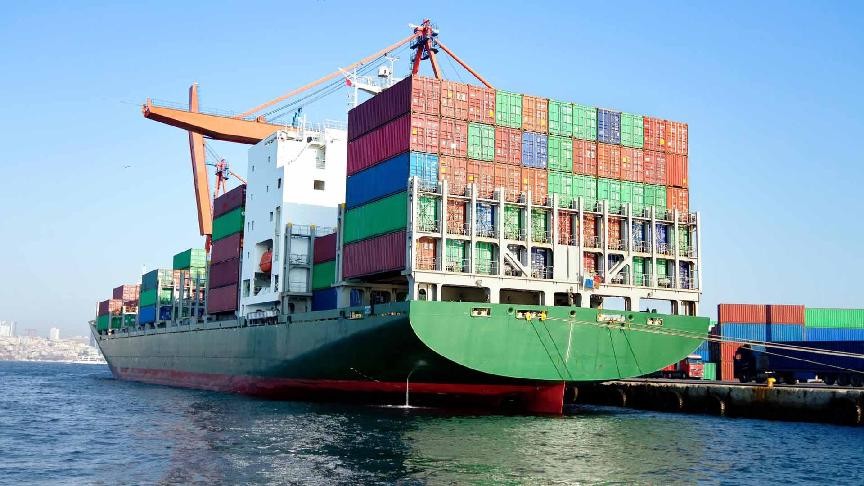

Global container shipping is experiencing an earlier-than-usual seasonal rise in demand (or peak season) following several months of supply disruption.
Trade activities typically increase ahead of the year’s third quarter and Christmas holidays. However, recent data shows that orders have shifted forward this year.
Experts believe this trend is related to concerns regarding fuel access shortages, market uncertainties, and potential future increases in costs.
Importers are also planning ahead before the expiry of some US tariff rates and fears of further new, higher tariffs.
After the decision by the Supreme Court to overturn Trump’s broad tariffs, the US Trade Representative applied temporary tariffs to all imports, due to expire on 24 July.
Other concerns include tighter container vessel capacities due to Hormuz closures and restricted Red Sea access.
Forecasts confirm import surge
Retail forecasts confirm that the current surge reflects early peak season behaviour. The US Retail Federation stated that import activity has been revised upwards for June as retailers frontload merchandise ahead of potential cost increases.
The current import surge will likely last into July, with an early peak season that resembles the more recent pattern of raised volume rather than a sharp peak
Founder of Hackett Associates
A Bloomberg report adds that orders are especially elevated from European importers buying goods from Asia, with demand on the Transpacific likely to follow. Trade Tsar at Bloomberg, Brendan Murray, comments that importers worry about “how the Mideast turmoil will play out in the second half” of the year.
Signs of a capacity crunch
This surge has led to tightening capacity and increased pressure on available vessel space.
“Capacity has become tight enough that forwarders are warning customers they must book at least three weeks in advance,” writes Senior Editor Michael Angell in the Journal of Commerce.
Import bookings by the US and from China and Southeast Asia increased by 10% during week 19. Consequently, availability from major Asian export hubs is described as extremely limited, with even premium services fully allocated through June.
Demand has also been supported by increased production activity in Asia, alongside reports of supply shortages linked to higher costs for oil and related commodities. According to the latest JPMorgan Global Manufacturing PMI, output is expanding at its fastest pace in several years, driven in part by clients bringing forward purchases to mitigate expected disruption.
Carriers have responded with plans to increase the Transpacific capacity for July, nearing 2.3 million TEU. In comparison, the capacity scheduled for June 2026 reached 2.1 million TEU, and 1.9 million TEU for May.
With the capacity tightening quickly, Kuehne+Nagel advises shippers to plan proactively to avoid the impact of a potential capacity crunch.
Given the constrained environment, flexibility and realistic planning are essential. Maintaining close communication and providing accurate forward visibility will help ensure smoother cargo flow during this peak season.