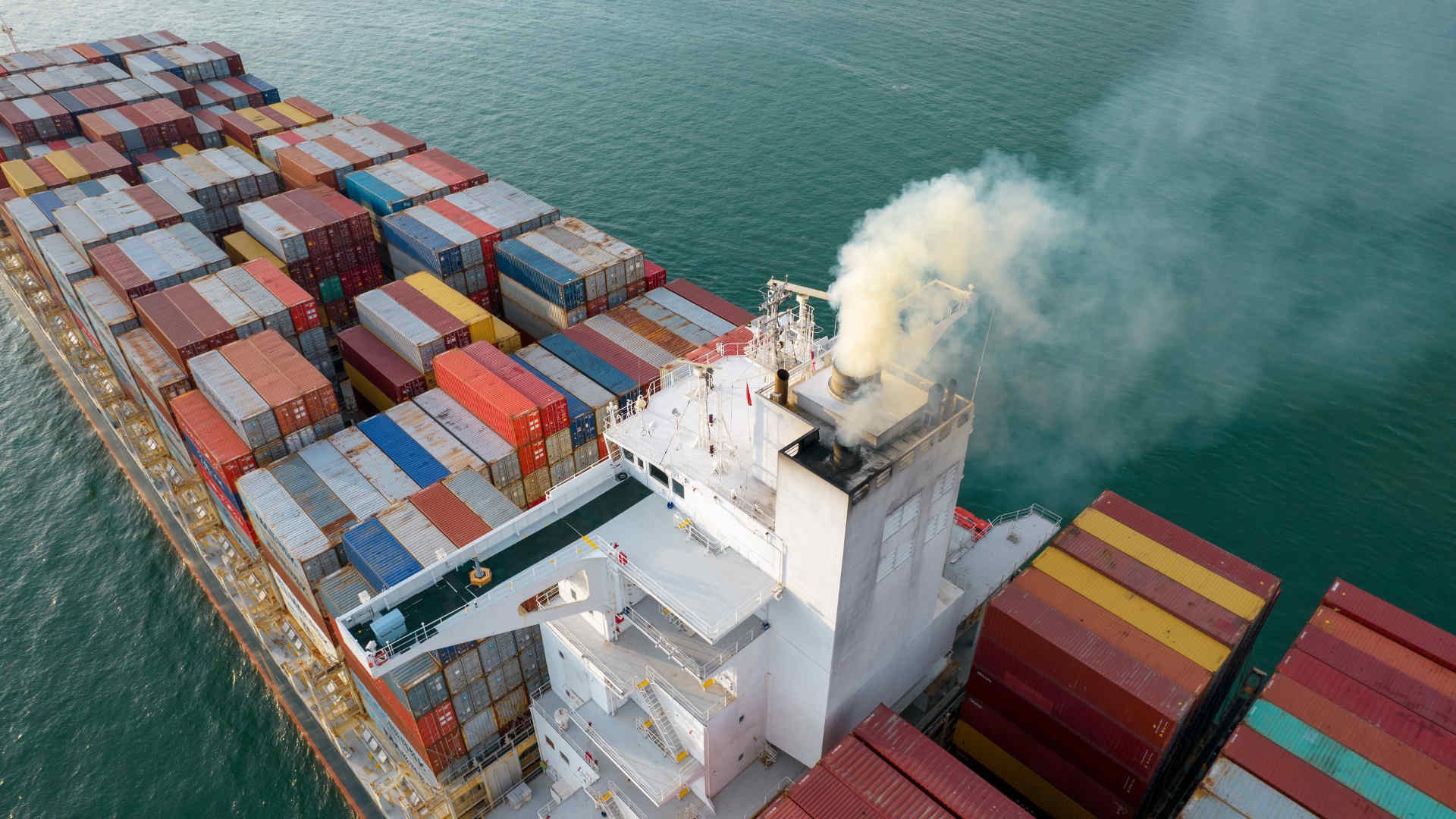
BRUSSELS has proposed extending the EU Emissions Trading System to ships of 400 gt and above, while earmarking billions for green shipping and including more non-EU port calls.
The European Commission on Friday published its lengthy proposals to overhaul the ETS, Europe’s flagship green regulation, after months of consultation.
They include the widely expected inclusion of smaller ships, from those of 5,000 gt and above to 400 gt and above.
The commission said it would reserve 110m ETS credits (known as allowances, or EUAs) to shipping companies until the end of 2040, to cover part of the green fuel price gap.
That reserve would be worth almost €9bn ($10.3bn) at today’s EUA price of around €80, and would help support green fuel making in Europe, in a significant win for the industry.
The proposal would simplify reporting requirements, aligning them with FuelEU Maritime and the EU Monitoring, Reporting and Verification system to reduce paperwork for shipping companies.
ETS exemptions for ice-class ships, those serving islands and outermost regions would be extended to 2035.
Trade body ECSA European Shipowners called the earmarking of revenues and support for green fuels “a long-awaited and important step in the right direction”.
It said the streamlined reporting was “an essential step towards reducing unnecessary administrative burden”.
But the group said support for clean technologies was too narrow, being limited to wind and electricity. It also wanted the exemptions made permanent, and said the 110m EUA reserve was “only a start”.
“It amounts to approximately €10bn out of the €90bn that the sector is expected to pay into the system between 2030 and 2040,” European Shipowners said.
“The full potential of the revenues generated by shipping must be used for the energy transition of the sector.”
Liner shipping lobby group, the World Shipping Council, and green NGO Transport & Environment welcomed the extra funds for green fuels.
But the WSC was concerned at the commission’s plan to include more neighbouring, non-EU transhipment ports in the ETS, to crack down on evasive port calls, based on infrastructure alone.
The council said ports within 150 nautical miles of the EU could be penalised simply because they had deep water, long berths and ship-to-shore cranes, regardless of whether transhipment was taking place.
“The ETS should be focused on cutting emissions, not making neighbouring non-EU ports less competitive,” said Simon Bergulf, environment and climate vice president at the WSC.
A port could be included if it’s within 150 nm of an EU port, has a draught greater than 11 metres, berth length greater than 250 metres and suitable container-handling cranes.
Ports within 300 nm of an EU port could also be included if their share of transhipments is above 50% of total container traffic.
That transhipment share is lowered to 50%, from 65%, because the higher limit “may not adequately cover ports outside the EU that have a high potential to attract transhipment activities from union ports, and where the transhipment of containers accounts for most container traffic”.
The 3.5% of maritime EUAs given to Greece, Cyprus and Malta — to compensate them for the administrative burden of the ETS given their high ratio of shipping companies to population — would continue to 2038. The commission would assess by 2035 if further extension were justified.
Response to an IMO measure
The proposal notes the risk of ships being double-taxed for their emissions if the International Maritime Organization passes a global greenhouse-gas emissions measure, a risk industry has long campaigned against.
It said the commission should present a report to the European Parliament and Council within 18 months of the adoption of such an IMO measure before it becomes operational.
That report should weigh the IMO measure’s environmental integrity and “provide for an IMO deduction mechanism according to which it is appropriate to allow shipping companies to surrender fewer allowances than their verified emissions to the extent that those emissions are also effectively priced under the IMO measure”.
That legislative proposal should look at reserving allowances to support least-developed countries and small island developing states, according to the document.
European Shipowners said the IMO response addressed only double payments. It wanted a clear signal that the ETS would be withdrawn once a global agreement was reached.
Bergulf, from the WSC, also wanted a firmer commitment against double payments in the final ETS revisions.
“That certainly would strengthen Europe’s position in global negotiations and support progress at the IMO,” he said.
Brussels proposes extending ETS to smaller ships, reserves billions for green shipping
Avoidance of double-taxation if a global IMO measure is adopted, but no outright promise to remove the ETS

Source: Lloyd's List

Related articles
Sea newsLandside bottlenecks, not ships, are the real constraint says Maersk, as Red Sea return gathers pace

Sea newsShipping emerges as prime cyber target for China-linked hackers
Sea newsGreece and Saudi Arabia to team up against IMO carbon price
Sea newsProgress at IMO green talks despite MEPC delay
Sea newsConfusion and disappointment after MEPC collapse
Sea newsIMO to delay Net-Zero Framework vote for one year