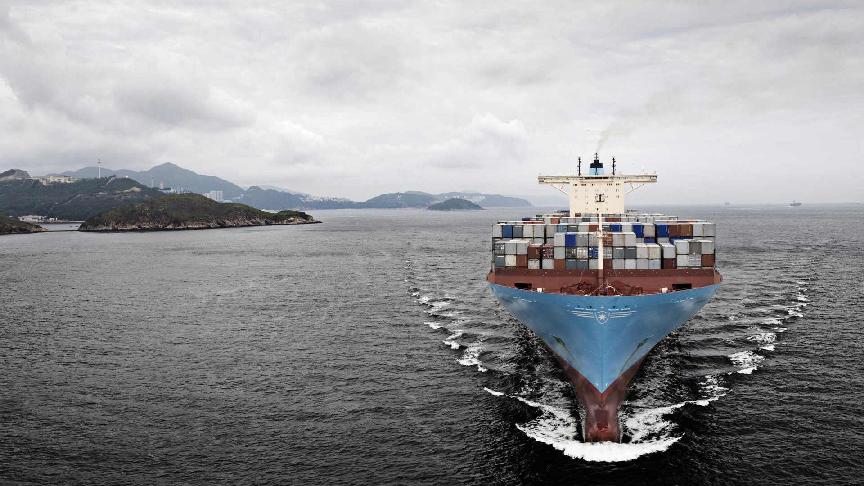

MAERSK will continue to expand its Red Sea services as long as security conditions remain stable, with the Danish carrier confident that a gradual return is now justified despite the Saudi-Houthi conflict, a senior executive has said.
Bhavan Vempati, who heads Maersk’s ocean business for Asia-Pacific, told Lloyd’s List that safety and security of crew, cargo and vessels remain the company’s top priority, but conditions now allow for a phased resumption of services through the Suez Canal.
“Based on the assessments we have, we believe it is safe to start to resume several of the services,” he said, adding that the carrier has announced eight services to return to the Red Sea so far.
Maersk is monitoring three key requirements before taking further steps: stability in and around the Red Sea, the absence of any material escalation in the conflict, and continued positive signals from operating partners and intelligence providers in the region.
Asked whether the current Saudi-Houthi conflict had reached a level that would halt the recovery, Vempati said it had not. He added that the company evaluates the situation on an ongoing basis rather than making binary decisions about a full return to normal.
The comments come as fighting between Saudi Arabia and the Iran-backed Houthis has intensified in recent weeks.
The militia has gained control of much of Yemen’s Red Sea coast and are advancing toward areas adjacent to the crucial Bab el Mandab strait, according to the United Nations. The group has also struck Saudi oil facilities, including the East-West Pipeline, with columns of smoke also visible near Riyadh’s main airport during the weekend.
The kingdom has launched hundreds of strikes on Houthi positions but with little impact on the group’s advance, while the US has so far rebuffed repeated pleas from its Middle East Gulf ally to join the fight, with US President Trump reportedly calling off his latest bombing campaign at the last minute.
Despite the escalating conflict, Maersk’s approach stands in contrast to its position on the Strait of Hormuz, where the carrier sees conditions as too risky for a return. “We don't believe that there are conditions which can protect the safety and security of the vessels, crew and cargo,” said Vempati.
Maersk’s phased return is part of a broader industry shift back to the Suez route.
Lloyd’s List Intelligence vessel-tracking data shows just one containership larger than 18,000 teu transited the Bab el Mandeb during 2025. This year, that figure has reached 44, including 39 crossings since July and almost half during August alone.
According to Linerlytica, the number of ships diverted to the Cape of Good Hope has fallen to a 30-month low of 250 vessels representing 3.5m teu, down from a peak of 380 ships for 5.4m teu earlier this year.
Customer response to the Red Sea return has been broadly positive, Vempati said, with shippers increasingly concerned about higher inventory costs resulting from longer transit times via the Cape of Good Hope.
Vempati said customers are increasingly worried about higher inventory costs and cashflow challenges caused by longer transit times via the Cape of Good Hope. “Especially with the rising interest rates we are seeing right now globally, it starts to become a more material concern,” he said.
While shippers initially raised questions about cargo insurance for Red Sea transits, Maersk has been working to provide solutions through its cargo risk management services.
Landside infrastructure the real constraint
When asked about analyst concerns that a full return to the Red Sea could trigger a collapse in freight rates as capacity absorbed by rerouting floods back into the market, Vempati offered a different perspective.
The real constraint facing the industry, he argued, is not vessel capacity but landside infrastructure bottlenecks — a shift that could reshape how the market thinks about supply and demand dynamics.
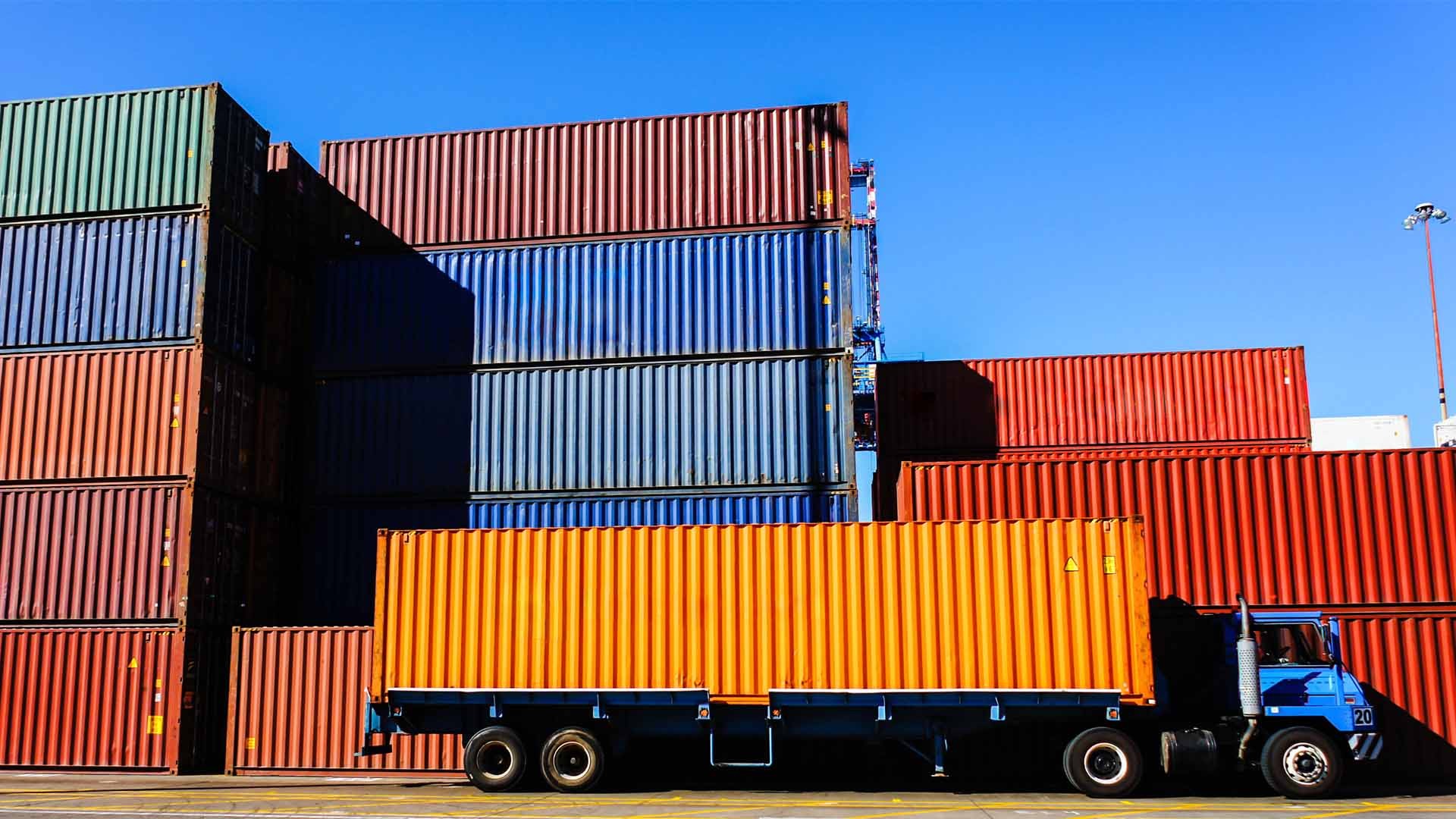
“The bigger impact we are seeing, more than the Red Sea transits, is the bottlenecks on the landside,” he said. “We are seeing increasing bottlenecks on the terminal and the landside infrastructure, where the port-side congestion is not just in Asia. We are seeing it across the regions.”
These blockages extend beyond terminals to inland waterways, rail and trucking, Vempati said, and are being amplified by continued strong export demand from Asia, particularly China, despite tariffs and geopolitical uncertainties.
“Even though we have higher vessel capacity, what really matters more and more for the customer supply chains is the ability to actually have the infrastructure to handle the volume at the terminals and on the landside,” he said.
Linerlytica data appears support this view. While port congestion in China is gradually easing from recent peaks, disruptions at Southeast Asian, Indian and Middle Eastern ports remain at near-record highs, with congestion also building at certain US east coast ports. Globally, capacity absorbed by port congestion remains stubbornly high at over 11% of the fleet.
The investment lag compounds the problem. Vempati said that a greenfield terminal takes six to 10 years from concept to operation, meaning logjams are unlikely to ease in the short term if demand continues at the current pace.
“Our perspective is that the real constraint has shifted from vessel capacity to actually the landside and the infrastructure bottlenecks,” he said.
The discussion around vessel oversupply, Vempati added, must also account for the capacity absorbed by operational inefficiencies in an increasingly disrupted shipping environment.
“Whenever you have terminal congestion, you have increased number of waiting days at the terminal, and the capacity is absorbed because of the bottlenecks,” he said. “The vessel that could finish operations now needs to wait for five days, or seven days more, and that eventually absorbs a bit more capacity than what would happen otherwise.”
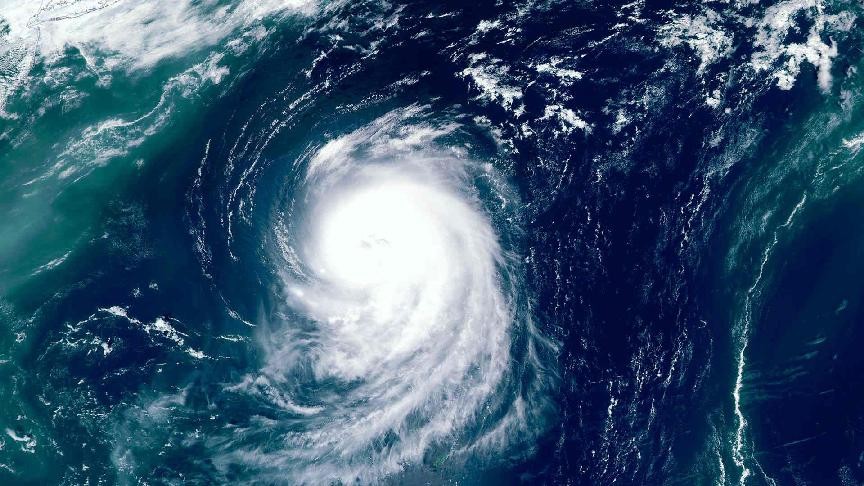
Three categories of disruption are now converging simultaneously, he said: geopolitics, including the Red Sea situation and tariffs; weather conditions affecting the Panama Canal and causing typhoons in Asia; and landside infrastructure constraints.
“What we see is not one but three buckets of issues coming at the same time, and that’s creating a lot more volatility and disruption to the supply chains than before,” he said.
This environment is pushing customers to seek greater resilience in their supply chains, whether through creating optionality, improving lead times, or partnering with integrated logistics providers — an area where Maersk is looking to grow beyond its traditional ocean shipping business.
Fleet renewal, not market defence
Maersk recently confirmed orders for 26 ultra-large containerships, a move that Linerlytica described as “the first break from its logistics integrator strategy”.
The order has set the stage for a new capacity race, with the containership orderbook-to-fleet ratio surging to a post-2009 high of 45% and additional orders still expected as vessel demand remains relentless.
“The current vessel shortage is driving freight rates, charter rates and secondhand ship prices to fresh year to date highs, which has ironically made current newbuilding prices appear low by comparison,” the analyst said.
Vempati said the orders were part of a fleet renewal programme aligned with the company’s decarbonisation ambitions, with the vessels featuring dual-fuel engines capable of running on liquefied natural gas. He declined to characterise the orders as a defensive move to protect Maersk’s position as the world's second-largest container carrier.
“The key reason is the fleet renewal programme,” he said. “Our focus continues to be providing quality services to the customer.”
For its intra-Asia growth ambitions — the region accounts for 22% of global trade flows — Maersk is looking at multiple options including cascading smaller vessels from the main trades, chartering from the market and partnerships.
The carrier launched five new services from Asia in the third quarter of 2026, covering routes to Australia, North America, Latin America and Africa.
“We continue to have plans to expand our footprint in Asia,” Vempati said. “Growth in the Asian market is a key priority.”