
Mali experienced large-scale attacks claimed by the militant group JNIM at the end of April 2026. The attacks took the lives of soldiers and civilians and were described as "one of the boldest operations" launched against the military-led government.
Regional logistics operators said the situation stabilised in early May, although the risk of further attacks remains high.
However, authorities introduced an overnight curfew in some Malian cities after the incident, including Kati and the capital, Bamako, from 9:00 PM to 6:00 AM until further notice.
Government administrations are operating at a slower pace in the aftermath of the attacks, causing delays in handling trade transactions.
This report looks at Mali’s economic situation and its impact on neighbouring countries in West Africa.
Political and economic background
The current cycle of large-scale violence in Mali generally dates back years before it escalated to a wider conflict.
It began in early 2012 after a northern armed uprising grew quickly, fuelled by fighters and weapons returning from Libya, weak government control (worsened by a coup), and the rise of extremist armed groups.
Mali’s economy is mostly dependent on the export of gold and raw cotton, which constitute roughly 80% and 7% of exports, and it also relies on agricultural output.
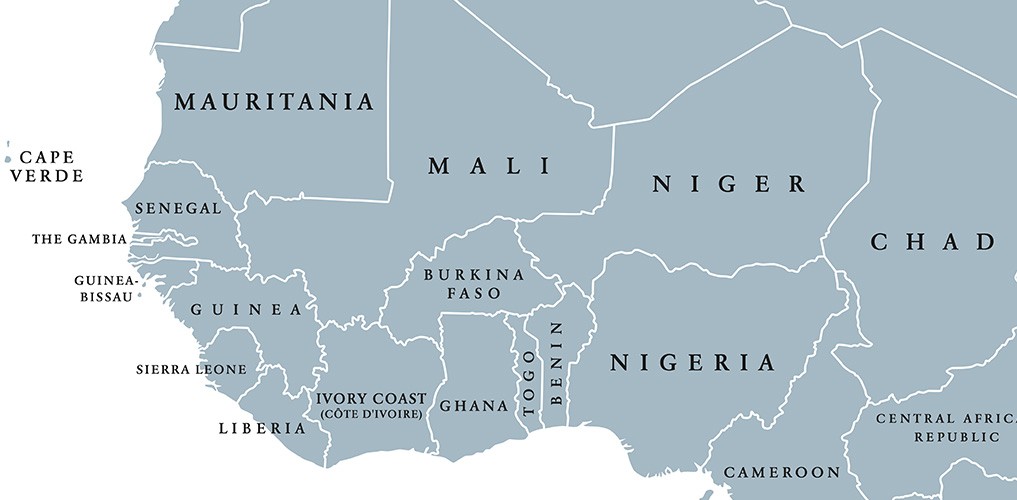
As a landlocked nation, Mali imports manufactured goods, machinery and fuels, relying heavily on multimodal sea–rail–road corridors that funnel sea freight via neighbouring ports, primarily Dakar (Senegal) and Abidjan (Côte d’Ivoire).
Container carrier responses to Mali’s security risks
As security conditions in Mali deteriorated in late 2025 and early 2026, container carriers reacted cautiously.
Several major lines temporarily suspended bookings and overland cargo movements to Mali, citing concerns over crew safety, fuel availability and the increasing unpredictability of inland transport corridors across West Africa.
While some operators updated their response, others, such as MSC, continued to suspend services to Mali. Kuehne+Nagel also maintains a temporary suspension regarding shipments to Mali.
Even where services partially resumed, insecurity along key corridors linking Abidjan, Dakar and Bamako led to prolonged transit times, congestion at coastal ports, and the temporary immobilisation of containers awaiting onward movement.
In response to these disruptions and the volatility of inland access, several carriers invoked force majeure provisions, allowing them to suspend or limit contractual obligations for shipments destined for landlocked Mali.
Impact on local economy
International institutions have examined how Mali’s political situation is affecting the economy, identifying disruption to supply routes and the flow of basic goods as the main challenge, with knock-on effects on daily life and economic activity.
An Institute for Security Studies (ISS) report, issued in October 2025, described militants’ use of road blockades as a strategic weapon to obstruct traffic on key roads linking Mali to Senegal, Mauritania and Côte d’Ivoire.
The blockades were used to hinder fuel tankers and other transport, depriving affected areas of essential services, including access to food, water, electricity and communication.
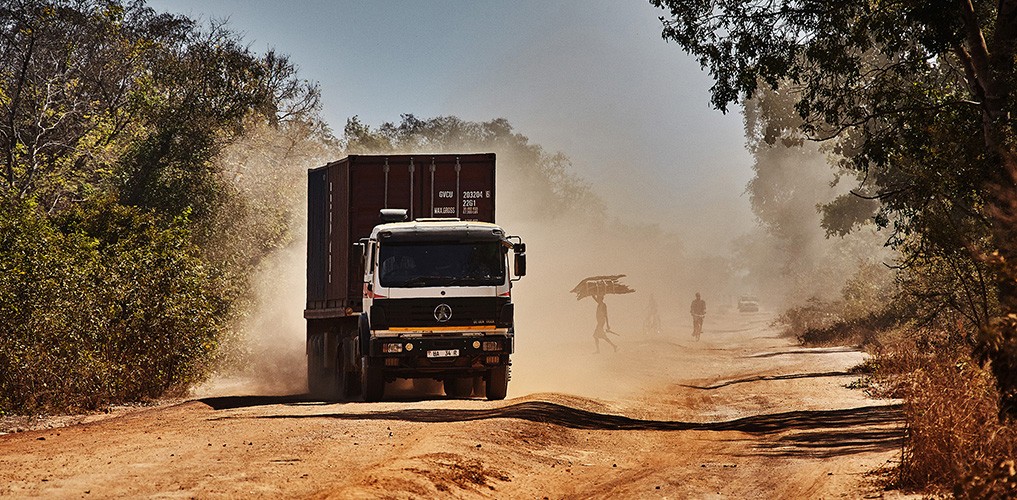
At the time of writing this report, disruptions are visible between Dakar and Bamako corridors, namely via Kidira and Moussala. While borders between Mali and Senegal remain open, blockades are immobilising trucks in Kayes and Sandaré, and some are being held in Kita.
These blockades were reportedly set up by terrorist groups, resulting in delays to ongoing deliveries, as well as in the return of empty containers to the Port of Dakar.
Regional impact across neighbouring countries
Studies on the regional impact mainly highlight effects on trade corridors, port-linked hinterland flows, and rising security-related friction in cross-border commerce.
As a landlocked economy, Mali relies on supply routes including the Dakar–Bamako corridor, the Abidjan–Bamako corridor and the Casablanca–Nouakchott–Bamako corridor.
Experts warn that disruption to Mali-linked corridors affects regional commerce and civilians, and note that ports in Côte d’Ivoire, Guinea, Senegal and Mauritania depend heavily on Malian traffic.
As a result, the security of consumers, traders and commercial flows to Bamako and other Malian cities is a regional economic concern.
Future outlook
In its April 2026 report, NGO Vision for Humanity said that militant expansion is increasingly edging towards coastal states and ports, and that border pressures can fuel wider instability, including refugee flows and tensions in border regions.
Taken together, the sources indicate that sustained insecurity in and around Mali can lead to less predictable regional transit and higher friction for cross-border movements.
Coastal economies linked to the Sahel hinterland demand via road corridors and port-connected logistics may also be more exposed.
Kuehne+Nagel’s West Africa operations aligned with the industry’s cautious stance, keeping internal guidance to temporarily suspend and not recommend containerised shipments to Mali due to security risks and corridor instability.
For more information, please consult with your local Kuehne+Nagel representative.