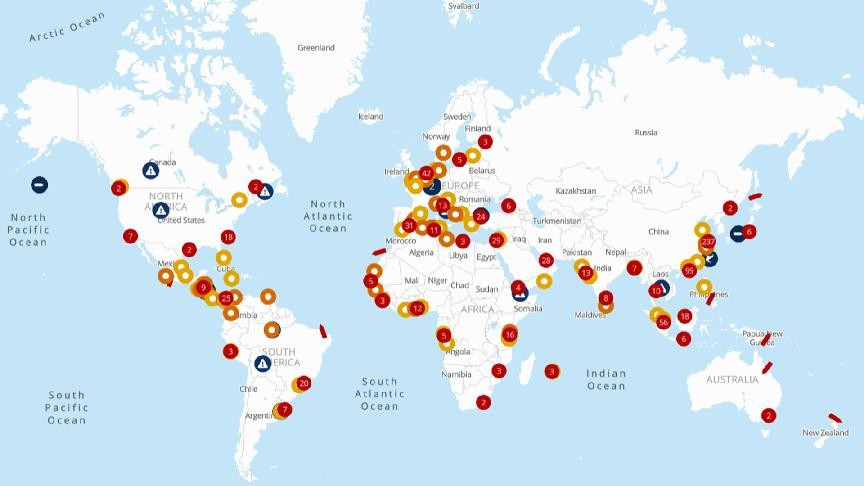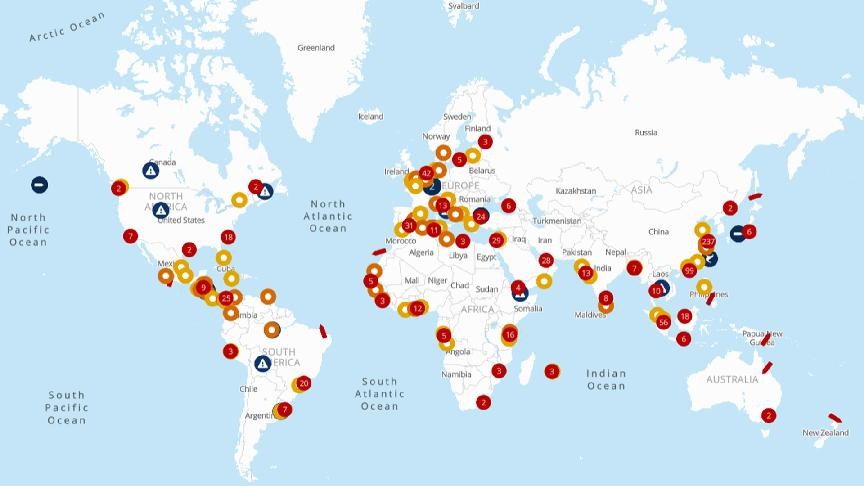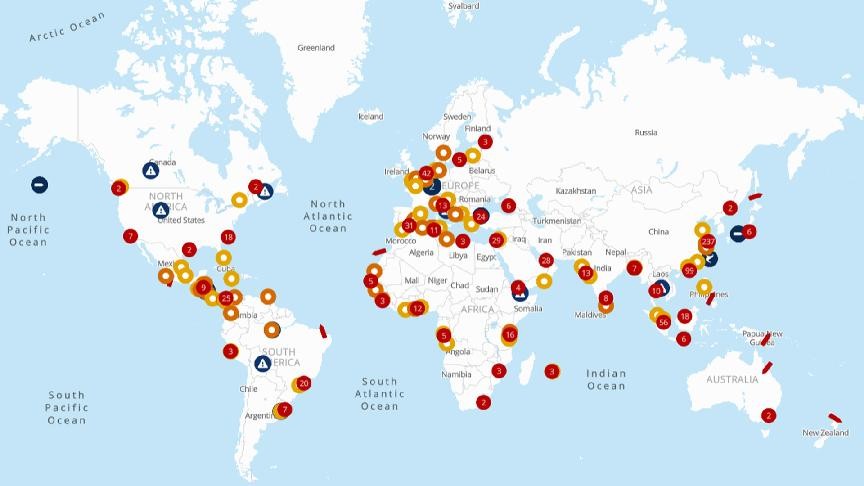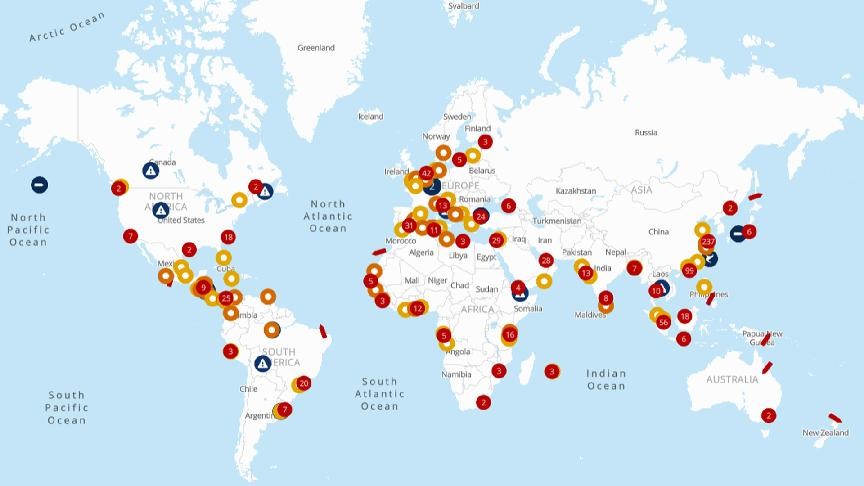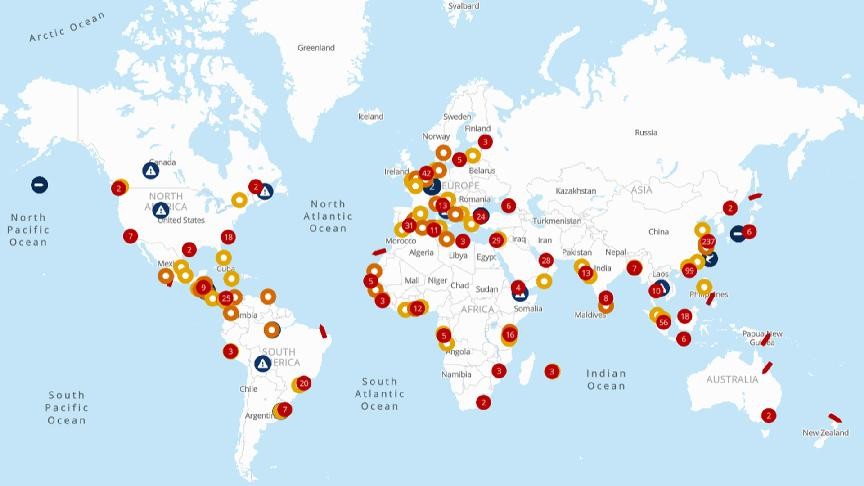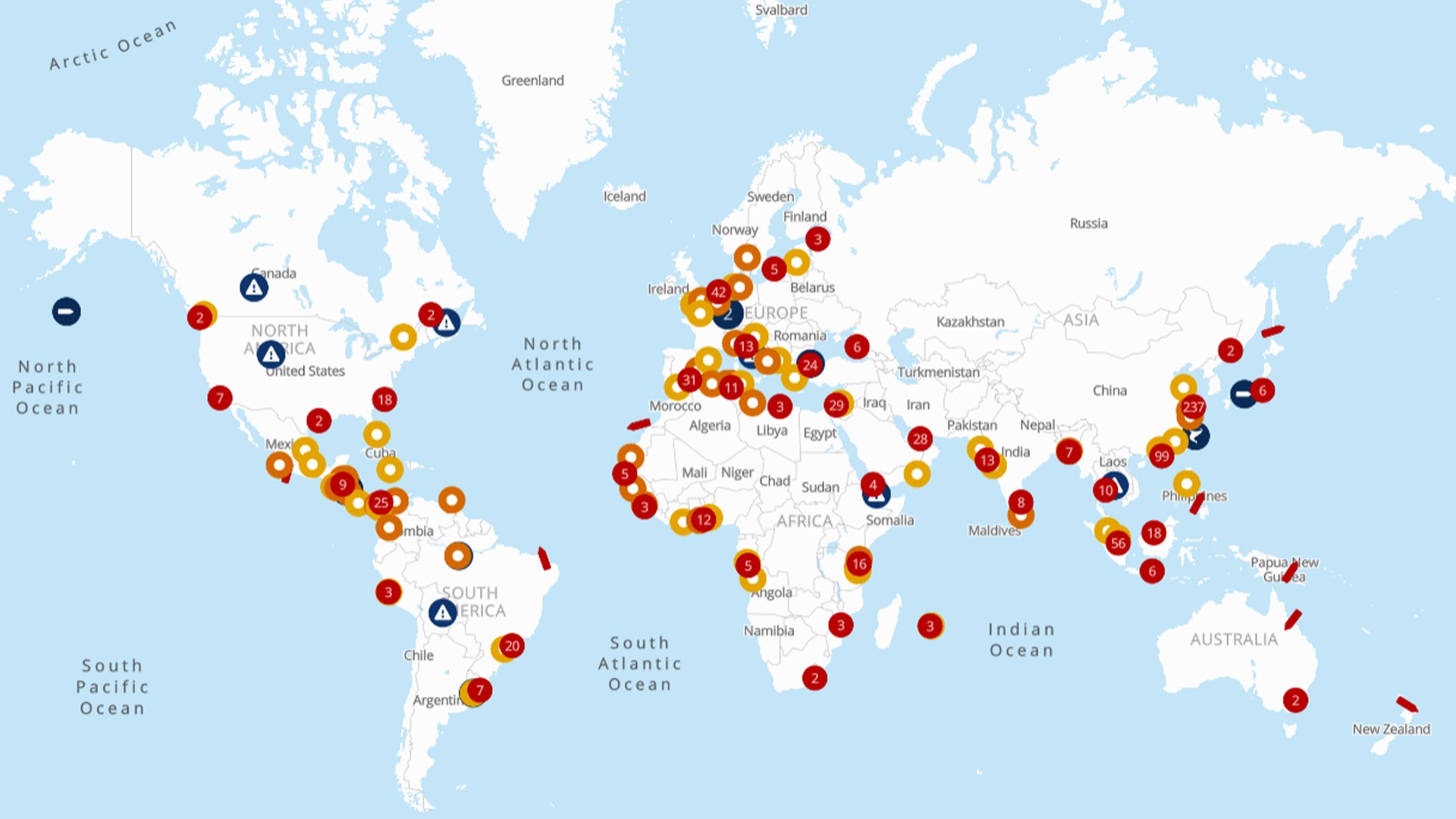

Stay ahead of supply chain disruptions and port congestion with Kuehne+Nagel’s weekly port operational update.
- Find out the latest vessel waiting times and status of ports in Africa, Asia Oceania, Europe, Middle East-Indian Subcontinent, North America, and South and Central America.
Africa
Cameroon
Kribi: Since 8 April, stricter customs controls at Kribi Port have caused gate‑out delays, with customers advised to use Douala Port temporarily. Early rains, poor road conditions and a 28‑tonne truck weight limit are further extending inland transit times.
Ghana
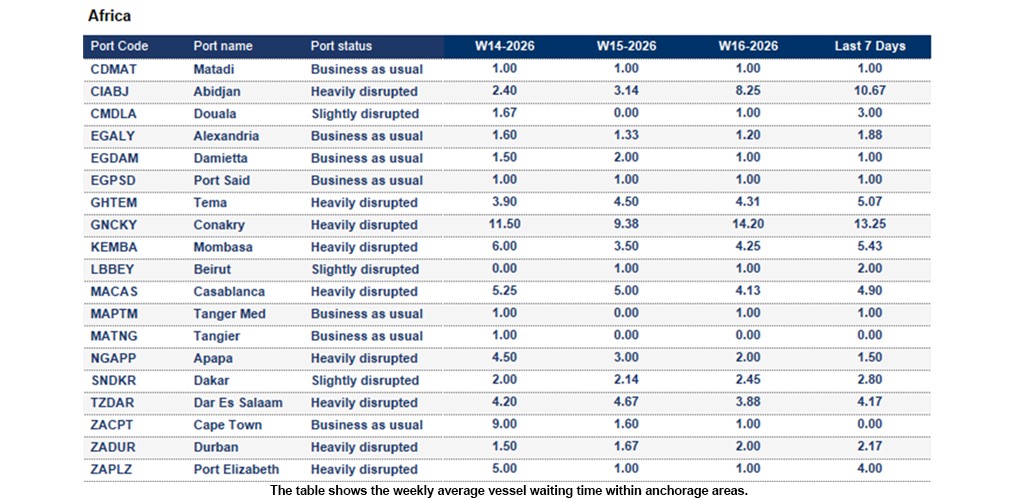
Tema: The 7-day average vessel waiting time is around 5.07 days. Yard utilisation remains high due to sustained volume growth and intermittent operational disruptions. Equipment downtime may further constrain productivity. In addition, Tema’s role as a key transhipment hub continues to place additional pressure on already congested terminal capacity.
Guinea-Bissau
Bissau: Port capabilities remain constrained due to limited berthing availability and handling equipment. Delays are further compounded by slow coordination among relevant authorities. In addition, restricted trucking capacity and deteriorated road conditions outside Bissau continue to adversely impact cargo movements and inland connectivity.
Mauritius
Port Louis: Cloudy conditions are forecast throughout the week, with intermittent rainfall and strong wind gusts expected.
Mozambique
Beira: The 7-day average vessel waiting time is around 17.67 days. Terminal recovery is estimated at approximately 16 days, with normalisation expected around weeks 29–30. Intermittent wind gusts and rainfall are forecast to persist for the remainder of the week.
Nigeria
Apapa: The 7-day average vessel waiting time is around 2.0 days. Congestion remains persistent, resulting in significant delays and operational slowdowns. Inefficient evacuation of import containers continues to exacerbate yard congestion, leading to an accumulation of empty units. To manage yard capacity, restrictions on empty returns and temporary terminal gate closures may be implemented.
Tincan: The 7-day average vessel waiting time is around 3 days. Congestion remains persistent, resulting in significant delays and operational slowdowns. Inefficient evacuation of import containers continues to exacerbate yard congestion, leading to an accumulation of empty units. To manage yard capacity, restrictions on empty returns and temporary terminal gate closures may be implemented.
Senegal
Dakar: The 7-day average vessel waiting time is around 2.8 days. Moderate congestion was observed in early April; however, conditions improved towards the end of the month. Availability of empty containers remains stable.
South Africa
Port Elizabeth: The 7-day average vessel waiting time is around 4.0 days. At the PECT terminal, waiting times are around three days, with scheduled service maintenance planned from 19 January through to the end of April 2026. Inclement weather is forecast later in the week, with periods of rain and strong winds expected on Thursday and Friday. Storm activity is possible from Sunday, with further rainfall anticipated into early next week.
The Gambia
Banjul: The 7-day average vessel waiting time is around 2.5 days. Operations at the Port of Banjul remain generally stable; however, administrative procedures handled by local authorities may be protracted, which can adversely affect planning reliability and overall operational predictability.
Asia Oceania
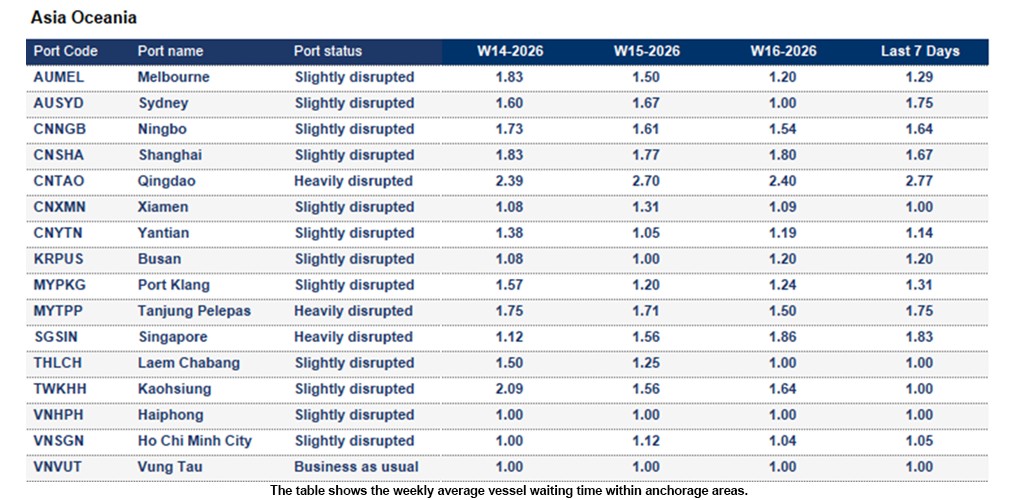
New Zealand
Auckland: The 7-day average vessel waiting time is around 2.17 days.
Tauranga: The 7-day average vessel waiting time is around 2.0 days.
Philippines
Manila: The 7-day average vessel waiting time is around 3.58 days. Heavy berth congestion persists at Manila North, driven by challenges with import empty container returns due to limited space at off‑dock depots and terminals, as well as berth queuing. Congestion is mainly caused by late vessel arrivals missing their allocated berthing windows.
Europe
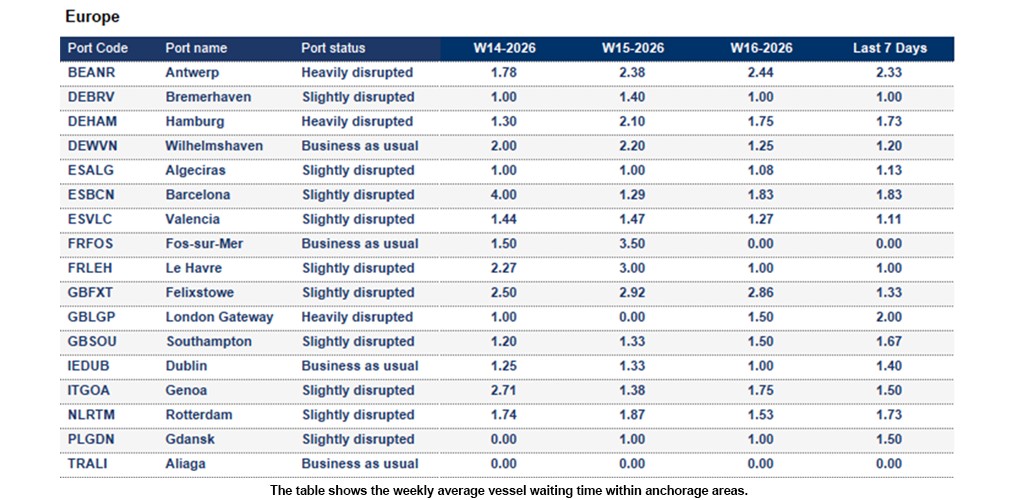
Croatia
Rijeka: The 7-day average vessel waiting time is around 4.0 days.
Germany
Bremerhaven: The 7-day average vessel waiting time is around 1 day. High volumes of transhipment containers are being handled, which are impacting the reliability and fluidity of southbound feeder connections.
Italy
Genoa: The 7-day average vessel waiting time is around 1.5 days. Carrier delays are being reported, with vessels arriving late at ports, resulting in delayed loading operations and subsequent export delays.
Slovenia
Koper: The 7-day average vessel waiting time is around 2.5 days.
Middle East - Indian Subcontinent
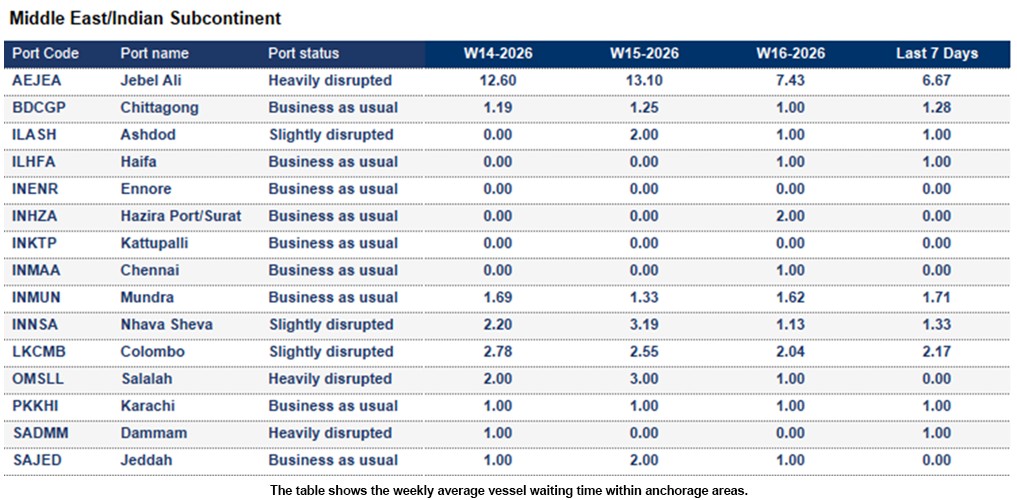
Middle East:
Port conditions across the region remain stable, with all ports in the Persian Gulf reporting normal operations. Read more.
India
With the strait remaining closed, diversion activity and associated knock‑on effects continue to intensify. Ports in India, particularly Nhava Sheva, have become the primary pressure point across the network. Transhipment volumes at the port are reported to be more than 1,300% above pre‑conflict levels, while import dwell times have almost doubled, reflecting broader shifts in network flows and operating patterns.
North America
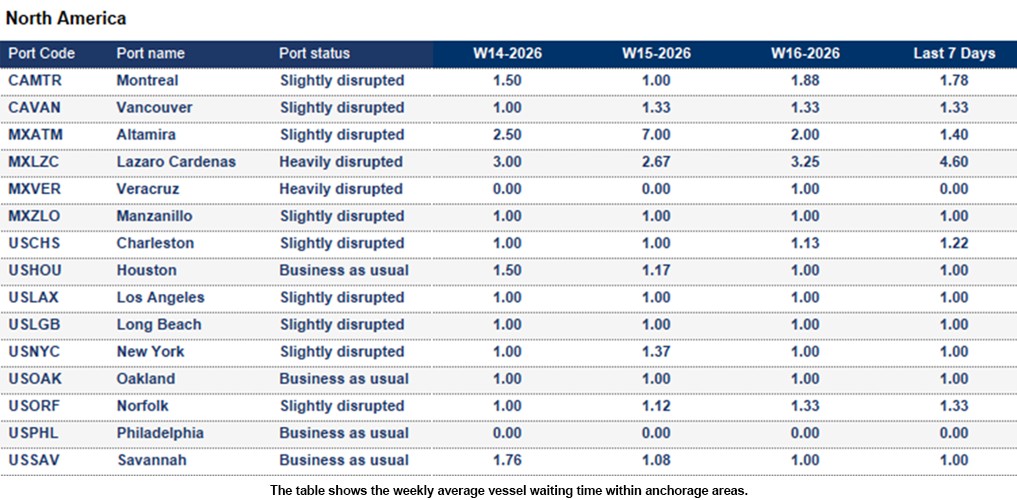
Canada
Average import rail dwell time for Canadian cargo (Vessel arrival to departure rail ramp):
- Halifax: 8 days
- Montreal: 8 days
- Prince Rupert: 8 days
- Saint John: 8 days
- Vancouver: 8 days
Mexico
Ensenada: High demand is impacting port manoeuvring operations and contributing to increased waiting times.
Manzanillo: The 7-day average vessel waiting time is around 1 day. At the ports of Manzanillo and Lázaro Cárdenas, adverse weather conditions may give rise to operational challenges. In addition, the availability of refrigerated equipment remains limited.
Veracruz: Operations were regulated over the weekend due to adverse weather conditions. Current demand remains elevated, which may lead to delays in the collection of empty containers and impact port entry. High operational concentration has also been reported.
United States
Average import rail dwell time for American cargo (Vessel arrival to departure rail ramp):
- Halifax - 12 days
- Montreal - 9 days
- Prince Rupert - 9 days
- Vancouver - 7 days
- Saint-John - 8 days
- Charleston - 3 days
- Newark - 4 days
- Houston - 8 days
- Jacksonville - 3 days
- Los Angeles - 5 days
- Long Beach - 8 days
- New York - 5 days
- Miami - 1 day
- Oakland - 5 days
- Norfolk - 3 days
- Philadelphia - 10 days
- Savannah - 2 days
- Seattle - 4 days
- Tacoma - 4 days
South and Central America
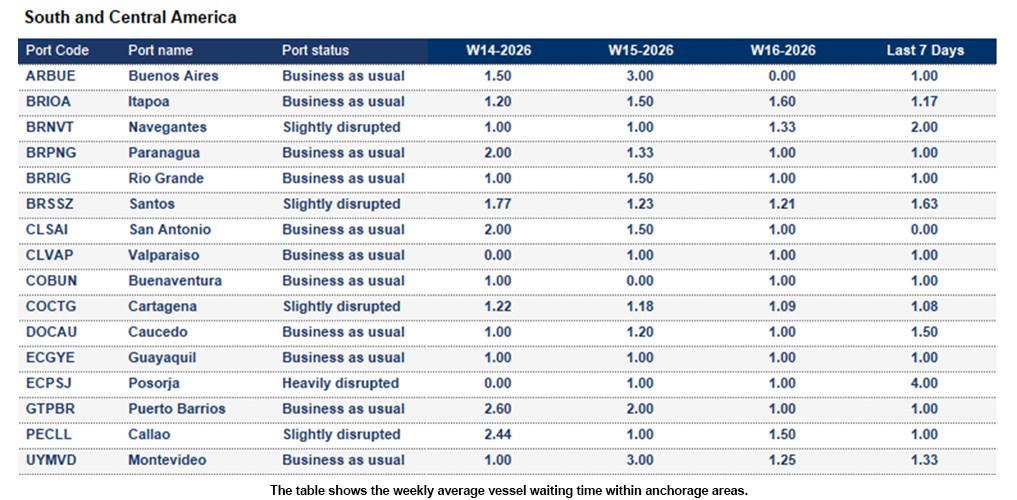
Brazil
Navegantes: The 7-day average vessel waiting time is around 2.0 days. Yard utilisation was reported at 77% in week 17 at PORTONAVE. The terminal is undergoing civil works with just one pier in operation.
Suape: The 7-day average vessel waiting time is around 4.0 days.
How Kuehne+Nagel estimates port disruption statuses
Seaexplorer has four port statuses that are estimated based mainly on the 7-day average vessel waiting time. Other factors include yard congestion, labour strikes, natural disasters or intermodal disruptions. Slightly different rules are applied to major ports, or ports that are hubs in their region, as they are typically more efficient.
- Business as usual means the port is currently operating without any significant disruption.
- Slightly disrupted is used if the 7-day average vessel waiting time exceeds 2 days.
- Heavily disrupted is used if the 7-day average vessel waiting time exceeds 4 days.
- Port closed is used when the port suspends operations due to a major disruptive event.
How Kuehne+Nagel calculates the 7-day average vessel waiting time
Mainline container vessels may spend a certain number of days waiting at designated anchorage areas before their scheduled port call.
To calculate the 7-day average waiting time, we consider the waiting days of these vessels, excluding:
- Waiting times for feeder vessels,
- Idle ships without an announced next port,
- Slow steamers heading toward the anchorage, but not actively waiting within the designated area
- Vessels passing through the anchorage area without intending to call at the port.
This rolling average is based on the last 7 days of data and is updated daily in seaexplorer. To find the latest waiting time for a port, enter the port name or code in the search bar and select the relevant option.
Stay Ahead, Stay Informed: Register for seaexplorer for the latest disruptions and vessel waiting times at global container ports.