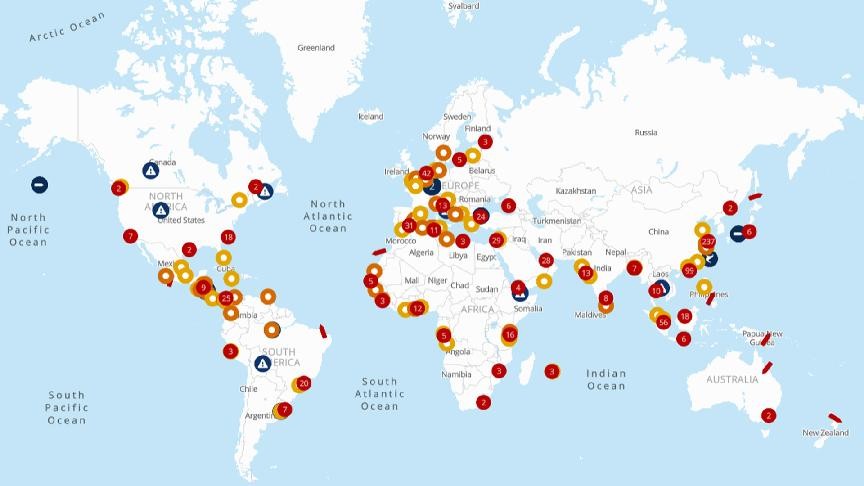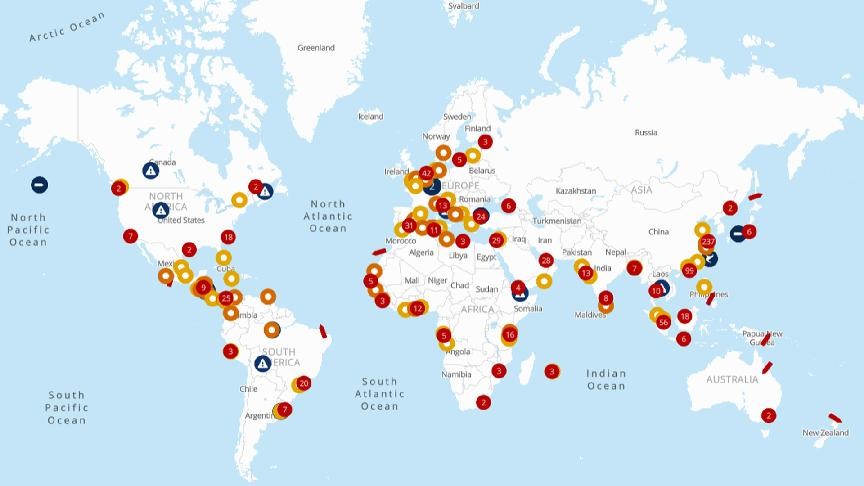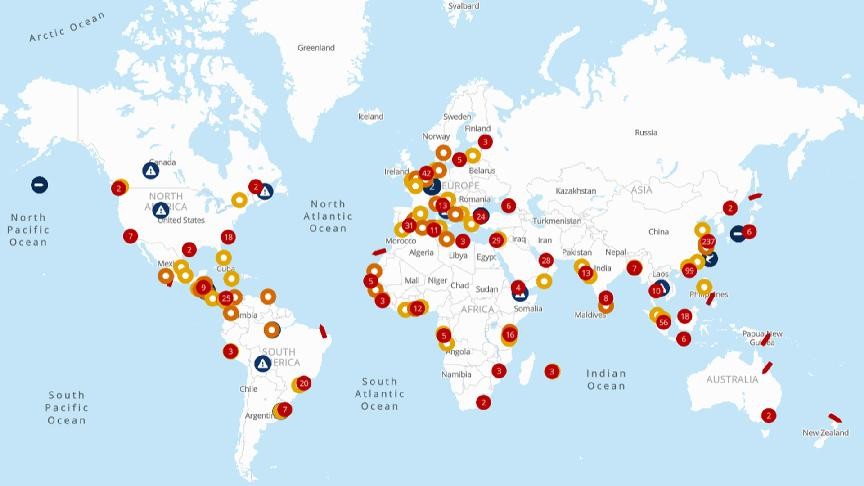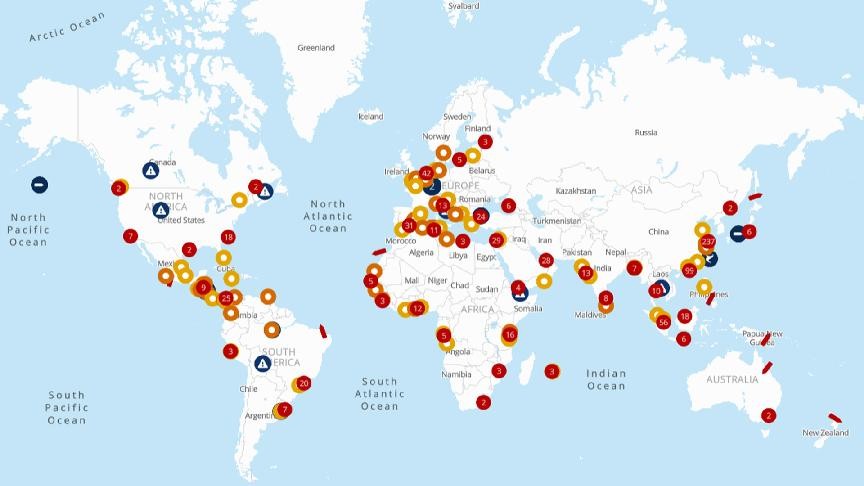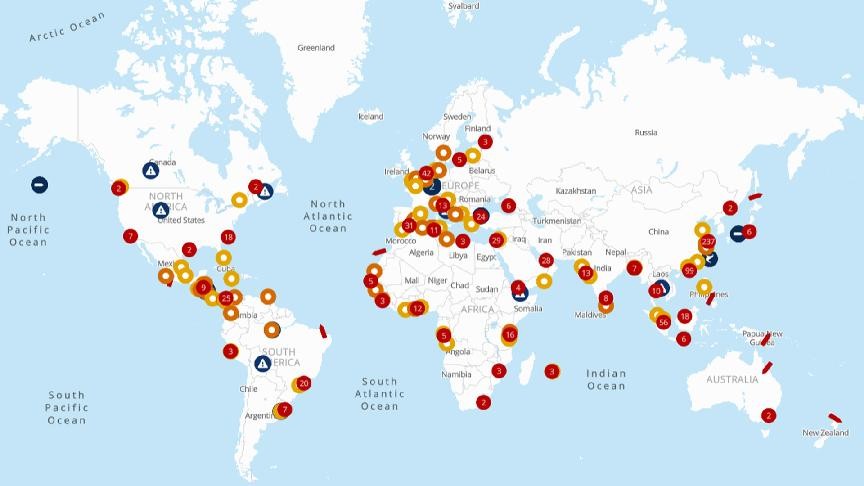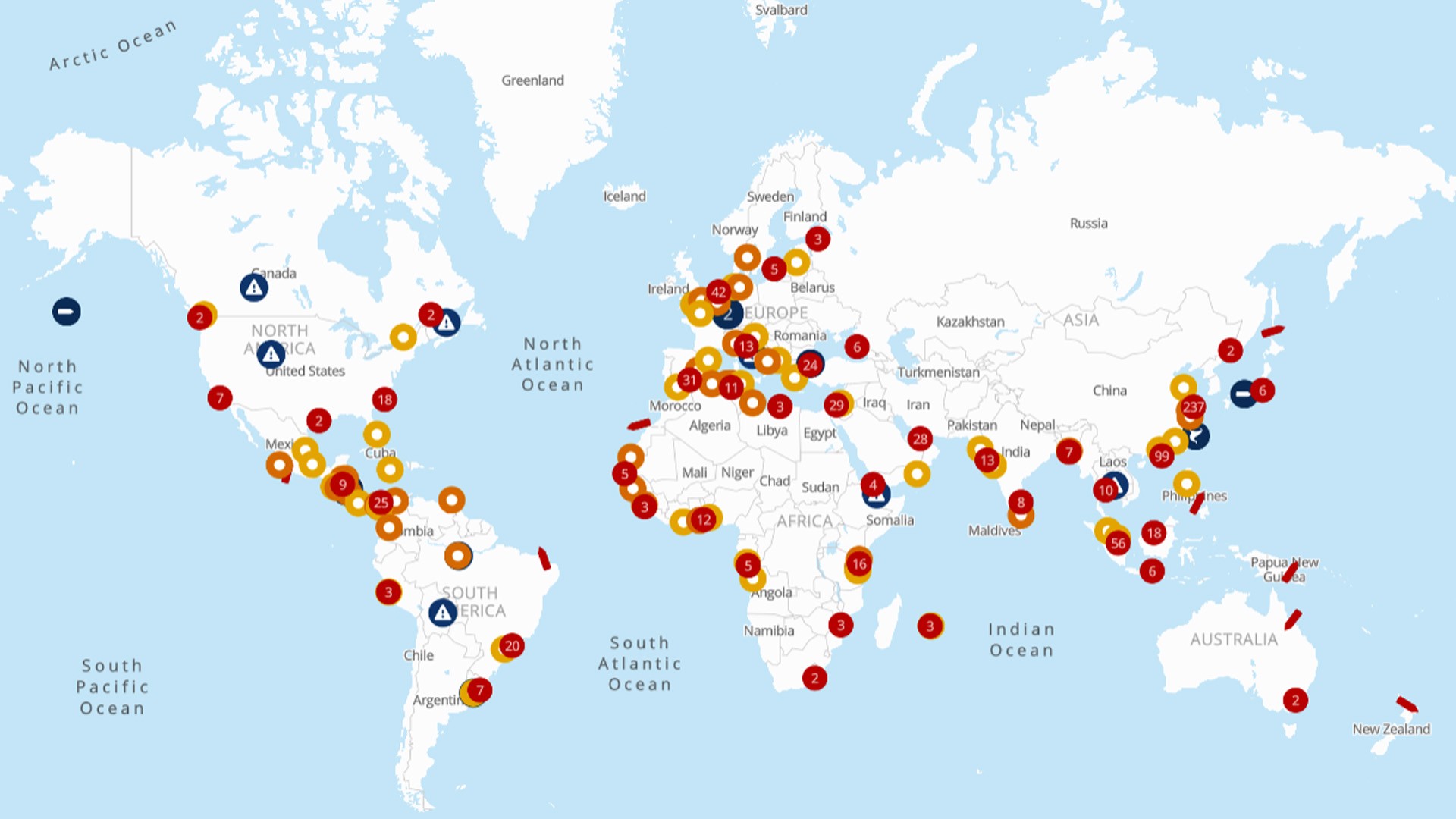

Stay ahead of supply chain disruptions and port congestion with Kuehne+Nagel’s weekly port operational update.
- Find out the latest vessel waiting times and status of ports in Africa, Asia Oceania, Europe, Middle East-Indian Subcontinent, North America, and South and Central America.
Africa
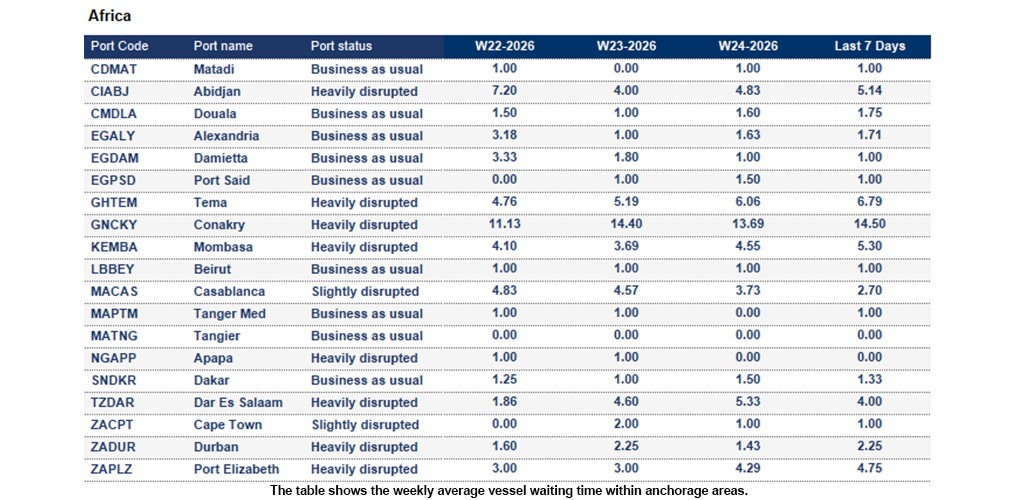
Ghana:
Tema: The 7-day average vessel waiting time is around 6.79 days. Berthing constraints, crane outages and yard congestion are impacting vessel berthing and extending turnaround times, averaging around five days and up to seven days for off-window vessels. Inland corridor limitations across rail and road networks may further disrupt cargo flows to hinterland connections.
Guinea
Conakry: The 7-day average vessel waiting time is around 14.5 days. Severe congestion with long vessel waiting times, limited storage capacity and insufficient empty containers; mitigation measures include continuous truck circulation.
Ivory Coast
Abidjan: The 7-day average vessel waiting time is around 5.14 days. Vessel turnaround times are extended to 7–10 days, with yard utilisation at critical levels of around 93%. Severe road congestion and urban traffic are delaying cargo evacuation, while high yard density, reduced gate efficiency, and power outages are contributing to ongoing berthing delays.
Kenya
Mombasa: The 7-day average vessel waiting time is around 5.3 days. Persistent congestion at terminals and extended vessel queues continue to pressure operations, exacerbated by empty container imbalances and high yard utilisation. Customs clearance delays are further constraining throughput, while truck shortages, road disruptions and flood‑damaged infrastructure along key corridors are significantly impacting inland cargo flows.
Mauritius
Port Louis: The 7-day average vessel waiting time is around 2.0 days. Weather-related disruptions are impacting productivity, while a crane outage is reducing handling capacity. Feeder service instability is further affecting cargo connections and overall departure reliability.
Mozambique
Beira: The 7-day average vessel waiting time is around 12.29 days. Terminal recovery is anticipated by weeks 32–33. Intermittent wind gusts and rain are expected to persist throughout the remainder of the week, with a potential impact on operations.
Nigeria
Apapa: The 7-day average vessel waiting time is around 1 day. Vessel clearance cycles have extended to up to 30 days on certain services. Persistent road congestion and truck queuing are impacting gate operations, while empty container build-up and intermittent gate closures are increasing dwell times to up to 15 days. Ongoing diversions to regional ports continue to add pressure to overall operations.
South Africa
Durban: The 7-day average vessel waiting time is around 2.25 days. Landside congestion has been observed on Bayhead Road, with an earlier power outage likely contributing to additional operational delays.
Port Elizabeth: The 7-day average vessel waiting time is around 4.75 days. The port is impacted by severe winds.
Tanzania
Dar Es Salaam: The 7-day average vessel waiting time is around 4.0 days. Moderate terminal congestion persists, with delays varying by service and berth allocation. Increasing cargo volumes, driven by diversions from Mombasa and Horn routes, are placing additional pressure on terminal capacity.
Asia Oceania
China
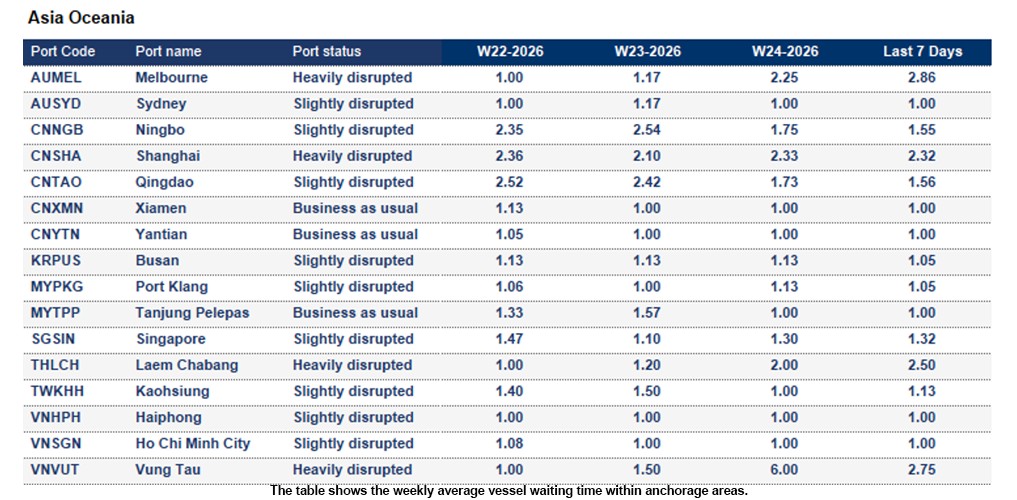
Ningbo: The 7-day average vessel waiting time is around 1.55 days. Recent dense fog caused terminal closures. High yard density at MSICT has increased waiting times since the second half of last week.
Shanghai: The 7-day average vessel waiting time is around 2.32 days. Waiting times increased across terminals this week, with approximately 2.5 days at WGQ2 and WGQ5, and around 4 days at YS12. This is mainly driven by concentrated mainliner arrivals following prolonged port closures. Continued disruptions due to poor visibility are expected to sustain pressure on waiting times.
Malaysia
Port Klang: The 7-day average vessel waiting time is around 1.05 days. Due to vessel bunching, waiting and delays have slightly increased, averaging around 0.5–1 day this week. The berthing situation remains dynamic and complex, though it is expected to stabilise from week 26 as the number of vessel calls decreases.
Philippines
Manila: The 7-day average vessel waiting time is around 3.76 days. Heavy berth congestion persists at Manila North.
South Korea
Busan: The 7-day average vessel waiting time is around 1.05 days. BNCT yard density stands at approximately 87%. Overall operations remain stable without major congestion; however, increased arrival volatility and potential vessel bunching next week may impact conditions. Planned electrical maintenance will suspend terminal and gate operations on 18 June (00:01–06:00), except at DGT.
Vietnam
Vung Tau: The 7-day average vessel waiting time is around 2.75 days. Operations at Gemalink remain stable, with minor berth congestion resulting in waiting times of around one day. Yard utilisation is elevated at approximately 90–95%, reflecting sustained pressure on terminal capacity.
Europe
Belgium
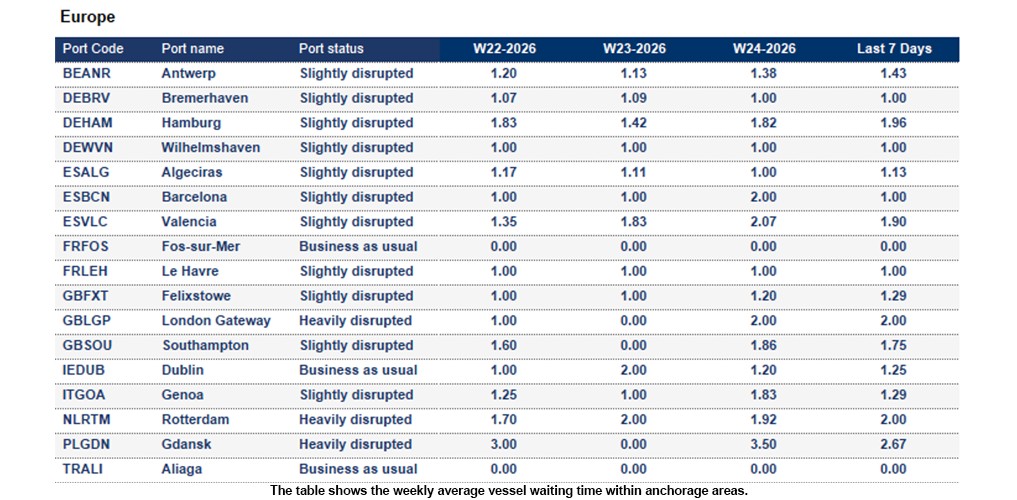
Antwerp: The 7-day average vessel waiting time is around 1.43 days. Increased quay dwell times are extending vessel turnaround times and contributing to ongoing schedule unreliability across services.
France
Le Havre: The 7-day average vessel waiting time is around 1 day. Operations remain stable with yard occupancy at 70% and no expected issues impacting vessel handling or berth availability. Despite a tightly scheduled 48-hour window for all calls, the terminal is managing operations smoothly without significant constraints.
Germany
Bremerhaven: The 7-day average vessel waiting time is around 1 day. Yard occupancy is high at around 95% but remains manageable. Capacity constraints for IMO and out‑of‑gauge cargo persist.
Hamburg: The 7-day average vessel waiting time is around 1.96 days. CTA remains congested with yard occupancy at ~85% and delays of 24 hours to 4 days. Labour shortages are expected to further impact throughput, with the terminal operating above capacity and diversion options under review. CTH is similarly at ~85% utilisation, with capacity constraints for IMO Class 9 cargo requiring swift import pick-up.
United Kingdom
London Gateway Port: The 7-day average vessel waiting time is around 2.0 days. Yard occupancy remains moderate at 54% for dry and 55% for reefer containers. Ongoing rail issues continue to impact operations, with daily monitoring in place. Ship-side and landside activities remain stable overall, although rail constraints may affect inland flows.
Southampton: The 7-day average vessel waiting time is around 1.75 days. Berth SCT5: The arrival of the new crane has been advanced to 13 June. The berth will be unavailable from 13 to 22 June due to crane installation and positioning activities. Yard utilisation stands at 74% for dry cargo and 75% for reefer units.
Middle East - Indian Subcontinent
Middle East:
The US–Iran agreement to reopen the Strait of Hormuz signals potential de‑escalation after earlier disruptions to global shipping and rerouting. However, the deal remains preliminary, and even if implemented, any recovery in vessel traffic is expected to be gradual due to continued caution and the need for restored stability. Read more here.
India
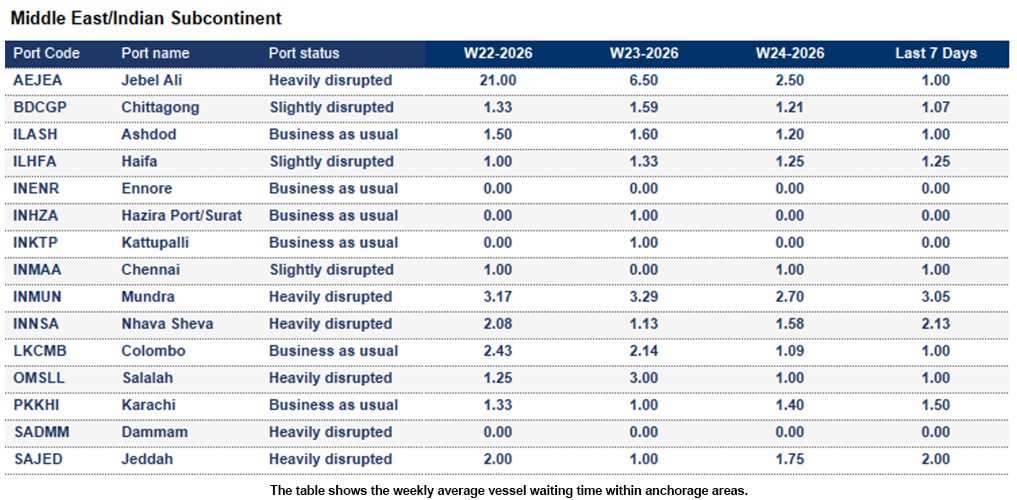
Mundra: The 7-day average vessel waiting time is around 3.05 days. High yard utilisation, with vessels outside berthing windows facing additional delays. Rail congestion at Mundra port is creating significant inland bottlenecks, slowing the evacuation of containers and extending overall transit times. The disruption is being driven by a surge in transhipment cargo volumes rerouted to India, which is straining both rail capacity and landside operations. As a result, shippers are facing delays and rising logistics costs, while port authorities have tightened export gate-in timelines to manage yard pressure.
Nhava Sheva: The 7-day average vessel waiting time is around 2.13 days. Vessel bunching and high yard utilisation are placing pressure on terminal operations, while trucking constraints and road congestion are further impacting cargo flows and overall efficiency.
North America
Canada
Average import rail dwell time for Canadian cargo (Vessel arrival to departure rail ramp):
- Halifax: 4 days
- Montreal: 6 days
- Prince Rupert: 8 days
- Saint John: 4 days
- Vancouver: 6 days
Mexico
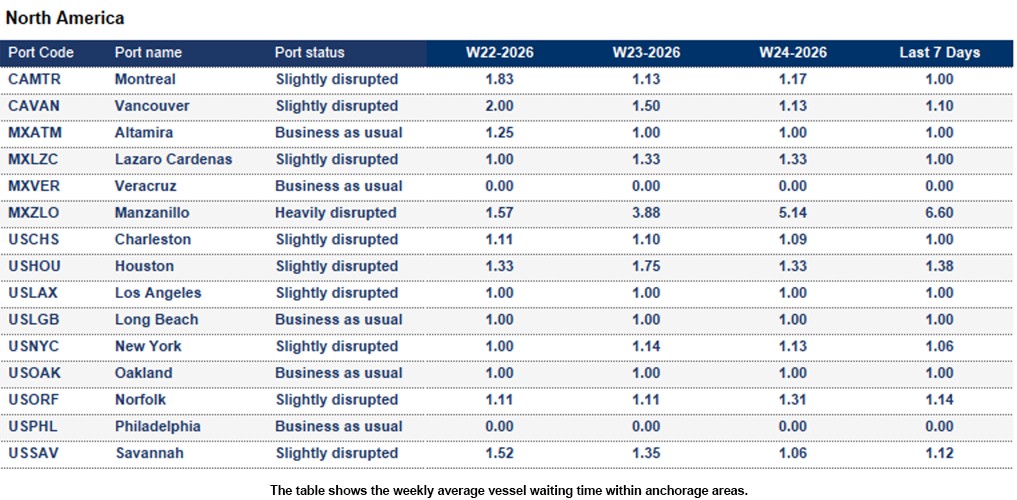
Manzanillo: The 7-day average vessel waiting time is around 6.6 days. Persistent customs bottlenecks are causing clearance delays, resulting in container rollovers and backlogs. Yard congestion and delays in truck dispatch are further constraining throughput, while rising storage, demurrage and delay-related charges are increasing overall logistics costs.
United States
Average import rail dwell and transit time for US cargo (Vessel arrival to departure rail ramp):
- Halifax - 9 days
- Montreal - 9 days
- Prince Rupert - 8 days
- Vancouver - 6 days
- Saint-John - 7 days
- Charleston - 2 days
- Newark - 2 days
- Houston - 8 days
- Jacksonville - 3 days
- Los Angeles - 5 days
- Long Beach - 8 days
- New York - 4 days
- Miami - 1 day
- Oakland - 5 days
- Norfolk - 3 days
- Philadelphia - 10 days
- Savannah - 2 days
- Seattle - 4 days
- Tacoma - 4 days
Los Angeles: The 7-day average vessel waiting time is around 1 day. Drayage delays and extended gate turn times are reducing trucking productivity, while high yard utilisation is leading to increased container dwell times and operational pressure.
New York: The 7-day average vessel waiting time is around 1.06 days. The FIFA World Cup 2026, taking place in the New York/New Jersey region, is expected to significantly impact logistics operations. Increased visitor volumes will likely lead to heavy road congestion, longer truck transit times, and delays in drayage, container pick-up and delivery. Additional security measures and traffic restrictions may further disrupt transport flows, placing added pressure on regional infrastructure and port operations.
South and Central America
Bolivia:
Several weeks of civil unrest in Bolivia have resulted in widespread road blockades along key freight corridors, particularly routes to Chilean ports via Tambo Quemado and Pisiga. Transport flows are heavily disrupted, causing congestion, terminal delays and operational challenges. Container handling is significantly affected, with delays in both pickup and return. The prolonged crisis continues to restrict nationwide cargo movement and has led to shortages of essential goods in major cities. Read more here.
Brazil
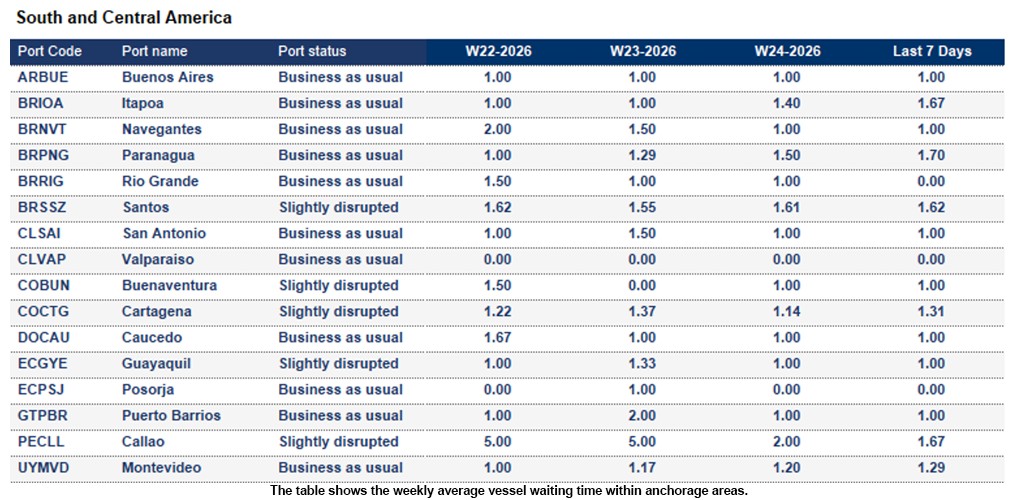
Santos: The 7-day average vessel waiting time is around 1.62 days. Carrier schedules remain unstable, with frequent rotation changes, port omissions and unscheduled transshipments into South Africa. Road congestion around São Paulo and export volume surges are exceeding inland transport capacity. Complex, multi-agency customs processes are further extending clearance times and adding compliance-related delays.
How Kuehne+Nagel estimates port disruption statuses
Seaexplorer has four port statuses that are estimated based mainly on the 7-day average vessel waiting time. Other factors include yard congestion, labour strikes, natural disasters or intermodal disruptions. Slightly different rules are applied to major ports, or ports that are hubs in their region, as they are typically more efficient.
- Business as usual means the port is currently operating without any significant disruption.
- Slightly disrupted is used if the 7-day average vessel waiting time exceeds 2 days.
- Heavily disrupted is used if the 7-day average vessel waiting time exceeds 4 days.
- Port closed is used when the port suspends operations due to a major disruptive event.
How Kuehne+Nagel calculates the 7-day average vessel waiting time
Mainline container vessels may spend a certain number of days waiting at designated anchorage areas before their scheduled port call.
To calculate the 7-day average waiting time, we consider the waiting days of these vessels, excluding:
- Waiting times for feeder vessels,
- Idle ships without an announced next port,
- Slow steamers heading toward the anchorage, but not actively waiting within the designated area
- Vessels passing through the anchorage area without intending to call at the port.
This rolling average is based on the last 7 days of data and is updated daily in seaexplorer. To find the latest waiting time for a port, enter the port name or code in the search bar and select the relevant option.
Stay Ahead, Stay Informed: Register for seaexplorer for the latest disruptions and vessel waiting times at global container ports.