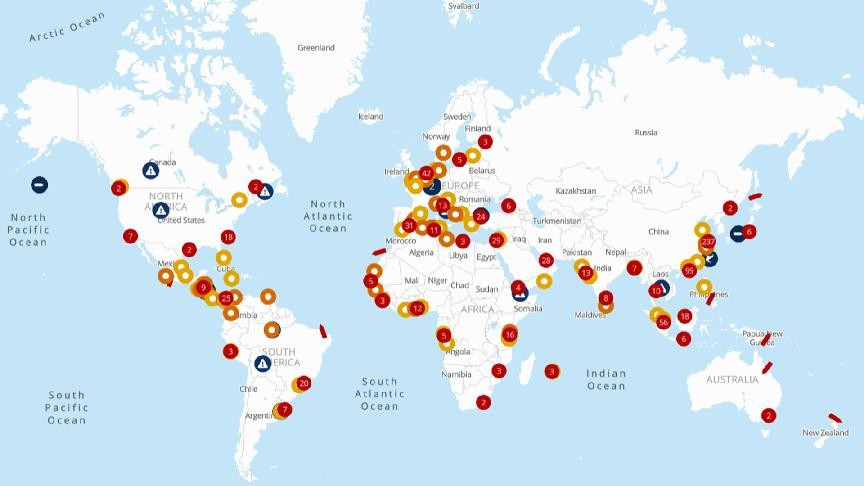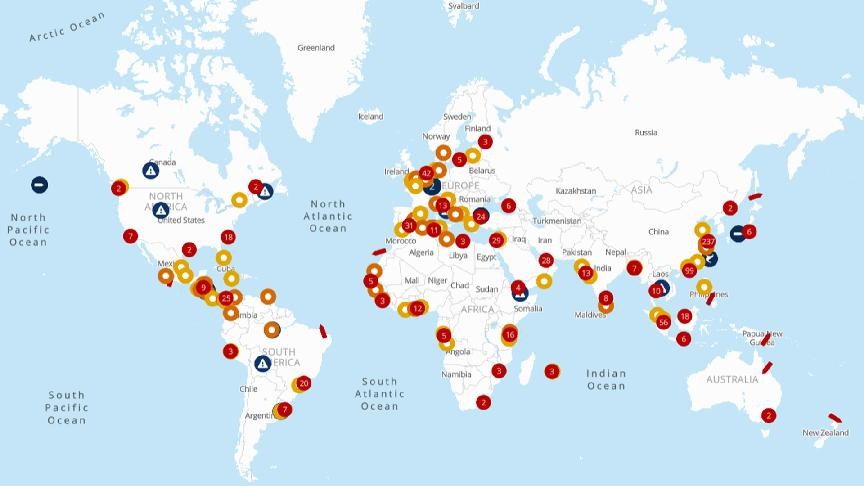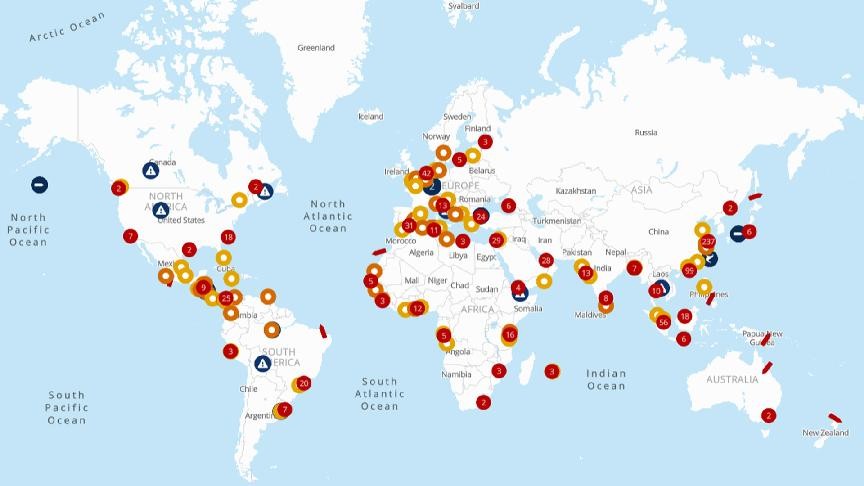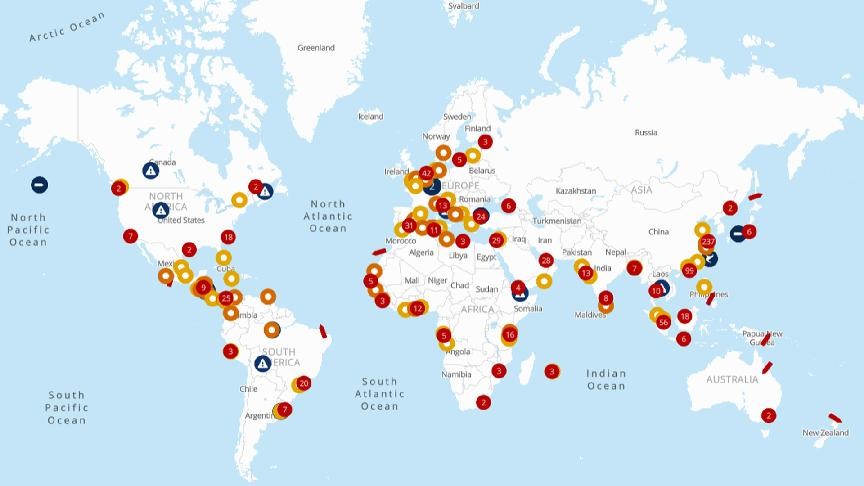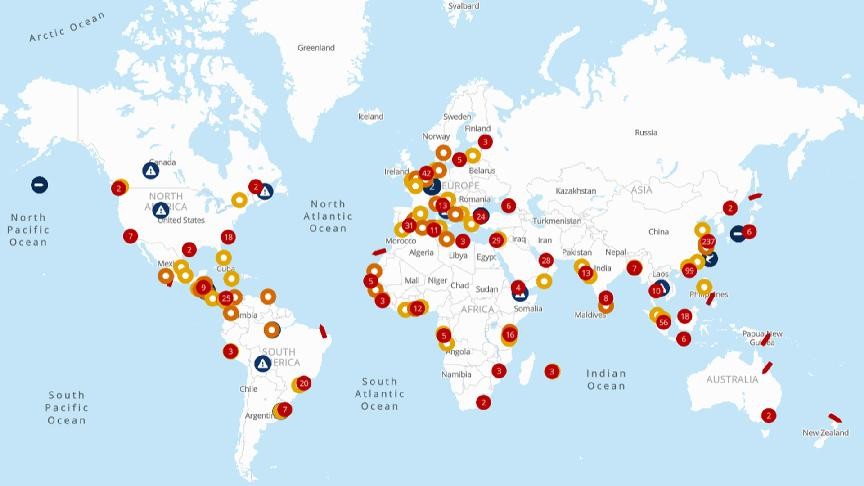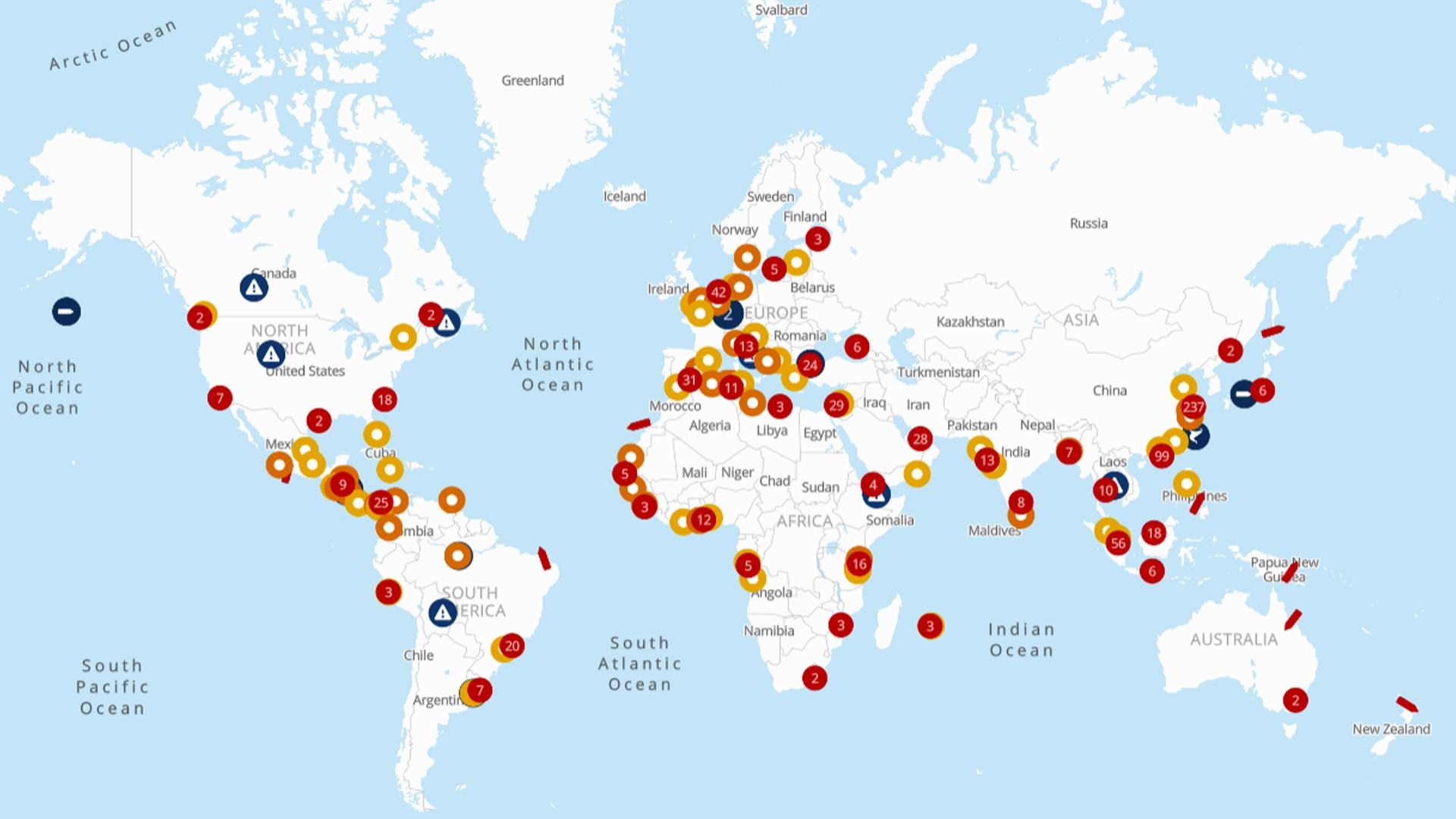

Stay ahead of supply chain disruptions and port congestion with Kuehne+Nagel’s weekly port operational update.
- Find out the latest vessel waiting times and status of ports in Africa, Asia Oceania, Europe, Middle East-Indian Subcontinent, North America, and South and Central America.
Africa
Algeria
Skikda: The 7-day average vessel waiting time is around 9.5 days
Cameroon
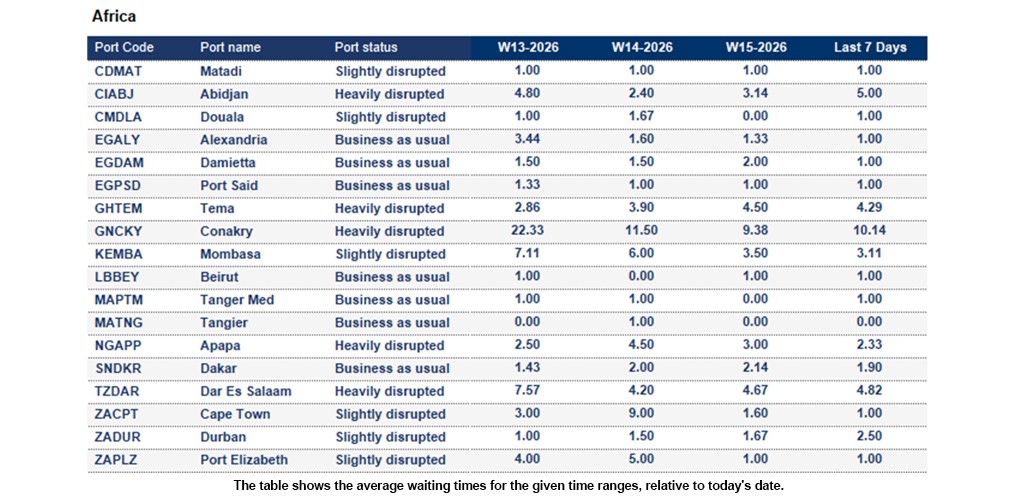
Douala: The 7-day average vessel waiting time is around 1.0 days. Feeder waiting times average around three days, mainly due to dependencies on mainliner connections.
Kribi: Laden reefer containers are being closely monitored on a case‑by‑case basis, with terminal approvals required for discharge at Kribi.
Ghana
Tema: The 7-day average vessel waiting time is around 4.29 days. Non‑window vessels are subject to berth availability, and ad‑hoc vessels are not accepted.
Mozambique
Beira: The 7-day average vessel waiting time is around 12.8 days. The port is severely congested.
Maputo: The 7-day average vessel waiting time is around 3.5 days. Waiting times at the terminal are improving, with overall recovery expected by weeks 19–20. However, adverse weather conditions, including rain and wind gusts, are forecast to persist for the remainder of the week.
South Africa
Cape Town: The 7-day average vessel waiting time is around 1 day. The terminal is currently experiencing high wind gusts. Resulting delays are up to three days at CTCT and up to 24 hours at CTMPT.
Asia Oceania
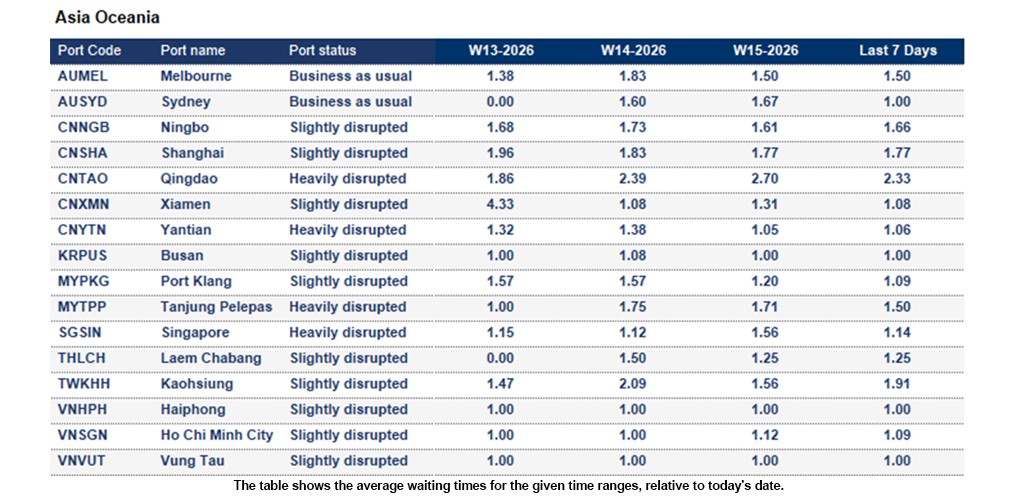
China
Ningbo: The 7-day average vessel waiting time is around 1.66 days. Yard occupancy remains moderate, with MSICT at 70% and other terminals at 69%. The fog season is causing intermittent port closures, resulting in increased vessel waiting times.
Qingdao: The 7-day average vessel waiting time is around 2.33 days. Foggy weather is forecast for 17 and 18 April. QQCT has planned crane upgrade works starting from 12 April, which will impact operations for approximately two weeks, with one to two cranes unavailable during this period.
Shanghai: The 7-day average vessel waiting time is around 1.77 days. WGQ port waiting times remained at 1.5–2 days this week, mainly due to concentrated mainliner arrivals. At YGS12, average waiting times were 2–2.5 days, driven by weather impact and vessel bunching. Gantry crane exchange works at WGQ Terminal 2 commenced on the 15th, with around 250 metres of quay occupied for 5–6 days, followed by 3–4 days for commissioning.
Yantian: The 7-day average vessel waiting time is around 1.06 days. Yantian is experiencing significant congestion for mega vessels with an LOA of 400 metres due to crane relocation works at Berths 10 and 13. As part of the project, three cranes are being transferred from Berth 10 to Berth 13 and a further three from Berth 13 to Berth 10. The project is scheduled to be completed by the end of April.
Indonesia
Semarang: The 7-day average vessel waiting time is around 2.67 days. The port is severely congested.
Japan
Yokohama: The 7-day average vessel waiting time is around 1.5 days. At YOK D5, the overall situation remained dynamic and complex in Week 16, mainly due to the bunching arrival of vessels, with five mainliner vessels arriving on 16 April.
Malaysia
Tanjung Pelepas: The 7-day average vessel waiting time is around 1.5 days. The berthing situation remains dynamic, with heavy congestion continuing in Week 16 and average waiting times of approximately 1–1.5 days. Around 150 metres of Berth 4 is blocked during Weeks 15 and 16 for new quay crane commissioning. In addition, Berth 1 remains unavailable until the end of April due to the disposal of old RTGs by barge.
Philippines
Manila: The 7-day average vessel waiting time is around 4.44 days. Heavy berth congestion persists at Manila North, driven by challenges with import empty container returns due to limited space at off‑dock depots and terminals, as well as berth queuing. Congestion is mainly caused by late vessel arrivals missing their allocated berthing windows, with around 13 vessels currently at anchorage awaiting berths.
South Korea
Busan: The 7-day average vessel waiting time is around 1 day. At BNCT, laden yard density is approximately 76%. Minor berth congestion persists, with waiting times of approximately 0.5–1 day, mainly due to the bunching arrival of vessels delayed from previous ports. The overall situation is expected to remain dynamic in Week 17.
Europe
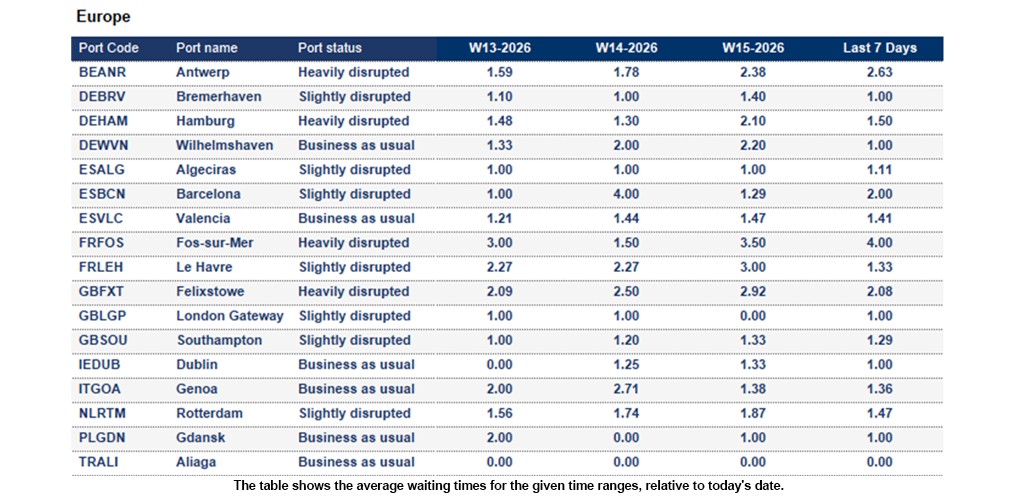
Belgium
Antwerp: The 7-day average vessel waiting time is around 2.63 days. Following an oil spill at Deurganck Dock, navigation in the Port of Antwerp was partially resumed. As of 16 April, the port reports that the North Sea Terminal and the Europa Terminal are now fully cleared for use. The terminals in the Deurganckdok are also operational. Quay walls and ships are still being cleaned on part of the western side. Inland vessels are being cleaned at the Galgenschoor inland waterway jetty. Delays of several days persist due to clean-up, delayed cargo operations and congestion, impacting MPET and DP World.
Middle East - Indian Subcontinent
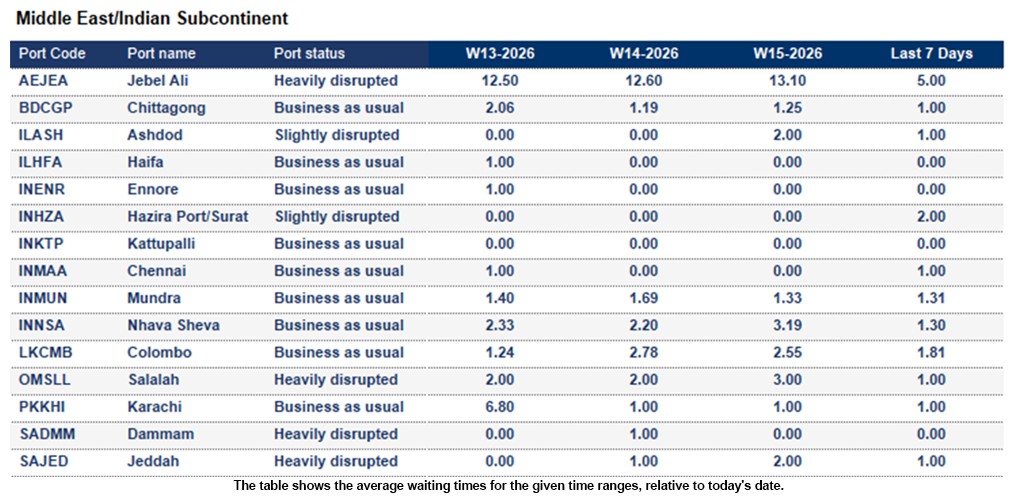
Port conditions across the region remain stable, with all ports in the Persian Gulf reporting normal operations.
North America
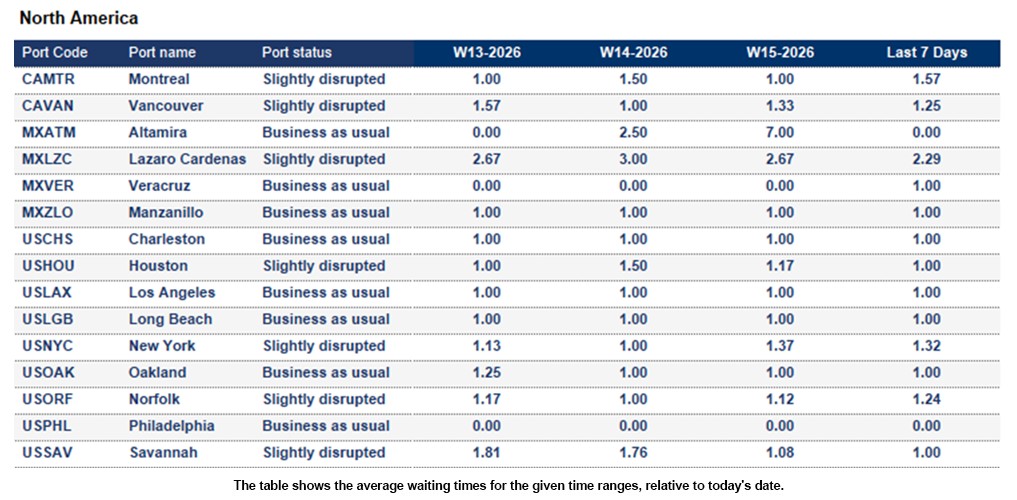
Canada
Average import rail dwell time for Canadian cargo (Vessel arrival to departure rail ramp):
- Halifax: 11 days
- Montreal: 6 days
- Prince Rupert: 7 days
- Saint John: 7days
- Vancouver: 7 days
Prince Rupert: The 7-day average vessel waiting time is around 3.0 days. The average import rail dwell is around 7 days.
Mexico
Lazaro Cardenas: The 7-day average vessel waiting time is around 2.29 days. APM: The yard is at 83%, and the berth is congested
United States
Miami: The 7-day average vessel waiting time is around 2.0 days.
Average import rail dwell time for American cargo (Vessel arrival to departure rail ramp):
- Halifax - 12 days
- Montreal - 9 days
- Prince Rupert - 9 days
- Vancouver - 7 days
- Saint-John - 8 days
- Charleston - 3 days
- Newark - 4 days
- Houston - 8 days
- Jacksonville - 3 days
- Los Angeles - 5 days
- Long Beach - 8 days
- New York - 5 days
- Miami - 1 day
- Oakland - 5 days
- Norfolk - 3 days
- Philadelphia - 10 days
- Savannah - 3 days
- Seattle - 4 days
- Tacoma - 4 days
South and Central America
Brazil
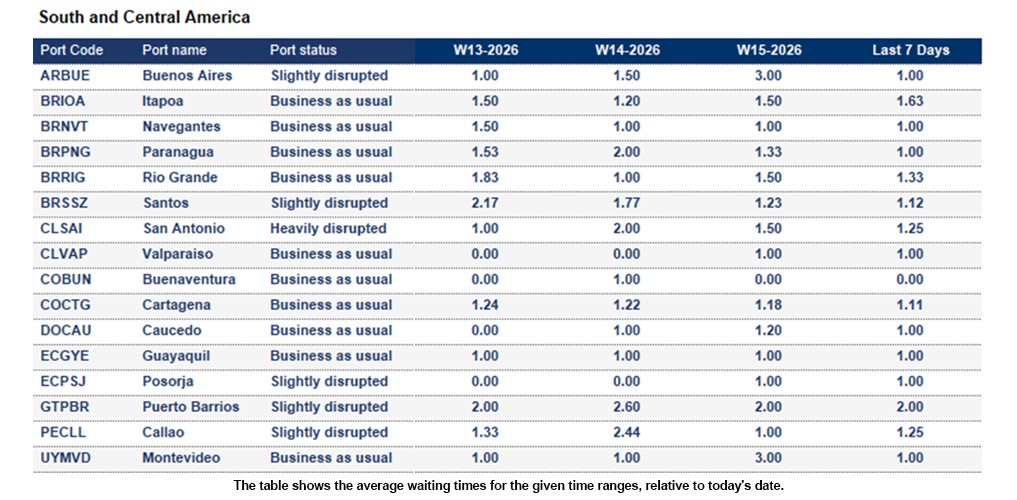
Pecem: The 7-day average vessel waiting time is around 1.33 days. Equipment shortages are leading to a delay for the vessels arriving out of the window. Waiting Time: 1.5 days
Santos: The 7-day average vessel waiting time is around 1.12 days. Frequent channel manoeuvres continue to cause delays to ETBs and ETDs.
Chile
Antofagasta: Port operations are impacted by high swells.
Arica: The port is currently impacted by high swells.
Iquique: The yard is at 98%. The port is impacted by severe swells.
San Antonio: The 7-day average vessel waiting time is around 1.25 days. The port is impacted by high swells.
How Kuehne+Nagel estimates port disruption statuses
Seaexplorer has four port statuses that are estimated based mainly on the 7-day average vessel waiting time. Other factors include yard congestion, labour strikes, natural disasters or intermodal disruptions. Slightly different rules are applied to major ports, or ports that are hubs in their region, as they are typically more efficient.
- Business as usual means the port is currently operating without any significant disruption.
- Slightly disrupted is used if the 7-day average vessel waiting time exceeds 2 days.
- Heavily disrupted is used if the 7-day average vessel waiting time exceeds 4 days.
- Port closed is used when the port suspends operations due to a major disruptive event.
How Kuehne+Nagel calculates the 7-day average vessel waiting time
Mainline container vessels may spend a certain number of days waiting at designated anchorage areas before their scheduled port call.
To calculate the 7-day average waiting time, we consider the waiting days of these vessels, excluding:
- Waiting times for feeder vessels,
- Idle ships without an announced next port,
- Slow steamers heading toward the anchorage, but not actively waiting within the designated area
- Vessels passing through the anchorage area without intending to call at the port.
This rolling average is based on the last 7 days of data and is updated daily in seaexplorer. To find the latest waiting time for a port, enter the port name or code in the search bar and select the relevant option.
Stay Ahead, Stay Informed: Register for seaexplorer for the latest disruptions and vessel waiting times at global container ports.