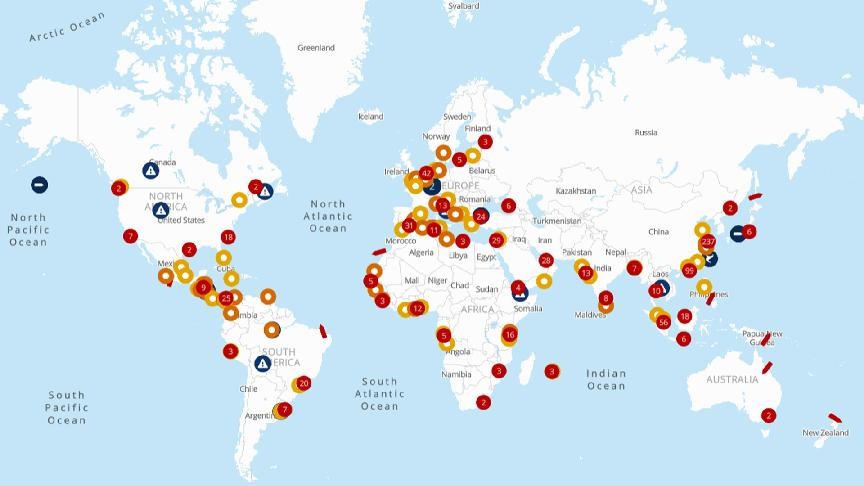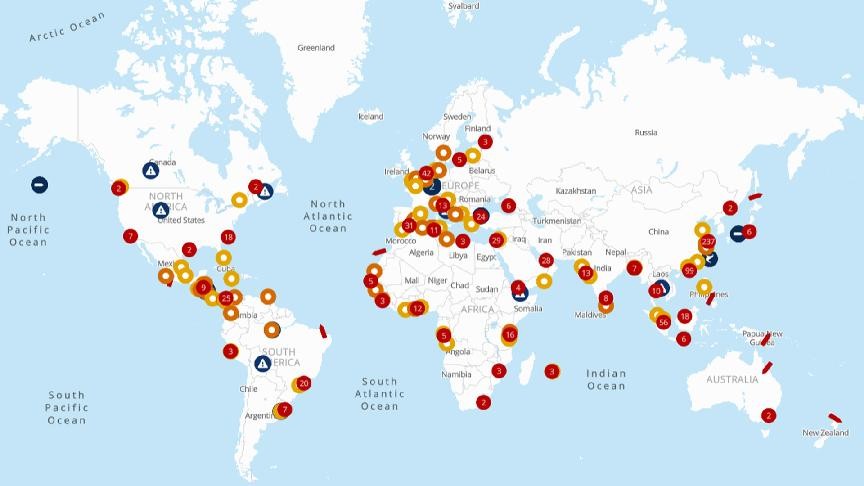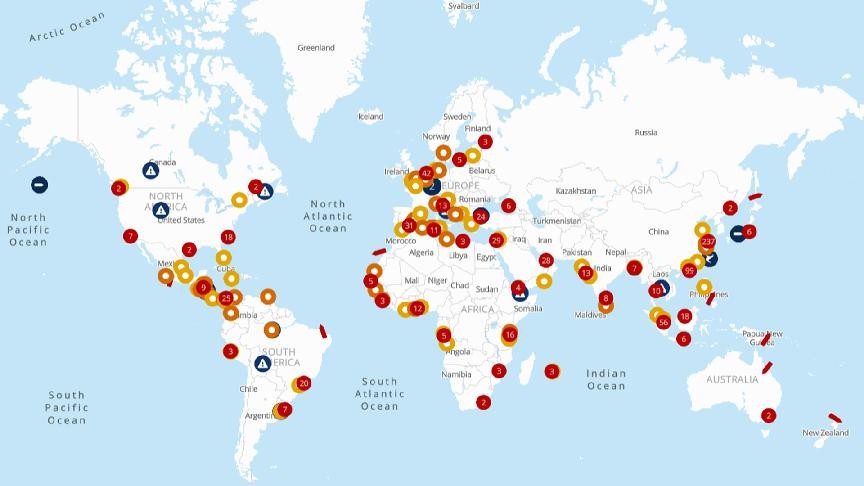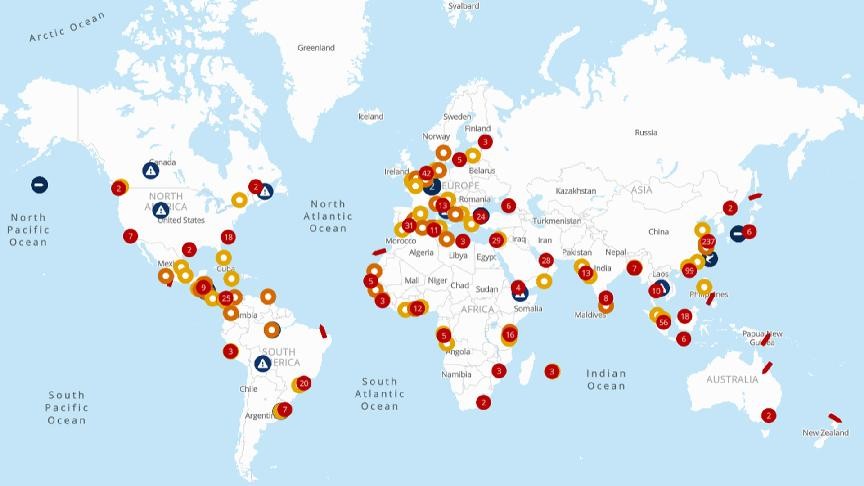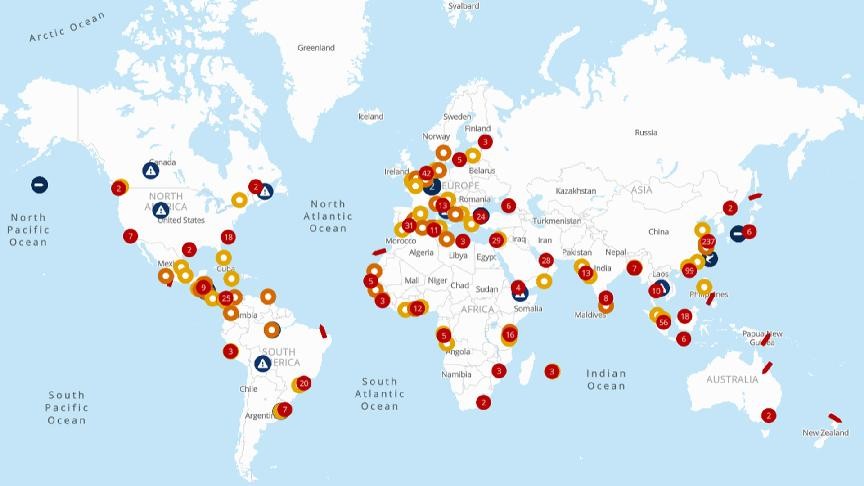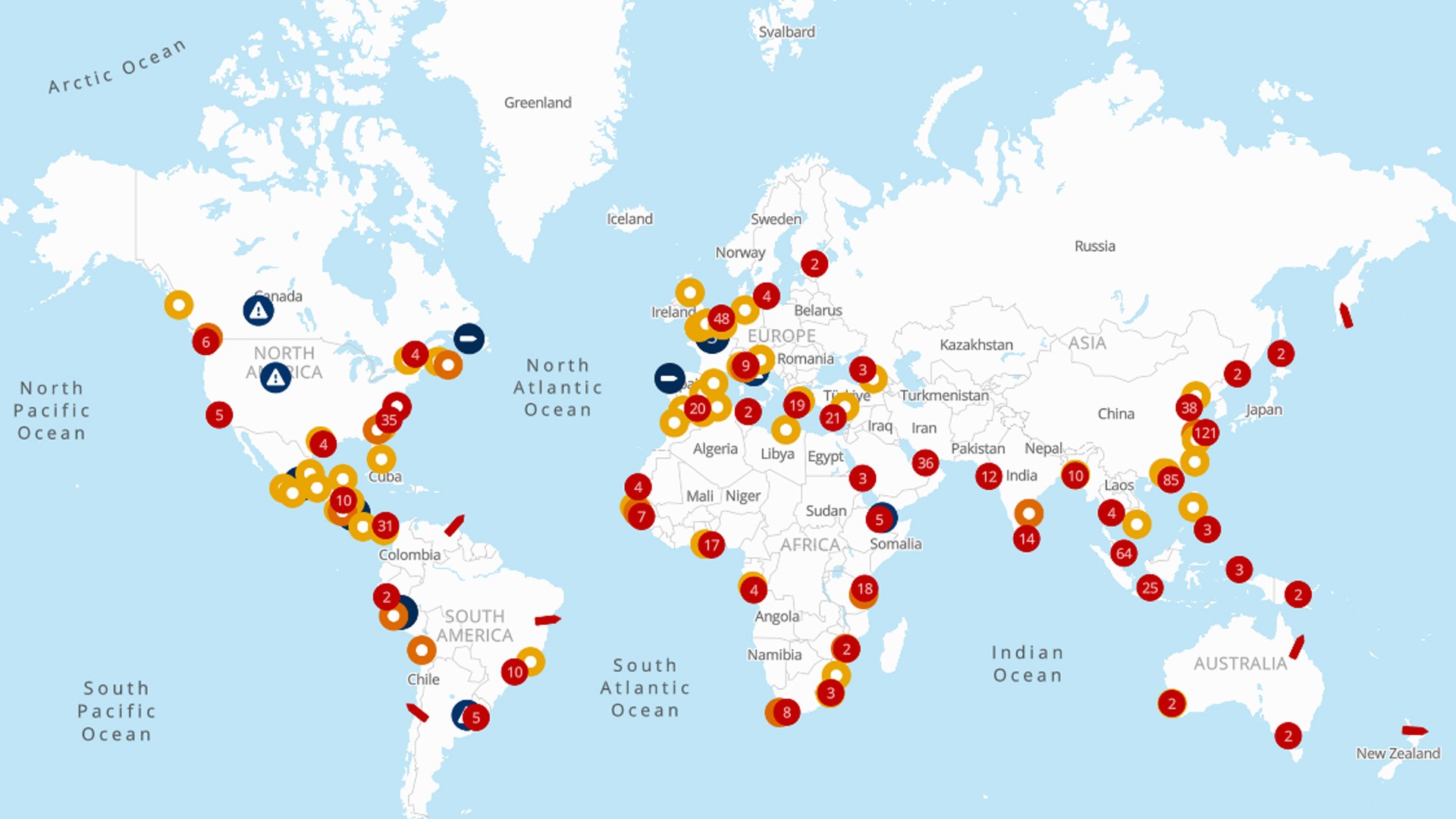

- Stay ahead of supply chain disruptions and port congestion with Kuehne+Nagel’s weekly port operational update.
- Find out the latest vessel waiting times and status of ports in Africa, Asia Oceania, Europe, Middle East-Indian Subcontinent, North America, and South and Central America.
Africa
Algeria
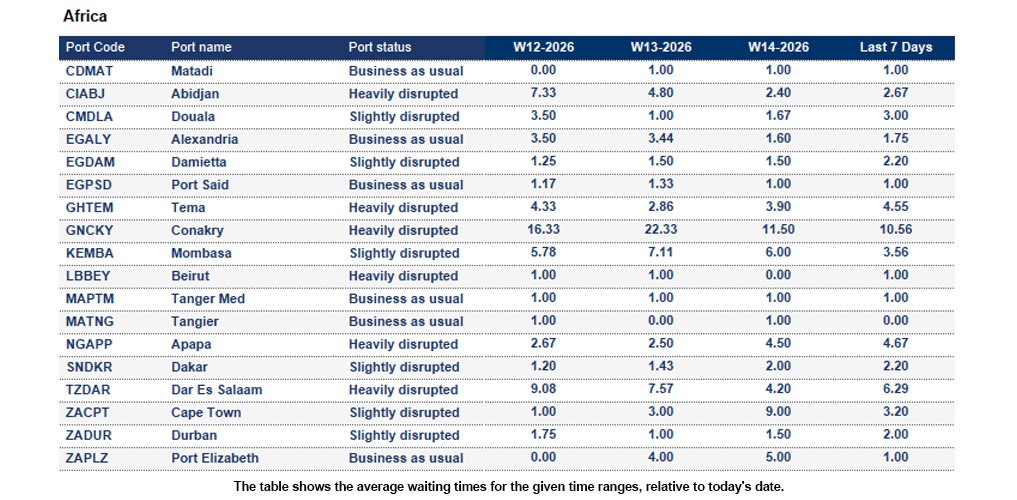
Algiers: The 7-day average vessel waiting time is around 6.43 days.
Ghana
Tema: The 7-day average vessel waiting time is around 4.55 days. Non‑window vessels are subject to berth availability, and ad‑hoc vessels are not accepted. Berth 20 was unavailable from 6 to 31 March due to RTG installation.
Guinea
Conakry: The 7-day average vessel waiting time is around 10.56 days. The reason for this is heavy congestion and poor terminal performance.
Kenya
Mombasa: The 7-day average vessel waiting time is around 3.56 days. The terminal is experiencing prolonged congestion and reduced productivity due to equipment shortages. Berth delays are further exacerbated by vessel bunching resulting from off‑window arrivals.
Morocco
Casablanca: The 7-day average vessel waiting time is around 5.09 days. The yard is at 99%. High swells were causing disruptions in week 15.
Mozambique
Beira: The 7-day average vessel waiting time is around 4.75 days. The port is severely congested.
Asia Oceania
New Zealand:
New Zealand authorities are preparing for the arrival of Tropical Cyclone Vaianu, which is forecast to be severe and potentially life‑threatening. Strong winds and heavy rainfall warnings have been issued, particularly across the upper and central North Island. While transport impacts remain uncertain, disruptions such as flooding, power outages and road closures are possible. Maritime operations are already adjusting, with Tauranga Port suspending inbound vessel movements from Friday evening. Cargo operations are expected to resume from Monday, subject to weather and harbour conditions. Read more here
Australia
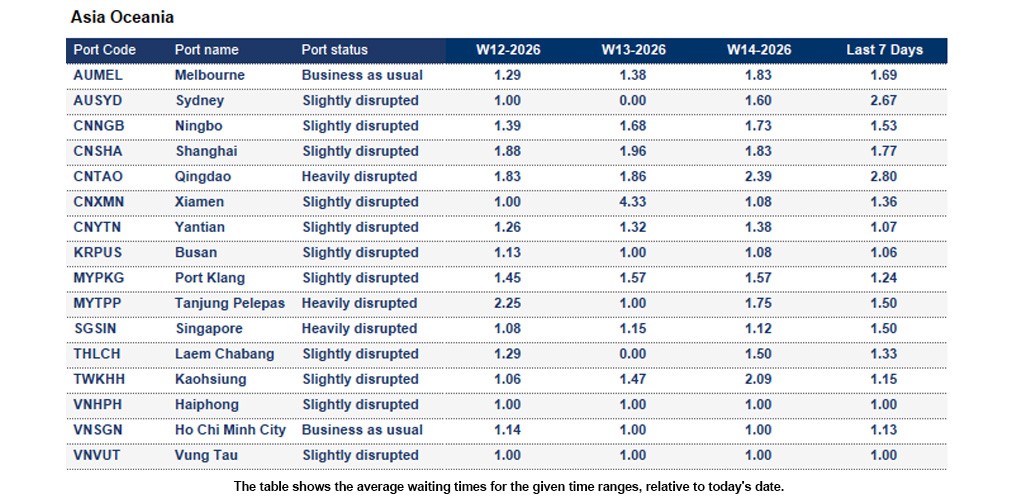
Sydney: The 7-day average vessel waitingtime is around 2.67 days.
China
Shanghai: The 7-day average vessel waiting time is around 1.77 days. The waiting time is elevated due to the arrival of several mainliner vessels at the same time.
Philippines
Manila: The 7-day average vessel waitingtime is around 4.09 days. Heavy berth congestion continues at Manila North, withoff‑window vessels experiencing waiting times and delays of more than threedays. Yard utilisation remains within normal levels at both terminals, withdensity estimated at approximately 70–80%.
Europe
Belgium
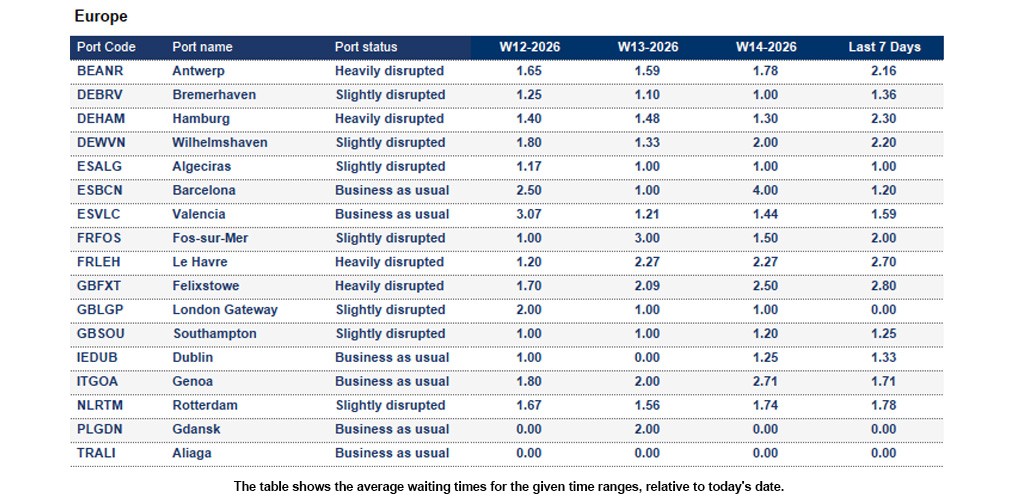
Antwerp: The 7-day average vessel waiting time is around 2.16 days. An oil spill at the Deurganckdock in the Port of Antwerp has significantly impacted vessel operations, affecting MPET (Quays 1742 and 1718) and DP World (Quay 1700). Yard utilisation at Q869 stands at 81%, with reefer occupancy at 64% and empties at 54%. In contrast, Q913 remains at a critical utilisation level of 93%, with reefer occupancy at 85% and empties at 65%.
France
Le Havre: The 7-day average vessel waiting time is around 2.7 days. Yard at a stable utilization of 65% with Reefers at 75%. The port is impacted by vessel bunching.
Germany
Hamburg: The 7-day average vessel waiting time is around 2.3 days. At CTA Hamburg, yard utilisation remains high at 84% amid back‑to‑back mainliners and maximum capacity operations. Minor crane system issues and limited feeder berthing are causing constraints, with further restrictions expected from Week 15. CTH operations remain stable, with yard utilisation at 86% and no major operational impacts reported.
Netherlands
Rotterdam: The 7-day average vessel waiting time is around 1.78 days. At ECT, yard utilisation is ~85%, reefers are under control, and labour availability remains stable. Feeder delays are 24–48 hours, peaking at 72 hours due to the berthing of four mainliners at Quattro berth. At MVII, yard use is ~82% with feeder delays up to 10 hours and barge delays up to 5 hours. Delta II operates at 49% yard use, with a 10% reduction on mainliner moves to protect feeder and barge capacity.
United Kingdom
London Gateway: Yard stack levels stand at 55% for dry and 45% for reefers, with empty stocks at c.4,624 TEU and local depots reducing volumes. Port productivity remains in line with expectations, supported by a less congested berth line‑up. Ongoing constraints remain for 400‑metre vessels on berth 4 due to mooring limitations. Labour availability is stable with 12–14 gangs. High winds delayed operations over the weekend; no further weather disruption is forecast this week.
Southampton: Yard utilisation currently stands at 52% for dry units and 60% for reefers. Labour availability is stable, with up to 10 gangs deployed. Terminal operations are running smoothly, and all Gemini services are berthing on arrival. No operational constraints or disruptions are reported at this time.
Middle East - Indian Subcontinent
Middle East
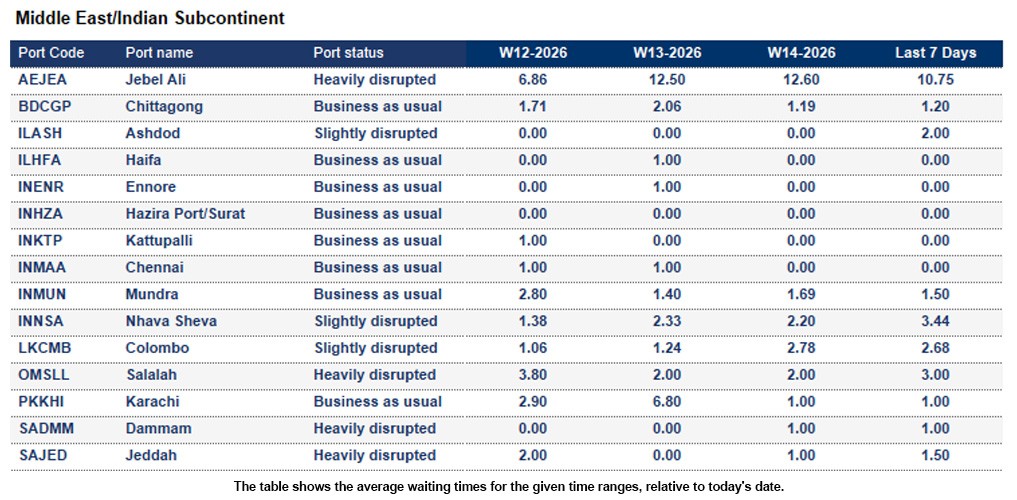
Port conditions across the region remain stable, with all ports in the Persian Gulf reporting normal operations. The Port of Beirut is likely to experience operational difficulties after the bombings on 8 April.
India
Nhava Sheva: The 7-day average vesselwaiting time is around 3.44 days. The port is currently congested.
Sri Lanka
Colombo: The7-day average vessel waiting time is around 2.68 days. The port is currentlycongested.
North America
Canada
Average import rail dwell time for Canadian cargo (Vessel arrival to departure rail ramp):
- Halifax: 11 days
- Montreal: 6 days
- Prince Rupert: 7 days
- Saint John: 7days
- Vancouver: 7 days
South and Central America
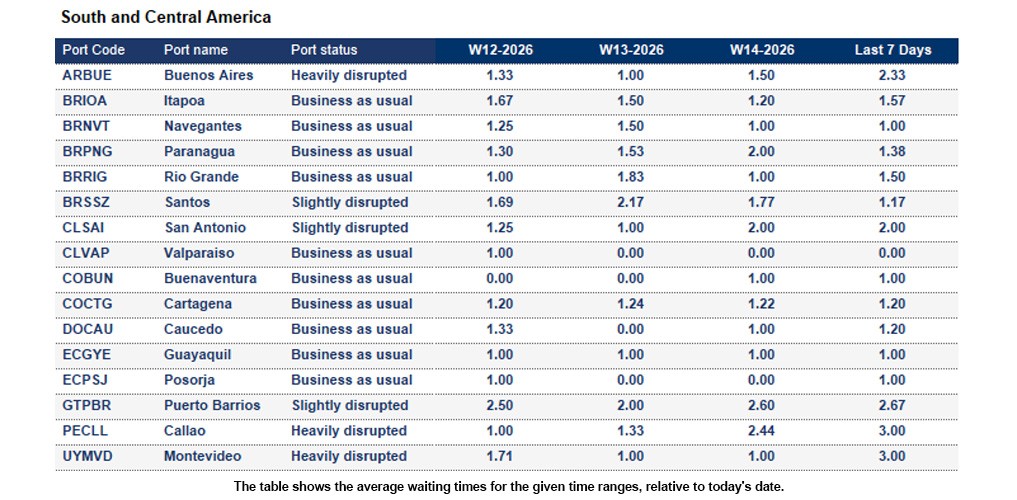
Argentina/Uruguay
A 36‑hour nationwide labour strike has been confirmed in Argentina for Thursday, 9 April, following large‑scale anti‑austerity demonstrations earlier in the week. While the full impact on Argentinian ports has yet to be clarified, the industrial action is expected to disrupt cargo movements and inland transport nationwide. Commenting ahead of the strike, CGT Secretary General Héctor Daer highlighted that austerity measures are placing a disproportionate burden on vulnerable sectors. The labour action coincides with a separate 24‑hour stoppage announced by the port workers’ union in Montevideo, Uruguay, on the same day. This action is expected to result in delays to terminal operations and wider supply chain disruption in the region. Read more here
Costa Rica
Caldera: The 7-day average vessel waitingtime is around 2.5 days. The yard is at 90%.
Panama
Balboa: The 7-day average vessel waitingtime is around 1.67 days. The yard is at 70%.
How Kuehne+Nagel estimates port disruption statuses
Seaexplorer has four port statuses that are estimated based mainly on the 7-day average vessel waiting time. Other factors include yard congestion, labour strikes, natural disasters or intermodal disruptions. Slightly different rules are applied to major ports, or ports that are hubs in their region, as they are typically more efficient.
- Business as usual means the port is currently operating without any significant disruption.
- Slightly disrupted is used if the 7-day average vessel waiting time exceeds 2 days.
- Heavily disrupted is used if the 7-day average vessel waiting time exceeds 4 days.
- Port closed is used when the port suspends operations due to a major disruptive event.
How Kuehne+Nagel calculates the 7-day average vessel waiting time
Mainline container vessels may spend a certain number of days waiting at designated anchorage areas before their scheduled port call.
To calculate the 7-day average waiting time, we consider the waiting days of these vessels, excluding:
- Waiting times for feeder vessels,
- Idle ships without an announced next port,
- Slow steamers heading toward the anchorage, but not actively waiting within the designated area
- Vessels passing through the anchorage area without intending to call at the port.
This rolling average is based on the last 7 days of data and is updated daily in seaexplorer. To find the latest waiting time for a port, enter the port name or code in the search bar and select the relevant option.
Stay Ahead, Stay Informed: Register for seaexplorer for the latest disruptions and vessel waiting times at global container ports.