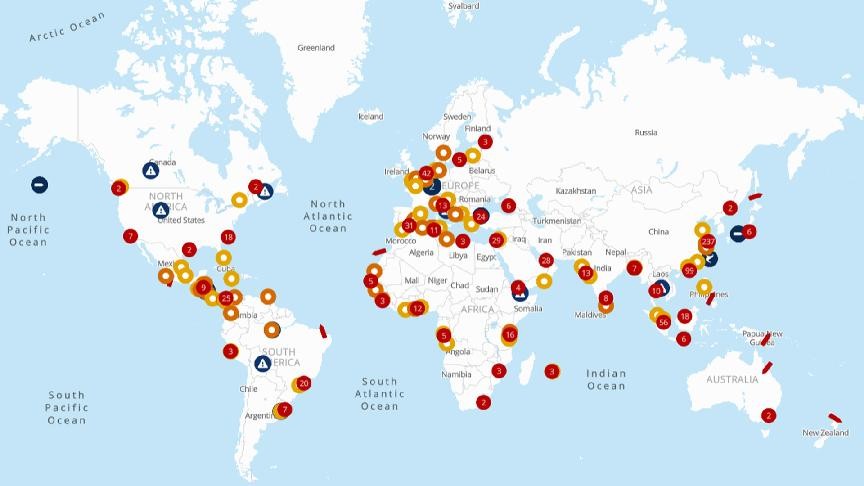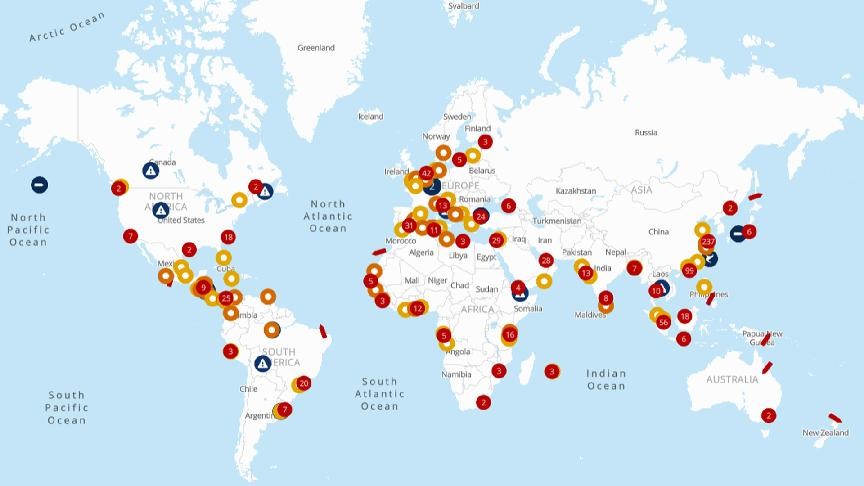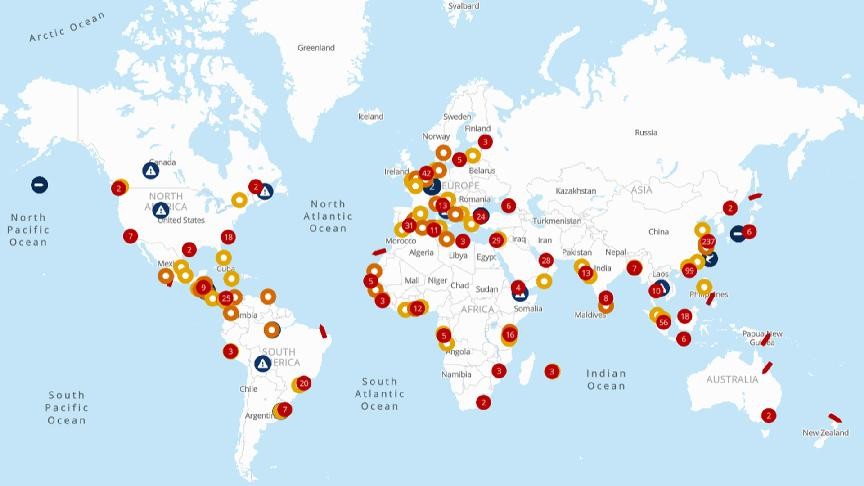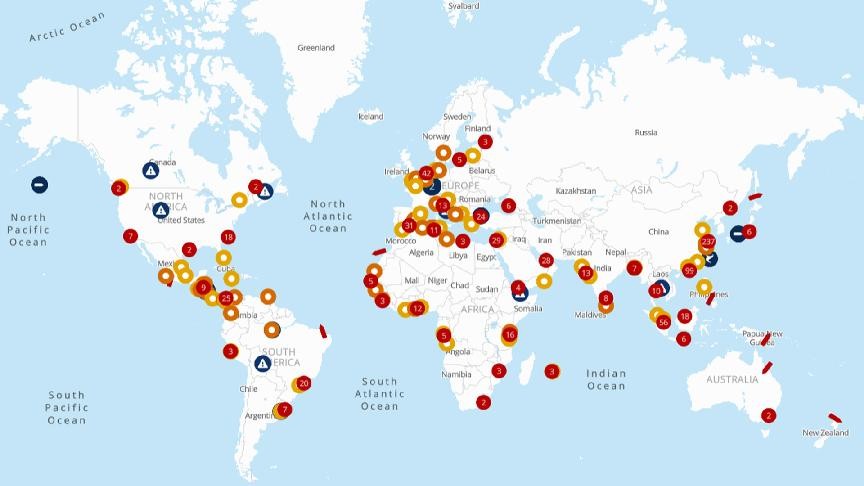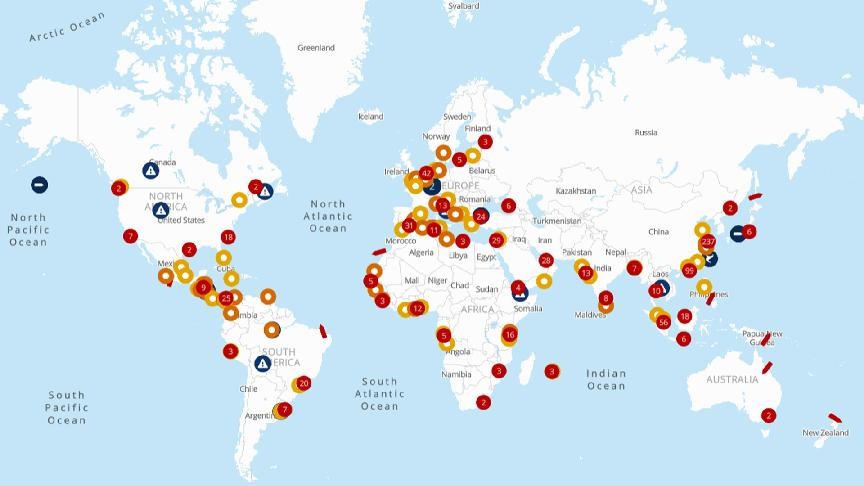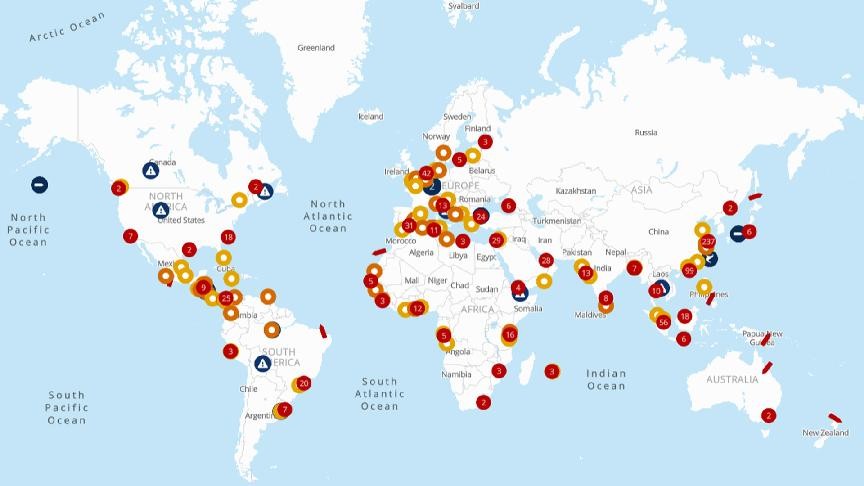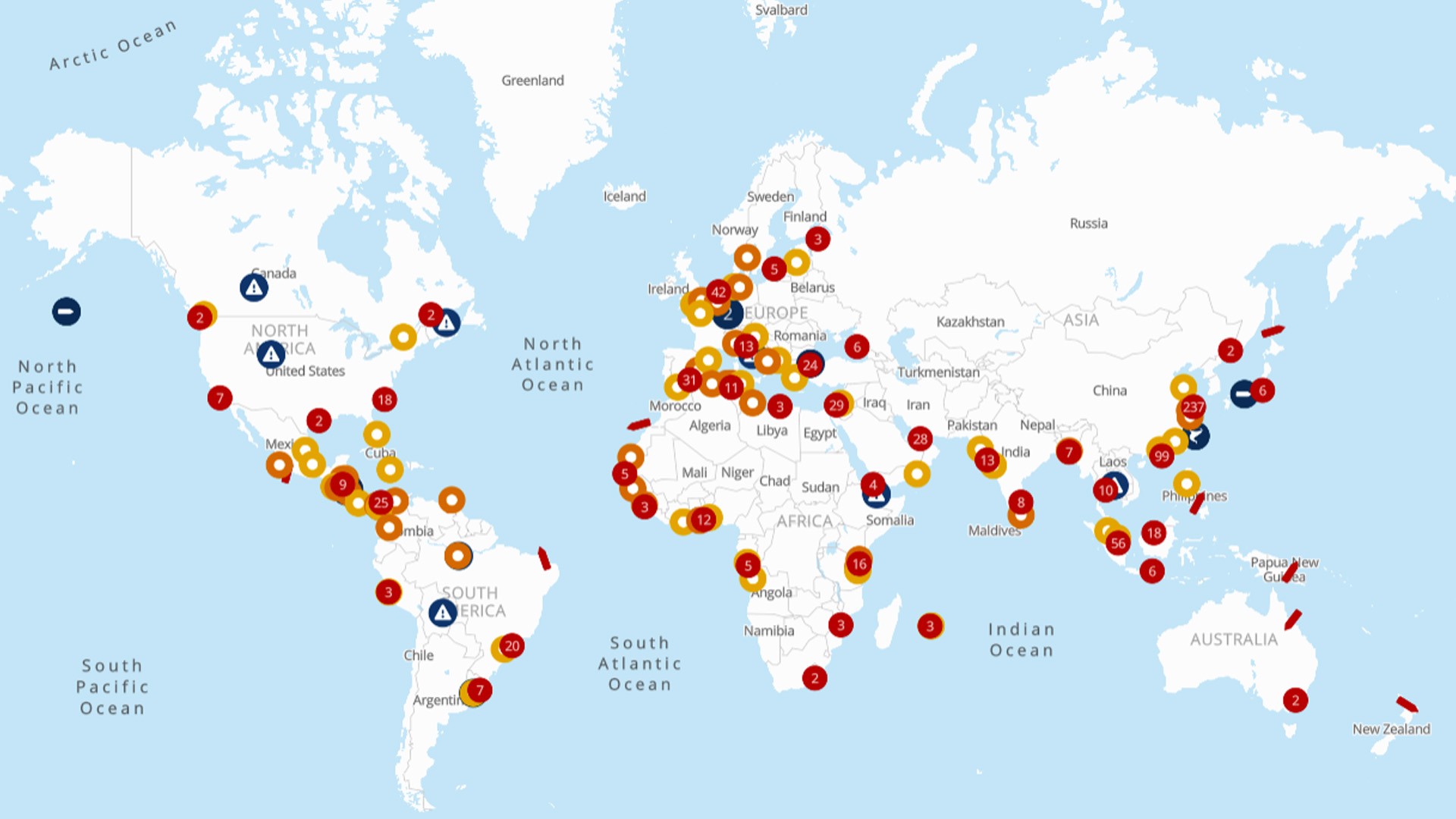

- Stay ahead of supply chain disruptions and port congestion with Kuehne+Nagel’s weekly port operational update.
- Find out the latest vessel waiting times and status of ports in Africa, Asia, Oceania, Europe, the Middle East-Indian Subcontinent, North America, and South and Central America.
Africa
Ivory Coast
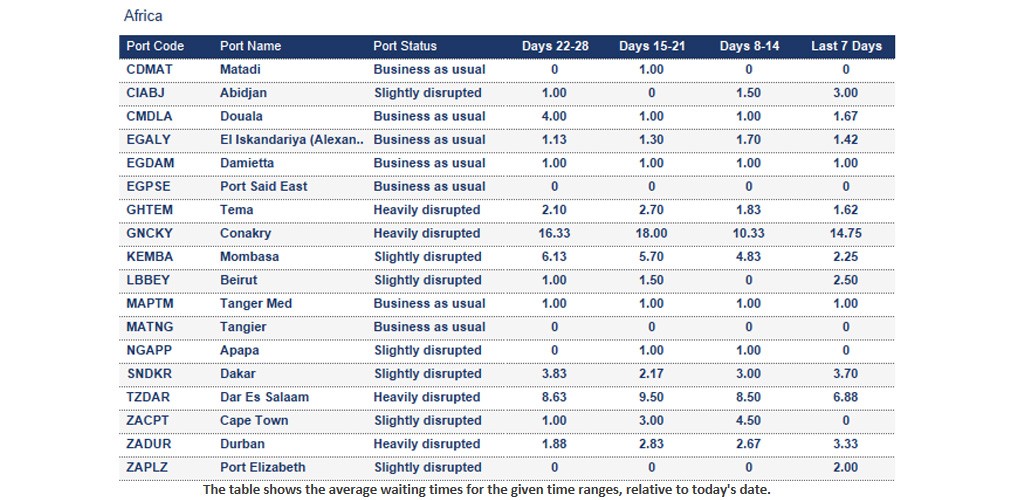
Abidjan: The 7-day average vessel waiting time is around 3 days. Vessel congestion has developed due to the introduction of new crane operations, resulting in operational delays and vessel bunching.
Mozambique
Beira: The 7-day average vessel waiting time is around 13.5 days due to congestion and severe weather, including strong wind gusts and rain. Additional equipment has been deployed to enhance productivity and support operational efficiency.
Nigeria
Apapa: Carriers report waiting times of up to 4 days.
Tincan/Lagos: Carriers report waiting times of up to 4 days.
South Africa
Cape Town: Cape Town terminals face 4-5 day waiting times due to strong southeasterly winds halting operations for over 20 hours. Reefer loading and grape shipments are severely impacted; cranes and gantries underperform. Delivery of nine rubber-tyred gantries accelerated to improve handling under high-wind conditions.
Durban: The 7-day average vessel waiting time is around 3.33 days. Durban faces severe congestion: Pier 1 has a 2–3 day waiting time, Pier 2 up to 5–7 days. Inclement weather and equipment issues reduced TEU throughput, with straddle-carrier shortages worsening delays. TPT is deploying quayside haulers and reach stackers to ease congestion, while investments in carriers and RTGs are planned.
Asia Oceania
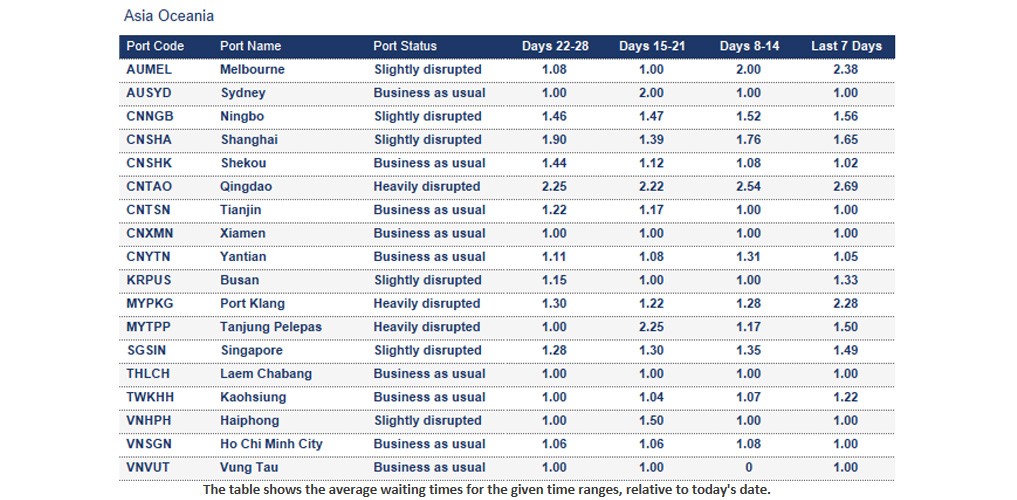
China
Ningbo: The 7-day average vessel waiting time is around 1.68 days due to berth congestion.
Qingdao: The 7-day average waiting time is around 2.68 days. Severe berth congestion persists across all terminals in Qingdao. At QQCT, one berth will be unavailable from 4 to 6 December due to the removal of an old QC. This will further exacerbate congestion and operational challenges, given the limited berth availability.
Shanghai: The 7-day average vessel waiting time is around 1.53 days due to berth congestion.
Indonesia
Belawan, Sumatra: The 7-day average vessel waiting time is around 2.2 days. Port operations at Belawan are gradually resuming after storm as carrier depots and container transport ease restrictions. Nevertheless, several vessels remain delayed in reaching the port, underscoring persistent logistical challenges. While progress is evident, full normalisation will require continued coordination across stakeholders to mitigate ongoing disruptions.
Malaysia
Kota Kinabalu: The 7-day average vessel waiting time is around 3 days due to severe flooding.
Port Klang: The 7-day average vessel waiting time is around 2.33 days. At WP, berth congestion intensified in week 48, with average delays of 2–3 days due to high berthing demand, adverse weather, and prior port closures. Smaller vessels face added complexity from regional feeder traffic. Yard utilisation remains high, exceeding 90% in week 49.
Tanjung Pelepas: The 7-day average vessel waiting time is around 1.5 days. Berthing conditions remain highly dynamic due to the commissioning of new quay cranes and the removal of older units.
Philippines
Manila: The 7-day average vessel waiting time is around 2.41 days. Severe berth congestion persists at both Manila North and South, with typical waiting times of 2–3 days. This is primarily due to the previous port closure and the backlog accumulated beforehand.
Thailand
Songkhla: Southern Thailand has endured severe flooding after prolonged heavy rainfall earlier this week. Port operations and access to the Port of Songkhla are likely to face delays in the aftermath of the storm. Read more.
Vietnam
Haiphong: The 7-day average vessel waiting time is around 1 day. Maintenance dredging at HICT is scheduled for December 2025, with completion anticipated by late January 2026.
Europe
Belgium
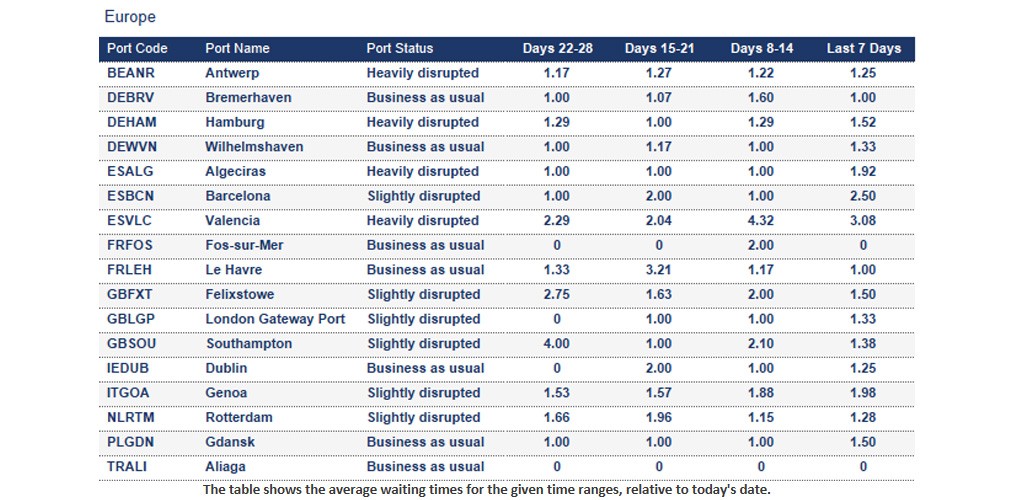
Antwerp: The 7-day average vessel waiting time is around 1.25 days. Port of Antwerp reports high yard utilisation: Q913 at 80% (reefers 50%, empties <65%) and Q869 at 73% (reefers 70%, empties 90%). Delays average 72 hrs at Q913 and 18 hrs at Q869; truck turnaround remains efficient. Empties need urgent evacuation before 21 Dec. Backlogs from strikes, fog, and crane issues are under recovery review.
Germany
Hamburg: The 7-day average vessel waiting time is around 1.52 days. Hamburg terminals remain under pressure: yard steady at 75%, reefers at 50%. The berth is at 100%.
Greece
Piraeus: The port is currently congested, with an average 7-day vessel waiting time of around 3.67 days.
Italy
A nationwide strike is planned for 12 December. Freight transport may also face slowdowns during the action. Read more.
Genoa: The 7-day average vessel waiting time is around 2 days. On 28 November, a general strike interrupted terminal operations.
Naples and Salerno: Trucking firms in Naples commenced an unannounced strike earlier this week and later escalated it to include Salerno, disrupting transport to and from ports, terminals, and gates. Read more.
Spain
Valencia: The 7-day average vessel waiting time is around 3.08 days. The yard density is high.
United Kingdom
Liverpool: Severe winds are forecast for the afternoon and evening of 5 December.
London Gateway Port: The 7-day average vessel waiting time is around 1.33 days. The yard is at 60% with reefers at around 44%. Northbound services are experiencing delays, with transshipments at London Gateway taking up to two weeks.
Southampton: The yard is heavily utilised at 87% for dry and 72% for reefers. The schedule remains congested due to weather-related delays affecting multiple lines, making planning challenging. Crane rail replacement is ongoing at berths SCT1–4; as work progresses along the quay, available crane capacity will be temporarily reduced.
Middle East - Indian Subcontinent
Bangladesh
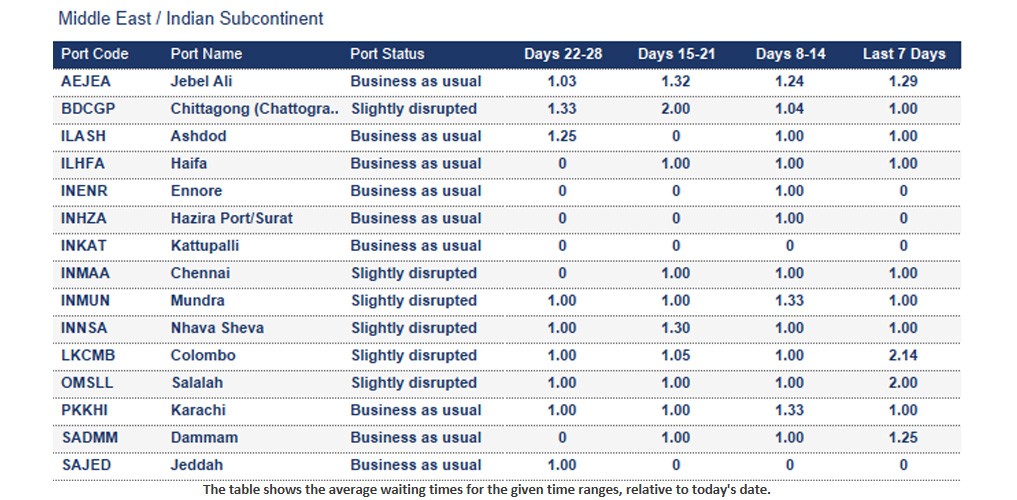
Chittagong (Chattogram): The 7-day average vessel waiting time is around 1 day. The yard is at 62.36%.
India
Chennai, Ennore, and Kattupalli: Cyclone Ditwah eased this week and was downgraded to a depression. Operations have resumed, albeit with delays. Read more.
Sri Lanka
Colombo: The 7-day average vessel waiting time is around 2.14 days. Port operations have resumed after the tropical storm. However, disruptions are still possible. The Sri Lankan port authority is facing challenges in getting workers from their homes to the port because of flooded roads, adding challenges to backlog-clearing efforts. Read more.
North America
Canada
Average import rail dwell time for Canadian cargo (Vessel arrival to departure rail ramp):
- Halifax: 7 days
- Montreal: 7 days
- Prince Rupert: 6 days
- Saint John: 9 days
- Vancouver: 10 days
Mexico
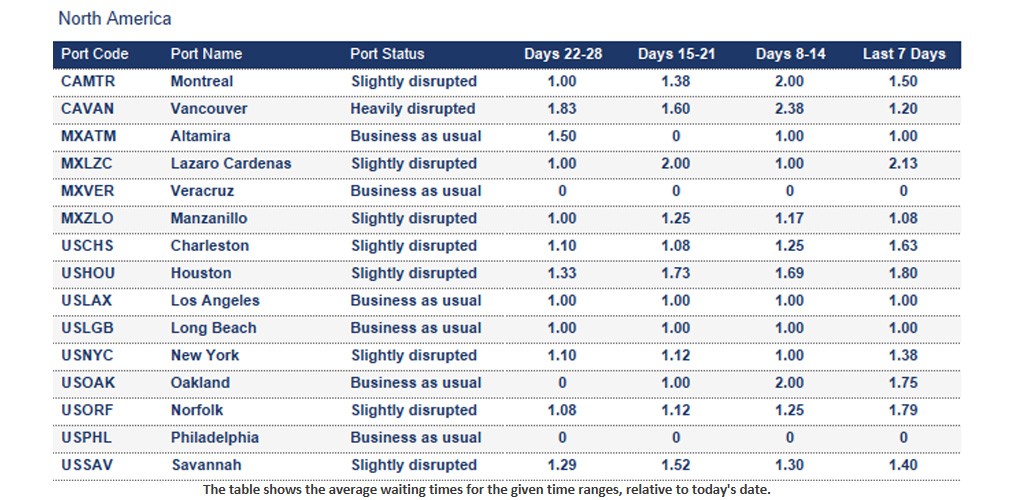
Lazaro Cardenas: The 7-day average vessel waiting time is around 2 days. Farmers in Chihuahua began protests in the region, blocking rails and roads and affecting the Estación Consuelo line. In the coming days, it may be escalated with potential impact on the roads in the municipality of Lázaro Cárdenas.
Manzanillo: The 7-day average vessel waiting time is around 1.08 days. Truck import processing times improved to 48 hours. Rail platform allocation for import cargo has decreased from 8 days to 7 days.
South and Central America
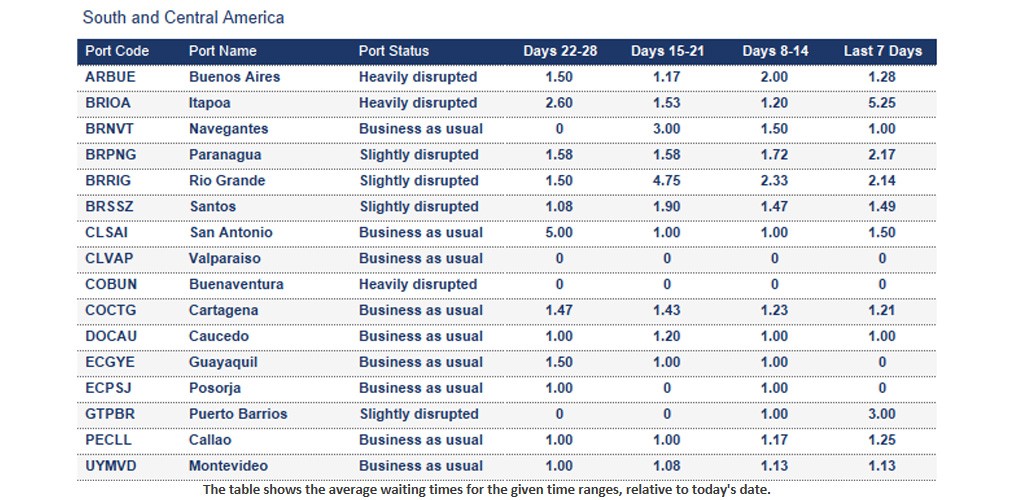
Brazil
Itapoa: The 7-day average vessel waiting time is around 4 days.
Santos: The 7-day average vessel waiting time is around 1.49 days. Terminals and yards are experiencing congestion and delays due to adverse weather conditions.
Jamaica
Kingston: The 7-day average vessel waiting time is around 3.33 days.
How Kuehne+Nagel estimates port disruption statuses
Seaexplorer has four port statuses that are estimated based mainly on the 7-day average vessel waiting time. Other factors include yard congestion, labour strikes, natural disasters or intermodal disruptions. Slightly different rules are applied to major ports, or ports that are hubs in their region, as they are typically more efficient.
- Business as usual means the port is currently operating without any significant disruption;
- Slightly disrupted is used if the 7-day average vessel waiting time exceeds 2 days;
- Heavily disrupted is used if the 7-day average vessel waiting time exceeds 4 days; and
- Port closed is used when the port suspends operations due to a major disruptive event.
How Kuehne+Nagel calculates the 7-day average vessel waiting time
Mainline container vessels may spend a certain number of days waiting at designated anchorage areas before their scheduled port call.
To calculate the 7-day average waiting time, we consider the waiting days of these vessels, excluding:
- Waiting times for feeder vessels,
- Idle ships without an announced next port,
- Slow steamers heading toward the anchorage but not actively waiting within the designated area
- Vessels passing through the anchorage area without intending to call at the port.
This rolling average is based on the data from the last seven days and is updated daily in seaexplorer.
To find the latest waiting time for a port, enter the port name or code in the search bar and select the relevant option.
Stay Ahead Stay Informed: Register for seaexplorer for the latest disruptions and vessel waiting times at global container ports.