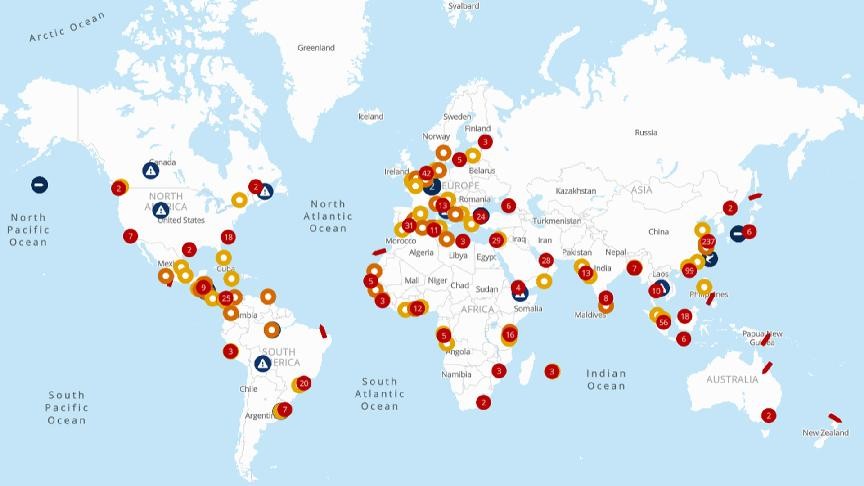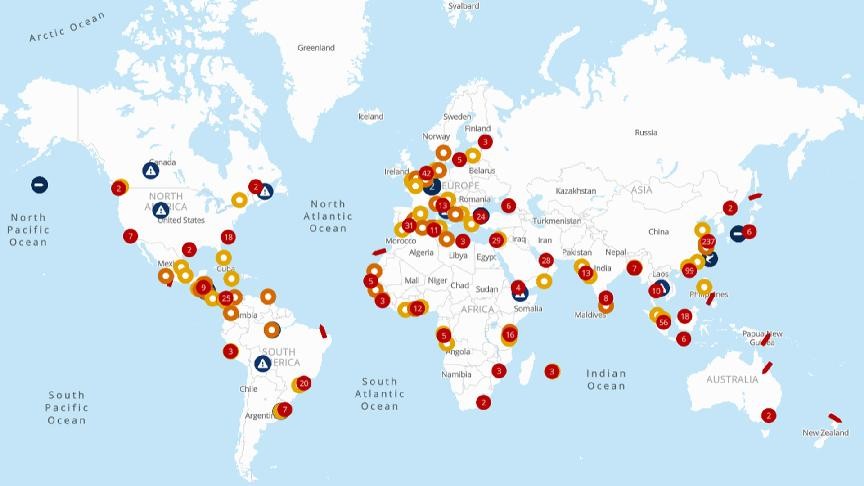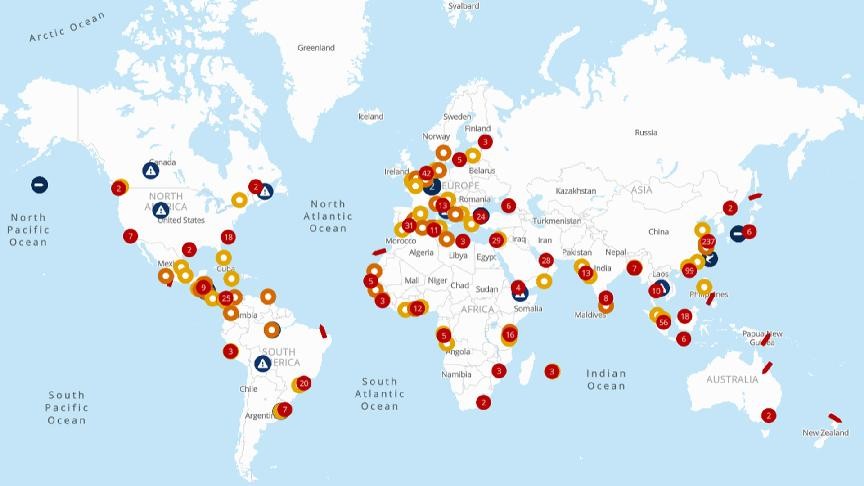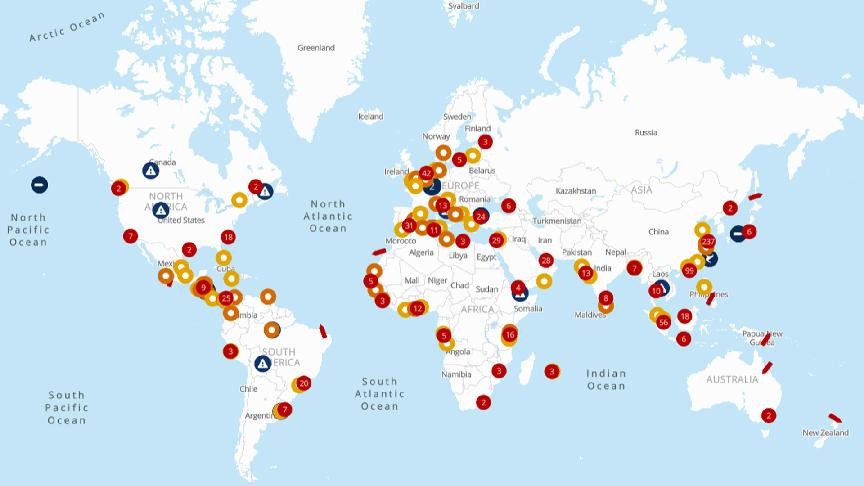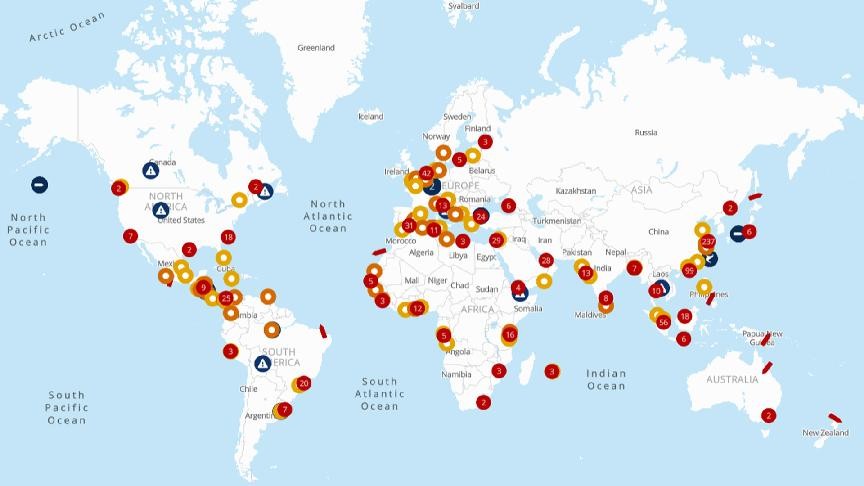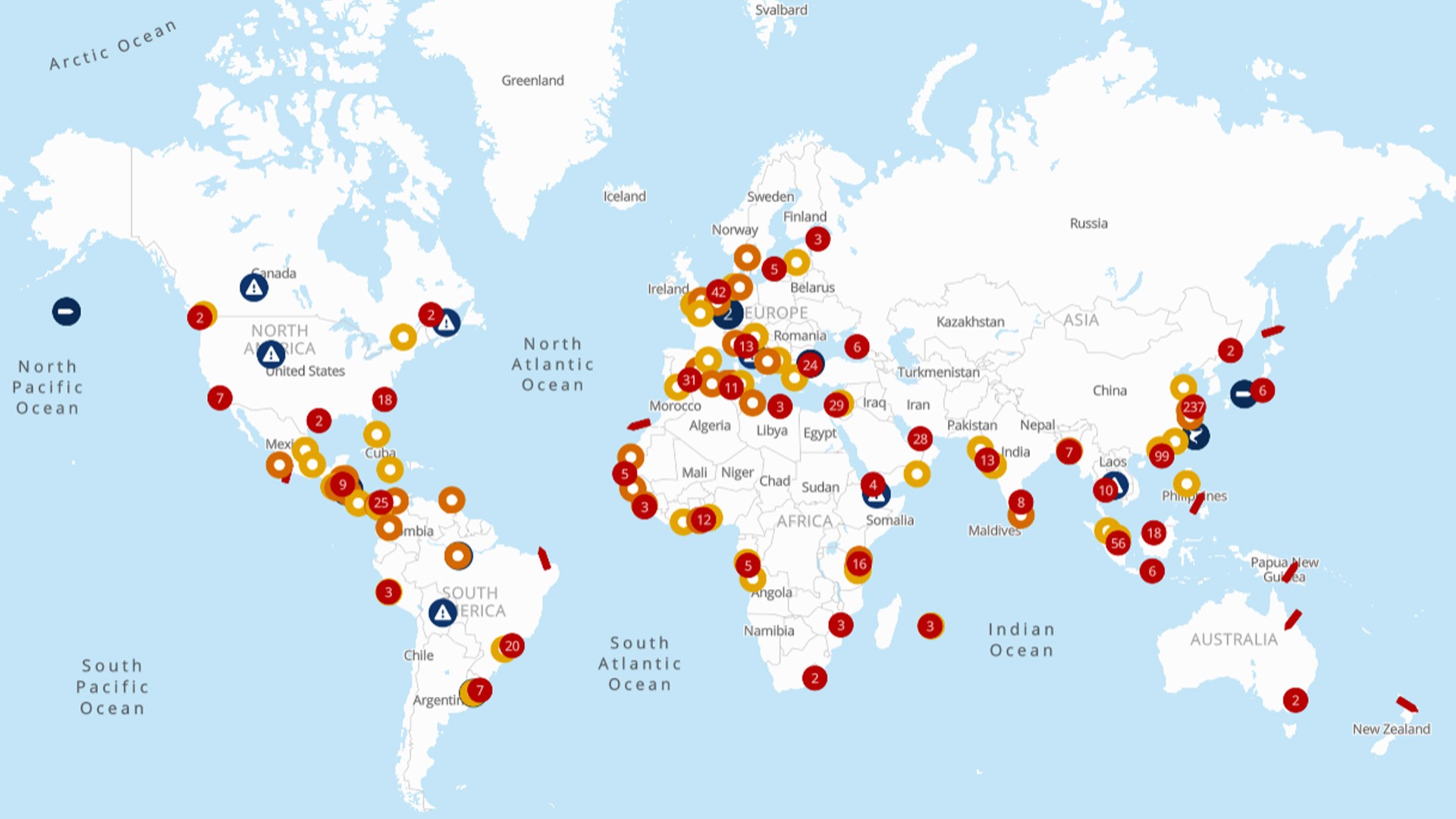

- Stay ahead of supply chain disruptions and port congestion with Kuehne+Nagel’s weekly port operational update.
- Find out the latest vessel waiting times and status of ports in Africa, Asia, Oceania, Europe, the Middle East-Indian Subcontinent, North America, and South and Central America.
Africa 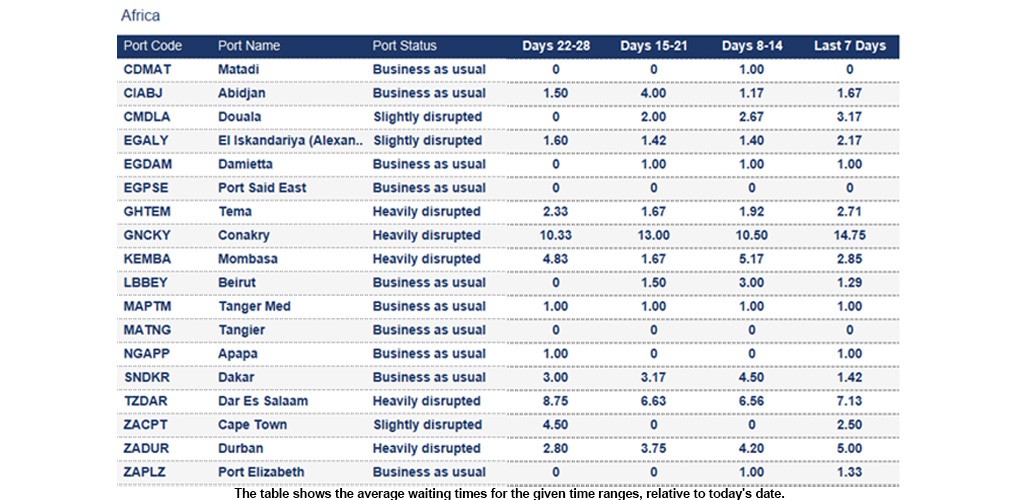
Cameroon
Douala: The 7-day average vessel waiting time is around 3.17 days.
Egypt
El Iskandariya (Alexandria): The 7-day average vessel waiting time is around 2.17 days.
Morocco
Casablanca: The port is currently closed due to severe weather and high swells. This is resulting in congestion. Read more.
Sudan
Port Sudan: The 7-day average vessel waiting time is around 4 days.
Asia Oceania
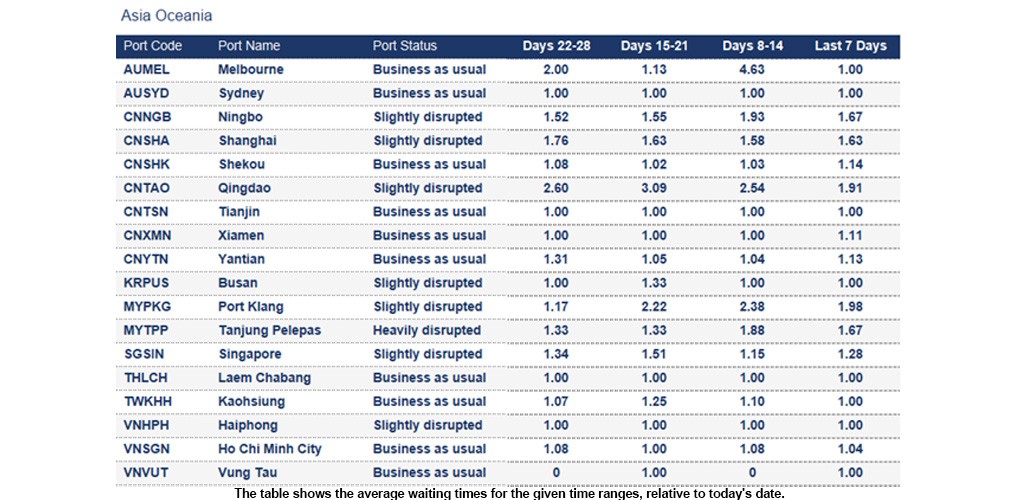
China
Ningbo: The 7-day average vessel waiting time is around 1.67 days due to berth congestion.
Shanghai: The 7-day average vessel waiting time is around 1.63 days due to berth congestion.
Malaysia
Port Klang: The 7-day average vessel waiting time is around 1.91 days. At WP, berth congestion intensified in week 48, with average delays of 2–3 days due to high berthing demand, adverse weather, and prior port closures. Smaller vessels face added complexity from regional feeder traffic. Yard utilisation remains high, exceeding 90% in week 49.
Tanjung Pelepas: The 7-day average vessel waiting time is around 1.67 days. Berthing conditions remain highly dynamic due to the commissioning of new quay cranes and the removal of older units.
Vietnam
Haiphong: The 7-day average vessel waiting time is around 1 day. Maintenance dredging at HICT is scheduled for December 2025, with completion anticipated by late January 2026.
Europe
 Belgium
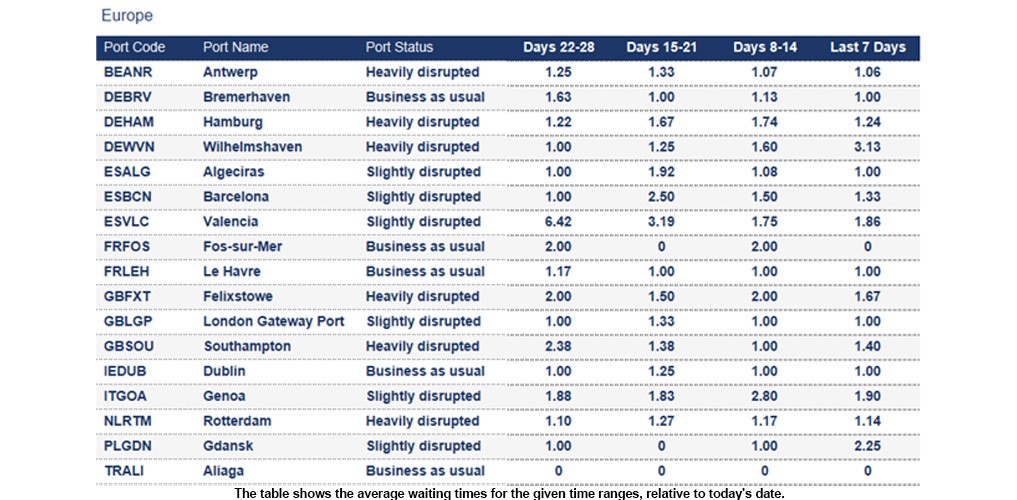
Antwerp: The 7-day average vessel waiting time is around 1.06 days. Port of Antwerp reports high yard utilisation: Q913 at 70% (reefers 50%, empties critical at 95%) and Q869 at 80% (reefers 80%, empties critical at 95%). Empties need urgent evacuation before 21 Dec. Adverse Atlantic weather is causing further delays in the coming days.
Germany
Hamburg: The 7-day average vessel waiting time is around 1.24 days. Hamburg terminals remain under pressure.
- CTA: yard steady at 68%, reefers at 68%. The berth is at 100%. Construction since September reduces berth capacity. The first remotely operated GQ unit is now in service; however, it still requires significant bug fixes. Productivity is improving gradually but remains below the expected standard.
- CTH: Mainliner vessels arriving out of window are causing additional pressure on the yard.
Wilhelmshaven: The 7-day average vessel waiting time is around 3.13 days.
Italy
Genoa: The average 7-day vessel waiting time is around 2.78 days.
Naples: The 7-day average vessel waiting time is around 2 days.
Netherlands
Rotterdam: The 7-day average vessel waiting time is around 1.14 days. Netherlands terminals stable overall:
- ECT yard at 85%, delays for barges/feeders decreased to 30hrs.
- MVII yard is at 98%. Elevated yard levels combined with ongoing stack crane maintenance are constraining the terminal’s usual high performance across both landside and quayside operations.
- Delta II:Challenges with inter-terminal transfers persist; however, overall operations remain stable.
Poland
Gdansk: The 7-day average vessel waiting time is around 2.25 days.
Spain
Algeciras: The 7-day average vessel waiting time is around 1 day. Carriers report yard density is around 83.73%. Recent adverse weather conditions, combined with yard and lineup congestion, have led to reduced operational efficiency and subsequent delays.
Barcelona: The 7-day average vessel waiting time is around 1.33 days. Recent adverse weather conditions have caused minor delays.
Valencia: The 7-day average vessel waiting time is around 1.86 days. The yard density is high. Recent adverse weather conditions have caused minor delays.
United Kingdom
Felixstowe: The port was affected by a system outage on the morning of 18 December.
Liverpool: Severe winds are forecast for 19 December.
London Gateway Port: The 7-day average vessel waiting time is around 1 day. The yard is at 65% with reefers at around 53%.The empty stock is high at 4200 TEU. IT outages, crane breakdowns as well as pilot station closures due to severe weather were hindering operations in the past weeks. Severe weather in the Bay of Biscaya is causing delayed vessel arrivals. This results in berth congestion, once mainliner vessel arrive at the same time.
Southampton: All shipside operations were suspended on 17 December due to dense fog. The 7-day average vessel waiting time is around 1.2 days. The yard is at 89% for dry and 75% for reefers. Southampton port operations have faced severe disruption over the past 2 weeks due to adverse weather and incidents. A 50-hour pilot closure (5–7 Dec), a 12-hour stoppage (9 Dec), and dense fog on 13 Dec halted shipside work for two hours. Additionally, 15 containers fell overboard on 6 Dec, triggering draft restrictions and worsening berth congestion. Further wind and rain are forecast. Read more.
Middle East - Indian Subcontinent
Pakistan
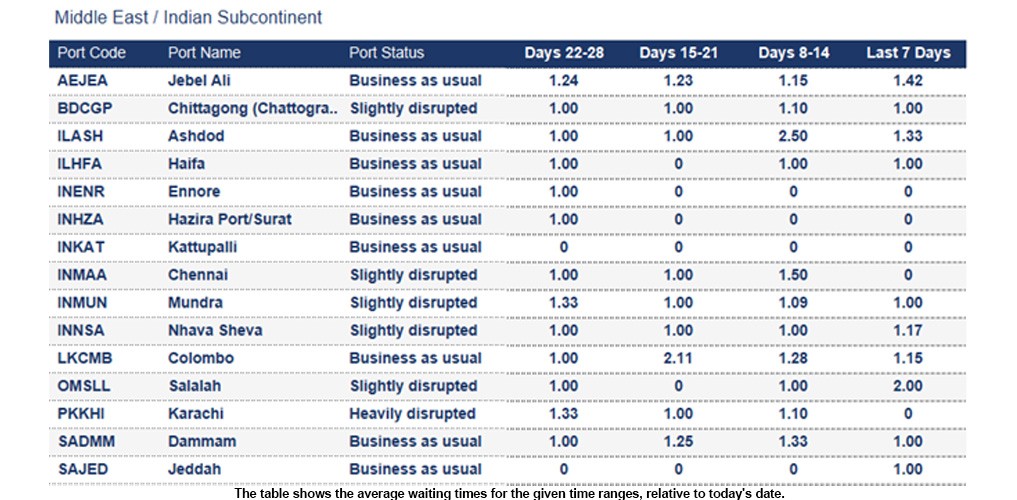
Karachi and Muhammad Bin Qasim: The All Pakistan Transport Federation and major unions have announced a nationwide strike on 19 December to protest a new fine system. Goods and passenger transport from Khyber to Karachi will halt, disrupting ports, supply chains, markets, and essential services. Despite earlier talks, unions rejected government assurances, raising serious concerns for businesses and trade. Read more.
North America
 Canada
Average import rail dwell time for Canadian cargo (Vessel arrival to departure rail ramp):
- Halifax: 6 days
- Montreal: 8 days
- Prince Rupert: 7 days
- Saint John: 11 days
- Vancouver: 10 days
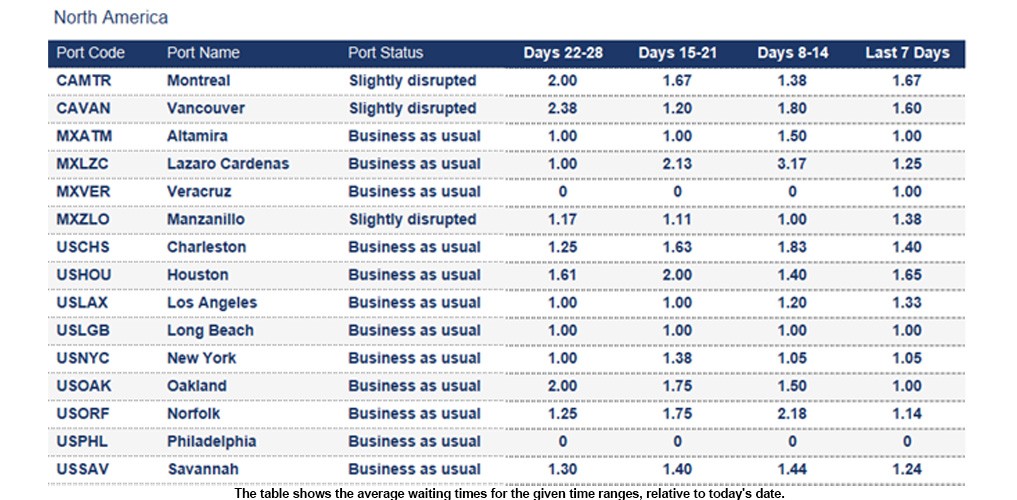
Vancouver: The 7-day average vessel waiting time is around 1.6 days. The surrounding areas outside of Vancouver have experienced some flooding. Port and rail operations remain fluid. Deliveries outside of Vancouver are partially impacted.
USA
Los Angeles: The 7-day average vessel waiting time is around 1.33 days. APM Terminals reported that dense fog impacted trucking operations at the port in the morning, causing delays. Appointments remain unchanged, but extended times are expected.
South and Central America
Brazil
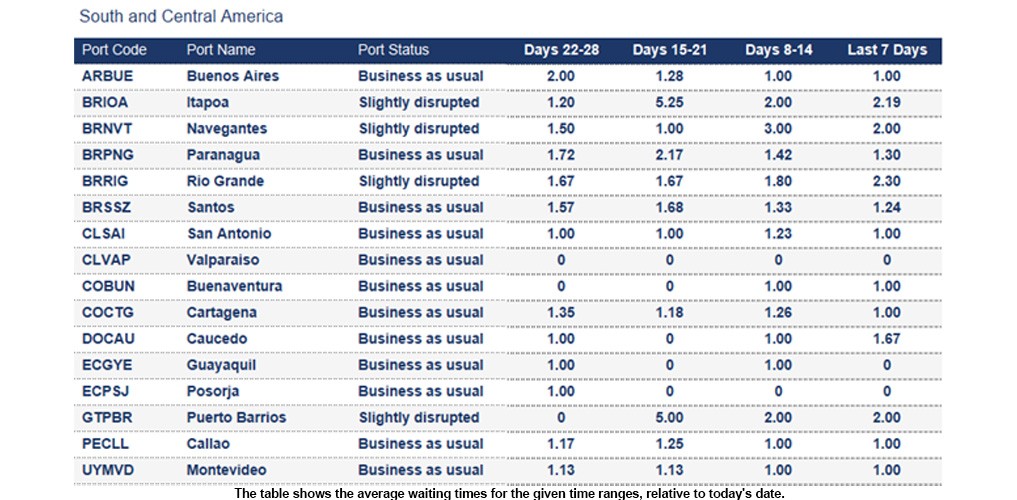
Itapoa: The 7-day average vessel waiting time is around 2.2 days.
Navegantes: The 7-day average vessel waiting time is around 2 days.
Rio Grande: The 7-day average vessel waiting time is around 2.3 days
How Kuehne+Nagel estimates port disruption statuses
Seaexplorer has four port statuses that are estimated based mainly on the 7-day average vessel waiting time. Other factors include yard congestion, labour strikes, natural disasters or intermodal disruptions. Slightly different rules are applied to major ports, or ports that are hubs in their region, as they are typically more efficient.
- Business as usual means the port is currently operating without any significant disruption;
- Slightly disrupted is used if the 7-day average vessel waiting time exceeds 2 days;
- Heavily disrupted is used if the 7-day average vessel waiting time exceeds 4 days; and
- Port closed is used when the port suspends operations due to a major disruptive event.
How Kuehne+Nagel calculates the 7-day average vessel waiting time
Mainline container vessels may spend a certain number of days waiting at designated anchorage areas before their scheduled port call.
To calculate the 7-day average waiting time, we consider the waiting days of these vessels, excluding:
- Waiting times for feeder vessels,
- Idle ships without an announced next port,
- Slow steamers heading toward the anchorage but not actively waiting within the designated area
- Vessels passing through the anchorage area without intending to call at the port.
This rolling average is based on the data from the last seven days and is updated daily in seaexplorer.
To find the latest waiting time for a port, enter the port name or code in the search bar and select the relevant option.
Stay Ahead Stay Informed: Register for seaexplorer for the latest disruptions and vessel waiting times at global container ports.