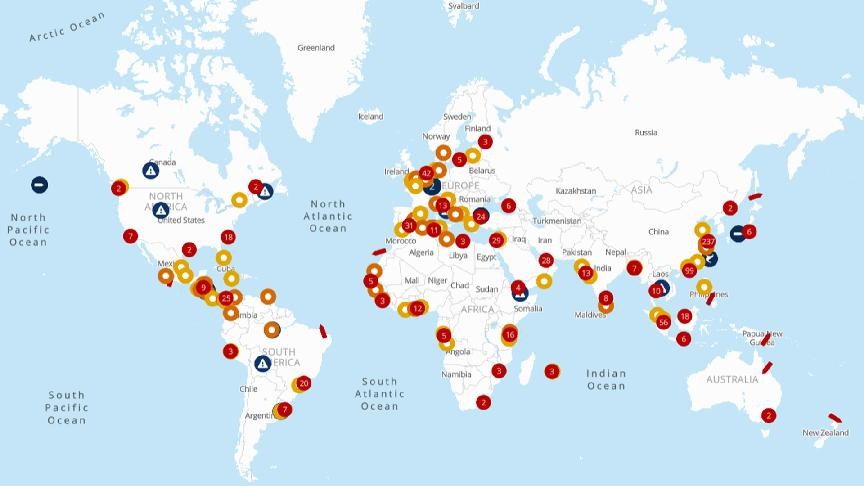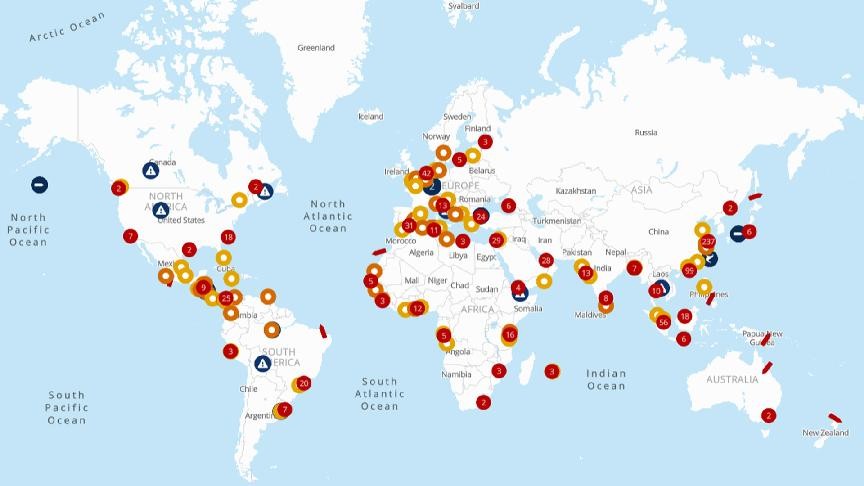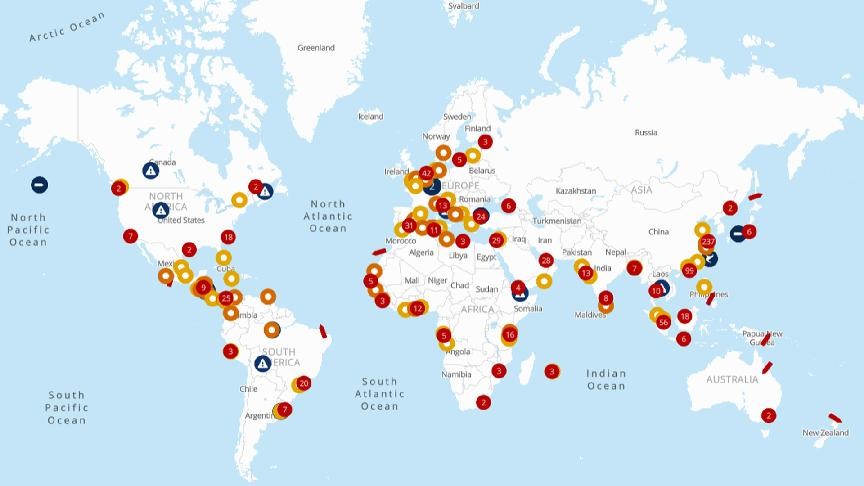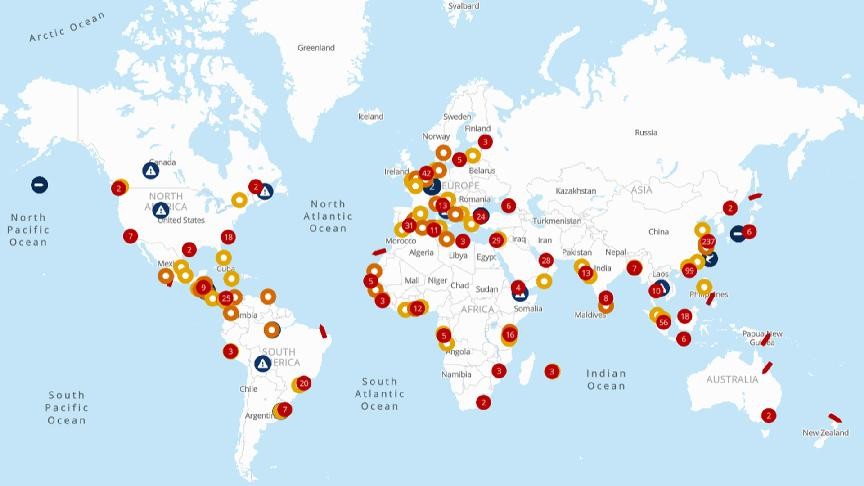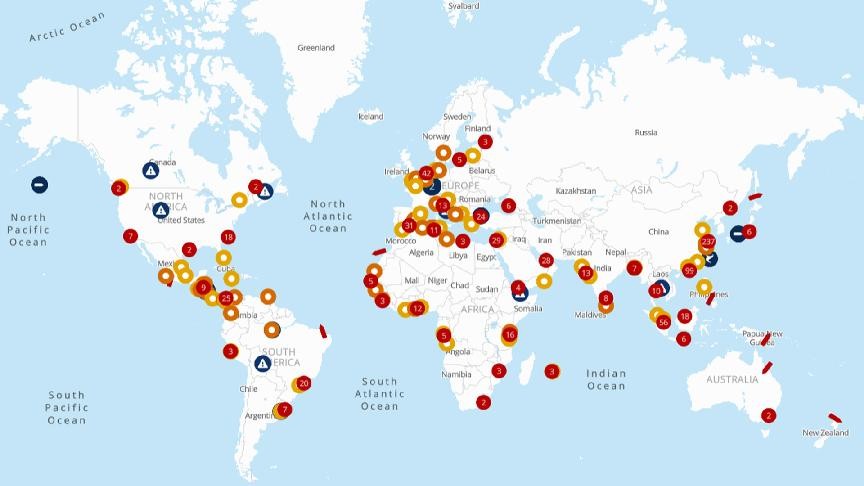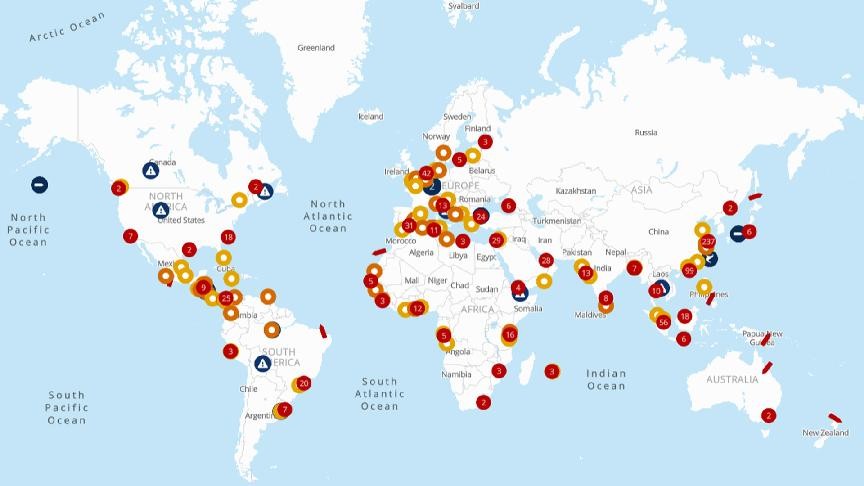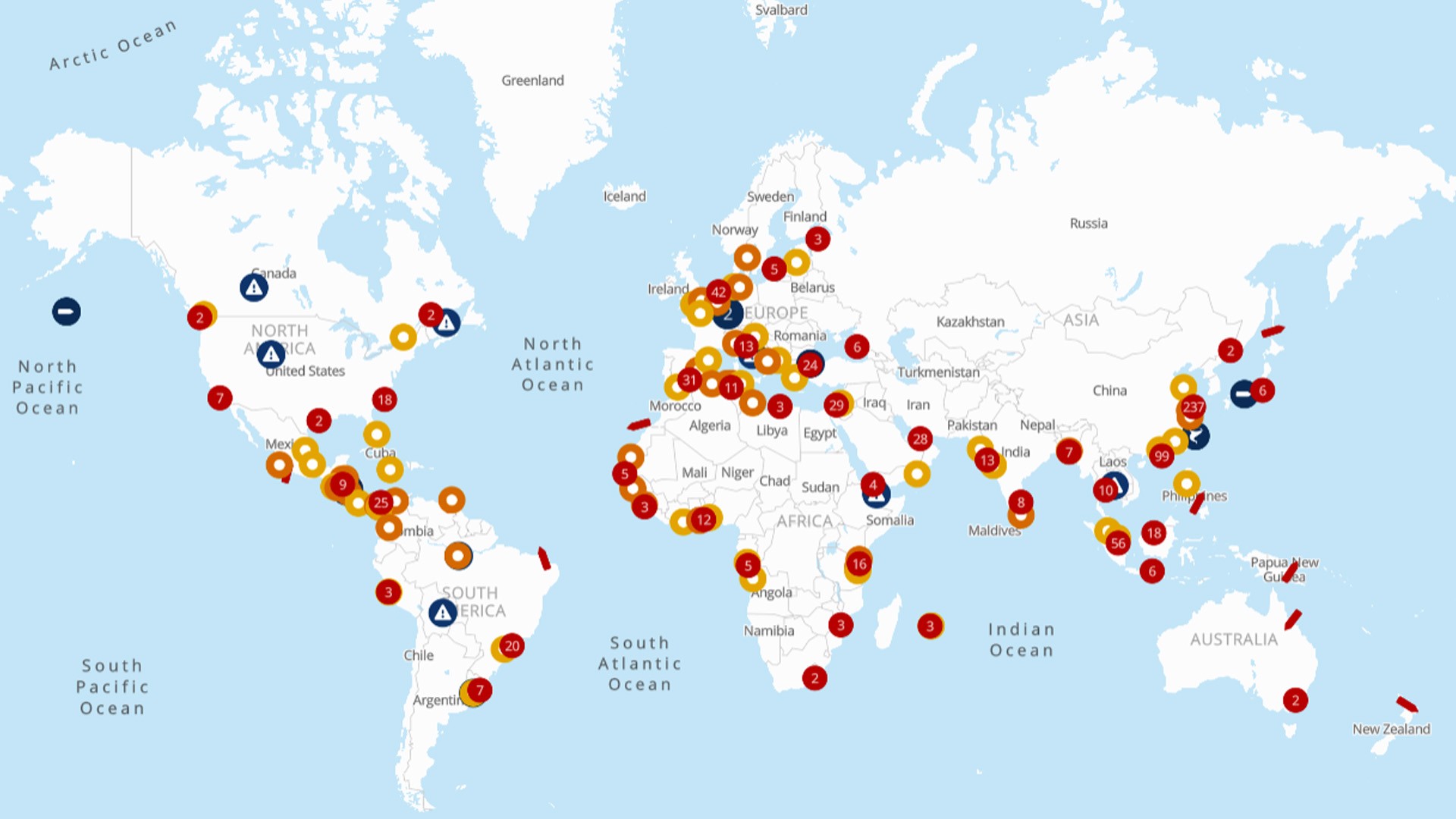

- Stay ahead of supply chain disruptions and port congestion with Kuehne+Nagel’s weekly port operational update.
- Find out the latest vessel waiting times and status of ports in Africa, Asia Oceania, Europe, Middle East-Indian Subcontinent, North America, and South and Central America.
Africa
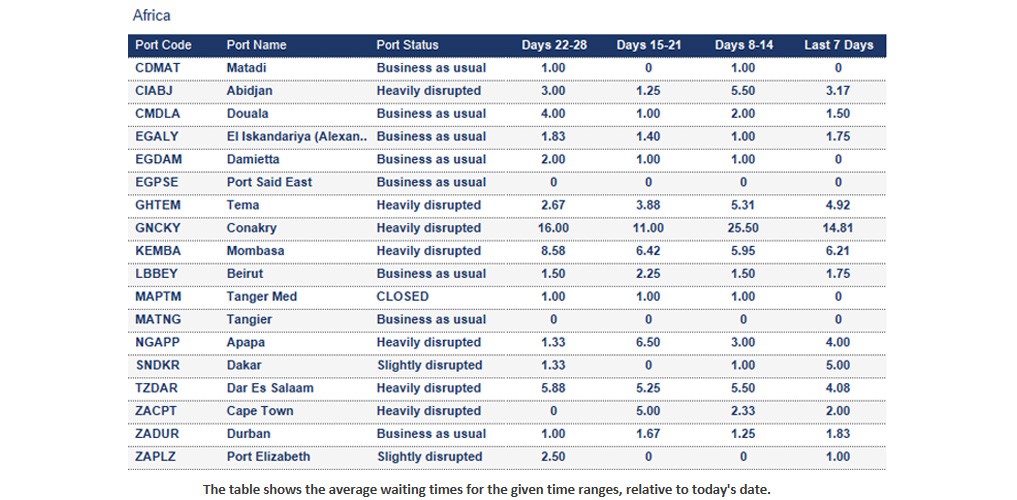
Ports in West Africa have been facing congestion caused by rising volumes, extended berthing queues and weather conditions, straining operations across key regional hubs. Read more.
Algeria
Annaba: Severe weather disrupted operations in week 5. Although operations resumed, delays and disruptions are still possible.
Bejaia: The 7-day average vessel waiting time is around 11.5 days. The port was impacted by severe weather. Although conditions improved, a backlog persists.
Mostaganem: The 7-day average vessel waiting time is around 9.00 days.
Oran: The 7-day average vessel waiting time is around 5.5 days. The port was impacted by severe weather. Although conditions improved, a backlog persists.
Ghana
Tema: The 7-day average vessel waiting time is around 4.92 days. The terminal is facing crane outages, resulting in significant operational constraints. Window vessels are encountering delays of up to 36 hours, while non-window vessels are handled subject to berth availability. The terminal is operating under strict pro-forma move guidelines.
Morocco
Casablanca: The 7-day average vessel waiting time is around 5.56 days. Operations are mostly back to normal, but conditions are still affected by high swell, strong winds, and continuous rain. As a result, operations are progressing more slowly than usual, and berth waiting time remains elevated. Potential closures remain possible.
Tanger Med: The port is currently closed due to severe weather and high swells.
Mozambique
Beira: The 7-day average vessel waiting time is around 17.44 days. Congestion and severe weather, including strong wind gusts and rain, persist.
Nigeria
Apapa: The 7-day average vessel waiting time is around 4 days. Operational slowdowns over the coming weeks due to adverse weather conditions are anticipated. The ports of Tincan/Lagos face similar weather conditions.
Asia Oceania
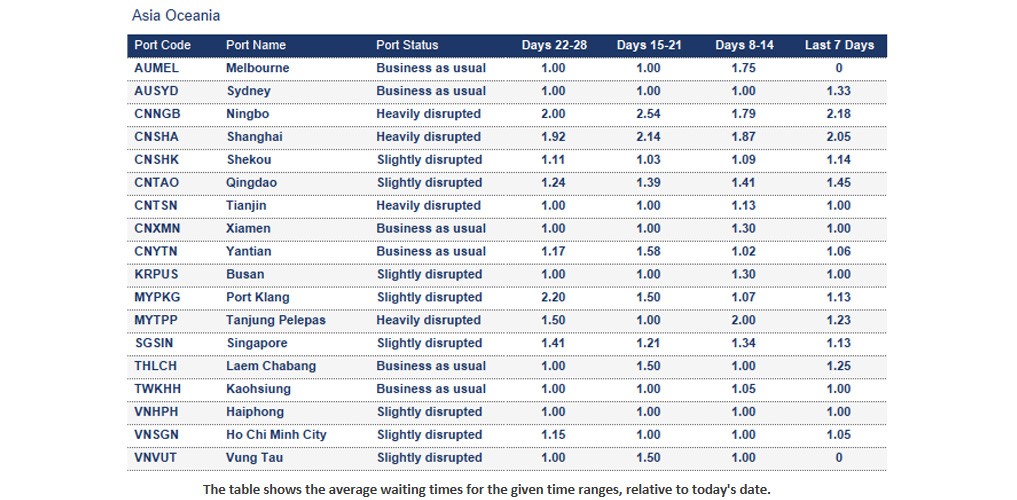
China
Nansha: The 7-day average vessel waiting time is around 2.6 days. Yard occupancy is currently at 91%, with a waiting time of 3.5 days. Nansha ports are experiencing extremely high yard density, and vessels with large discharge volumes are likely to face longer berth delays.
Ningbo: The 7-day average vessel waiting time is around 2.26 days. Yard occupancy stands at 96% in MSICT and 86% across other terminals. Reefer utilisation at MSICT is 80%.
Shanghai: The 7-day average vessel waiting time is around 2.05 days. Yard occupancy stands at 81% in WGQ and 74% in YS12, with reefer utilisation at 44% in YS12. Strong winds are forecast to affect Shanghai on the 6th and 7th, which may further impact operations.
Shekou: At Shekou, yard density for laden units remains extremely high at 98%. Export-laden gate‑in operations are under significant pressure due to the sustained intensity of volumes.
Tianjin: The 7-day average vessel waiting time is around 1 day. The overall port situation remains poor in Week 05. All terminals are experiencing heavy congestion, with general waiting times of around two to three days. Ongoing maintenance dredging at QQCTU is further reducing berth utilisation.
Malaysia
Port Klang: The 7-day average vessel waiting time is around 1.13 days. Compared with previous weeks, further improvement has been observed at WP this week, with waiting times generally around 0.5 days. Yard density has also improved, standing at 73% as of this morning.
Tanjung Pelepas: The 7-day average vessel waiting time is around 1.23 days. Berthing conditions remain fluid. Part of the quay is allocated to commissioning new QCs and removing older units. Decommissioning of QC 36 and 37 occupied 300 metres of Berth 11 until 2 February. In Week 7, around 150 m of Berth 1 will be blocked for seven days for RTG discharge. In Weeks 10–11, about 300 m of Berth 4 will be closed for installation of new QC cranes.
Singapore
Singapore: The 7-day average vessel waiting time is around 1.13 days. The entire PSA remains busy, with average waiting times of around 1.5 days for all carriers. Yard utilisation is stable, currently at 80–85%.
South Korea
Busan: The 7-day average vessel waiting time is around 1 day. At BNCT, laden yard density stands at around 61% today (5 February). Heavy berth congestion is expected in Week 06, with average waiting times of around one day due to bunching of arrivals and delays carried over from previous ports.
Vietnam
Haiphong: The 7-day average vessel waiting time is around 1 day. Yard utilisation at both HHIT and HICT remains healthy at around 70–80% in Week 06. Conditions at HICT are stable, with waiting times of about 0.5 days. Yard congestion is expected during the Lunar New Year holiday from 14 to 22 February.
Ho Chi Minh City: The 7-day average vessel waiting time is around 1.05 days. For Cat Lai, the overall situation is stable this week, with a waiting time of 1 day generally. Overall yard utilisation was maintained at a high level of density around 84% in week 06.
Vung Tau: Heavy berth congestion persists, with waiting times of around 1.5–2 days in Week 06 due to vessel bunching and additional empty discharges to meet pre‑LNY demand. Yard utilisation is very high at 95–100%, significantly impacting overall terminal efficiency.
Europe
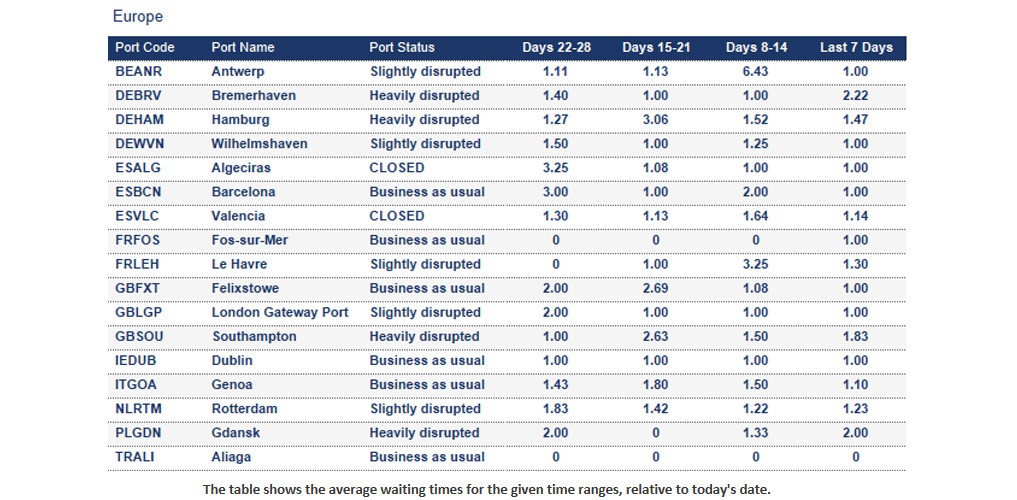
The region has been experiencing prolonged low temperatures and snowy conditions. Carriers report terminal closures, vessel delays and rising congestion in the Bay of Biscay. Read more.
Belgium
Antwerp: The 7-day average vessel waiting time is around 1 day. Yard utilisation is 75% at Q913 and 65% at Q869, with reefer and empty levels stable. Truck turnaround averages 22 minutes at Q913 and 11 minutes at Q869. Weekday labour exceeds 30 gangs, slightly lower at weekends. Quay‑expansion cranes are delayed due to weather, with arrival now expected on 11 February.
Germany
Port and inland operations are facing limitations due to cold temperatures in Germany. Icy conditions are expected to remain for the next few days. Read more.
Bremerhaven: The 7-day average vessel waiting time is around 2.22 days. The yard at NTB remains close to capacity, with limited availability for IMO slots. This may prevent the discharge of certain IMO units this weekend, requiring restow for discharge on the next call. BRV is also affected by freezing rain, resulting in slower cargo operations.
Hamburg: The 7-day average vessel waiting time is around 1.47 days. The River Elbe is closed to larger vessels due to high winds and low water levels, affecting departures and intake.
- CTH yard remains very high at 90%, impacting vessel productivity, and swift import pickup has been requested.
- At CTA, yard utilisation eased to 68% mid‑week, truck flows are being moderated, and ice build‑up is adding 1–2 hours per manoeuvre.
Wilhelmshaven: At CTW, yard utilisation remains stable at around 60%. However, vessel arrivals in Wilhelmshaven are significantly affected by severe weather in the Bay of Biscay and closures at Tanger, resulting in an increasingly congested line‑up.
Italy
La Spezia: The 7-day average vessel waiting time is around 2.43 days. Due to a breakdown on the railway to La Spezia Marittima station/junction, the intermodal connection to/from La Spezia port is blocked.
Milan: The Winter Olympic Games commence on Friday in Milan and Cortina. Road transport is expected to face delays around the cities, including access to internal depots.
Netherlands
Rotterdam: The 7-day average vessel waiting time is around 1.23 days. From 7 to 10 February, the port will be closed for work on the infrastructure. During this time, no trains, barges or trucks will be handled.
- ECT’s yard is stable at 80% though imbalanced due to delayed vessels and move restrictions, with second‑modality delays of 12–48 hours and berth delays up to 35 hours.
- At NL/MVII, yard utilisation is 85% with minor feeder and barge delays.
- NL/Delta II remains smooth with 36% utilisation and no barge or feeder delays, aside from a short crane‑related departure delay.
Portugal and Spain
The two neighbouring countries face severe weather conditions with strong winds, power outages and risk of flooding. This impacted transport and port operations in the region. Read more.
Algeciras, Valencia: The ports are currently closed due to storm Leo.
Middle East - Indian Subcontinent
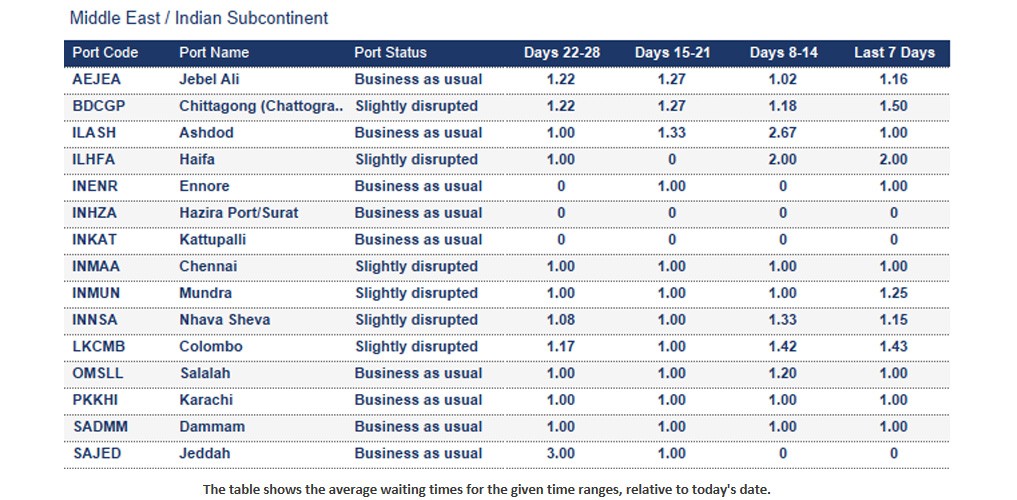
Bangladesh
Chittagong (Chattogram): Operations at Chattogram Port are gradually resuming after workers suspended their strike on 5 February. The initial suspension is for 48 hours as negotiations continue. While operations return to normal, delays may still occur. Read more.
North America
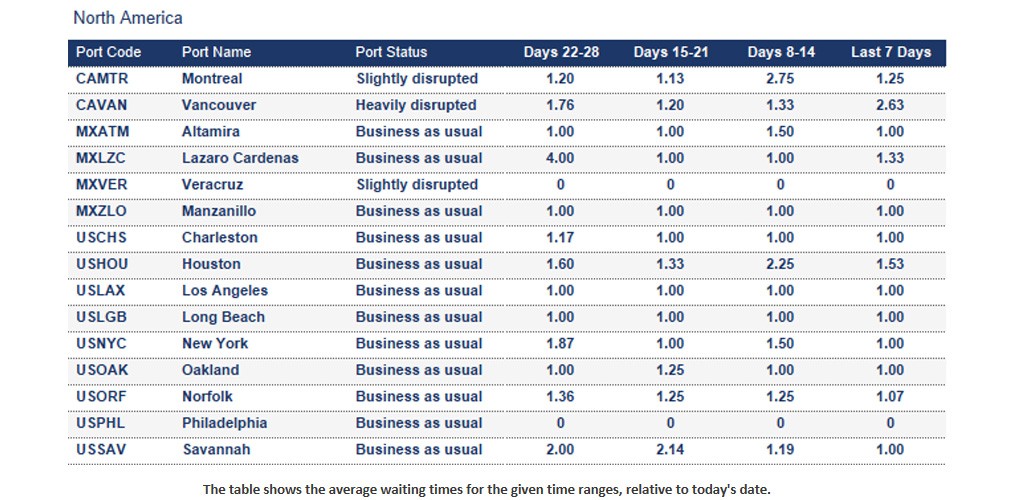
Canada
Average import rail dwell time for Canadian cargo (Vessel arrival to departure rail ramp):
- Halifax: 4 days
- Montreal: 8 days
- Prince Rupert: 8 days
- Saint John: 7 days
- Vancouver: 8 days
Mexico
Veracruz: Adverse weather on 30 and 31 January resulted in terminal closures, extending loading times from the usual 48 hours to 48–72 hours. Operations have now resumed, and terminal manoeuvres are currently proceeding without restrictions.
South and Central America
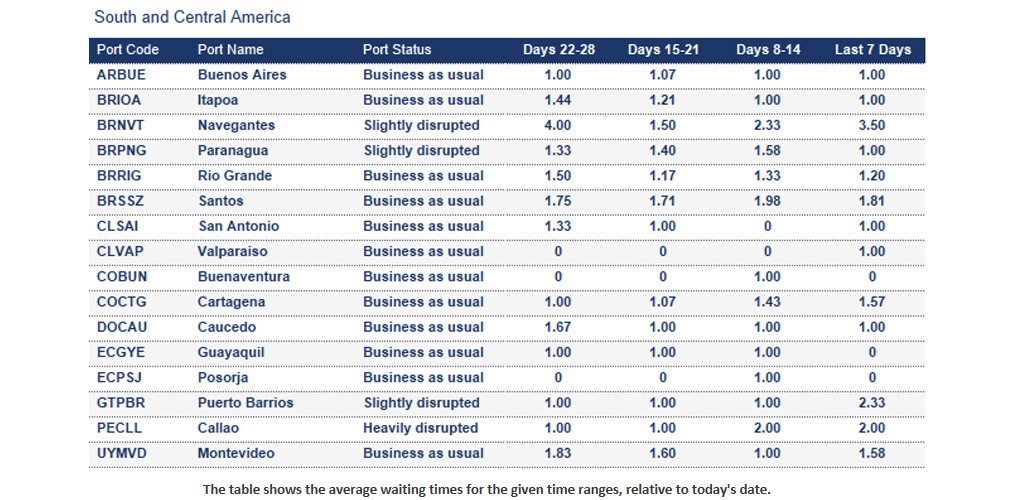
Cayman Islands
Georgetown, Grand Cayman: The 7-day average vessel waiting time is around 8.00 days.
Nicaragua
Corinto: The 7-day average vessel waiting time is around 3.63 days.
How Kuehne+Nagel estimates port disruption statuses
Seaexplorer has four port statuses that are estimated based mainly on the 7-day average vessel waiting time. Other factors include yard congestion, labour strikes, natural disasters or intermodal disruptions. Slightly different rules are applied to major ports, or ports that are hubs in their region, as they are typically more efficient.
- Business as usual means the port is currently operating without any significant disruption.
- Slightly disrupted is used if the 7-day average vessel waiting time exceeds 2 days.
- Heavily disrupted is used if the 7-day average vessel waiting time exceeds 4 days.
- Port closed is used when the port suspends operations due to a major disruptive event.
How Kuehne+Nagel calculates the 7-day average vessel waiting time
Mainline container vessels may spend a certain number of days waiting at designated anchorage areas before their scheduled port call.
To calculate the 7-day average waiting time, we consider the waiting days of these vessels, excluding:
- Waiting times for feeder vessels,
- Idle ships without an announced next port,
- Slow steamers heading toward the anchorage but not actively waiting within the designated area
- Vessels passing through the anchorage area without intending to call at the port.
This rolling average is based on the data from the last seven days and is updated daily in seaexplorer. To find the latest waiting time for a port, enter the port name or code in the search bar and select the relevant option.
Stay Ahead, Stay Informed: Register for seaexplorer for the latest disruptions and vessel waiting times at global container ports.