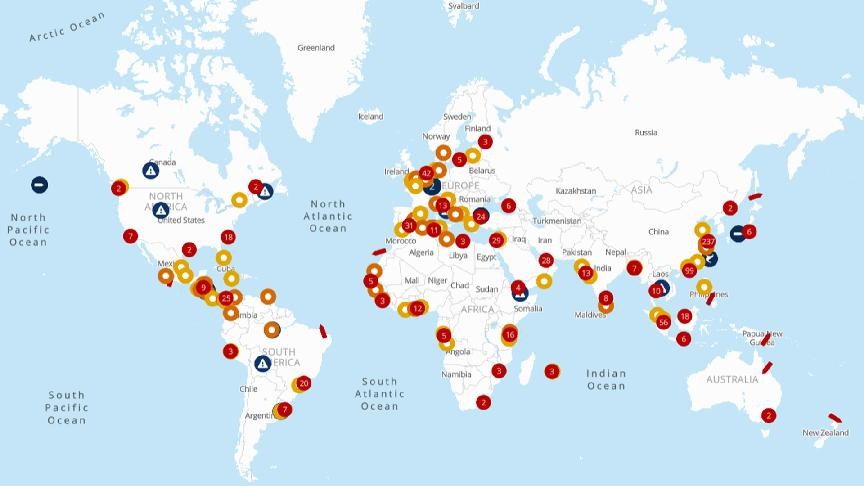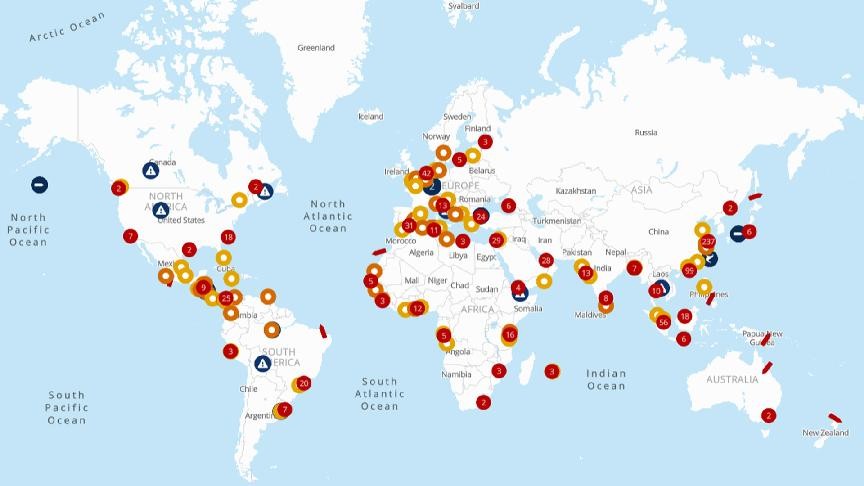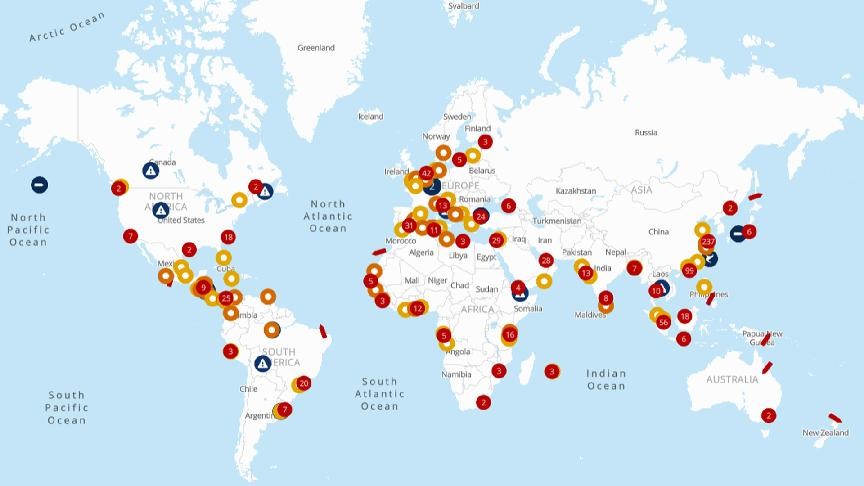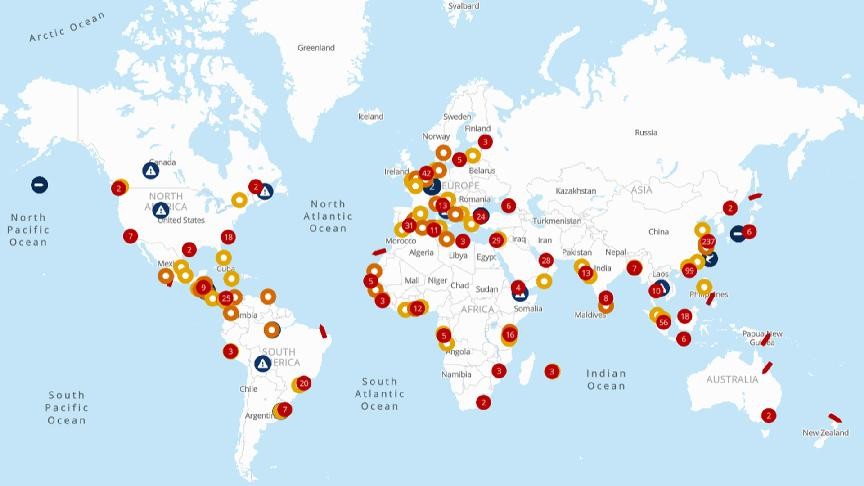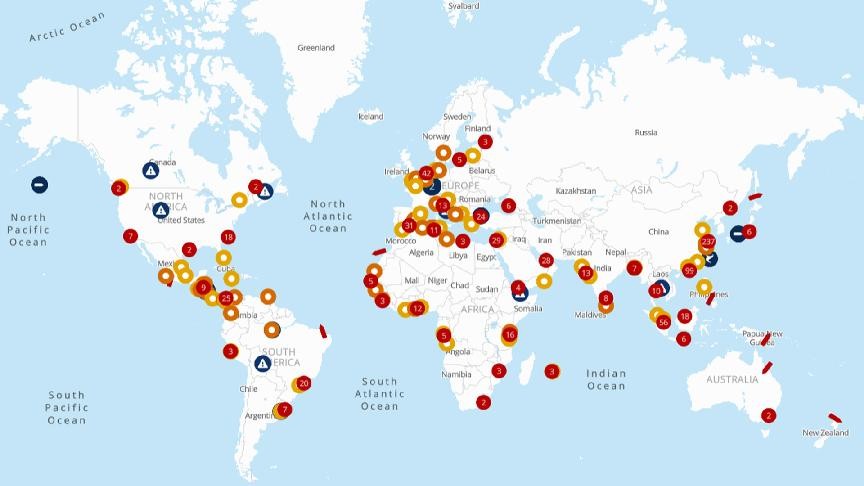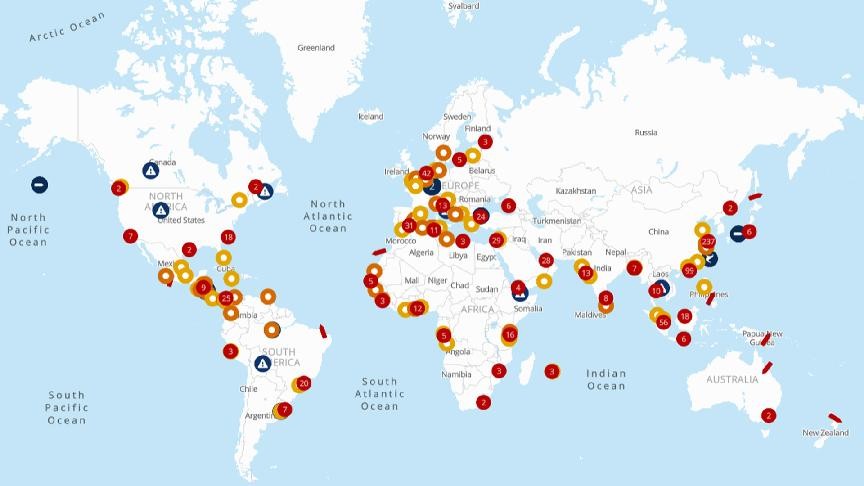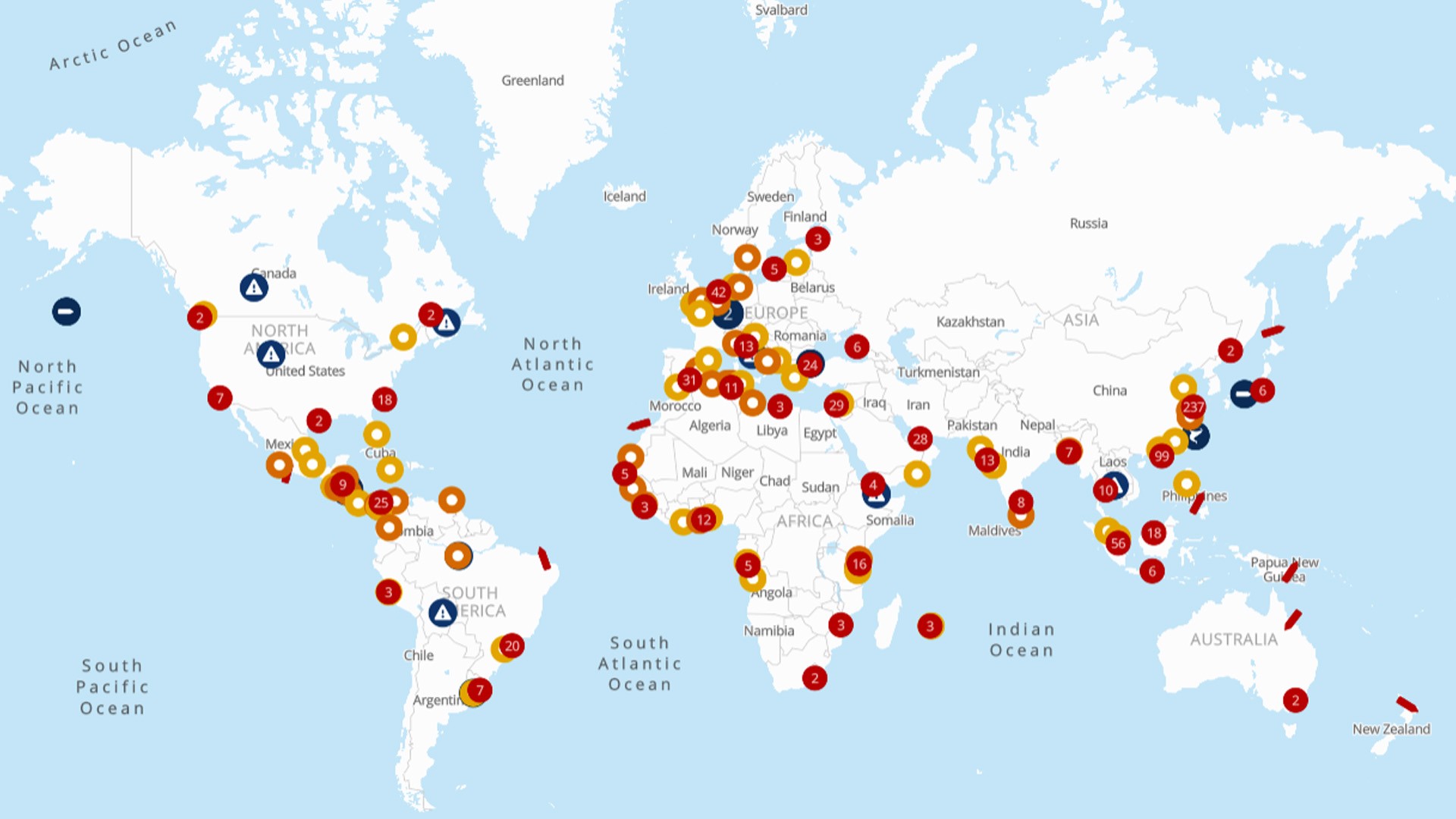

- Stay ahead of supply chain disruptions and port congestion with Kuehne+Nagel’s weekly port operational update.
- Find out the latest vessel waiting times and status of ports in Africa, Asia Oceania, Europe, Middle East-Indian Subcontinent, North America, and South and Central America.
Africa
Algeria
Algiers: The 7-day average vessel waiting time is around 4.25 days.
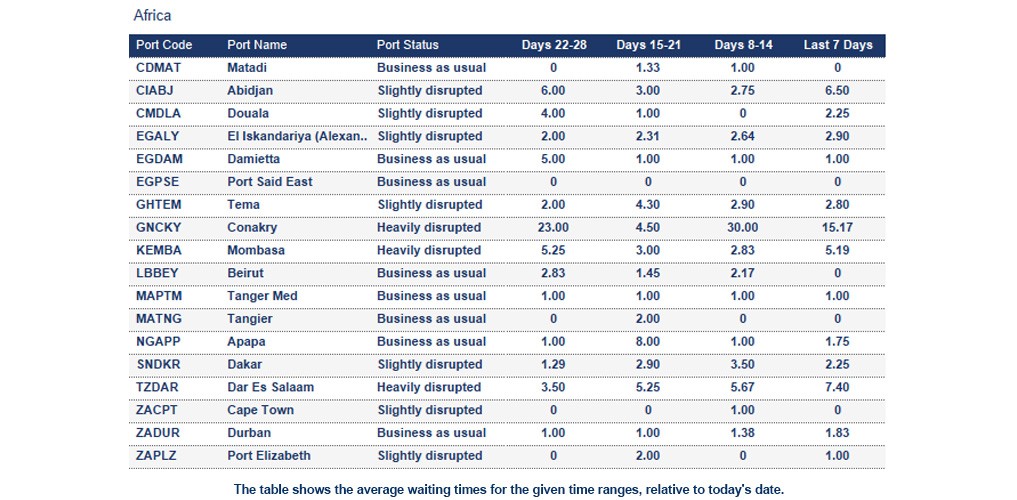
Bejaia: The 7-day average vessel waiting time is around 6 days. The port was impacted by severe weather. Although conditions improved, a backlog persists.
Cameroon
Douala: The 7-day average vessel waiting time is around 2.25 days. Feeder waiting times average around three days, mainly due to dependencies on mainliner connections.
Guinea
Conakry: The 7-day average vessel waiting time is around 15 days due to heavy congestion and poor terminal performance. Hapag-Lloyd reports waiting times of up to 21 days.
Kenya
Mombasa: The 7-day average vessel waiting time is around 5.19 days. The terminal is experiencing prolonged congestion and reduced productivity due to equipment shortages. Berth delays are further exacerbated by vessel bunching resulting from off‑window arrivals.
Mauritania
Nouadhibou: The 7-day average vessel waiting time is around 8.25 days.
Morocco
Casablanca: The 7-day average vessel waiting time is around 3.60 days.
Nigeria
Terminals in Nigeria are facing huge congestion with berthing delays ranging from 2 to 3 days.
Republic of the Congo
Pointe Noire: The 7-day average vessel waiting time is around 3.27 days. Adverse weather conditions and rain are slowing terminal operations, which is affecting vessel scheduling. Feeder vessels are experiencing berthing delays of three to four days, primarily due to the reliance on mainliner connections.
South Africa
Durban: Bad weather and crane programme malfunctions are causing delays at Pier 1 and Pier 2.
Tanzania
Dar Es Salaam: The 7-day average vessel waiting time is around 7.4 days. DPW Terminal is facing severe delays of up to 8 days due to berth sequence, gate and road congestion.
The Gambia
Banjul: The 7-day average vessel waiting time is around 7.5 days.
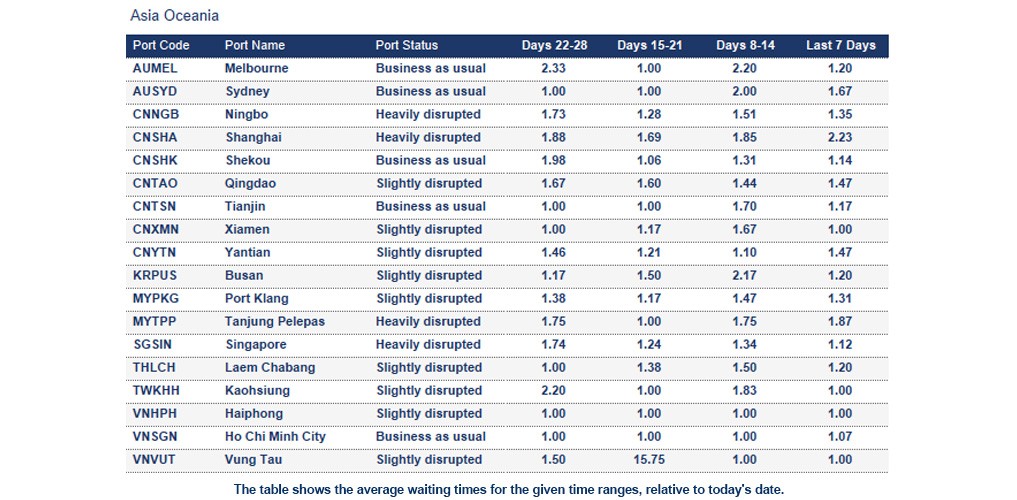
Asia Oceania
China
Shanghai: The 7-day average vessel waiting time is around 2.23 days.
Indonesia
Belawan, Sumatra: The 7-day average vessel waiting time is around 4 days.
New Zealand
Auckland: The 7-day average vessel waiting time is around 2.33 days.
Lyttelton: The 7-day average vessel waiting time is around 2.25 days.
South Korea
Busan: The 7-day average vessel waiting time is around 1.2 days. At BNCT, as of 12 March, laden yard density stands at approximately 86%.
Thailand
Laem Chabang: The 7-day average vessel waiting time is around 1.2 days.
Vietnam
Vung Tau: Berth congestion stabilised in week 11, with average waiting times of around half a day, supported by blank sailings across all shipping lines. Yard utilisation has decreased to a healthy level of approximately 60%, contributing to the restoration of overall terminal efficiency.
Europe
Belgium
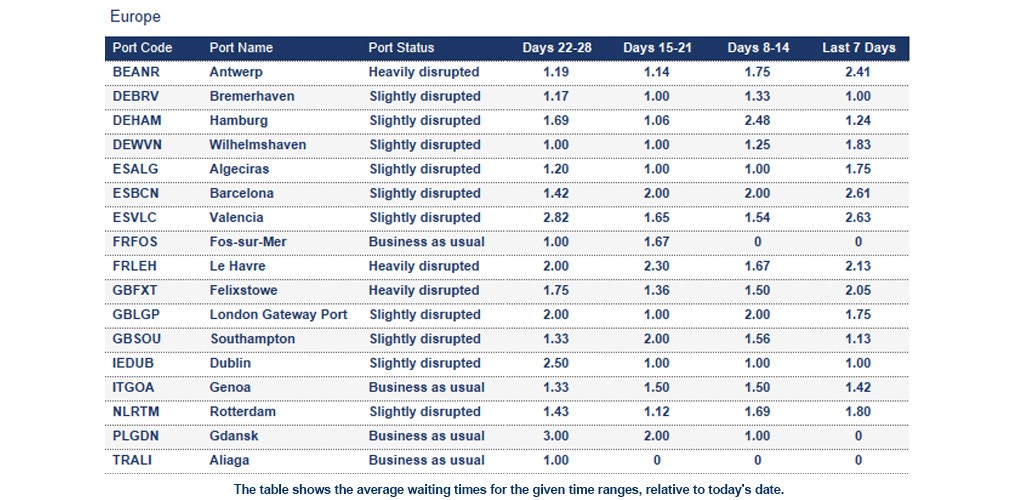
Antwerp: The 7-day average vessel waiting time is around 2.41 days, an increase from last week due to the strike. Yard utilisation at container yards is relatively high.
- PSA 913: Yard utilization is elevated at 80% - 85%, with reefer utilization at 65% - 70%.
- PSA 869: Yard utilisation decreased to a level of 70% - 75%, reefer on slightly elevated utilisation of 65% – 70%.
- AGW: Yard utilisation has remained increased to 70% - 75%, with reefer utilisation reducing to 60% – 65%.
France
Le Havre: The 7-day average vessel waiting time is around 2.13 days. Yard at a stable utilization of 55% – 60%. Reefers at 50% – 55%.
Germany
Bremerhaven: The 7-day average vessel waiting time is around 1 day. Yard utilisation remains at a typically high level of around 80%, but without operational concern.
Hamburg: The 7-day average vessel waiting time is around 1.24 day. Workers at the HHLA terminal in Hamburg Port attended a work meeting on 18.03 that impacted truck slots all day. Yard utilisation remains relatively high at CTA (80-85%) but is at normal levels at CTH (75-80%).
Netherlands
Rotterdam: The 7-day average vessel waiting time is around 1.8 days. The port was impacted by dense fog last week. Yard utilisation is at elevated levels, ranging between 75% to 95%.
Spain
A seven‑week closure of the Rubí tunnel has halted all rail freight movements between Barcelona and France, affecting connections to the ports of Barcelona and Tarragona. Trains are being diverted via Zaragoza, increasing congestion and significantly extending transit times. Services approaching Barcelona are redirected to the La Llagosta Combiconnect terminal, with onward transfers required from there. The shutdown is expected to last for seven weeks. Read more.
United Kingdom
Southampton: The 7-day average vessel waiting time is around 1.13 days. Yard utilisation stands at 68% for dry cargo and 78% for reefers. Labour availability is limited to a maximum of around 10 gangs. Terminal operations continue steadily with only minor weather‑related disruption. The vessel line‑up remains busy but without adverse impact. Rail works at SCT4 are ongoing in preparation for upcoming crane installations.
Middle East - Indian Subcontinent
Due to the current situation in the Middle East, delays and disruptions are highly likely at ports in the Persian Gulf. Bahrain port resumed operations. Operations at Al-Fujairah port were interrupted briefly following the interception of a drone over the weekend. More updates can be found here.
The Gulf states have also been witnessing a rise in inland transport demands, which remains constrained as carriers reroute cargo to maintain trade flow. Read more.
India
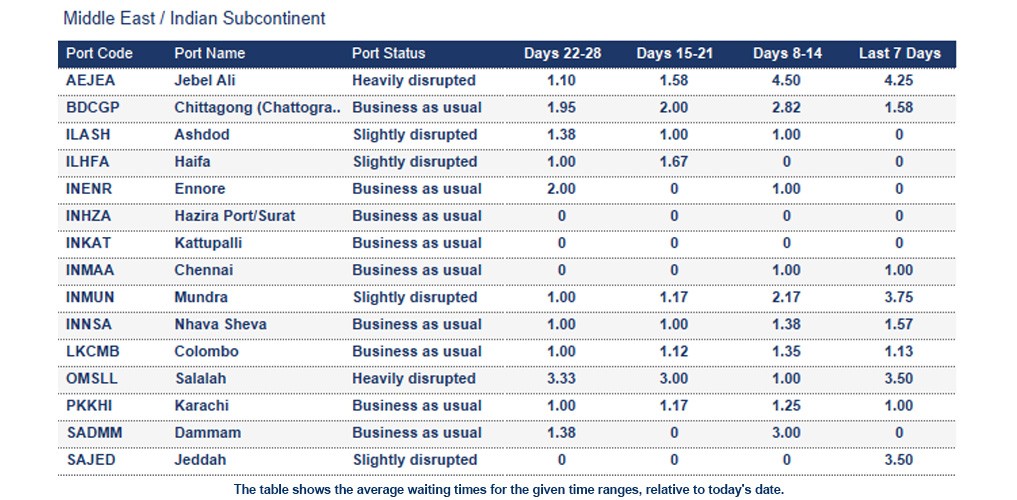
Mundra: The 7-day average vessel waiting time is around 3.75 days.
United Arab Emirates
Jebel Ali: The 7-day average vessel waiting time is around 4.25 days. Productivity is currently being impacted due to operational delays arising from crane malfunctions.
North America
Canada
Average import rail dwell time for Canadian cargo (Vessel arrival to departure rail ramp):
- Halifax: 7 days
- Montreal: 7 days
- Prince Rupert: 10 days
- Vancouver: 7 days
United States
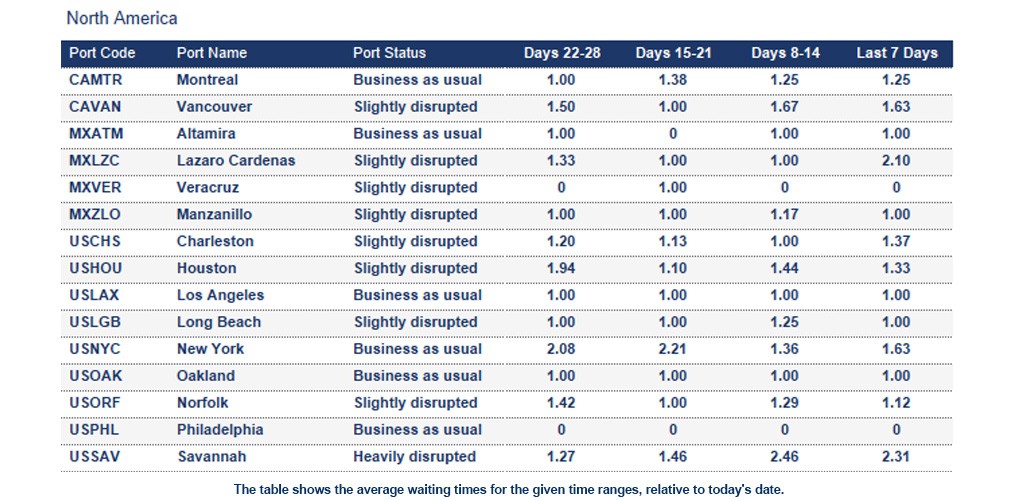
Los Angeles/Long Beach: The California Department of Transportation will restrict traffic in one direction from 23 March to 1 November 2026 on the Vincent Thomas Bridge. This is part of an upgrade project and will be followed by a complete closure that will run through November 2028. The upgrade could impact access to Los Angeles and Long Beach ports. Authorities noted that measures will be taken to limit disruption during the two‑year redecking project. Read more.
South and Central America
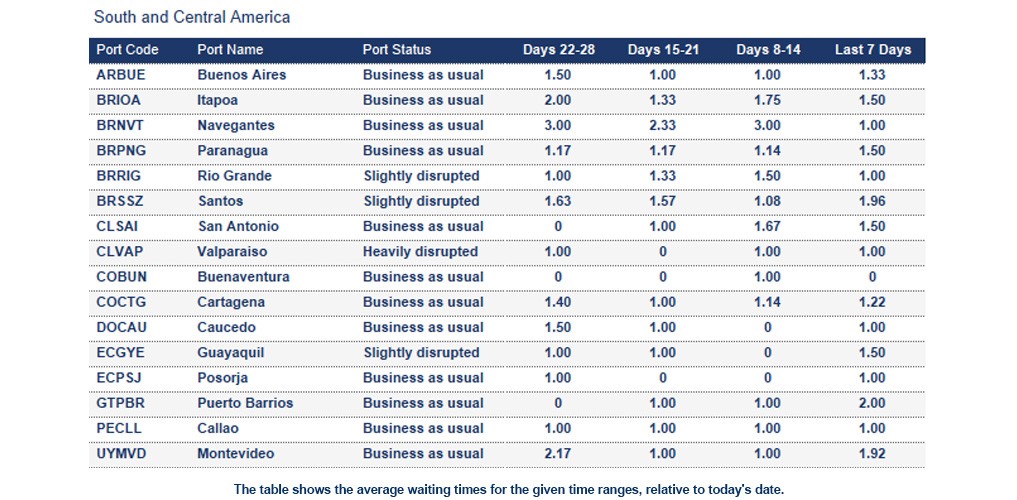
Brazil
A railway blockade was reported on Monday, 16 March in Bom Jesus do Tocantins, Pará State. The protest disrupted freight services and passenger train operations on some routes.
Navegantes: Yard utilisation was reported at 93% in week 11 at PORTONAVE, with a waiting time of around 28 hours. The terminal is undergoing civil works with just one pier in operation.
Itapoa: The yard is currently operating at 68% capacity, with a vessel waiting time of 29 hours. The berth window at Itapoa is fully occupied, leaving no gaps between scheduled services. Vessels that arrive within their assigned berth window experience minimal waiting time, while those arriving outside the window may face significantly longer delays.
Ecuador
Due to persistent rainfall, there is flooding in large parts of the country. The provinces of Guayas, El Oro, Esmeraldas, Los Ríos, Manabí, Santa Elena and parts of the Galapagos Islands, as well as the provinces of Loja and Chomborazo, are particularly affected.
Guatemala
Puerto Barrios: The 7-day average vessel waiting time is around 2 days. The yard is at 86% utilisation, with a waiting time of 2 hours in the terminal. Hapag-Lloyd reports that only two cranes are available.
How Kuehne+Nagel estimates port disruption statuses
Seaexplorer has four port statuses that are estimated based mainly on the 7-day average vessel waiting time. Other factors include yard congestion, labour strikes, natural disasters or intermodal disruptions. Slightly different rules are applied to major ports, or ports that are hubs in their region, as they are typically more efficient.
- Business as usual means the port is currently operating without any significant disruption.
- Slightly disrupted is used if the 7-day average vessel waiting time exceeds 2 days.
- Heavily disrupted is used if the 7-day average vessel waiting time exceeds 4 days.
- Port closed is used when the port suspends operations due to a major disruptive event.
How Kuehne+Nagel calculates the 7-day average vessel waiting time
Mainline container vessels may spend a certain number of days waiting at designated anchorage areas before their scheduled port call.
To calculate the 7-day average waiting time, we consider the waiting days of these vessels, excluding:
- Waiting times for feeder vessels,
- Idle ships without an announced next port,
- Slow steamers heading toward the anchorage, but not actively waiting within the designated area
- Vessels passing through the anchorage area without intending to call at the port.
This rolling average is based on the last 7 days of data and is updated daily in seaexplorer. To find the latest waiting time for a port, enter the port name or code in the search bar and select the relevant option.
Stay Ahead, Stay Informed: Register for seaexplorer for the latest disruptions and vessel waiting times at global container ports.