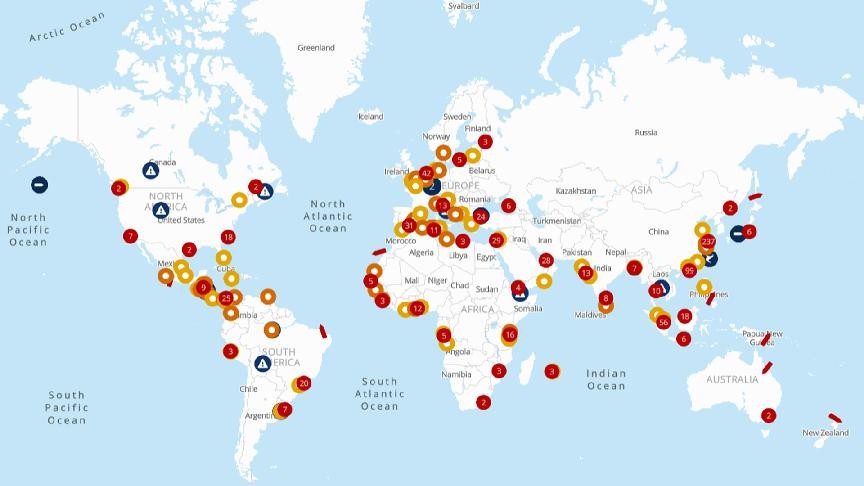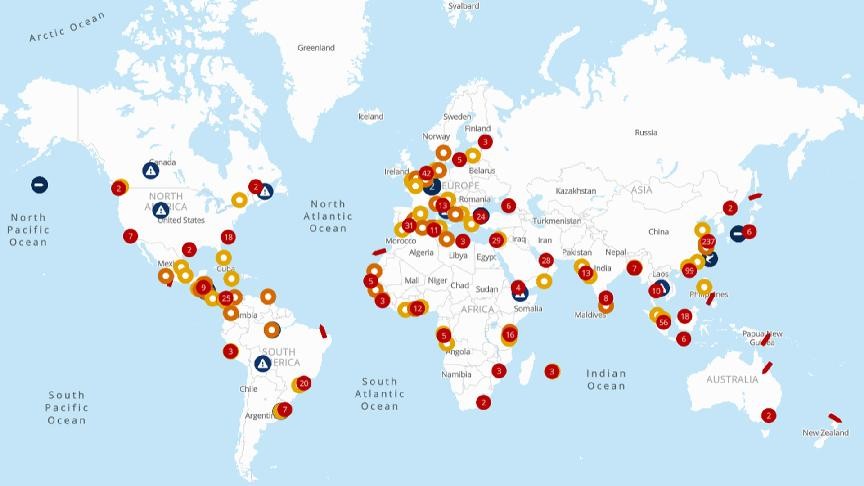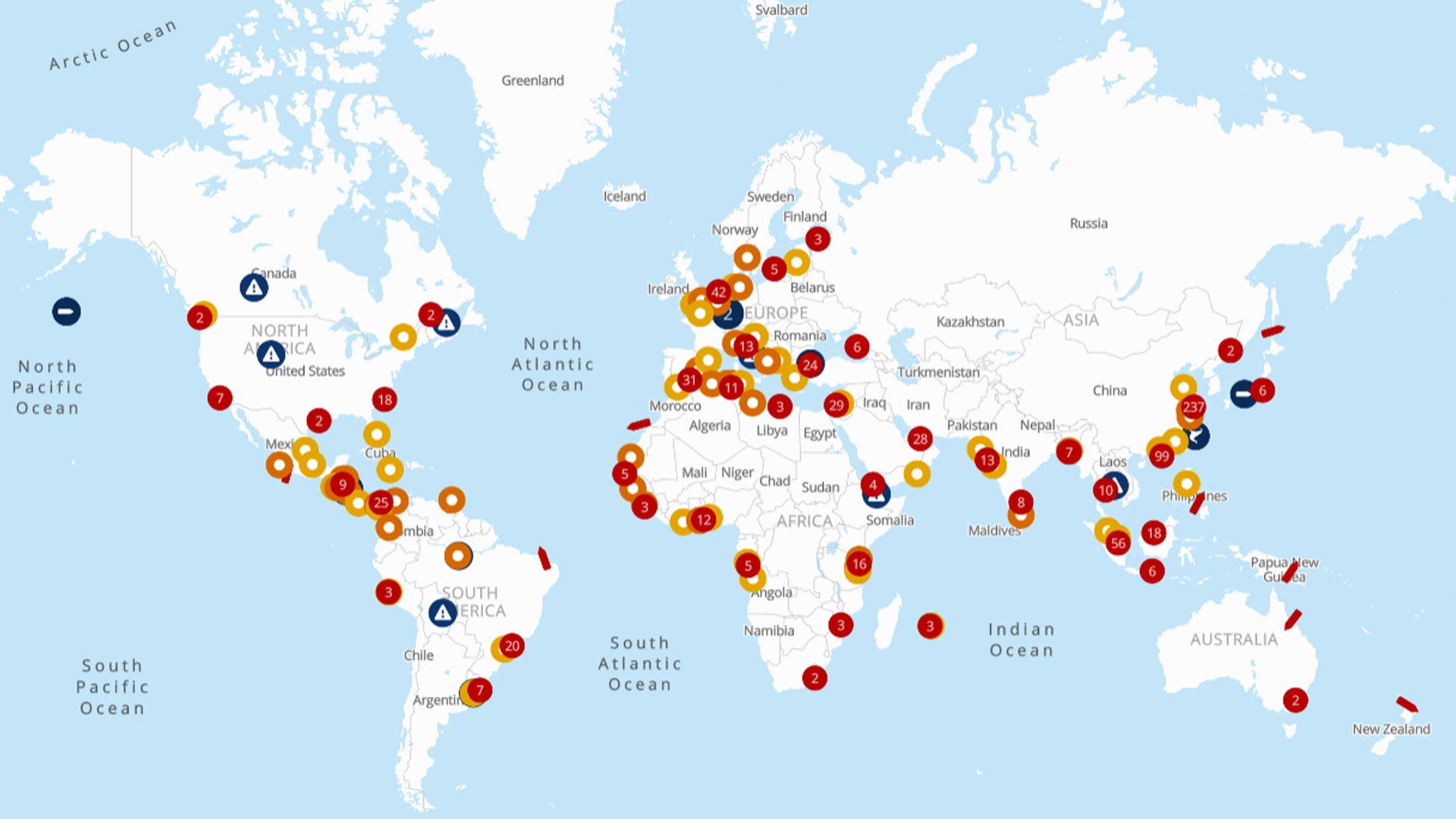

- Stay ahead of supply chain disruptions and port congestion with Kuehne+Nagel’s weekly port operational update.
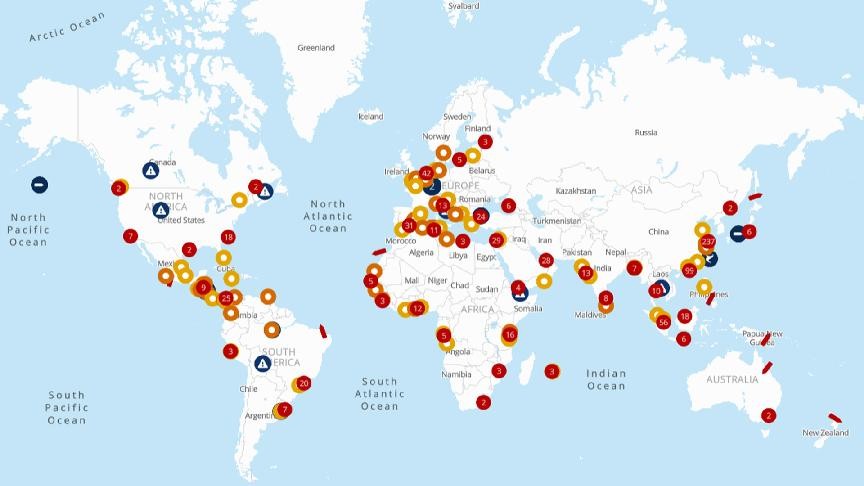
- Find out the latest vessel waiting times and status of ports in Africa, Asia Oceania, Europe, Middle East-Indian Subcontinent, North America, and South and Central America.
Africa
Algeria
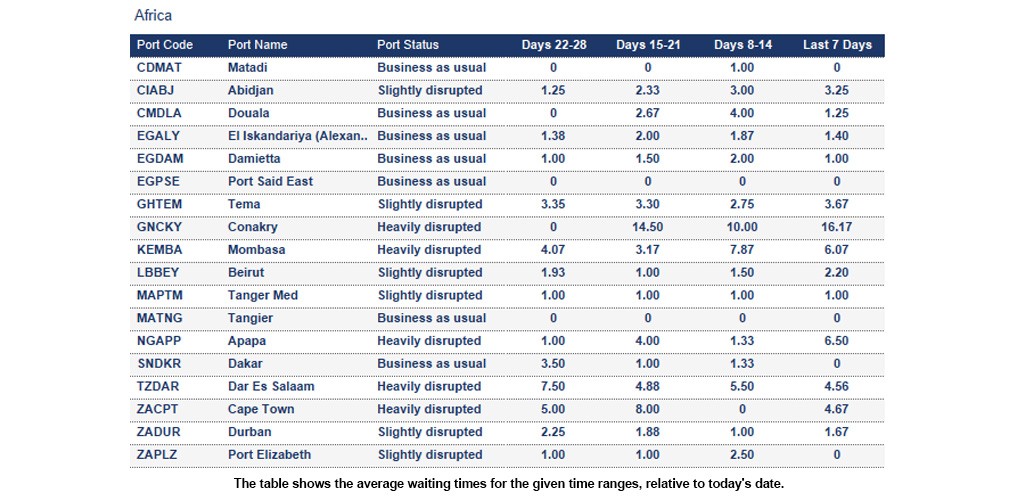
Algiers: The 7-day average vessel waiting time is around 5.83 days.
Burkina Faso
Significant regulatory changes have been initiated in customs clearance and transit procedures in Burkina Faso. The changes impact the way customs handle brokerage formalities for specific categories of goods. For more information, please contact your local Kuehne+Nagel representative.
Egypt
Port Said: An operational change will take place at the Port Said Container Terminal, where scrap and used spare parts (cars, trucks and equipment) commodities will be prohibited from being handled at the Suez Canal Container Terminal as of 1 February. For more information, please contact your local Kuehne+Nagel representative.
Guinea
Conakry: The 7-day average vessel waiting time is around 16.17 days due to heavy congestion. Some carriers report waiting times of up to 30 days.
Mauritius
Port Louis: The 7-day average vessel waiting time is around 5 days.
Morocco
Casablanca: The 7-day average vessel waiting time is around 4 days. Bad weather had a slight impact on vessel operations. More bad weather is expected from 22nd to 26th of January. Waiting time is high at MARSA MAROC terminal only (averaging 72h) due to congestion.
Tanger Med: The 7-day average vessel waiting time is around 1 day. The port is lightly congested.
Mozambique
Beira: The 7-day average vessel waiting time is around 17.5 days. Congestion and severe weather, including strong wind gusts and rain, persist.
Asia Oceania
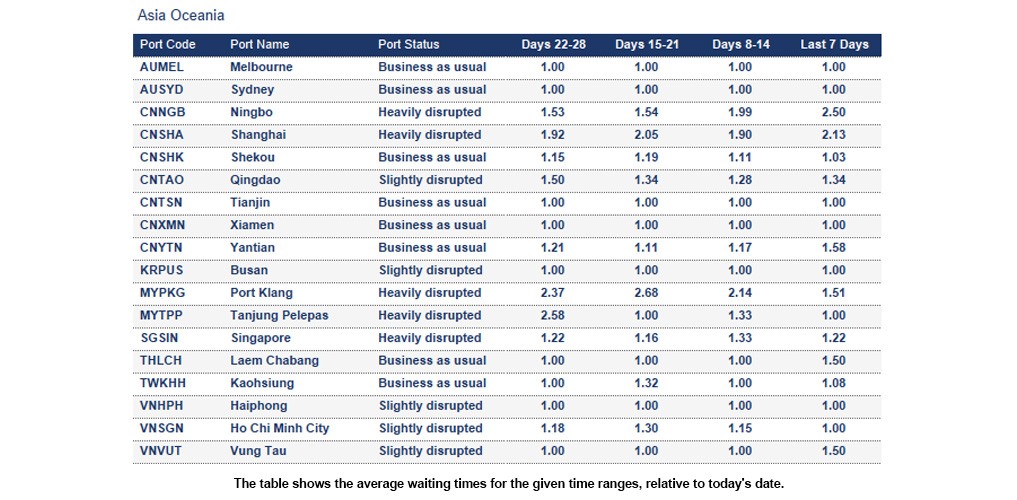
China
Nansha: The 7-day average vessel waiting time is around 1.49 days. Although the overall situation improved, terminals are still heavily congested.
Ningbo: The 7-day average vessel waiting time is around 2.5 days. Congestion at MSICT and CMICT has worsened, with waiting times exceeding three days. MSICT is experiencing heavy yard congestion, with a density above 90%, significantly impacting overall operational efficiency.
Qingdao: The 7-day average waiting time is around 1.34 days. The overall situation has further stabilised in week 03; however, berth congestion persists at QQCT, with waiting times generally around 1–1.5 days.
Shanghai: The 7-day average vessel waiting time is around 2.13 days. WGQ terminals continue to face berth congestion, with waiting times of 2 days. In YS, week 02 remains challenging due to vessel bunching and high berthing demand. The congestion in Y1 and Y2 has eased up.
Indonesia
Semarang: The 7-day average vessel waiting time is around 2 days. The port is currently severely congested with waiting times of up to 3 days. The yard density exceeds 100%, impacting overall terminal efficiency. Operations at Semarang’s Tanjung Emas Port remain disrupted following late‑December cargo surges and holiday road limits, leading to yard congestion and vessel delays. Read more.
Japan
Yokohama: The 7-day average vessel waiting time is around 1 day. The berth is severely congested due to vessel bunching.
Malaysia
Port Klang: The 7-day average vessel waiting time is around 1.51 days. WP conditions have marginally stabilised this week, yet expected waiting times remain high at around four days before vessels can slow down. Heavy vessel bunching, strong berthing demand across all lines and persistent yard congestion continue to suppress productivity and extend delays. Waiting times for smaller vessels remain particularly dynamic and complex due to intense feeder demand.
Tanjung Pelepas: The 7-day average vessel waiting time is around 1 day. The berthing situation and associated congestion remain highly dynamic, driven largely by the commissioning of new quay cranes and the phased removal of older units.
New Zealand
Auckland and Tauranga: The ports reported disruptions due to bad weather earlier in the week. Although operations resumed, delays and disruptions are still likely.
Philippines
Manila: The 7-day average vessel waiting time is around 2.17 days. Severe berth congestion persists at both Manila North and South, with vessels generally facing waiting times and delays exceeding three days. Yard utilisation remains very high across both terminals, operating at approximately 85–90%, further constraining operational efficiency.
Singapore
Singapore: The 7-day average vessel waiting time is around 1.22 days. Berth congestion persists across all PSA terminals, with vessels generally facing waiting times of 1.5–2 days. Group vessels experience an average delay of around one day in week 03. Yard utilisation remains stable at approximately 80%, indicating operations are functioning at normal capacity despite the ongoing berth pressure.
South Korea
Busan: The 7-day average vessel waiting time is around 1 day. This week, overall terminal performance at GML has deteriorated significantly. Severe berth congestion has developed, with waiting times of approximately 1.5 to 2 days in week 02 due to vessel bunching and elevated berthing demand. Yard utilisation remains high at around 95%, which is further affecting terminal efficiency.
Europe
Belgium
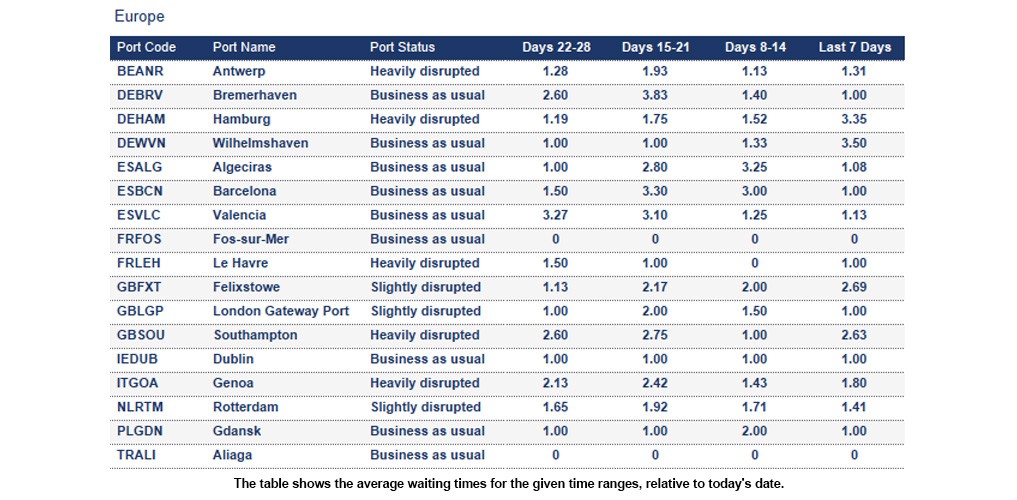
Antwerp: The 7-day average vessel waiting time is around 1.31 days. Container terminals continue to experience high congestion. A rail strike was announced for the end of January, impacting passenger and rail cargo. Read more.
Italy
Genoa: The average 7-day vessel waiting time is around 1.8 days. The terminals are currently heavily congested due to closures last week caused by severe weather.
Gioia Tauro: The terminals are currently heavily congested due to closures last week caused by severe weather.
Netherlands
Rotterdam: The 7-day average vessel waiting time is around 1.41 days.
- ECT operates at 78% yard utilisation with feeder delays up to 72 hours and barge delays up to 24 hours; Hamburg discharge is assessed on a case-by-case basis.
- MVII is at full capacity after storm‑related reductions, with barge delays of 24 hours and limited scope for Hamburg discharge.
- Delta II runs at 40% utilisation with 12–24‑hour delays and restricted reefer capacity.
Overall performance across Rotterdam remains heavily weather‑dependent.
United Kingdom
London Gateway Port: The 7-day average vessel waiting time is around 1 day. Yard occupancy remains stable with a notable reduction in empty stock. Weekly terminal planning is now aligned as delayed vessels begin arriving.
Southampton: The 7-day average vessel waiting time is around 2.63 days. The yard is fully utilised for dry cargo (100%) and 80% for reefers, with labour capacity capped at ten gangs. Terminal berth planning shows gaps due to delayed vessel arrivals, and yard density is now a concern.
Middle East - Indian Subcontinent
North America
Severe cold and heavy snow are forecast for parts of Canada and the US, with expected impact on transport. Read more.
Canada
Average import rail dwell time for Canadian cargo (Vessel arrival to departure rail ramp):
- Halifax: 4 days
- Montreal: 7 days
- Prince Rupert: 6 days
- Saint John: 5 days
- Vancouver: 5 days
United States
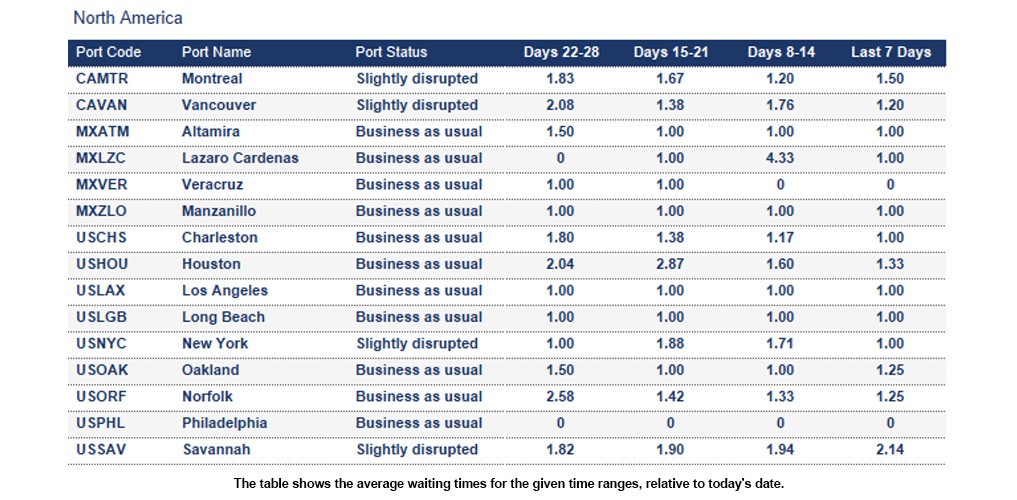
New York: Some carriers report waiting times of up to 3 days. The port is currently congested due to recent holidays as well as adverse weather.
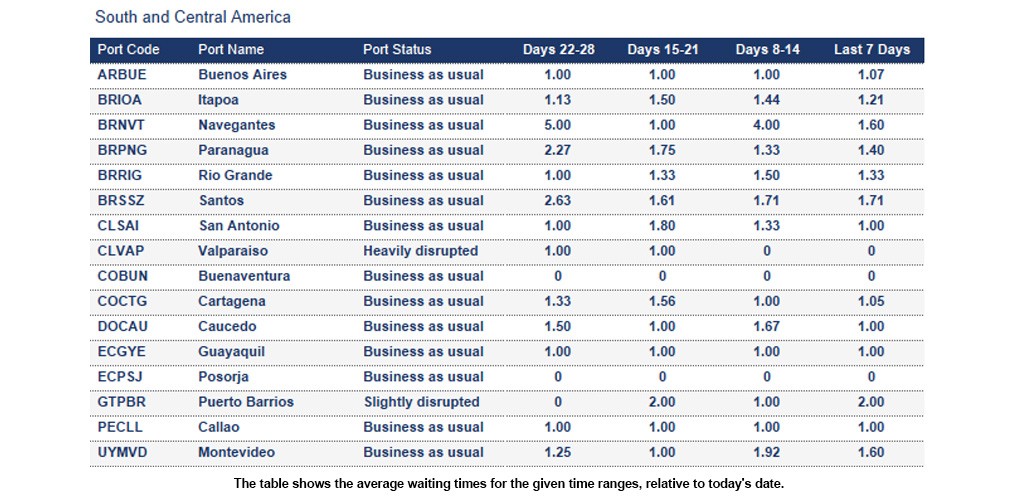
South and Central America
Chile
Iquique: Operations are currently affected by substantial congestion within the terminal yard, leading to reduced handling capacity and operational limitations. This disruption impacted terminal activity throughout December 2025 and has persisted despite the mitigation measures previously installed.
Lirquen: The port is currently closed due to wildfires in the region impacting several ports. Read more.
San Vicente, Arica, Valparaiso: the ports are currently operational but with restrictions due to high swells and wildfires.
Guatemala
Guatemala has entered a 30‑day state of siege after authorities moved to contain a surge of violent incidents. Interruptions to transport may occur. Read more.
Puerto Barrios: The 7-day average vessel waiting time is around 2 days. Port operations continue to face pressure, with utilisation levels at EPQ 80%, APMT 66%, PBR 82% and STC 79%. Ongoing shortages of truck drivers are further constraining capacity and slowing the timely release of import cargo.
How Kuehne+Nagel estimates port disruption statuses
Seaexplorer has four port statuses that are estimated based mainly on the 7-day average vessel waiting time. Other factors include yard congestion, labour strikes, natural disasters or intermodal disruptions. Slightly different rules are applied to major ports, or ports that are hubs in their region, as they are typically more efficient.
- Business as usual means the port is currently operating without any significant disruption.
- Slightly disrupted is used if the 7-day average vessel waiting time exceeds 2 days.
- Heavily disrupted is used if the 7-day average vessel waiting time exceeds 4 days.
- Port closed is used when the port suspends operations due to a major disruptive event.
How Kuehne+Nagel calculates the 7-day average vessel waiting time
Mainline container vessels may spend a certain number of days waiting at designated anchorage areas before their scheduled port call.
To calculate the 7-day average waiting time, we consider the waiting days of these vessels, excluding:
- Waiting times for feeder vessels,
- Idle ships without an announced next port,
- Slow steamers heading toward the anchorage but not actively waiting within the designated area
- Vessels passing through the anchorage area without intending to call at the port.
This rolling average is based on the data from the last seven days and is updated daily in seaexplorer. To find the latest waiting time for a port, enter the port name or code in the search bar and select the relevant option.
Stay Ahead, Stay Informed: Register for seaexplorer for the latest disruptions and vessel waiting times at global container ports.