
Update: 03.02.2026
Port operations in the US East Coast resumed, but cold temperatures remained in the Southeast region of the country.
The state of Florida witnessed freezing temperatures and snow over the weekend, limiting inland cargo operations.
While operations at the ports of Savannah and Charleston were restricted during the storm, the ports resumed operations on 1 February. The latest updates from the operations returned to normal on Monday, 2 February.
According to the US National Weather Service, cold temperatures will persist in the Southeast, but milder conditions are expected in the next few days.
Cargo movement by rail and road, however, is still limited in impacted regions. Kuehne+Nagel reports rail closures in the South Atlantic and limited drayage capacity due to unsafe road conditions.
Birmingham in the Southeast, Greensboro and the Atlanta-Charlotte regions remain closed for operations as of 2 February.
Meanwhile, intermodal operations in Charleston, Memphis and Nashville are working with reduced capacities.
Update: 30.01.2026
US container terminals reopened on 29 January 2026 after the severe winter storm, restoring activity across major coastal locations.
Although operations have resumed, several surrounding road networks remain affected, slowing access to terminals in certain regions.
Ports in the Northeast, Mid‑Atlantic and Ohio Valley, including New York, New Jersey, Boston, Norfolk, Philadelphia and Baltimore, are open.
The Gulf Coast and West Coast are also operating, with Houston, Los Angeles, Long Beach and Oakland reporting no direct impacts.
In the Southeast, facilities such as Savannah, Charleston and Jacksonville have reopened; however, road conditions in parts of the region continue to restrict trucking activity.
Memphis and Nashville are particularly affected, with no trucks on the roads due to icy conditions.
A new weather system forecast for the coming weekend may influence ports from Charleston through Boston, potentially causing further disruption.
Rail operations restricted
According to a report by the Journal of Commerce, rail networks are also recovering from the storm.
Trains are operating at reduced speeds as a safety measure, and railroads have shortened train lengths to prevent equipment failures in extreme cold.
Union Pacific experienced major disruptions in Arkansas, Louisiana, and Texas but reported being roughly 70% recovered by Tuesday, expecting full infrastructure recovery by the end of this week.
BNSF faced challenges at terminals in the Dallas–Fort Worth area and Memphis, while Norfolk Southern briefly suspended international container lifts in Atlanta.
For the latest port and vessel statuses or situation updates, please refer to the seaexplorer alert map.
Update: 28.01.2026
According to an update from German carrier Hapag-Lloyd, heavy weather across the Atlantic continues to impact vessel schedules, particularly in the US East Coast.
After a day of closure on 26 January, the majority of US ports reopened, including two container terminals at the port of New York. Similarly, the Port of Houston, which suspended operations on Monday, reopened, but container deliveries are restricted.
The port that remains closed as of the latest update is the port of Baltimore; other inland locations, including Memphis and Nashville, are facing stoppages due to icy conditions.
According to German carrier Hapag-Lloyd, heavy winds and waves in the Atlantic are significantly impacting vessel schedules.
A large storm zone in the centre of the ocean is causing wave heights ranging from 9 to 12 metres. These conditions have compelled vessels to divert to shelter areas and remain there until the weather improves.
Current forecasts indicate that the situation is unlikely to ease before 5 February.
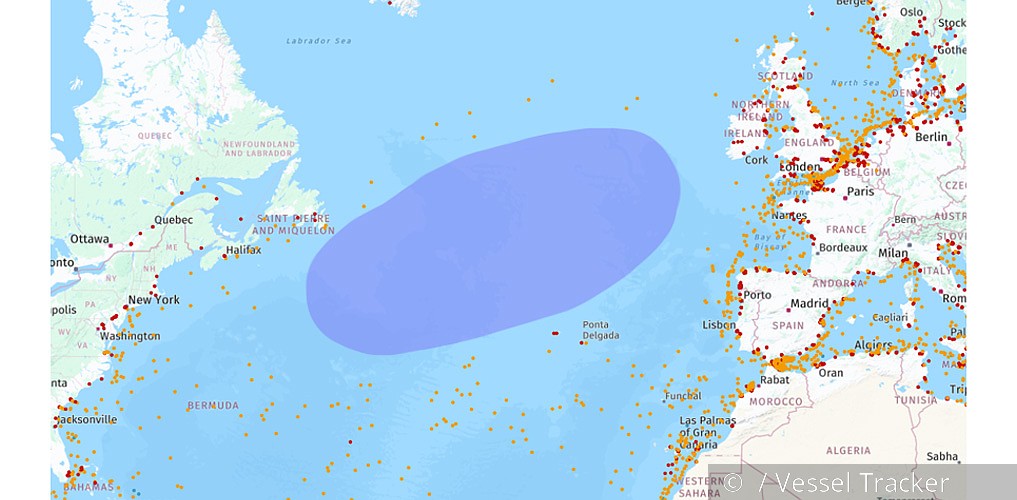
The disruption has led to widespread schedule interruptions. All ships positioned in shelter are expected to resume their voyages once the weather clears.
Such a simultaneous departure could result in a concentration of arrivals at New York, particularly if the port has not resolved existing backlogs of export and import volumes caused by the winter storm.
Shelter positions include areas west and north of Le Havre Port. Some vessels have delayed their departures from ports in Northern Europe until the weather conditions in the US improve.
Schedule delays and operational restrictions are likely to remain for a while after the storm subsides, as the ports handling incoming vessels and the backlog of containers.
For shipment-specific information, please contact your local Kuehne+Nagel representative.
Update: 27.01.2026
Kuehne+Nagel reports that key US ports halted operations as a result of the severe snowstorm that started last week.
Ports and coastal facilities are experiencing slower vessel movements, with ice, snowfall and limited visibility challenging pilotage and berth activities. River systems, including sections of the Mississippi and Illinois, are also facing reduced barge traffic.
Operations in the Gulf Coast from Texas to Louisiana remain exposed to freezing rain and ice, creating risks for port access and terminal activity. The Port of Houston closed on 26 January, and operations are likely to remain limited if conditions improve.
Along the South‑East Atlantic coast from Georgia to Virginia, mixed winter conditions continue to hinder north–south freight flows and intermittently restrict port and rail access. The ports of Savannah, Charleston, and Jacksonville are operational, albeit with limited activity.
As of 26 January, several ports in the Northeast, Mid-Atlantic and Ohio Valley, including New York/New Jersey, Baltimore, Boston and Norfolk, are closed, with limited or no reopenings expected.
On the West Coast, no related weather disruptions are reported. Los Angeles, Long Beach, and Oakland ports are fully operational.
Landside disruption
Across affected regions, drayage capacity is constrained, rail services into the Northeast remain delayed, and trucking providers face unsafe roads and limited snow‑clearing capability.
Productivity is significantly reduced, with gradual gate reopenings expected over the next 24–48 hours. Continued rail and yard delays are anticipated even as operations begin to improve.
Current challenges stem largely from landside conditions rather than marine operations, and customers should expect multi‑day delays. Monitoring efforts remain ongoing, with further updates to follow as the situation develops.
For more information, please contact your Kuehne+Nagel representative or check port updates on the seaexplorer map.
Original article: 22.01.2026
A significant winter storm is forecast to move across the central and eastern United States from 23–25 January 2026, bringing snow, sleet, freezing rain and ice to a broad stretch of the country.
According to the weather warnings issued by the US National Weather Service, bad weather may impact transport networks across more than 30 states.
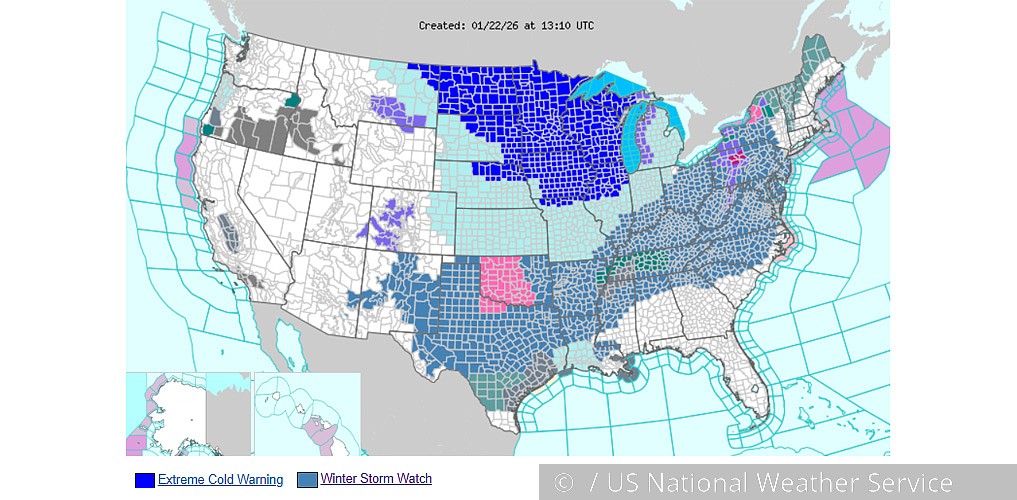
The system combines Arctic air with moisture from the Gulf, creating the potential for considerable disruption to key corridors. Major interstate routes are within the projected path, and freezing rain may lead to fallen trees, power outages and temporary road closures.
In addition, rail operations face potential delays, with risks of snow‑covered tracks, frozen points and signalling faults. Freight corridors serving ports and inland hubs may encounter reduced service levels and congestion at yards.
Ports, coastal shipping and inland waterways could also experience slower vessel movements as ice, snowfall and limited visibility affect pilotage and berth activities.
River systems, including parts of the Mississippi and Illinois, may see reduced barge traffic, adding to existing delays for bulk and grain commodities.
The Gulf Coast, stretching from Texas to Louisiana, is particularly vulnerable to freezing rain and ice, with port access and terminal operations at risk of interruption.
Along the South‑East Atlantic coast from Georgia to Virginia, a mix of snow and ice could hinder north–south freight flows and intermittently restrict port and rail access.
Further north, the Mid‑Atlantic and New England states may face prolonged impacts from heavier snowfall, although clearance capacity in these regions is typically stronger.
Weather warnings for Canada
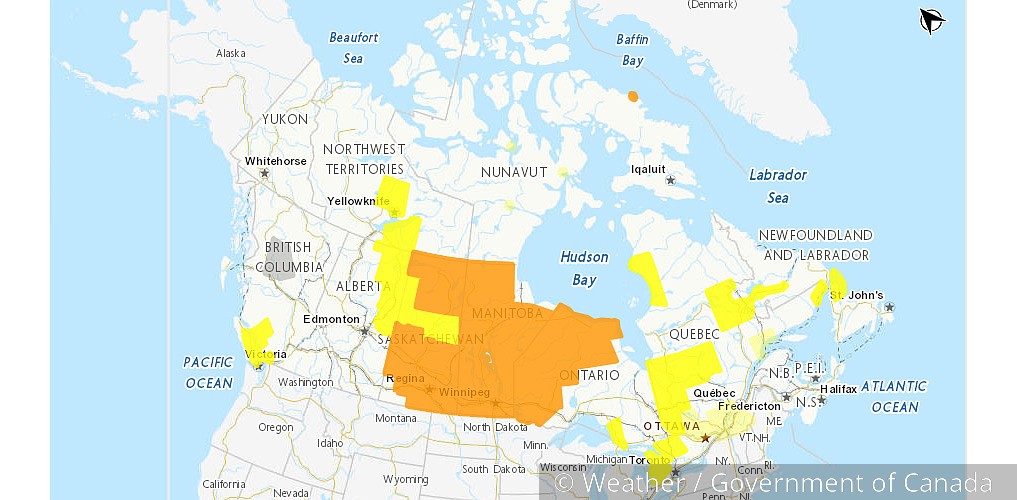
Orange weather warnings were also issued by the Canadian government mainly for regions in the central and southern parts of the country, such as Southern Manitoba, Yorkton and parts of Ontario.
Inland transport in Canada could also face disruptions during the storm.
Operational interruptions at ports may vary according to the severity of the storm in affected areas. For the latest port and vessel statuses or situation updates, please refer to the seaexplorer alert map.