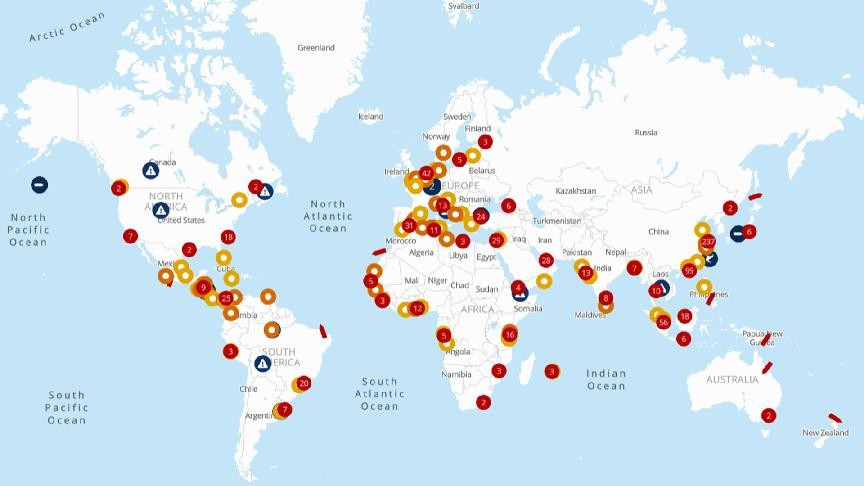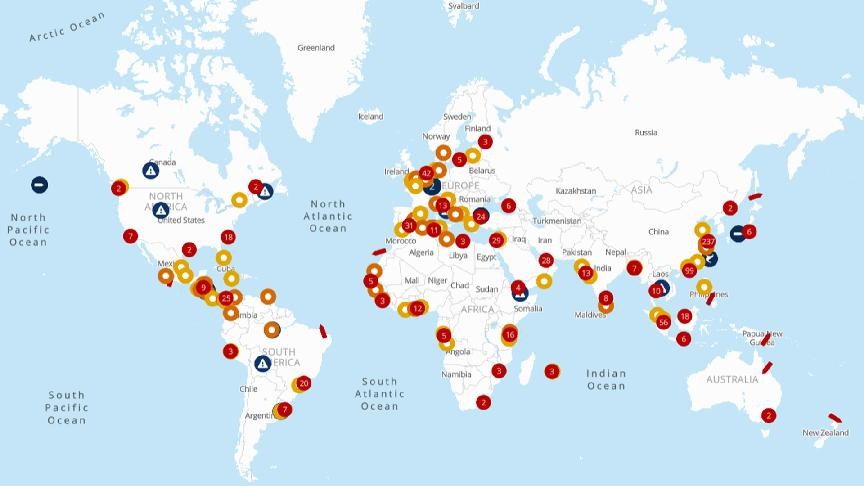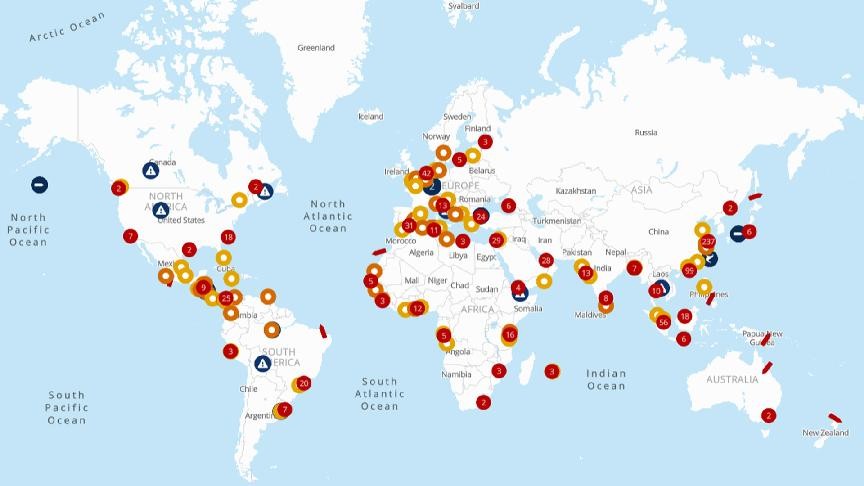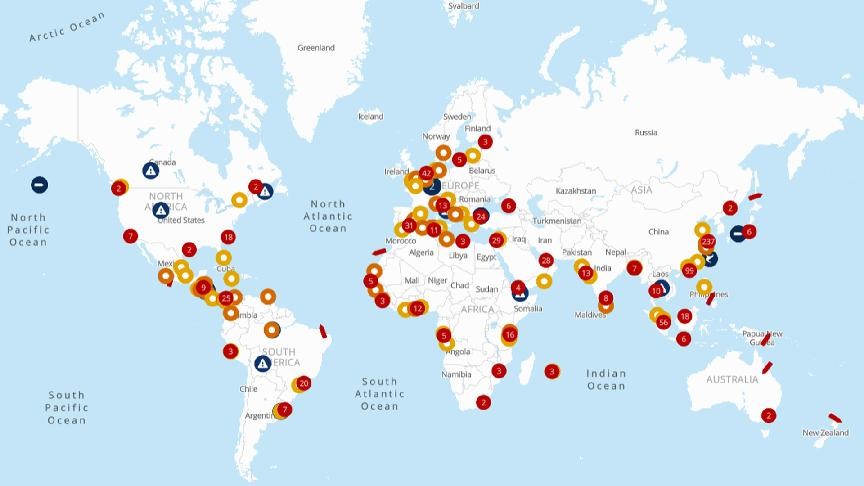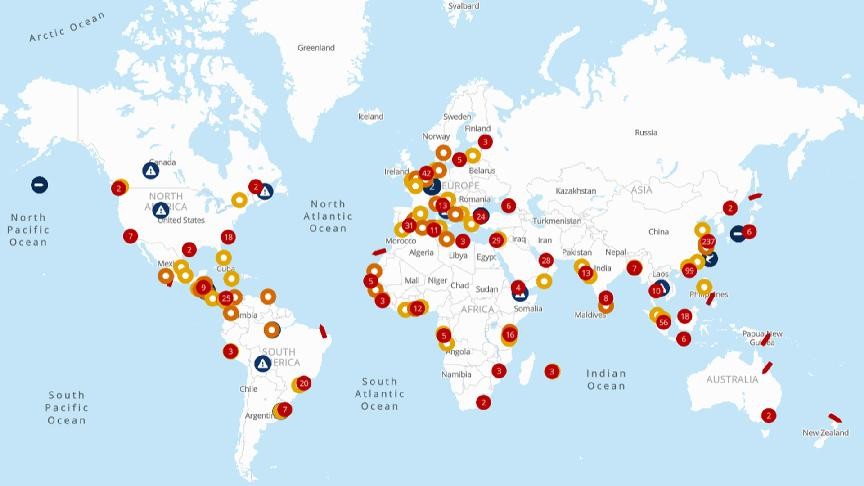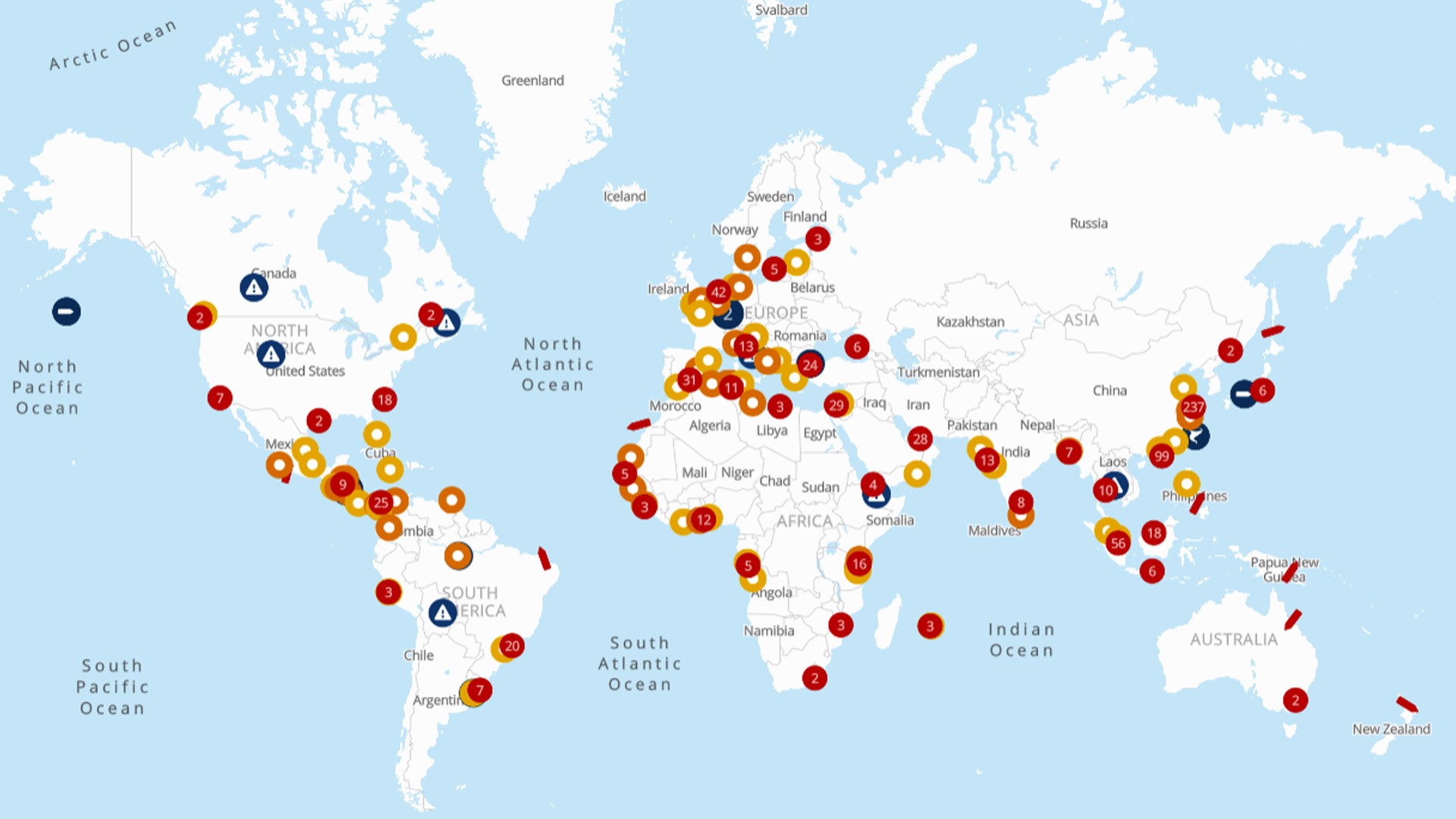

Stay ahead of supply chain disruptions and port congestion with Kuehne+Nagel’s weekly port operational update.
Find out the latest vessel waiting times and status of ports in Africa, Asia Oceania, Europe, Middle East-Indian Subcontinent, North America, and South and Central America.
Africa
Algeria
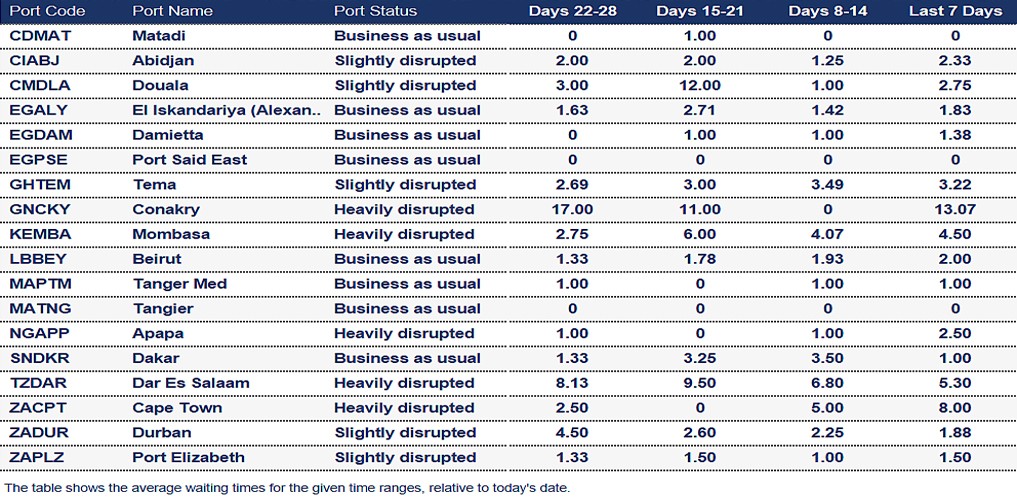
Skikda: The 7-day average vessel waiting time is around 10.5 days.
Angola
Luanda: The port is currently congested.
Egypt
Port Said: The 7-day average vessel waiting time is around 3.63 days.
Ghana
Tema: The 7-day average vessel waiting time is around 3.22 days. Berthing delays of up to four days are currently being experienced at Tema port.
The terminal is facing crane outages, resulting in significant operational constraints. Vessels with berthing windows are encountering delays of up to 24 hours, while non-window vessels are handled subject to berth availability. The terminal is operating under strict pro-forma move guidelines.
Guinea
Conakry: The 7-day average vessel waiting time is around 13.07 days due to heavy congestion. Some carriers report waiting times of up to 30 days.
Ivory Coast
Abidjan: The 7-day average vessel waiting time is around 2.33 days. A new crane has been successfully commissioned; however, operational slowdowns are anticipated due to delays in vessel line-ups.
Kenya
Mombasa: The 7-day average vessel waiting time is around 4.5 days. The terminal is experiencing prolonged congestion and reduced productivity due to equipment shortages and high transhipment volumes. Berth delays are further compounded by vessel bunching caused by off-window arrivals.
Liberia
Monrovia: The average 7-day vessel waiting time is around 7 days due to port congestion.
Mauritania
Nouakchott: The 7-day average vessel waiting time is around 7 days.
Mauritius
Port Louis: The 7-day average vessel waiting time is around 7.5 days. Due to adverse weather conditions and operational challenges, transhipments ex-Port Louis are delayed. Carriers’ erratic schedules on direct services have led to reliance on alternate sailings via outlying transhipment hubs, resulting in extended transit times. Cargo may remain in Port Louis until the next available direct sailing.
Morocco
Casablanca: The 7-day average vessel waiting time is around 6.5 days. Congestion remains high.
Mozambique
Beira: The 7-day average vessel waiting time is around 12.5 days. Congestion and severe weather, including strong wind gusts and rain, persist.
Nigeria
Severe rainfall is forecast for the next weeks, which could result in delays at Apapa and Tincan.
Republic of the Congo
Pointe Noire: The 7-day average vessel waiting time is around 7.1 days.
South Africa
Cape Town: The 7-day average vessel waiting time is around 8 days. Strong winds have disrupted port operations, with terminal activities suspended due to wind-bound conditions. Significant delays are currently being experienced.
Durban: The 7-day average vessel waiting time is around 1.88 days. Operational challenges persist at Pier 1, leading to extended waiting times.
Port Elizabeth: Port operations are running smoothly; however, strong winds are expected to occur during the week. Due to the citrus season, reefer demand is high.
Tanzania
Dar Es Salaam: The 7-day average vessel waiting time is around 5 days. Dar es Salaam port has faced severe disruption since 29 October due to nationwide unrest. Despite reopening requests on 4 November, operations remain heavily congested, customs clearance is delayed, and connectivity issues persist. Terminal gate and road congestion are adding to delays, and full stabilisation of cargo movement is not expected until late December.
The Gambia
Banjul: The 7-day average vessel waiting time is around 5 days.
Asia Oceania
Australia
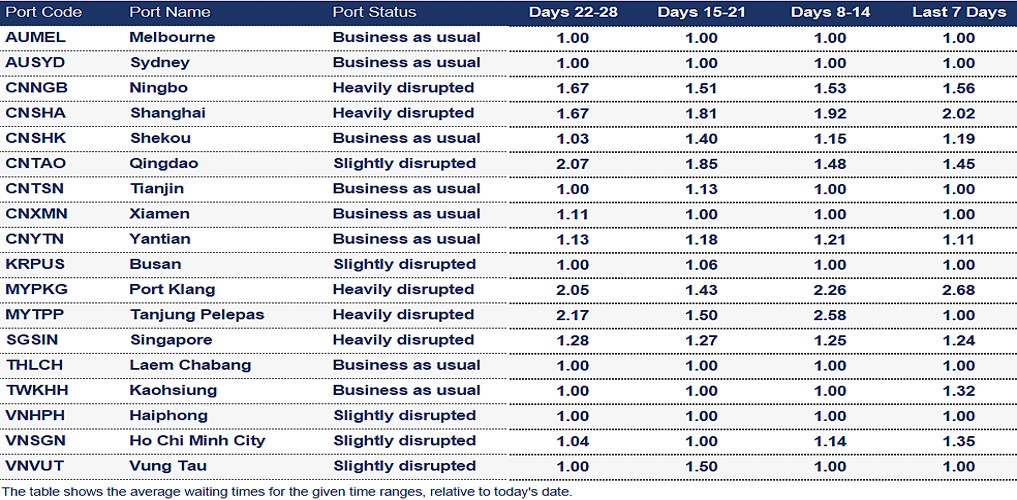
Fremantle: The 7-day average vessel waiting time is around 2.33 days.
China
Nansha: The 7-day average vessel waiting time is around 1.71 days. Both GOCT and NICT are experiencing severe congestion, with waiting times generally between two and three days. Over 20 vessels have arrived and are anchored, awaiting available berths.
Ningbo: The 7-day average vessel waiting time is around 1.52 days. Congestion at MSICT and CMICT has worsened, with waiting times exceeding three days. MSICT is experiencing heavy yard congestion, with density above 90%, significantly impacting overall operational efficiency.
Qingdao: The 7-day average waiting time is around 1.45 days. The overall situation has further stabilised in week 02; however, berth congestion persists at QQCT, with waiting times generally around 1–1.5 days.
Shanghai: The 7-day average vessel waiting time is around 2.02 days. WGQ terminals continue to face berth congestion, with waiting times of 1.5–2 days. In YS, week 02 remains challenging due to vessel bunching and high berthing demand. YS1 is heavily congested, with delays of 3–4 days, while YS2, handling mega-sized vessels, is performing better with shorter waits of 0.5–1 day.
Malaysia
Port Klang: The 7-day average vessel waiting time is around 2.69 days. Conditions in WP have worsened in week 02, with waiting times now expected at 5–6 days due to prior vessel slowdowns. Terminals face severe vessel bunching and yard congestion averaging over 90% (occasionally exceeding 105%), resulting in extremely low productivity and significant delays. Smaller vessels face further dynamic challenges amid high berthing demand from regional feeders.
Tanjung Pelepas: The 7-day average vessel waiting time is around 1 day. Berthing conditions remain highly dynamic due to the commissioning of new quay cranes and the removal of older units. All five new cranes became operational on 6 January, while decommissioning continues until 8 January. Additionally, 220 metres of berth will remain blocked from 2–11 January to accommodate the delivery of new RTGs.
Philippines
Manila: The 7-day average vessel waiting time is around 1.73 days. Heavy berth congestion persists at both Manila North and South terminals, with waiting times generally between two and three days. At MICT, acceptance of import reefers resumed on 5 January; however, reefer plug availability remains tight.
Singapore
Singapore: The 7-day average vessel waiting time is around 1.25 days. Heavy berth congestion remains for entire PSA in waiting of 2 days generally. Yard utilization remains high with density around 80-85%.
South Korea
Busan: The 7-day average vessel waiting time is around 1 day. Minor berth congestion persist.
Vietnam
Haiphong: The 7-day average vessel waiting time is around 1 day. Yard utilisation remains healthy at 65–75% across both HHIT and HICT. At HICT, conditions are stable with vessel waiting times around 0.5 day; maintenance dredging continues and is expected to finish by late January 2026. At HHIT, two new quay cranes are under commissioning and anticipated to be operational from mid-January 2026.
Ho Chi Minh City: The 7-day average vessel waiting time is around 1.4 days. Overall conditions have stabilised, though berth congestion persists with waiting times of around 1.5 days. Yard utilisation has increased significantly, reaching approximately 90% density this week.
Vung Tau: The 7-day average vessel waiting time is around 1 day. Terminal operations remain stable overall. Moderate berth congestion persists, with waiting times of around one day due to vessel bunching and high berthing demand. Yard utilisation remains elevated, with density at approximately 90%.
Europe
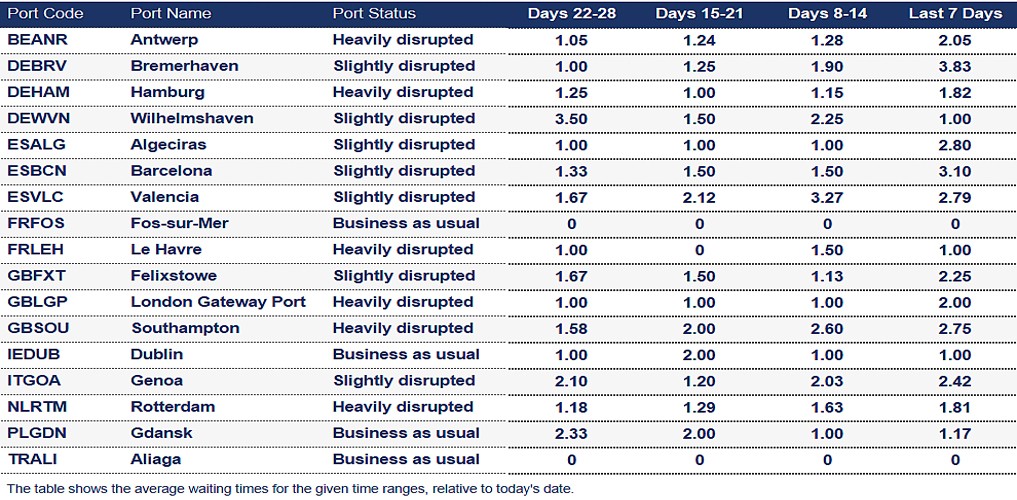
Northern Europe is experiencing severe winter weather, with heavy snow, ice, and freezing temperatures significantly disrupting port and inland operations. Major terminals, especially Rotterdam and Hamburg, report reduced productivity, widespread truck and rail delays, and increasing congestion. Carriers urge early container collection and snow clearance. Further disruptions are expected as adverse weather continues. Read more
Belgium
Antwerp: The 7-day average vessel waiting time is around 2.05 days. Due to the winter weather conditions Antwerp is experiencing slower operations, and in some cases, terminal activities may be temporarily suspended. As a result, delays are expected for vessels and shipments moving through these locations.
France
Le Havre: Yard occupancy steady at 40%. Terminal gate closed 05 January at noon–06 January 16:30 due to snow, causing export/import delays. Most vessels this week impacted by prior port issues but expected to berth/work on arrival in Le Havre. A new storm with high winds is forecast 08 January in the evening–early on 09 January ; no operations likely.
Germany
Bremerhaven: Operations are almost back to normal after the severe winter storm over the weekend. Therefore, cargo originally scheduled for Hamburg is planned to be loaded/discharged here.
Hamburg: The 7-day average vessel waiting time is around 1.82 days.
Severe winter conditions have restricted port operations since Friday, allowing only discharges. Yard congestion limits truck slots to 30/hour versus 170/hour, with delivery and pick-up heavily impacted. Five of 26 container stacks are partially cleared, but sub-zero temperatures (-11°C forecast Sunday) will prolong disruption. Backlogs and delays are expected to worsen next week.
Wilhelmshaven: Operations are almost back to normal after the severe winter storm over the weekend. Therefore, cargo originally scheduled for Hamburg is planned to be discharged in Wilhelmshaven by some carriers.
Netherlands
Rotterdam: The 7-day average vessel waiting time is around 1.81 days. Barges face 12–24hr delays; feeders 48–72hrs amid holiday backlog. All services disrupted by wind and heavy snow, with German port delays impacting line-up. Hamburg discharge handled case by case due to reefer plug limits. RTM terminal performance remains weather-dependent and unpredictable.
Slovenia
Koper: The 7-day average vessel waiting time is around 1.75 days. Container terminal utilisation is high. The cargo surge causes import and export dwell times of 5-6 days. Railway reconstruction until 3Q 2026 reduces train traffic, causing an increase in truck traffic.
Sweden
Gothenburg: Due to severe snowfall all operations are currently on hold.
United Kingdom
London Gateway Port: The 7-day average vessel waiting time is around 2 days. Yard stacks: Dry 62%, Reefers 52%; empty stock down to 3,575 TEU. Ship line-up remains volatile due to Biscay and RNE weather, causing gaps midweek and vessel bunching into the weekend. Storm Goretti may disrupt UK ports Thursday–Friday with pilot station closures. Terminal dredging completed over Christmas.
Southampton: The 7-day average vessel waiting time is around 2.75 days. The yard is at 97% for dry and 90% for reefers. The terminal is highly utilised, and weather disruptions are impacting all arrivals.
Middle East - Indian Subcontinent
Bangladesh
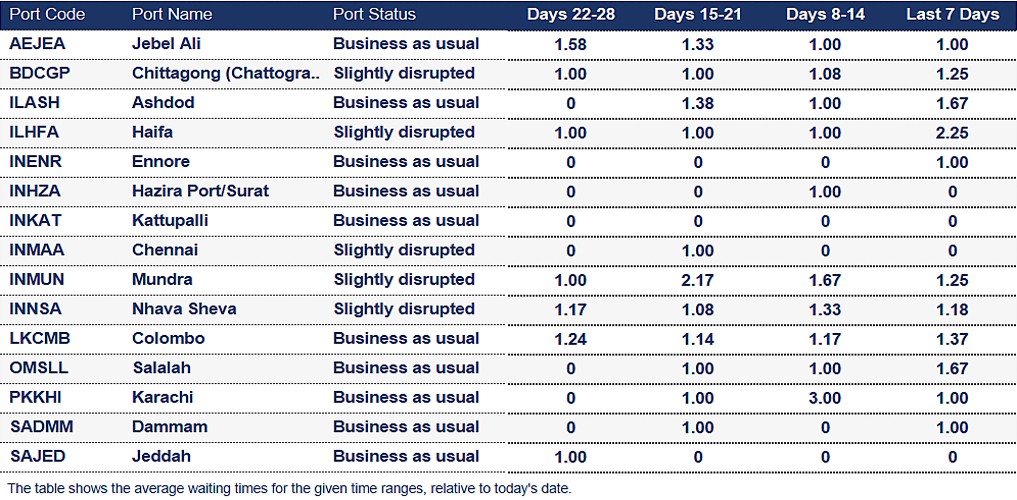
Chittagong (Chattogram): The 7-day average vessel waiting time is around 1.25 days. The yard is at 66.6%. Gearless vessels are being sailed out after 48 hours without considering laden balance or empty loading scope. Extended port stays are restricted if laden units are not fed to the hook on time.
Yemen
Aden: The 7-day average vessel waiting time is around 9 days.
North America
Canada
Average import rail dwell time for Canadian cargo (Vessel arrival to departure rail ramp):
- Halifax: 6 days
- Montreal: 8 days
- Prince Rupert: 6 days
- Saint John: 5 days
- Vancouver: 7 days
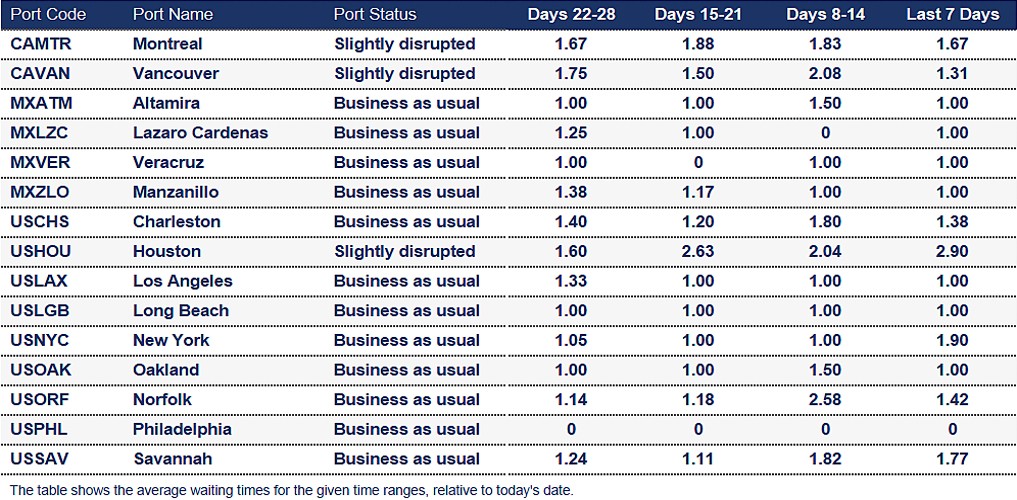
Montreal: The 7-day average vessel waiting time is around 1.67 days. The average rail dwell time is around 5 days. Due to severe weather in the North Atlantic, vessels arriving off-window are likely.
Prince Rupert: The 7-day average vessel waiting time is around 3 days. The average import rail dwell is around 7 days.
Saint John: The 7-day average vessel waiting time is around 2 days. The average rail dwell time is around 10 days. Persistent bad weather in the North Atlantic is causing vessel delays.
Vancouver: The 7-day average vessel waiting time is around 1.31 days. The average rail dwell time is around 6 days.
United States
Houston: The 7-day average vessel waiting time is around 2.9 days.
South and Central America
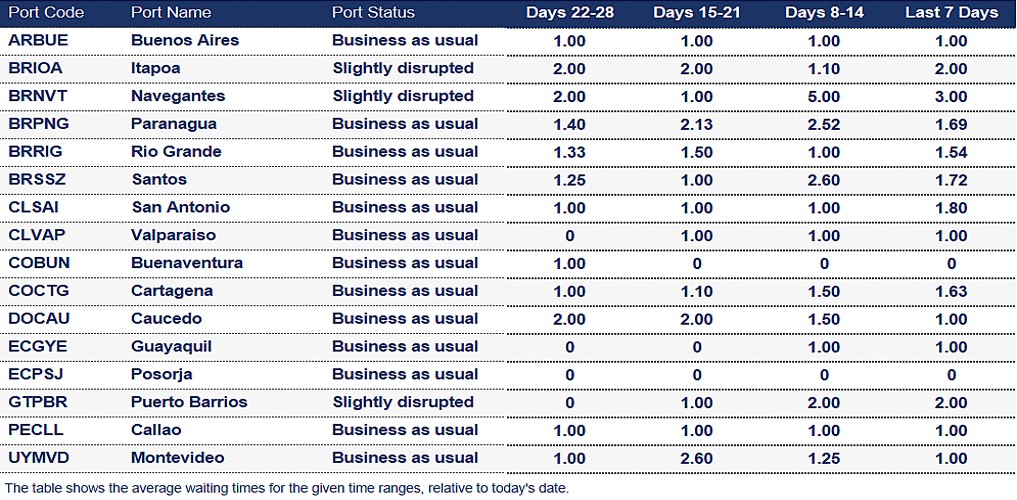
Bolivia:
Bolivia faces widespread roadblocks after the government removed the fuel subsidy, aiming to address a fiscal crisis. Protests and blockades are disrupting major highways in regions like Santa Cruz, Cochabamba, and La Paz, with violent clashes reported. Significant delays to road transport and deliveries are expected nationwide, and the situation may escalate as more groups join the protests.
Brazil
Navegantes: The 7-day average vessel waiting time is around 3 days.
Venezuela
Despite recent US military intervention, Venezuelan ports handling containerised cargo remain largely operational. No new restrictions have been imposed, and security levels are unchanged.
- Puerto Cabello: Operating normally with no significant delays.
- La Guaira: Restricted access, but container operations continue without major disruption.
Overall, container traffic is unaffected, though caution is advised. War risk premiums remain stable but may rise soon. Read more
How Kuehne+Nagel estimates port disruption statuses
Seaexplorer has four port statuses that are estimated based mainly on the 7-day average vessel waiting time. Other factors include yard congestion, labour strikes, natural disasters or intermodal disruptions. Slightly different rules are applied to major ports, or ports that are hubs in their region, as they are typically more efficient.
Business as usual means the port is currently operating without any significant disruption.
Slightly disrupted is used if the 7-day average vessel waiting time exceeds 2 days.
Heavily disrupted is used if the 7-day average vessel waiting time exceeds 4 days.
Port closed is used when the port suspends operations due to a major disruptive event.
How Kuehne+Nagel calculates the 7-day average vessel waiting time
Mainline container vessels may spend a certain number of days waiting at designated anchorage areas before their scheduled port call.
To calculate the 7-day average waiting time, we consider the waiting days of these vessels, excluding:
- Waiting times for feeder vessels,
- Idle ships without an announced next port,
- Slow steamers heading toward the anchorage but not actively waiting within the designated area
- Vessels passing through the anchorage area without intending to call at the port.
This rolling average is based on the data from the last seven days and is updated daily in seaexplorer.
To find the latest waiting time for a port, enter the port name or code in the search bar and select the relevant option.
Stay Ahead Stay Informed: Register for seaexplorer for the latest disruptions and vessel waiting times at global container ports.