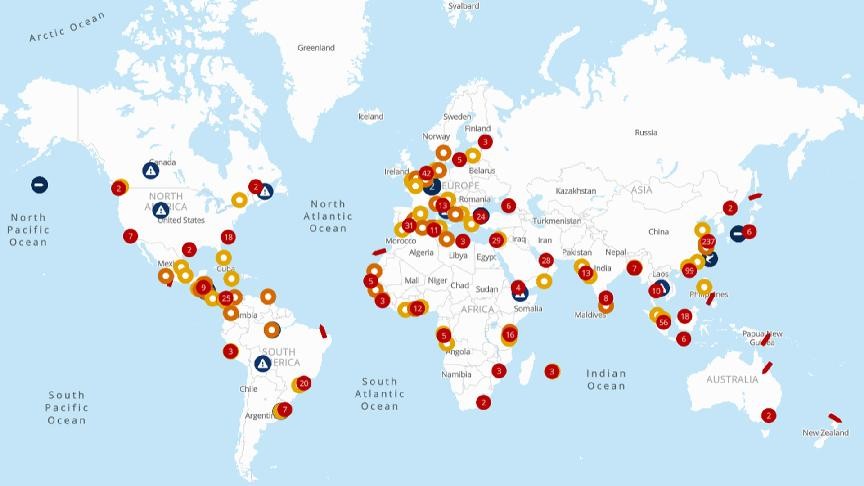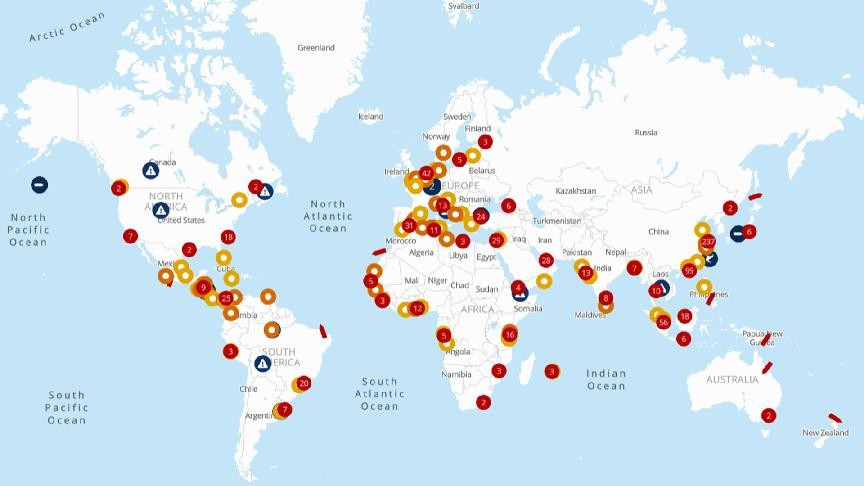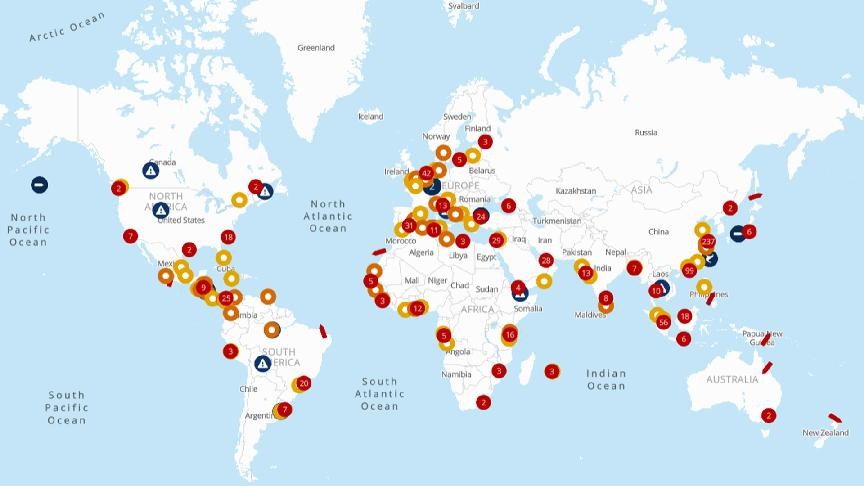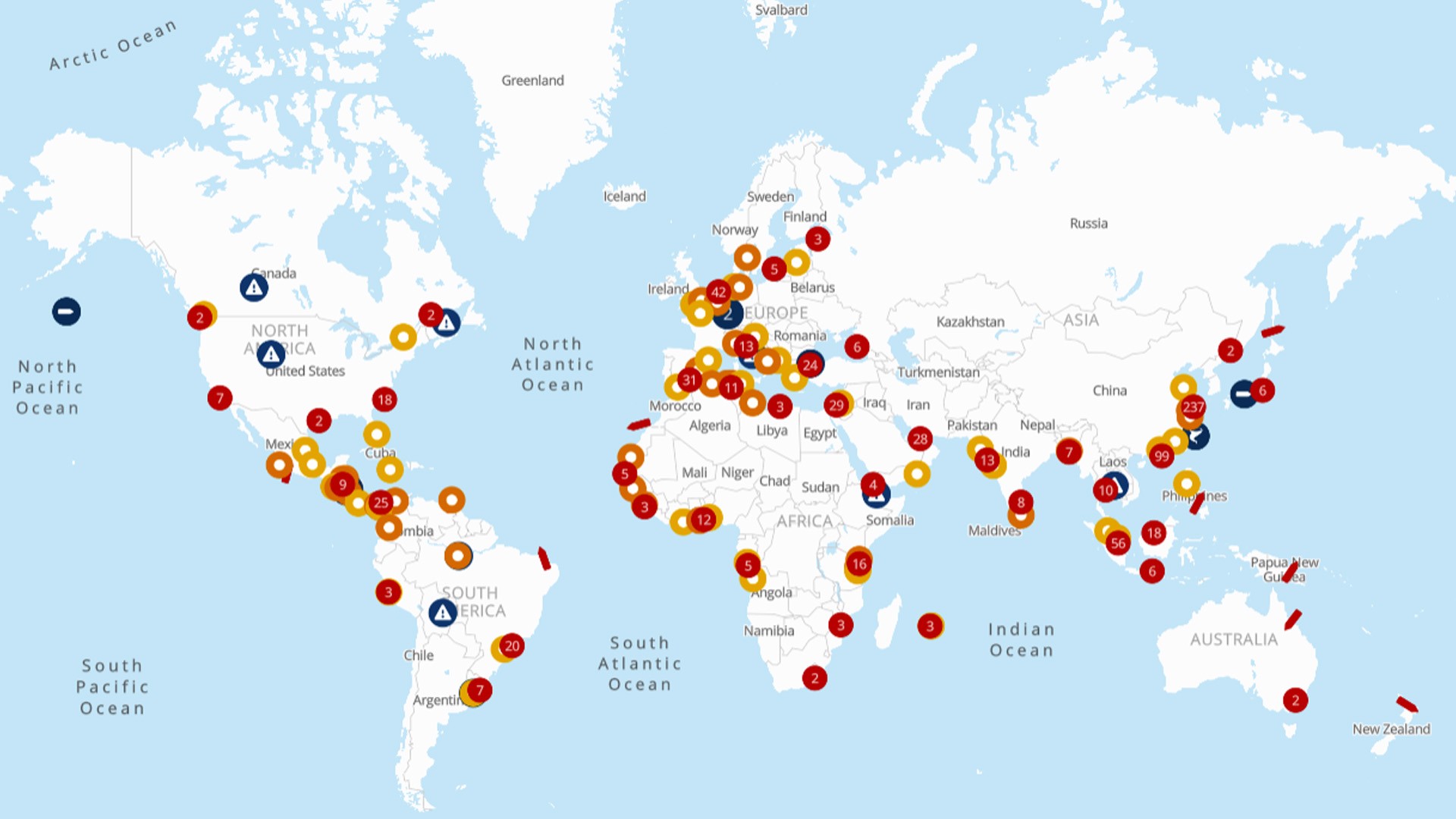

Stay ahead of supply chain disruptions and port congestion with Kuehne+Nagel’s weekly port operational update.
- Find out the latest vessel waiting times and status of ports in Africa, Asia, Oceania, Europe, the Middle East-Indian Subcontinent, North America, and South and Central America.
Africa
Cameroon
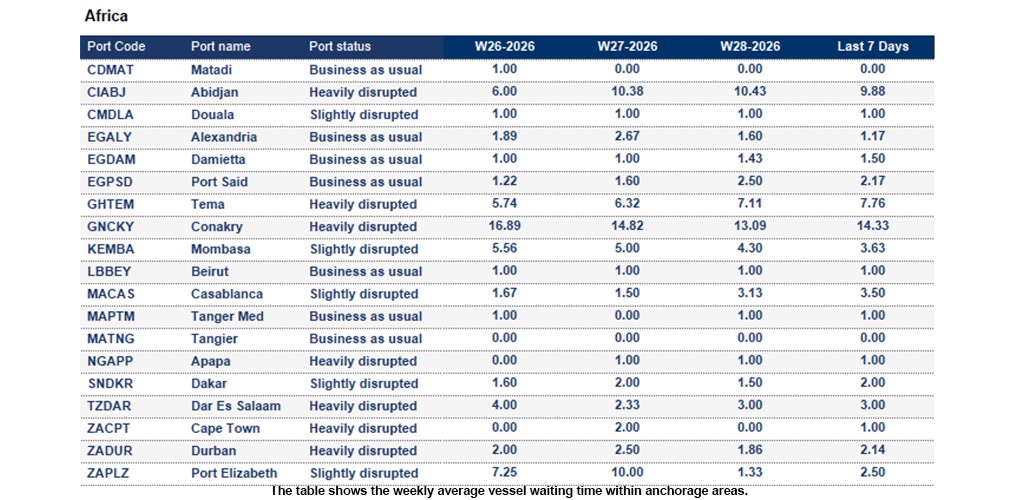
Douala: The 7-day average vessel waiting time is around 1.0 days. The port is slightly congested. The rainy season and deteriorating road conditions continue to impact inland transportation. In addition, the 28-metric-ton truck and container weight restriction remains in effect.
Kribi: New customs procedures at Kribi continue to cause delays in container gate-out activities and transit cargo movements. In addition, the ongoing rainy season is affecting road accessibility to certain inland destinations, creating further challenges for cargo distribution and supply chain reliability.
Guinea
Conakry: The 7-day average vessel waiting time is around 14.33 days. Conakry Port remains congested, with both dry and reefer container storage capacity under significant pressure. Inland logistics continue to be impacted by poor road infrastructure, which is further deteriorating during the rainy season, creating additional challenges for cargo evacuation and supply chain reliability.
Mozambique
Maputo: Intermittent wind gusts and rain are expected to persist for the remainder of the week, with the potential to disrupt operations.
Senegal
Dakar: The 7-day average vessel waiting time is around 2.0 days. Dakar Port continues to experience operational pressure due to cargo diversions associated with the Mali corridor. The additional cargo volumes are placing increased demand on port capacity and logistics infrastructure, potentially affecting cargo handling efficiency and transit times.
Sierra Leone
Freetown: The 7-day average vessel waiting time is around 3 days. Moderate congestion continues at Freetown Port due to container handling constraints.
Asia Oceania
China
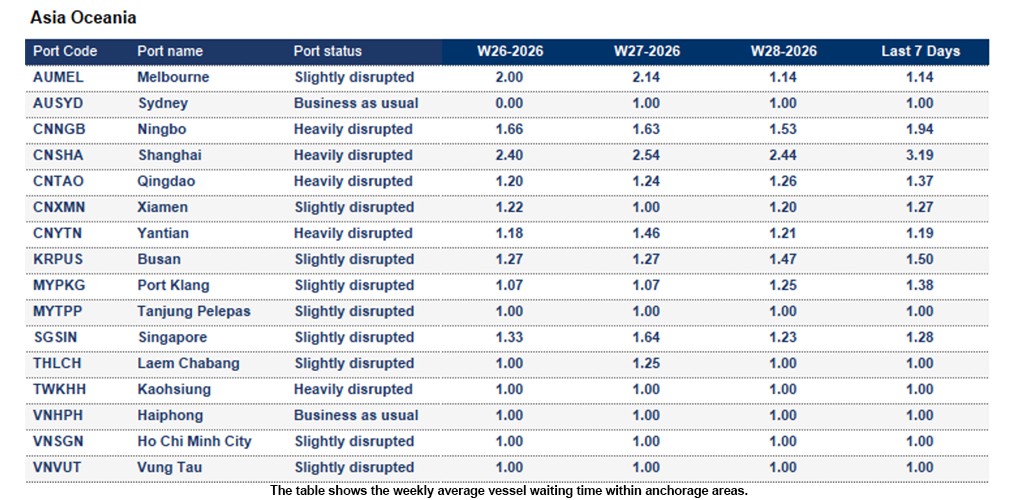
Typhoon Bavi temporarily disrupted port, terminal, trucking, and warehouse operations across eastern China. Following the storm’s weakening, emergency measures were lifted, and operations at Ningbo, Shanghai, and Qingdao gradually returned to normal, although localised weather-related delays remained possible.
Nansha: The 7-day average vessel waiting time is around 1.1 days. Minor berth congestion is being experienced at GOCT (Nansha Phase 2), with vessel waiting times and delays currently ranging between 0.5 and 1 day.
Yantian: The 7-day average vessel waiting time is around 1.19 days. Six quay cranes remain under heightening upgrades until August, reducing terminal capacity and rendering one berth unavailable. As a result, Yantian continues to experience heavy berth congestion, with vessel waiting times of approximately 1–1.5 days, primarily driven by concentrated vessel arrivals and berth capacity constraints.
Indonesia
Belawan, Sumatra: The 7-day average vessel waiting time is around 1 day. Berth congestion continues, with off-window vessels experiencing delays of approximately 1–12 days.
Jakarta: The 7-day average vessel waiting time is around 1.5 days. QC #19 remains under repair until 8 July, contributing to vessel waiting times currently averaging 0.5–1 day. Capacity is expected to improve with the addition of one extra quay crane by the end of July, which should help enhance productivity and support smoother vessel operations.
Semarang: The 7-day average vessel waiting time is around 1 day. High yard occupancy continues to place pressure on terminal operations, while the port remains congested with vessel waiting times generally ranging between 1 and 1.5 days. The combination of elevated yard utilisation and berth congestion is contributing to ongoing delays and limiting operational flexibility.
Surabaya: The 7-day average vessel waiting time is around 1.17 days. The overall port situation is improving, with most vessels now able to berth on arrival or with only minimal waiting times. The commissioning of the new quay crane equipment has been successfully completed, increasing operational capacity and supporting smoother vessel and terminal operations
Japan
Tokyo: The 7-day average vessel waiting time is around 1 day. Due to crane rail repair works from 21–28 July, Aomi Terminal will be limited to operating with only one quay crane. The reduced handling capacity is expected to impact vessel productivity and result in longer port stays for the JTX service during the maintenance period.
Yokohama: Berth congestion reached approximately 1.5 days in Week 28, primarily driven by a bunching of vessel arrivals. The concentrated vessel influx has placed increased pressure on berth availability, resulting in longer waiting times and operational delays.
Malaysia
Port Klang: The 7-day average vessel waiting time is around 1.38 days. Yard density has increased to 80–85%, while productivity and vessel waiting times remained stable in Week 28, with average delays of around one day. Terminal conditions could improve further if vessel call volumes decrease. However, planned dredging works from 23 July to 1 August will require the closure of approximately 600 metres of berth space at B23 and B24, which is expected to impact berthing arrangements for mega vessels and could place additional pressure on terminal operations.
Tanjung Pelepas: The 7-day average vessel waiting time is around 1 day. Minor berth congestion persists.
Philippines
Manila: The 7-day average vessel waiting time is around 4.69 days. Heavy berth congestion continues at Manila North, with off-window vessels experiencing waiting times and delays of more than five days. At the Manila International Container Terminal (MICT), yard utilisation remains high at 85–90%, reflecting ongoing capacity pressure and limited operational flexibility. Waiting Time: 4.69 days.
South Korea
Busan: The 7-day average vessel waiting time is around 1.5 days. The overall situation remained stable in Week 28, with no major congestion reported. However, conditions could become more challenging next week due to the high variability of vessel arrival times caused by delays at preceding ports. Potential vessel bunching in Busan may increase pressure on berth availability and terminal operations, creating a risk of localised congestion and schedule disruptions.
Thailand
Laem Chabang: The 7-day average vessel waiting time is around 1 day. Berth bunching was observed in Week 28, resulting in some vessels being reassigned to Berth 5 (B5) to support terminal operations. Despite the concentration of vessel arrivals, average waiting times remain relatively moderate at 0.5–1 day.
Vietnam
Vung Tau: The 7-day average vessel waiting time is around 1 day. Heavy berth congestion persisted during Week 28, with vessel waiting times averaging 1.5–2 days. The congestion is primarily driven by high berth demand and vessel bunching, resulting in extended delays and increased pressure on terminal operations.
Europe
Belgium
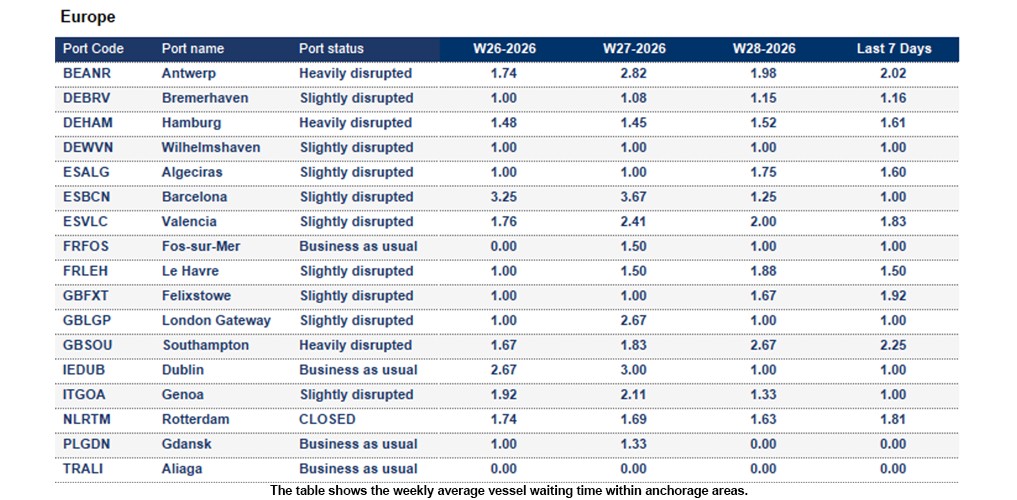
Antwerp: The 7-day average vessel waiting time is around 2.02 days. Pilot services have resumed; however, vessel backlogs continue to affect the lineup and are expected to persist through this week. Labour availability has also been reduced by the start of the school holiday period. The yard density remains at a critical level.
Germany
Due to low water levels, vessel access to the ports of Düsseldorf and Cologne is expected to be severely restricted or suspended from tomorrow. HGK will use the Krefeld terminal as a hub and provide shuttle services for all bookings, although capacities remain extremely limited. Contargo Neuss is not affected. Navigation on the Upper Rhine may also be suspended due to falling water levels. Significant capacity constraints are expected to continue, with no improvement forecast before the end of Week 30.
Hamburg: The 7-day average vessel waiting time is around 1.61 days. Yard occupancy remains high. A lightning strike near Uelzen has disrupted rail infrastructure, causing delays and restricted train operations. Rail traffic to and from the Port of Hamburg is affected, with increased waiting times expected. Currently, no short-notice capacity is available at CTB for empty container returns, either by rail or by truck.
Netherlands
Rotterdam: The 7-day average vessel waiting time is around 1.81 days. Due to extreme heat, APM gate operations were suspended on 14 July 2026 at 14:15. No gate movements are currently possible.
Middle East - Indian Subcontinent
Middle East
North America
Canada
Ongoing heat and dry weather conditions are expected to result in low water levels on the St. Lawrence River, which will lead to draft restrictions as of 16 July, reduced vessel loading capacity, and potential disruptions to inland shipping operations.
Average import rail dwell time for Canadian cargo (Vessel arrival to departure rail ramp):
- Halifax: 2 days
- Montreal: 7 days
- Prince Rupert: 6 days
- Saint John: 9 days
- Vancouver: 6 days
Mexico
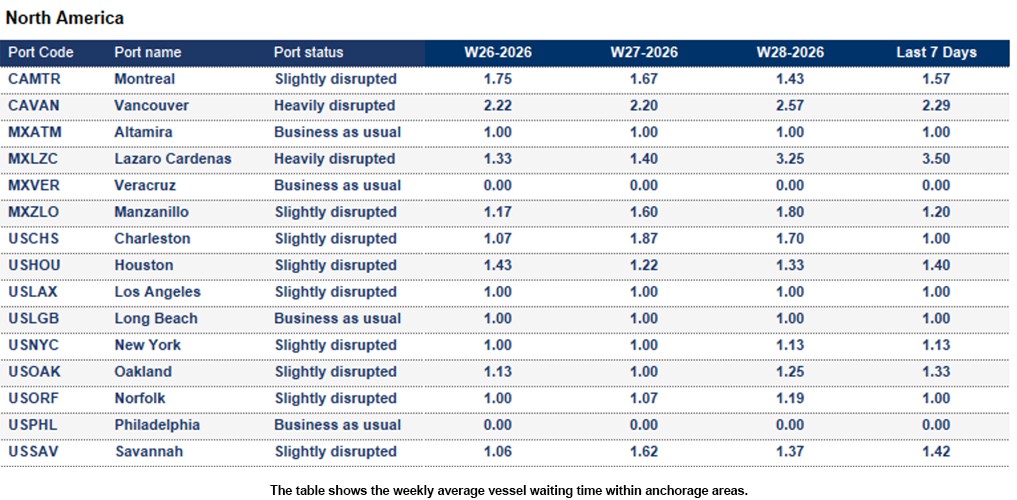
Lazaro Cardenas: The 7-day average vessel waiting time is around 3.5 days.
United States
Average import rail dwell and transit time for US cargo (Vessel arrival to departure rail ramp):
- Halifax- 13 days
- Montreal- 7 days
- Prince Rupert- 7 days
- Vancouver- 4 days
- Saint-John- 7 days
- Charleston- 2 days
- Newark- 1 day
- Houston- 4 days
- Wilmington- 2 days
- Los Angeles- 5 days
- Long Beach- 6 days
- New York- 4 days
- Miami- 1 day
- Oakland- 6 days
- Norfolk- 2 days
- Philadelphia- 6 days
- Savannah- 2 days
- Seattle- 4 days
- Tacoma- 4 days
South and Central America
Chile
The CNTP work stoppage on 9 July 2026 temporarily disrupted port operations at Iquique, San Vicente, Coronel, and Puerto Lirquén. Terminal activities were suspended during the four-hour strike period, resulting in operational delays and restricted access at some facilities. Vessel schedules and cargo handling operations experienced localised impacts, while adverse weather conditions further affected operations at several southern ports. Following the conclusion of the strike, port activities resumed, and operations gradually returned to normal.
How Kuehne+Nagel estimates port disruption statuses
Seaexplorer has four port statuses that are estimated based mainly on the 7-day average vessel waiting time. Other factors include yard congestion, labour strikes, natural disasters or intermodal disruptions. Slightly different rules are applied to major ports, or ports that are hubs in their region, as they are typically more efficient.
- Business as usual means the port is currently operating without any significant disruption.
- Slightly disrupted is used if the 7-day average vessel waiting time exceeds 2 days.
- Heavily disrupted if the 7-day average vessel waiting time exceeds 4 days.
- Port closure is used when the port suspends operations due to a major disruptive event.
How Kuehne+Nagel calculates the 7-day average vessel waiting time
Mainline container vessels may spend a certain number of days waiting at designated anchorage areas before their scheduled port call.
To calculate the 7-day average waiting time, we consider the waiting days of these vessels, excluding:
- Waiting times for feeder vessels,
- Idle ships without an announced next port,
- Slow steamers heading toward the anchorage, but not actively waiting within the designated area
- Vessels passing through the anchorage area without intending to call at the port.
This rolling average is based on the last 7 days of data and is updated daily in seaexplorer. To find the latest waiting time for a port, enter the port name or code in the search bar and select the relevant option.
Stay Ahead, Stay Informed: Register for seaexplorer for the latest disruptions and vessel waiting times at global container ports.