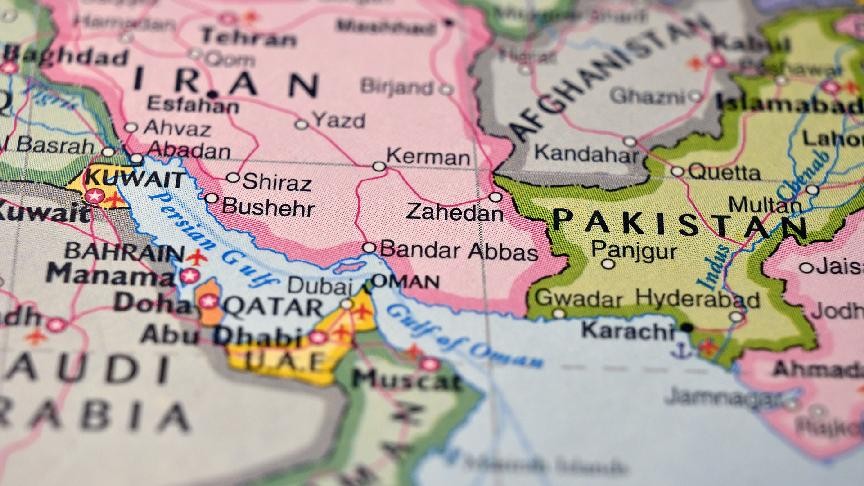

THE US and Iran intensified their confrontation on Monday after Iranian cruise missiles struck two tankers near the Strait of Hormuz
The United Arab Emirates defence ministry said the Liberia-flagged VLCCs Mombasa B (IMO: 9739501) and Al Bahyah (IMO: 9937799) were hit by two Iranian cruise missiles while transiting the southern passage of the Strait of Hormuz in Omani territorial waters. One seafarer was killed and eight others were injured.
Mombasa B is owned by South Korea’s Sinokor, while Al Bahyah is owned and operated by Abu Dhabi National Oil Company (ADNOC).
The attack came as the US military launched a third consecutive night of strikes against Iranian targets and President Donald Trump reinstated a maritime blockade aimed at restricting Iranian shipping
In a social media post, Trump said the Strait of Hormuz would remain open “with or without Iran”, adding that while Iranian vessels would be prevented from entering or leaving the waterway, ships from other nations would be allowed to transit.
He also doubled down on his demand that a 20% charge on cargoes transiting the strait should be imposed to cover the cost of maintaining security, although the White House provided no details on how such a measure would be implemented.
Oil prices rose nearly 3% on Tuesday, reaching their highest level in four weeks as traders weighed the growing risk to Middle East energy exports.
The latest developments mark a dramatic reversal of the gradual stabilisation that had emerged following the 24 June ceasefire.
Over recent weeks, commercial shipping had cautiously resumed transits through a combination of an Iranian-administered northern route and a US-supported southern corridor.
Traffic remained well below normal levels, but operators had reported improving confidence and a limited recovery in vessel movements.
That progress now appears to have unravelled.
Compounding concerns, Iran’s Persian Gulf Strait Authority announced that transit permissions through the strait had been suspended, describing passage as currently “unfeasible” following recent US military operations.
The decision removes the permitting mechanism that many operators had relied upon to conduct voyages through Iranian-controlled waters since late June.
Security analysts said the suspension demonstrates Tehran’s willingness to use access to the strait as a strategic lever during periods of military escalation.
The attack on the two VLCCs marks a significant escalation in the threat facing commercial shipping.
The use of cruise missiles against large crude tankers operating outside Iranian waters suggests that vessels transiting the southern Omani corridor are no longer insulated from direct military action.
The reinstatement of the US blockade further complicates the operating environment. Maritime security specialists warned that commercial vessels could increasingly find themselves navigating between competing Iranian and US enforcement measures, raising the risk of inspections, interception, sanctions exposure and misidentification.
Regional tensions widened further after Yemen’s Houthi movement launched missiles towards Saudi Arabia in retaliation for reported Saudi strikes on Sana’a airport.
Maritime security consultancies have cautioned that any renewed Houthi campaign against shipping would expand risks beyond Hormuz to the Red Sea, Bab el Mandeb and Gulf of Aden.
Several security providers said on Monday evening that the threat level for commercial shipping had returned to “critical”, comparable with conditions seen before the June ceasefire.
Even prior to the latest escalation major charterers had reported that owners had become increasingly wary of accepting any further Middle East Gulf business. That now appears to have hardened.
Unless diplomatic efforts resume quickly, shipowners are likely to face continued disruption to Hormuz transits, rising war-risk premiums and growing reluctance among operators to accept MEG business as the conflict enters a more dangerous phase.