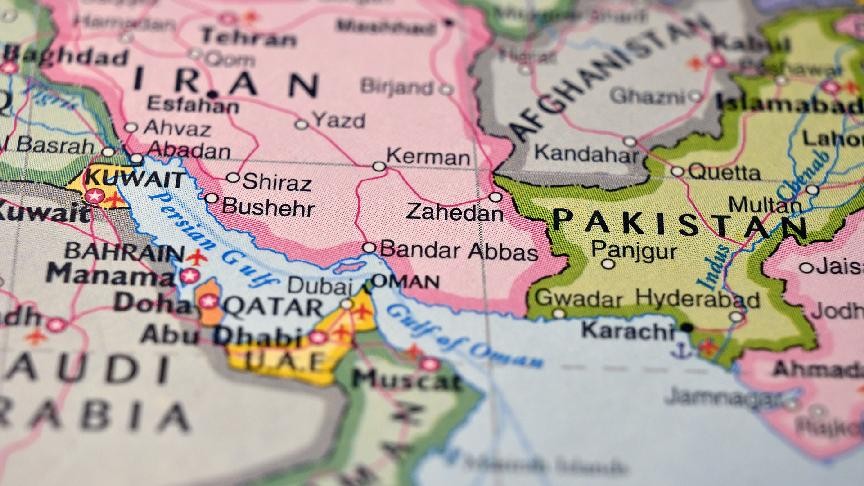

THE United States and Iran have agreed to halt their recent military exchanges in and around the Strait of Hormuz and resume direct negotiations in Doha on Tuesday, creating a narrow and uncertain window of reduced risk for shipping in the Strait of Hormuz.
The understanding, first reported by Axios and later confirmed by US officials, follows several days of escalating tit‑for‑tat attacks — including two strikes on commercial vessels — that threatened to unravel a fragile memorandum of understanding reached earlier this month.
Talks in Qatar are expected to focus on restoring safe navigation and preventing further military escalation, signalling that both sides are still attempting to preserve the diplomatic framework despite repeated violations.
Shipping remains wary as attacks continue
The pause comes after a volatile weekend that saw renewed attacks on merchant shipping.
On Friday, the Singapore‑flagged Ever Lovely (IMO: 9629110) was hit by a projectile southeast of Dahit, Oman, prompting the International Maritime Organization to suspend evacuation plans for vessels trapped in the Gulf. Traffic through the strait continued in the hours that followed.
The next day, the Panama‑flagged VLCC Kiku (IMO: 9329796) was struck by an Iranian drone while carrying two million barrels of crude. The tanker later anchored off Fujairah. The US responded with strikes on Iranian missile, drone and radar sites near Sirik.
Despite the violence, at least 10 tankers entered the strait over June 27–28 and nine exited, though flows remain well below pre‑conflict levels. One tanker turned back after briefly stopping off Oman, and another went dark approaching from the Gulf of Oman.
Crude futures climbed above $70 per barrel on Monday as traders priced in the likelihood of prolonged disruption.
Industry braces for prolonged uncertainty
Tanker operators and shipowners are again pulling back, wary of the fragile security environment and the unclear terms of the 60‑day US‑Iran memorandum.
“Hormuz transits shot up last week, but we are seeing it come down once again,” said Drewry director Jayendu Krishna. “Unless and until there is a comfort level that shipowners have, they won’t start transiting at levels we saw before the conflict began.”
Krishna said differing interpretations of the MoU — particularly a clause stating that vessel traffic will be restored “in proportion to pre‑war levels” by Iran — have heightened uncertainty. Tehran may view this as reinforcing its control over the strait, he noted, a key leverage point in negotiations.
Seafarer refusals to transit Hormuz have also risen since the weekend attacks, complicating any attempt by owners to capitalise on early‑mover advantages.
Shipbrokers in Asia reported a renewed “wait‑and‑see” stance on Monday, with owners reluctant to fix new charters until stability improves. Elevated risk premiums are expected to rise further.
“Structurally, nothing has changed. Risk premiums remain elevated and if anything, the developments over the weekend could send them higher. Of course, there will be some owners who are confident of making Hormuz transits. But they will be seeking much higher rates,” said one broker on Monday.
Some owners are preparing to coordinate directly with Iranian authorities to secure safe passage — a practice that analysts warn could expose them to sanctions risks.
Given the nature of vessel attacks and the lack of an IMO evacuation plan in place some brokers are reporting that shipowners are looking to adopt the Iranian route for transits.
“If the requirement is to coordinate with Iran to go through the strait, then that is what you have to do. Given that there is no cost to it right now, shipowners will likely look to get in line if it means a guarantee of safety.”
Although the MoU period reportedly waives tolls or premiums, applying for transit permits may require sharing vessel, ownership and insurance details with the Persian Gulf Strait Authority, a designated entity.
“Engagement with the PGSA, whether direct or indirect, may constitute a dealing with a designated entity,” said Steamship Mutual claims director Edward Barnes. He added that while certain transactions may be temporarily permissible under US law, they may still violate UK or EU sanctions regimes.
A fragile pause amid an unstable corridor
While the reported halt in US‑Iran strikes offers a brief reduction in immediate risk, maritime security analysts caution that conditions could deteriorate quickly. Vessels with urgent commercial needs are advised to proceed only with strict risk controls, enhanced monitoring and robust contingency planning.
The Strait of Hormuz — through which roughly a fifth of the world’s oil supply normally flows — remains a flashpoint where diplomatic progress and military escalation can unfold simultaneously.