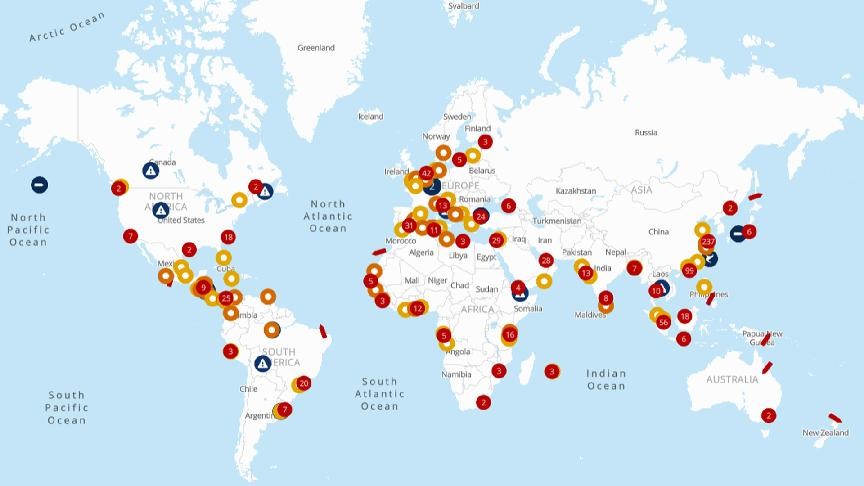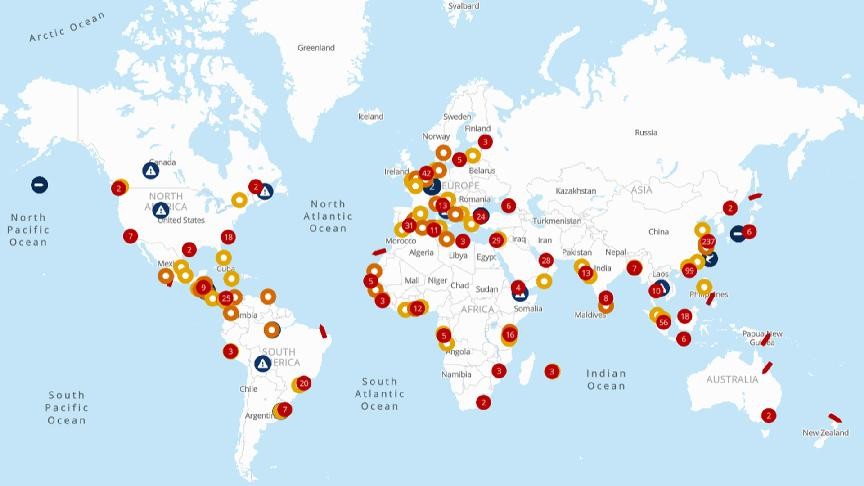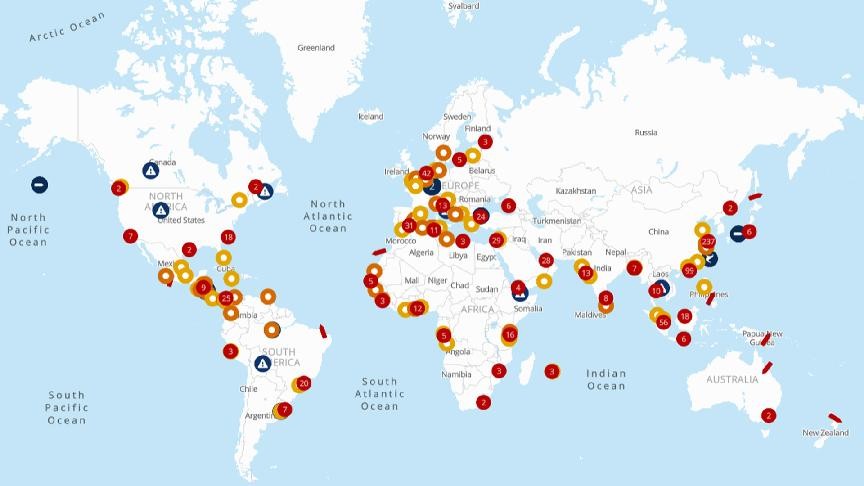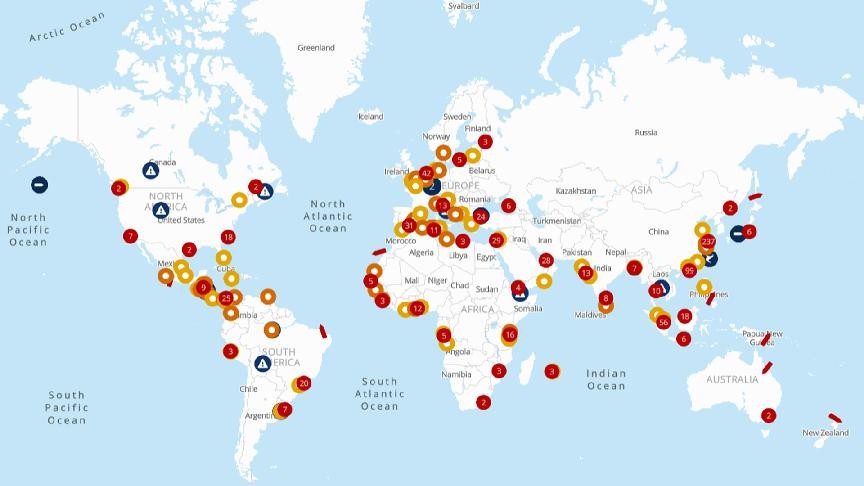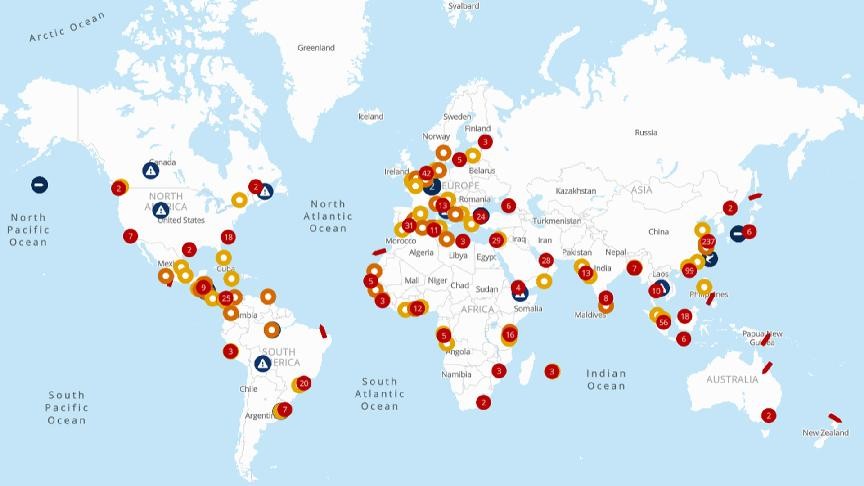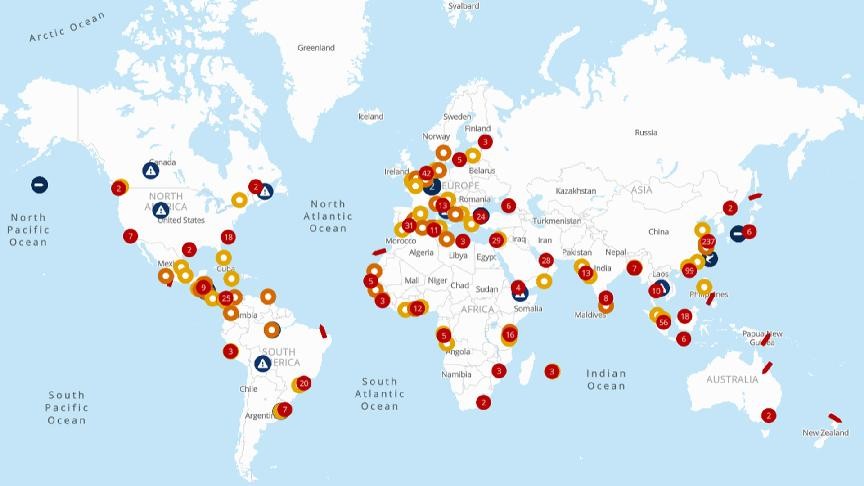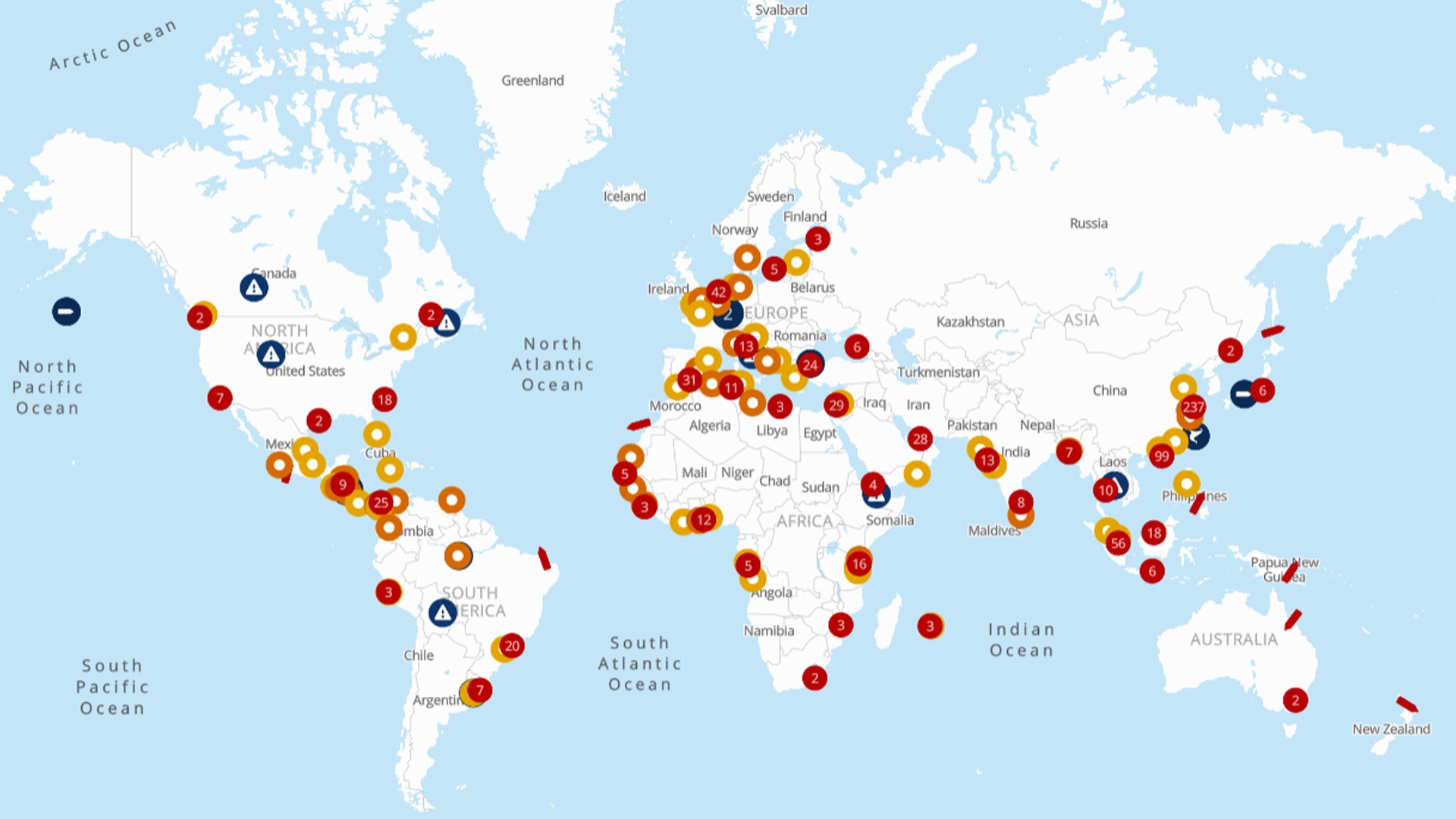

Stay ahead of supply chain disruptions and port congestion with Kuehne+Nagel’s weekly port operational update.
- Find out the latest vessel waiting times and status of ports in Africa, Asia Oceania, Europe, Middle East-Indian Subcontinent, North America, and South and Central America.
Africa
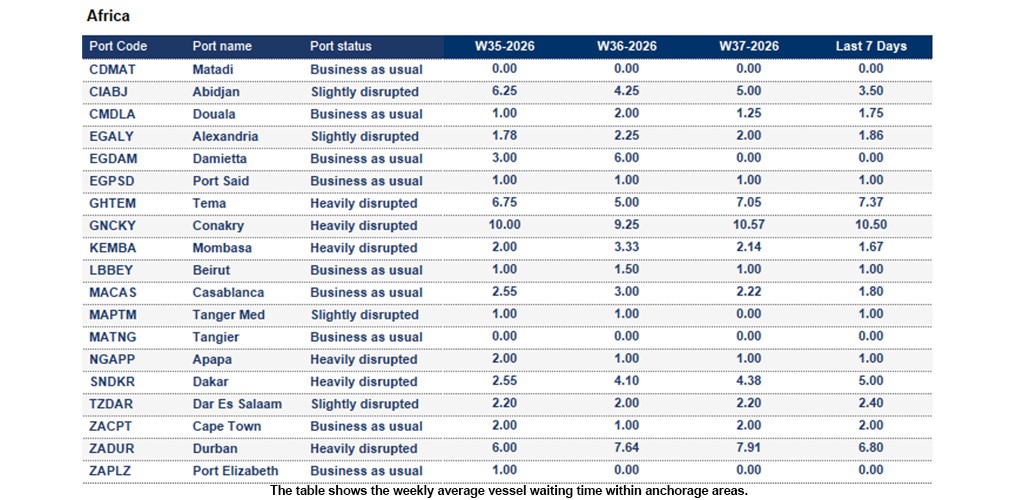
Morocco
Tanger Med: The 7-day average vessel waiting time is around 1 day. Vessel operations remain largely stable; however, an incoming service is expected to arrive late due to strike-related delays in Hamburg. Recent strong winds caused container stack disruption within the yard, with clean-up operations currently underway.
Asia Oceania
China
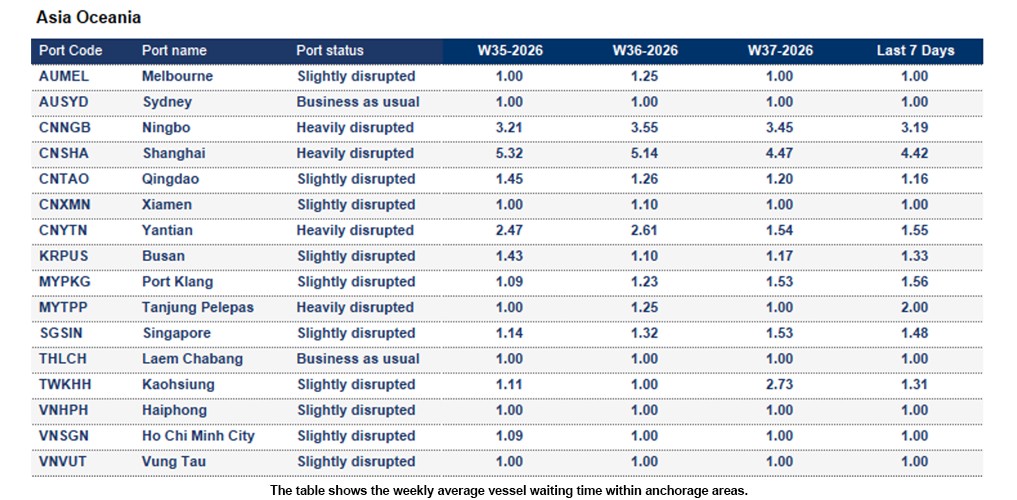
Ningbo: The 7-day average vessel waiting time is around 3.19 days. High yard density continues across all terminals. MSICT is reporting average vessel waiting times of around 5 days, although congestion is expected to gradually improve from Week 38. A temporary channel restriction caused a short port closure earlier this week.
Shanghai: The 7-day average vessel waiting time is around 4.42 days. Congestion remains elevated across Yangshan and Waigaoqiao terminals. Vessel waiting times range between 7 and 8 days, while heavy berth congestion persists at Yangshan. Yard occupancy remains high, although conditions are expected to stabilise with slight improvements from Week 38.
Japan
Yokohama: Reefer plug utilisation is critically high at 95-100% due to slow cargo collection, placing pressure on terminal operations. Average vessel waiting times exceed 1 day, while plug availability remains limited.
Hong Kong
Hong Kong: The 7-day average vessel waiting time is around 1.15 days. Port congestion has eased as backlog vessels and cargo are cleared. However, terminal utilisation remains high at 80-85%, which is continuing to impact overall operational efficiency.
Malaysia
Port Klang: The 7-day average vessel waiting time is around 1.56 days. Emergency dredging works are underway until 27 September, temporarily removing one deep-water berth from service and reducing flexibility for larger vessels.
Tanjung Pelepas: The 7-day average vessel waiting time is around 2.0 days. Port operations were temporarily disrupted following a cybersecurity incident detected on 9 September, which affected terminal operating systems and led to a temporary suspension of container handling activities. Operations have since resumed in phases, with manual gate processing introduced as part of recovery measures. While vessel impact has remained limited, some delays may occur as normal operations are progressively restored. Read more here
Philippines
Manila: The 7-day average vessel waiting time is around 3.19 days. Congestion persists across both North and South terminals. Vessel waiting times range between 2 and 3 days, with further operational pressure expected as returning services gradually re-enter the port.
South Korea
Busan: The 7-day average vessel waiting time is around 1.33 days. Yard density remains high at around 90%, while reefer plug availability is increasingly constrained. Operational conditions remain dynamic due to elevated reefer volumes and anticipated holiday-related port closures later this month.
Vietnam
Vung Tau: The 7-day average vessel waiting time is around 1 day. Congestion at Gemalink has stabilised, with vessel waiting times reduced to 0.5-1 day. However, yard density remains very high at 95-100%, affecting overall terminal efficiency.
Europe
Belgium
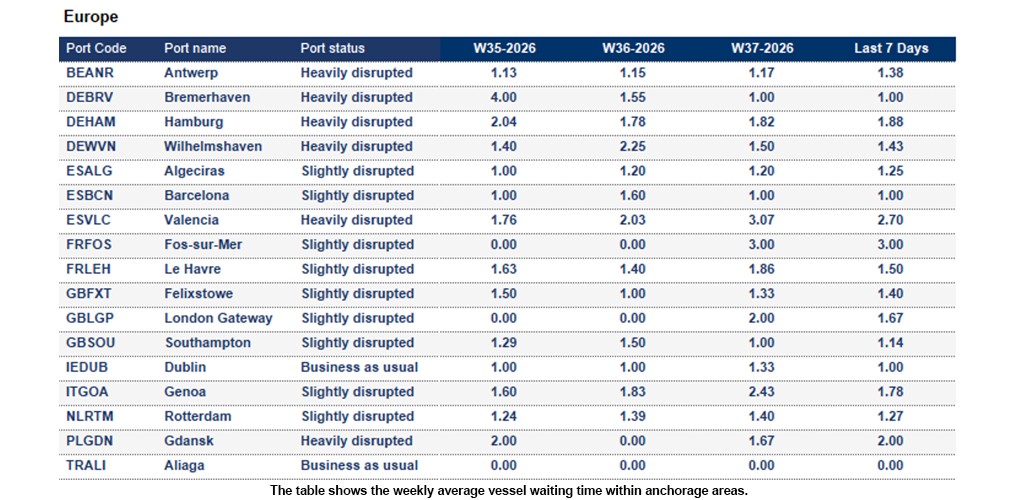
Antwerp: The 7-day average vessel waiting time is around 1.38 days. An oil spill incident at quay 1718 has temporarily suspended all vessel and barge handling operations in the affected area. Clean-up activities are progressing, with restrictions expected to remain in place until approximately 14:00 on 16 September. Quay 1742 remains fully operational. While Deurganck Dock traffic has been partially restricted and diverted, no significant impact has been reported for FCL import operations at this stage.
Germany
Bremerhaven: The 7-day average vessel waiting time is around 1 day. Yard occupancy is high at 90%, with increasing constraints on IMO and OOG cargo. Although operations continue to recover from the recent strike disruption, yard pressure remains elevated, and some vessel services are still experiencing delays.
Hamburg: The 7-day average vessel waiting time is around 1.88 days. CTA: Yard occupancy has eased to 70% following recent strike disruption. Operations have largely recovered, with vessel schedules remaining stable. However, a two-week construction project starting 14 September will reduce feeder capacity, while a busy vessel program and potential further labour action may place additional pressure on terminal operations. CTH: Operations remain stable despite recent strike action, with yard occupancy at 83%.
Wilhelmshaven: The 7-day average vessel waiting time is around 1.43 days. Yard density remains manageable at 75%, but the recent 48-hour strike reduced weekly terminal capacity by more than 30%. Some containers were rolled to protect vessel schedules, and further strike action remains possible while labour negotiations continue.
Netherlands
Rotterdam: The 7-day average vessel waiting time is around 1.27 days. Overall, the terminal still faces a backlog after recent strike actions. ECT: Yard occupancy remains challenging at 93%, while barge and feeder delays of 24-72 hours continue. Reefer capacity is currently under control, although reduced gang availability and industrial action affecting reefer operations may create additional operational pressure. MVII: Yard occupancy has risen to 80%.
United Kingdom:
London Gateway Port: The 7-day average vessel waiting time is around 1.67 days. Terminal operations remain stable despite high import volumes, with yard occupancy at 73% for dry cargo and 59% for reefers. Resource constraints and berth works continue, but vessel calls are being completed as planned.
Indian Subcontinent and the Middle East
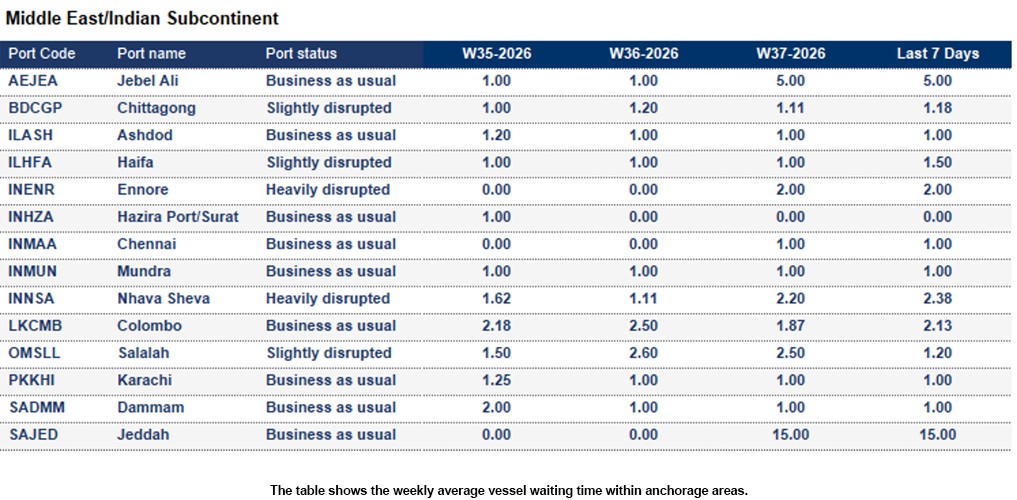
Strait of Hormuz: Planned discussions between Iran and Gulf states on navigation arrangements through the Strait of Hormuz have been postponed, with no new date announced. The delay reflects unresolved differences among participating countries regarding shipping rules, transit approvals and potential fees. While Oman and Iran continue to coordinate on a future meeting, a regionally supported framework for commercial navigation remains on hold, prolonging uncertainty for carriers operating in the region. Read more here
Suez Canal: Gemini partners Maersk and Hapag-Lloyd have announced that additional Asia-Europe, Mediterranean and India-Europe services will return to the Suez Canal from the longer Cape of Good Hope routing. The move is intended to improve transit times and efficiency but remains dependent on continued stability in the Red Sea. Industry opinion remains divided, with some warning that renewed security incidents could quickly force fresh diversions and disrupt supply chains during the peak season. Read more here
North America
Canada
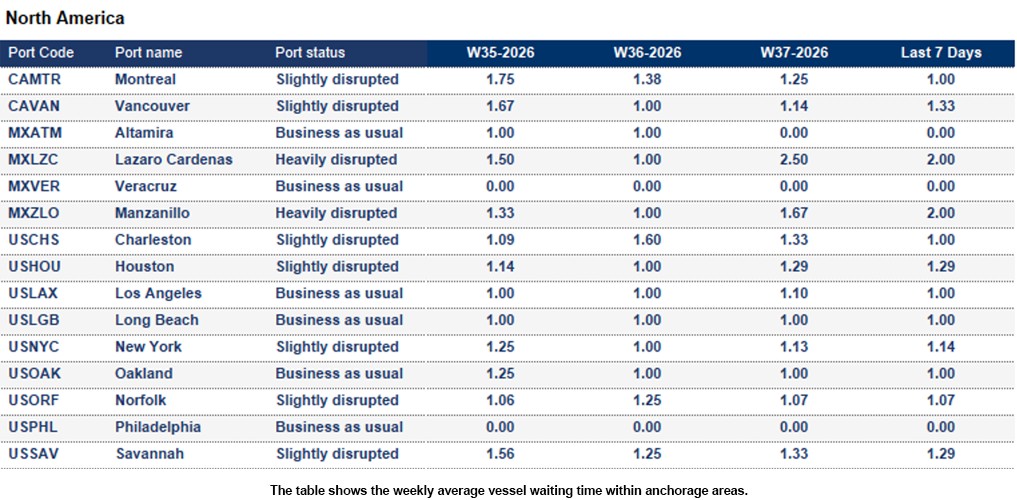
Average import rail dwell time for Canadian cargo (Vessel arrival to departure rail ramp):
- Halifax: 4 days
- Montreal: 6 days
- Prince Rupert: 5 days
- Saint John: 8 days
- Vancouver: 6 days
Central and South America
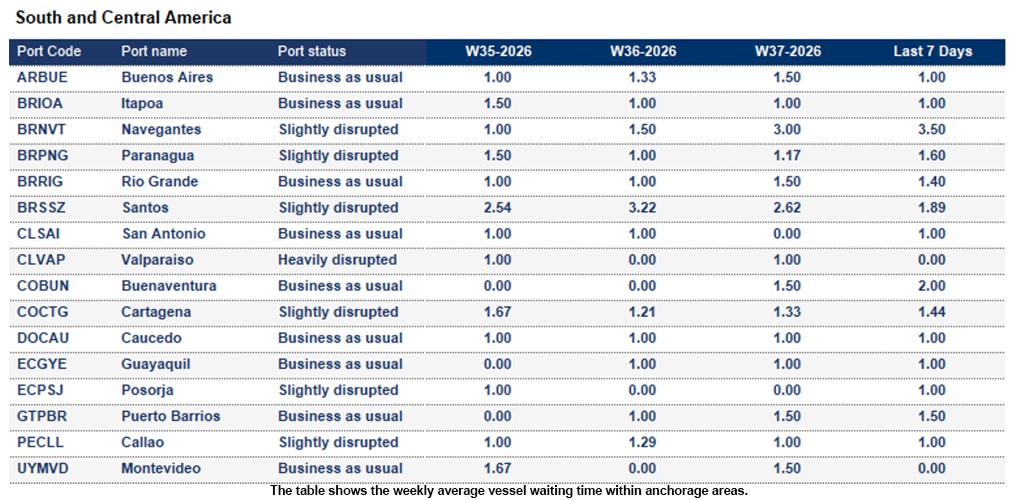
Panama
The Panama Canal Authority has postponed the planned reduction in the maximum authorised Neopanamax draft from 48.0 ft to 47.5 ft, allowing vessels to continue transiting at current draft levels until further notice. While current conditions remain significantly better than during the 2023/24 drought, rainfall across the watershed remains below average, and authorities have warned that additional restrictions could still be introduced in early 2027 if dry conditions persist. Rising tanker waiting times on both canal approaches indicate increasing operational pressure. Read more here
How Kuehne+Nagel estimates port disruption statuses
Seaexplorer has four port statuses that are estimated based mainly on the 7-day average vessel waiting time. Other factors include yard congestion, labour strikes, natural disasters or intermodal disruptions. Slightly different rules are applied to major ports, or ports that are hubs in their region, as they are typically more efficient.
- Business as usual means the port is currently operating without any significant disruption.
- Slightly disrupted is used if the 7-day average vessel waiting time exceeds 2 days.
- Heavily disrupted is used if the 7-day average vessel waiting time exceeds 4 days.
- Port closed is used when the port suspends operations due to a major disruptive event.
Stay Ahead, Stay Informed: Register for seaexplorer for the latest disruptions and vessel waiting times at global container ports.