
Update: 11.11.2026
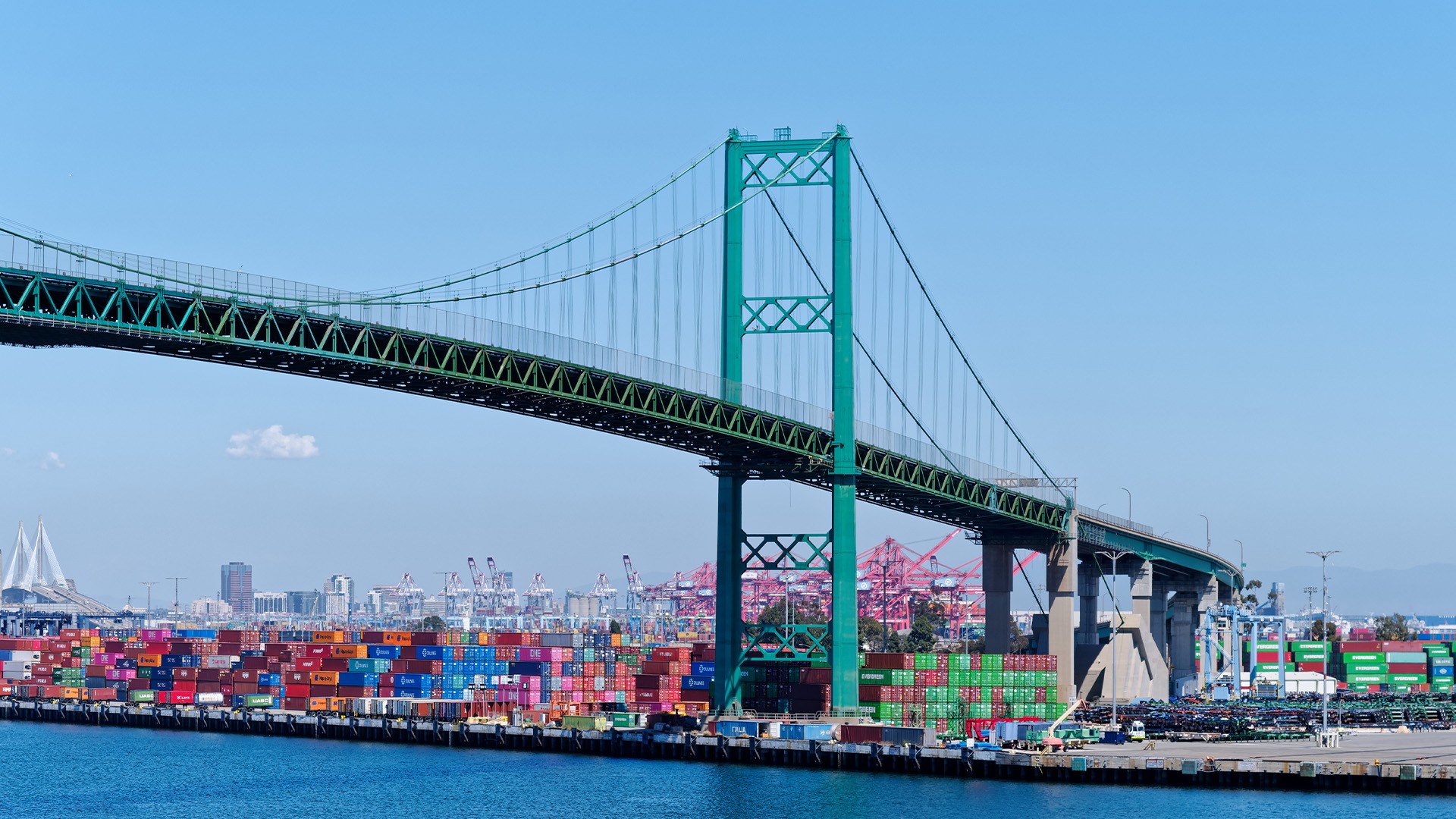
The Vincent Thomas Bridge closed in both directions on 7 November 2026 and will remain closed for approximately 16 months, with reopening targeted for early March 2028.
The ports of Los Angeles and Long Beach, including APM Terminals Pier 400, are expected to remain operational, while vessel movements and rail connectivity are not expected to be affected.
The main disruption will be to road access. Around 8% of drayage traffic across the port complex uses the bridge and will be diverted.
According to an update by carrier Maersk, trucks serving Pier 400 from San Pedro will instead need to approach through Wilmington or Long Beach.
Longer and less predictable journeys could affect appointment punctuality, driver productivity and container pickup and delivery, with potential additional accessorial costs.
In addition, traffic is expected to increase on surrounding harbour crossings and roads, particularly during commuting periods, terminal peaks, shift changes, incidents and the first weeks of the closure.
Earlier bridge-related works in 2025 included gate closures without disrupting cargo flow.
During the full closure, customers are advised to verify gate appointments and operating hours, allow additional journey time and report delays promptly.
Original article: 28.09.2026
California will soon commence a new phase in the Vincent Thomas Bridge Deck Replacement Project, a 6,062-foot (1,847.7-meter) bridge that carries a major state route across the Los Angeles Harbor.
As of November 2026, the project will require the closure of the Vincent Thomas Bridge for approximately 16 months, during which Caltrans, the California Department of Transportation, will replace the bridge deck and carry out safety upgrades.
According to the department, detour routes and enhanced traffic management measures will be introduced to help minimise disruption for commuters, commercial truck drivers and workforce personnel.
The full shutdown follows several months of preparatory work, including overnight one-way bridge closures and resurfacing of local streets that will form part of the diversion network.
With the planned closure period extending beyond a year, concerns among local stakeholders are focused primarily on road transport rather than port operations as terminals and rail activity are expected to remain operational.
The greater challenge is likely to come from traffic being diverted onto alternative routes around the port complex, creating more variability in container collection and delivery times as well as reduced trucking productivity during peak periods.
While additional congestion and disruption are anticipated during the early stages of the closure, the project is not expected to create a fundamental restriction on cargo moving through the ports.
Meanwhile, operational indicators in the port complex have already been elevated, according to a report by the Journal of Commerce.
The report mentions that data from the Pacific Merchant Shipping Association show truck dwell times reached 2.95 days in August, while rail dwell times increased to 6.75 days, the highest level since March 2025. The same data showed average truck turn times of 60 minutes during the month.
As a result, challenges could impact trucking operations serving the Port of Los Angeles with the potential for a significant loss of productivity around the port. This could include a rise in demurrage during the initial phase of the closure.
For more information about how this impacts your shipment, do not hesitate to contact your local Kuehne+Nagel representative.