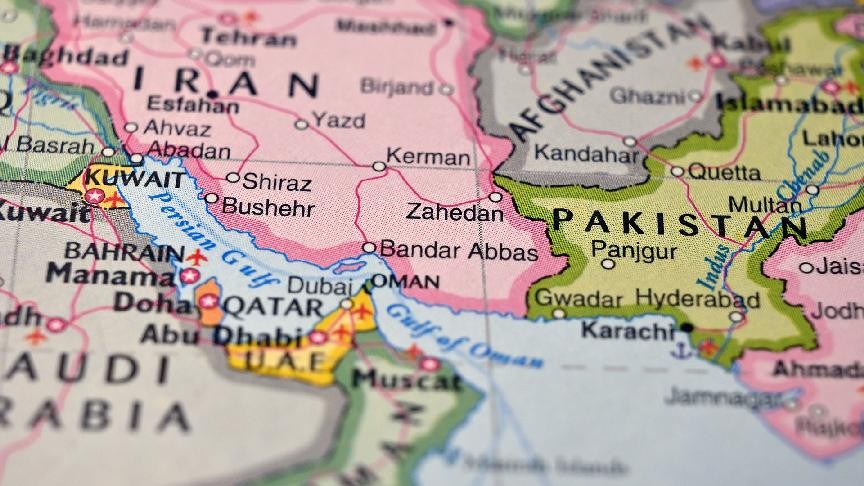

A STEADY flow of previously stranded vessels has begun leaving the Middle East Gulf over the past three weeks, marking a new phase in transits through the Strait of Hormuz.
Nearly 40 non‑Iranian‑linked ships have exited during this period, bringing the number of “escapees” to 142 since March.
The rise in departures comes amid quiet coordination between some ship operators and US naval forces, which are offering limited security assurances. While the US is not publicly providing escorts, several owners are submitting transit plans through the Naval Cooperation and Guidance for Shipping (NCAGS) office in Bahrain, knowing that the US Navy is, in some cases, providing “overwatch”. Lloyd’s List understands this includes informal assurances that US forces will intercept incoming threats, however the precise details of any rules of engagement are not clear.
Transit decisions remain solely with ship operators, industry operators report, and movements are not being centrally coordinated. Many recent departures have been conducted with AIS and other transmitters switched off and radar used sparingly — a practice that regional security officials warn poses significant navigational risks.
Despite this, the number of vessels choosing to leave the MEG continues to rise.
Lloyd’s List Intelligence data shows that since the US and Israel began strikes on Iran, 46 bulk carriers, 28 crude tankers, 19 gas carriers, 19 product tankers and 15 containerships have departed the MEG. Half of the eastbound transits were conducted with Automatic Identification System enabled, and 51 vessels used the Iranian traffic system, indicating coordination with the sanctioned PGSA. The remainder sailed “dark”.
Earlier in the conflict, departures came in sporadic bursts. Between April 13 and 19, for example, 23 stranded ships exited — the highest weekly total since the war began — as owners rushed to move during a brief ceasefire between the US and Iran. That week saw vessels affiliated with 12 countries depart, including three MSC containerships that transited dark.
The past three weeks, however, have brought a more consistent pattern of exits.
Risk Intelligence’s Dirk Siebels attributes this to operators having more time to prepare and to expanded bilateral negotiations between Iran and governments — particularly in Asia — to secure safe passage. Iraq, Pakistan, Japan, China, India, Oman and Malaysia have all negotiated some form of transit arrangement.
Many vessels not covered by diplomatic agreements continue to pay transit fees, though the amounts have fallen sharply from the initial $1m–$2m reportedly demanded early in the crisis. Current rates are understood to be up to $120,000 for bulk carriers and $160,000 for tankers, depending on vessel type, cargo and nationality. Details remain opaque due to the risk of US sanctions.
Ships now exiting with US support are not paying fees or coordinating with Iran. Instead, they are hugging the Omani coast to avoid Iranian mines, with US forces ready to intervene if necessary.
“Though US forces are not escorting, we continue to communicate and coordinate with commercial ships seeking to freely and safely transit the Strait of Hormuz,” US Central Command spokesperson Captain Tim Hawkins said on Monday.
Despite growing confidence among some owners, security risks remain high. Control Risks director Cormac Mc Garry said most industry contacts still consider the strait too dangerous. “There is a growing acceptance that this will persist for many more months,” he said, adding that operators are exploring ways to reduce the cost of stalled operations — none of which involve sending vessels through the strait.
Chinese and Greek vessels dominate recent exits
Over the past three months, 34 of the vessels leaving the MEG were affiliated with Chinese companies, 21 with Greek firms, 15 with UAE operators and nine with Indian interests. Chinese‑linked ships account for nearly a quarter of all exits since March 1.
Last week alone, two Cosco-operated general cargoships — Da Cai Yun (IMO: 9451367)and Da Zi Yun (IMO: 9451305) — and the crude tanker Hua Lin Wan (IMO: 9614086) departed the MEG. Cosco Shipping president Lin Ji told Lloyd’s List in May that the company was working through “relevant channels” to withdraw its remaining vessels.
Other notable departures include the Japanese VLCC Idemitsu Maru (IMO: 9334210), which exited via the Iranian traffic system on April 28, and Oldendorff’s Sarah Oldendorff (IMO: 9490258), which sailed dark on May 27. Qatar’s LPG carrier Al Kharaitiyat (IMO: 9397327) transited on May 9 using the Iranian system before discharging in Karachi.
May traffic through Hormuz hits new lows
Despite the uptick in exits, overall traffic through the Strait of Hormuz fell to its lowest level since the crisis began. After dropping from 64 to 37 transits the previous week, last week saw 38 vessels pass through the strait, 22 of them unrelated to Iranian trade.
In total, 182 vessels transited Hormuz in May — a 42% decline from April’s 313 and below March’s 200. Of these, 96 (53%) were not linked to Iranian trade, up from 20% in March and 34% in April. This indicates that while the absolute number of non‑Iranian vessels fell, their share of total traffic increased.
For the first time, dark transits outnumbered traceable ones: 95 of May’s 182 transits were conducted with AIS disabled.