
THE question of whether to impose fees on vessels transiting the Strait of Malacca and Singapore has resurfaced at a regional maritime conference this week.
The discussion underscores a persistent debate among the three littoral states over how best to fund the maintenance of this critical shipping corridor, and comes amid heightened global attention on freedom of navigation through maritime chokepoints following the recent disruptions in the Strait of Hormuz.
Speaking at the 11th International Conference on the Strait of Malacca in Kuala Lumpur, Dato’ Captain K. Subramaniam, general manager of Port Klang Authority and a distinguished fellow at the Maritime Institute of Malaysia (MIMA), proposed establishing a permanent fund financed by a levy on trade passing through the straits.
“Maintaining the straits is getting more challenging. We need more funds,” he said, questioning whether the current model of voluntary contributions from user states is sustainable.
“Why can’t we have a common fund, similar to the liability funds [established under the International Maritime Organization conventions], such as the International Oil Pollution Compensation Funds?” asked Subramaniam, when moderating a panel session.
The idea of user states sharing the cost of maintaining the straits is not new.
Malaysia pushed for such burden-sharing at the IMO in the 1990s, and the possibility of imposing some form of fee on transiting vessels was discussed at the time.
Constraints under the United Nations Convention on the Law of the Sea governing transit passage through international straits, together with reservations among major user nations, meant those discussions ultimately settled on the current framework of voluntary contributions and co-operative mechanisms rather than a formal toll.
The most specific proposal came from the user side. In 2007, Japan’s Nippon Foundation put a figure on it at a symposium in Kuala Lumpur: a contribution based on deadweight tonne, which its former chairman Yohei Sasakawa said would raise $40m a year and “eliminate the excessive and unfair burden borne entirely by the littoral states.”
Framed as an appeal to shipowners’ corporate social responsibility — a formulation that avoided the legal difficulty of a compulsory charge — it was not taken up. A MIMA assessment later recorded the industry’s reluctance “to pay for services which they have been enjoying for free.”
Haruhiko Kono, executive director of the Malacca Strait Council in Japan, offered a cautious response during this week’s conference to the levy proposal, suggesting that concrete achievements and system proposals must come before any conceptual discussion of common funds.
“Otherwise, it is not a persuasive argument to the user states,” he said.
The council is a public organisation established in 1969 in Japan with funding support from The Nippon Foundation and related industries. As one of the largest user states, Japan has been a major contributor to the Aids to Navigation Fund and has funded hydrographic surveys and other safety initiatives through the council.
Lloyd’s List understands a levy proposal has already been circulated in regional policy forums earlier this year, though it has not been formally tabled for official discussion.
Malaysian officials have argued that as the number and size of transiting vessels continue to grow, so does the pressure of managing the straits.
Lloyd’s List Intelligence vessel-tracking data shows an average of 4,364 vessels transited the straits each month between January and June. Bulk carriers accounted for 39% of monthly transits on average, followed by containerships at 26% and crude tankers at 11%.
While stopping short of explicitly endorsing the levy proposal, Mohd Fairoz Bin Rozali, Division Director at the Malaysia Marine Department, suggested the door remains open for discussion.
He noted that if Unclos remains unchanged, issues pertaining to shipping levies and common funding “will not progress.” However, he argued that the existing legal framework could be complemented by “practical and adaptable regional arrangements.”
Fairoz proposed that compiling comprehensive data on littoral state investments — including navigational aids, hydrographic surveys and infrastructure — could provide a foundation for future burden-sharing discussions.
“Have we ever thought about what are the top 10 user states passing the Strait of Malacca? If we are able to come up with that figure, perhaps that information could be translated into certain numbers, which could later become a ground for common funding,” he said.
Singapore pushes back
The suggestion met with a firm response from Singapore.
Chua Yeng Hian, Director of Strategy and Policy at the Maritime and Port Authority of Singapore, said the city-state’s position is unequivocal: the straits must remain free and open.
“Categorically, from Singapore’s position, we want to make sure that as a responsible member state, transit passage should be safe, should be open, should be secure,” Chua said, referencing a joint statement issued by the three littoral states last week reaffirming their commitment to keeping the waterway open for international trade.
He acknowledged that funding challenges exist but cautioned against measures that could undermine the straits’ fundamental appeal. “If we are to go against that principle, then the foundation is disrupted,” he said.
Chua did not, however, close off alternatives entirely. “Could there be other mechanisms that are aligned with international rules and regulations?” he said. “It’s something that we can explore.”
Under Unclos, the right of transit passage through straits used for international navigation cannot be impeded, and littoral states are prohibited from imposing fees or tolls on transiting vessels.
The existing Cooperative Mechanism, established by Singapore, Malaysia and Indonesia, supports navigational safety and environmental protection through voluntary contributions to an Aids to Navigation Fund — an arrangement the MPA has previously stressed is “entirely separate from the exercise of transit passage.”
Competitiveness concerns
The proposal also drew opposition from M. Habib Abiyan Dzakwan, a researcher at the Centre for Strategic and International Studies in Indonesia, who argued that any levy could drive traffic toward alternative routes.
“We need not only to keep the straits open, safe and secure, but also competitive and indispensable,” he said. “If we collect more funds from user states, it will give them much more incentive to diversify away from the Strait of Malacca and Singapore.”
He pointed to ongoing investment in Central Asian infrastructure — land corridors and pipelines designed to transport goods and energy between the Middle East, Europe and East Asia — as evidence that alternatives are being actively developed.
The so-called “Malacca Dilemma” — a term coined by Chinese former leader Hu Jintao in 2003 to describe China’s dependence on the chokepoint, through which some 80% of its imported crude passes — has spurred diversification efforts.
The nearest maritime alternatives, the Lombok and Sunda straits, both lie within Indonesian waters, which gives competitiveness arguments a different weight in Jakarta than in Kuala Lumpur.
Chua acknowledged that such diversification is inevitable but argued that maintaining competitiveness is the best defence.
“As long as we keep that advantage up, we are giving others less of a reason to diversify away,” he said, noting that shipping through the straits remains the most cost-efficient option for the vast majority of trade.
The burden-sharing question
The debate partly reflects differing perspectives among the three littoral states on how the economic benefits and administrative burdens of the straits should be distributed.
All three countries bear costs for navigational aids, hydrographic surveys, safety patrols and environmental protection. But Malaysia and Indonesia have long argued that the benefits are unevenly shared.
As the world’s busiest container transhipment hub — handling 44.7m teu in 2025 — and the largest bunkering port, at 56.8m tonnes, Singapore derives substantial commercial gains via vessel handling, bunkering, ship supply, maritime finance, insurance and arbitration services.
Malaysian officials have repeatedly suggested that voluntary financial contributions from user states are insufficient to cover their investments in strait management.
Since 2007, according to MPA Singapore, 15 projects have been initiated through the Project Co-ordination Committee, with the international maritime community contributing around $26m cumulatively to the Aids to Navigation Fund.
Iran’s Hormuz toll casts a shadow
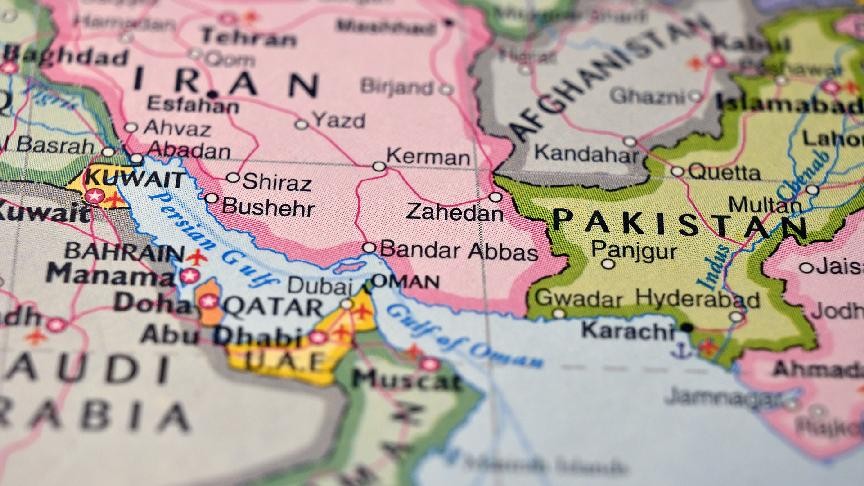
The discussion comes against the backdrop of Iran’s recent introduction of transit fees in the Strait of Hormuz, citing environmental and other services provided to shipping.
In a July statement, MPA sought to clarify the legal framework governing straits used for international navigation, after New York Times and New York Post reports drew comparisons between Hormuz and the Straits of Malacca and Singapore.
The authority reiterated that under Unclos and customary international law, the right of transit passage cannot be hampered, and that the three littoral states do not impose any fees or tolls on transiting vessels.
It also stressed that voluntary contributions to the Aids to Navigation Fund “are entirely separate from the exercise of transit passage and should not be misconstrued as fees, tolls or payment imposed on transiting ships.”
World Shipping Council president Joe Kramek described Iran’s move as a misuse of Unclos Article 43. “If such tolls are allowed to be implemented under an Article 43 regime, we could see them easily propagating and putting all this at risk,” he warned.