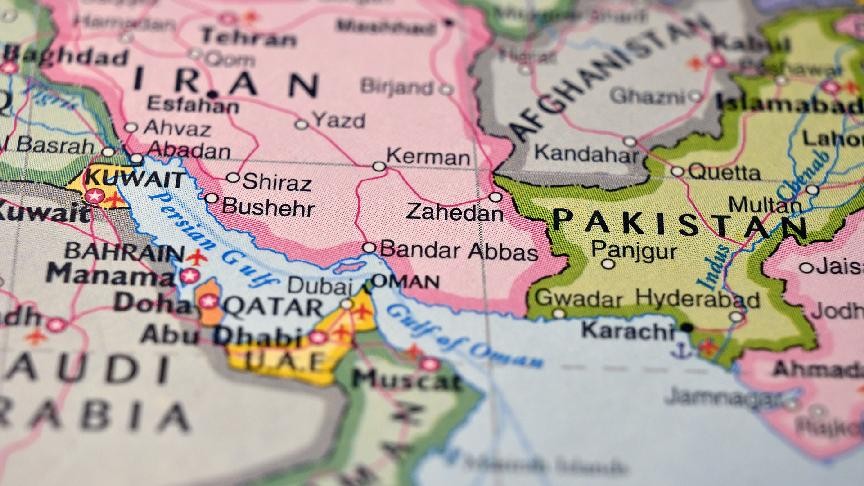

THE maritime security industry failed to warn shipping companies of the risks of a US-Iran war and subsequent Strait of Hormuz closure, according to shipping lawyer Stephen Askins.
The Tatham & Co co-founder, known for securing the release of hostages in prominent kidnapping cases, took issue with security companies’ advice to clients in the run-up to the Third Gulf War.
In a speech to a Nautical Institute security conference on Tuesday, Askins asked: “How in the world did we get to the situation where we have 10,000 crew members trapped in the Middle East Gulf?
“What I suggest is there’s been a collective failure of what I call commercial intelligence — a complete failure to take on board the lessons of the Red Sea.”
Askins cited one advisory from February 20, which said it was “unlikely that Iran would establish a formal blockade of the straits against all shipping”.
An advisory by a different, also unnamed company said it was “highly unlikely” that Iran would attempt to block the Strait of Hormuz.
But Askins said there were “huge signals” building before February 28, when the US and Israel started bombing Iran.
He said a shipowner told him he had ordered two tankers to stop loading and leave the Middle East Gulf on February 27, after reading a Guardian article about the British government evacuating its Tehran embassy
But the industry failed to react in time to avoid the Hormuz closure and underestimated how much a shooting war would limit its access to insurance, Askins said.
“Somehow we missed it,” he said. “We did not take steps to prevent vessels going into the Middle East Gulf in a 10-day period where we could see clearly what Trump was going to do.”
He said security companies such as UK-based Ambrey had grown from providing armed guards to deter Somali pirates, to advising on the risk of Houthi attacks in the Red Sea – usually by finding possible links to Israel, the US, or other countries the Houthis considered enemies.
But he suggested the Iran conflict was a far more complicated job and questioned whether such companies were up to the task.
Askins asked: “Why is it that so much of what we do — including the war risks Joint Warfare Committee at Lloyd’s... why is so much in the hands of very few commercial risk analysts?”
Askins said he didn’t know the answer and didn’t comment on what an alternative system would look like.
“But if we reached a conclusion that there was some kind of commercial intelligence failure, then we have to work out how we do it better,” he said.
Shipowner’s final decision
Security industry representatives in the audience disputed the idea that commercial risk analysts held such sway over shipowner decisions, saying it was up to clients to make final security decisions at the end of the day.
Risk Intelligence chief executive Hans Tino Hansen said: “It’s not only about the information, but it’s also about the ability and the willingness to actually act upon it.”
Hansen said one of Risk Intelligence’s biggest clients had dismissed as alarmist a February 18 alert from the company, about higher risk of a military attack on Iran.
Ambrey chief commercial officer Joshua Hutchinson told Lloyd’s List the scale of US and Israeli attacks on February 28 far outweighed any previous military action against Iran’s nuclear programme.
Hutchinson said analysts had anticipated any US or Israeli action would be similar in scope to the Twelve-Day War of June 2025. They expected a proportionate Iranian response could include seizures, detentions, or even a partial closure of the Strait of Hormuz.
But what happened instead was “unprecedented”, with Iran’s Supreme Leader killed in the opening wave of air attacks.
“Governments around the world were caught flat-footed, including Middle East Gulf states allied to the US, the UK and our European counterparts,” Hutchinson said.
“The level of violence fell outside the worst-case scenarios of both governments and the commercial sector, not least because significant progress in US-Iranian nuclear talks was reported on February 26.”
Hutchinson said the maritime security industry provided “critical support to vessel owners and masters, who make daily decisions about how to keep their ships and crews safe”, such as port risk assessments, and advice on the safest drifting areas within the MEG.
He said owners had continued to operate despite recommendations the strait may be disrupted.
“While the maritime security industry provides risk advice, the ultimate decision lies with the vessel owner, who must balance commercial, operational and security factors in their decision-making,” he said.