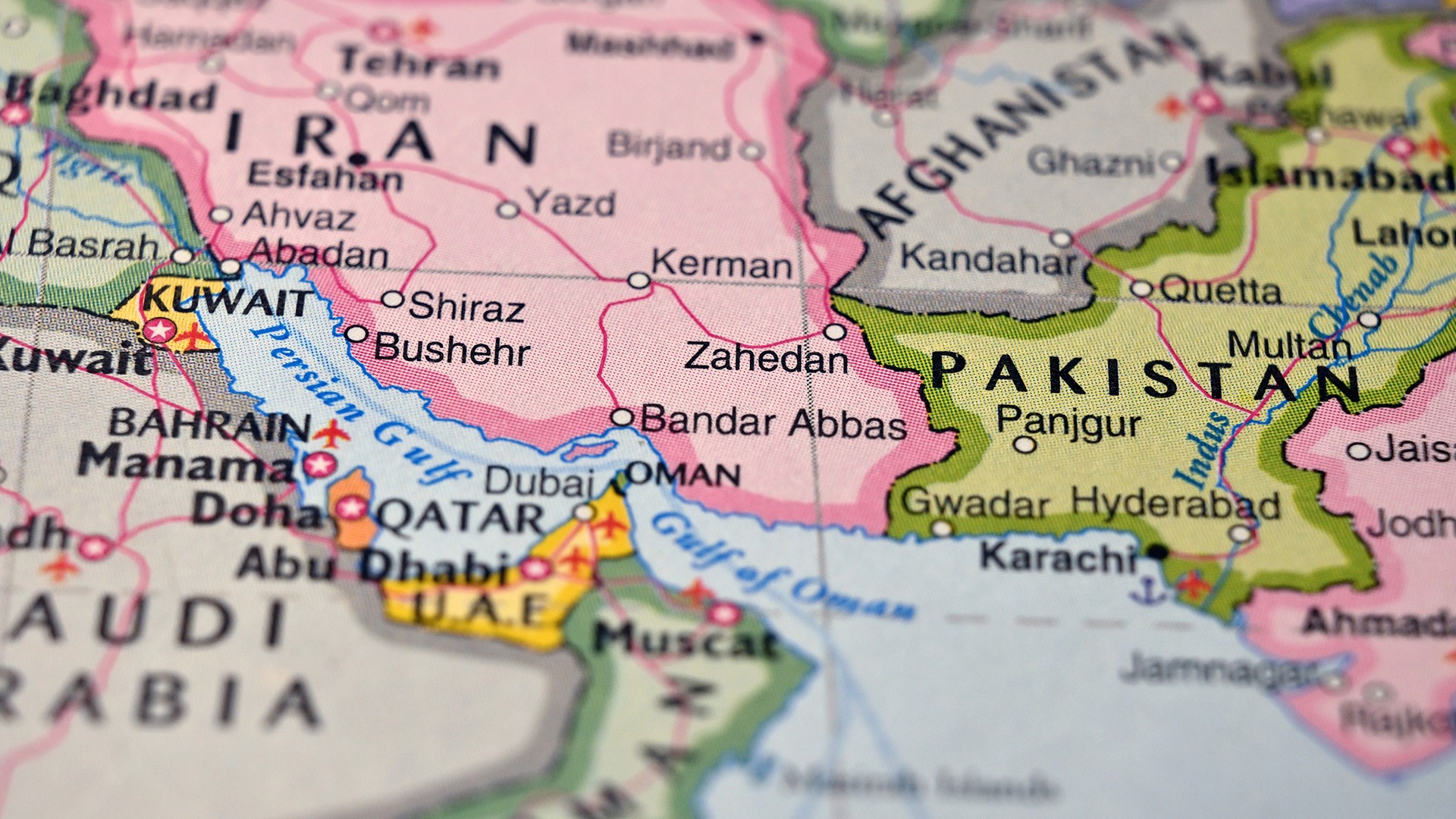
IRAN’S Islamic Revolutionary Guard Corps Navy has warned vessels against using any non-Iran-approved transit routes in the Strait of Hormuz, apparently rejecting an International Maritime Organization-backed evacuation plan that offers ships a southern passage coordinated by Oman and the US.
The IRGC navy said in a statement via official media Sepah News on Wednesday that “some authorities” announced a new route for Hormuz transit “without notifying or coordinating with” Iran, though it didn’t name any entity involved in what it called an “unacceptable and completely dangerous” plan.
“The only permitted route for passage through the Strait of Hormuz is the routes announced by the Islamic Republic of Iran,” the IRGC said, adding that vessel movements outside those routes were “highly dangerous and prohibited”.
It said that coordination with the IRGC Navy via VHF Channel 16 was “mandatory” and that “action will be taken against violating vessels”.
The warning from IRGC appears to contradict with a plan announced by IMO on Tuesday to evacuate more than 11,000 seafarers stranded in the Middle East Gulf after the agency said it had secured “necessary safety guarantees”. The conflicting instructions create new uncertainty for ships weighing how to leave the MEG safely.
IMO Secretary-General Arsenio Dominguez said in a statement that the evacuation would be carried out in cooperation with Iran, Oman, other coastal states, the United States and the maritime industry.
To support these operations, the IMO has “thoroughly verified the conditions for safe navigation”, Dominguez said. “We remain fully committed to ensuring the safety of seafarers and the continuity of global trade.”
Operational guidance issued by the IMO says vessels should not move until contacted through a coordinated mechanism involving UKMTO and the MICA Centre in order to mitigate mine-related risks.
Once contacted directly, ships may proceed to a designated waiting area and then choose either a northern route through Iranian waters or a southern route through Oman and US-coordinated waters, after conducting their own risk assessment.
The existing traffic separation scheme “should not be used due to the reported presence of mines”, IMO said, adding that it doesn’t directly coordinate routing and maritime safety.
In a separate statement, Oman confirmed a southern route through the Strait of Hormuz would be available for vessels seeking to transit eastbound out of the Middle East Gulf. For the Oman-authorised eastbound transit route, vessels are told to contact radio station “A4N” on VHF Channel 16 before reaching the first waypoint.
According to Lloyd’s List Intelligence tracking data, traceable traffic through Hormuz jumped 270% to 119 transits last week after a Memorandum of Understanding between Washington and Tehran partially reopened the waterway amid volatile political negotiations.
The surge in transits, however, masks the confused, two-tier system now operating in the strait, which remains split between the Iran-controlled northern route and a US-protected southern “highway”, with the pre-war routes, rendered unusable because of the risk of mines, separating them.
The figure, though sharply higher than that of recent weeks, is still far below the 700 recorded during the same period last year.
The immediate risk of an outright closure of the Strait of Hormuz, or military confrontation there, has “substantially” decreased, but recent diplomatic developments should not be read as a return to unrestricted commercial navigation, security consultancy Marisks said Wednesday in a client update.
The IRGC has reportedly stopped issuing new transit permits for the Tehran-controlled northern corridor, with only vessels that already hold permission, or those directly selected by Iranian authorities, currently being allowed to pass, according to Marisks.
The southern route through Omani territorial waters, meanwhile, is being widely used by vessels with no Iranian affiliation, Marisks said, adding that those ships are transiting without incident under US coordination so far.
Lloyd’s List has approached the IMO for comment.
IRGC rejects alternative Hormuz evacuation routes not approved by Iran
IRGC warns ships against using any Strait of Hormuz route not approved by Iran, calling alternative passages ‘highly dangerous and prohibited’

Source: Lloyd's List

Related articles
Sea newsMalaysia forum floats transit levy for Strait of Malacca as funding debate resurfaces
Sea newsSaudi Arabia pushes naval alliance as Red Sea risks spread north

Sea newsUS-Iran escalation shatters fragile Hormuz recovery after missile strike on tankers
Sea newsMaritime security industry accused of ‘complete failure’ in lead-up to Iran war
Sea newsHormuz exit will bring ‘huge’ navigational challenges
Sea newsShipping risks mount despite US-Iran agreement to pause strikes