
THE Strait of Hormuz edges closer to resuming free navigation as the US and Iran sign the long-awaited memorandum of understanding, promising to begin lifting military measures choking transits across the strait immediately. But questions linger over long-term outcome.
A senior US official read out the 14-point MoU to reporters on a conference call this morning. This MoU allows both sides a period of 60 days to negotiate a final deal. The White House has yet to release a copy of the MoU at the time of writing. Vice President JD Vance has said that a text of the MoU will be released by Friday at the latest.
As such, the points highlighted in this report are based on transcriptions by various news outlets.
Demilitarising the strait
The first point of the MoU details commitments by both the US and Iran to permanently and immediately cease “military operations on all fronts, including in Lebanon, and undertake from now on not to initiate any war or any military operation against each other, and to refrain from the threat or use of force against each other, and ensuring the territorial integrity and sovereignty of Lebanon.”
A permanent deal is slated to be reached within a maximum of 60 days under point three.
Point four states that the US will “begin the removal of its naval blockade and any disturbances or impediments against the Islamic Republic of Iran and will fully end the naval blockade within 30 days.” Iran will aid in restoring traffic to pre-war levels during this period. This begins immediately following the signing of the MoU.
The US will also look to remove its forces from Iran’s proximity within 30 days after the final deal has been signed.
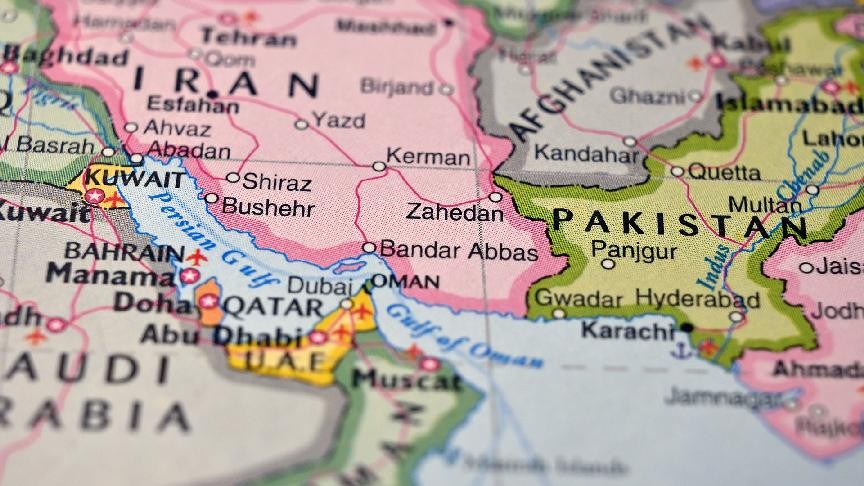
Under point five, Iran has committed to arranging for “the safe passage of commercial vessels with no charge for 60 days” from the MoU signing. This will be “only from the Persian Gulf to the Sea of Oman and vice versa.”
Commercial vessel transits are to begin immediately upon the signing of the MoU. Iran will need to begin demining and removing other technical and military obstacles within 30 days of the MoU signing.
Iran and Oman are also slated to conduct discussions to “define the future administration and maritime services in the Strait of Hormuz in discussion with other Middle East Gulf states in line with the applicable international law and the sovereign rights of coastal states of the Strait of Hormuz.”
This raises questions about freedom of navigation through the strait. Previous reports indicate that Iran was looking to establish tolls together with Oman. But the MoU states that these discussions must be in line with international law, the United Nations Convention on the Law of the Sea could apply.
Iranian media had previously reported that these tolls could be in the form of environmental fees or military fees for protecting vessels transiting the strait. It remains unclear if this would violate UNCLOS or not.
A shipbroker told Lloyd’s List that for this mechanism to work, Iran will need regional partners to be in agreement or else “vessels could hug coastlines of other Gulf states, effectively evading tolls by Iran.” This could dampen vessel traffic as “vessels are forced to transit through a narrower path,” the shipbroker added.
Sanctions and waivers
The US has committed to lifting primary and secondary sanctions on Iran under point seven of the agreement, including “United Nations Security Council resolutions, IAEA Board of Governors resolutions, and all unilateral US sanctions.” No time frame was provided.
The US Treasury is also committed to issuing waivers on exports of “Iranian crude oil, petroleum products and derivatives, and all associated services, including banking transactions, insurances, transportation, etc.” under point 10 of the MoU. This is effective immediately upon signing the MoU.
The US treasury issued a waiver of sanctions on Iranian crude oil at the start of the conflict in March for 30 days. This waiver was not renewed, unlike waivers on Russian barrels.
No new sanctions will be issued by either side under point nine, with Iran committing to not procure or develop nuclear weapons in point eight.
The US will also unfreeze Iran’s frozen assets and restricted funds with the MoU implemented under point 11.
Negotiations on the final deal will be subject to points one, four, five, 10 and 11 being followed, with the final deal being endorsed by a binding United Nations Security Council resolution.