NEARLY 150 commercial vessels remain stranded in the Middle East Gulf more than five months after the US-Israeli campaign against Iran upended regional shipping. For the seafarers trapped on board, the conflict has meant months of uncertainty, repeated security threats and life-or-death decisions over whether to stay or leave.
Lloyd’s List Intelligence data shows 149 non-sanctioned cargo-carrying vessels above 10,000 dwt remain inside the MEG. Of those, 73 entered shortly before hostilities erupted and have now been unable to leave for more than five months. Another 65 vessels that entered in the days following the June 17 Memorandum of Understanding between Washington and Tehran also remain stranded. Eleven have entered outside of that period and remain in the gulf.
For crews, the prolonged disruption has transformed what should have been routine voyages into an extended stint in one of the world’s most volatile maritime theatres.
The data also shows that 40 vessels have switched off their AIS signals while operating in the MEG over the past two months, making their locations impossible to track. Such behaviour has become increasingly common in conflict zones, including the Black Sea and Red Sea.
Around 80 of the vessels still trapped are tankers, down from the almost 200 that were stuck when the conflict first erupted. Some ships managed to leave shortly before or after the signing of the MOU, when traffic through the Strait of Hormuz briefly began to flow more freely, although movements remained well below pre-war levels.
For the seafarers stranded aboard vessels inside the gulf, the experience was anything but routine.
Soner, an engineer working for a Turkish operator, sailed into the MEG on a bulk carrier before the war started. He asked that his surname remained private.
It took about 10 days to discharge the bulker’s cargo at a Saudi Arabian port, during which time the conflict between the US, Israel and Iran began.
Soner and his fellow crew members waited to assess whether it was safe to transit. They received their answer when commercial vessels began coming under attack.
Instead, their vessel’s operator found alternative employment for the bulker, and sent it to load cargo in Qatar. That assignment took 15 days.
“By the time they told us to leave the gulf via Hormuz, it was mid-April,” Soner said.
As Soner’s vessel began heading towards the SOH, the Islamic Revolutionary Guard Corps was instructing vessels to transit via the so-called Tehran Toll Booth, around Larak Island while staying within Iranian territorial waters.
Further attacks on commercial vessels once again halted Soner and his crew’s plans to leave the region, forcing them to reconsider their options.
“In the beginning of June, we gathered and decided to ask the operators if we could leave the vessel and go back home to Türkiye,” he told Lloyd’s List.
“The company did not want us to leave the vessel, but we wrote official petitions and requests so they had to let us go.
“They found some seafarers from India, who we heard would work anywhere in the world.” They flew to Dubai and Soner’s crew handed the vessel over.
The MOU was signed shortly after Soner and his crew left, and the bulker sailed to Sri Lanka. But the operator was not happy with the new crew as they lacked experience.
“They sent them back to India and found new crew members from Türkiye,” he said.
“We said we would work in the vessel again as it [had] exited the dangerous waters, but the company said that they would not like to work with us anymore.
“The company won’t go in the Middle East Gulf anymore,” Soner said.
“They have decided not to renew contracts with the seafarers who signed the petitions like me.”
Volkan Gokcen is a captain working for a mainstream Indian shipping company.
“I was working outside of the gulf when my company called me and asked if I would work on a product tanker that was stuck in the gulf,” he told Lloyds List.
“The master and some other crew members wanted to leave, and they were in need of another master who would accept going there.”
Gokcen went to Dubai to embark on the ship while others who were there for months left.
“We have a basic pay and then extra payments as long as you work on board. When the crew leaves the vessel, they are back to their basic pay.
“But I didn’t accept the job for extra payment. I was already working on board and getting paid, and they didn’t offer me any increase to go to the Middle East Gulf,” said Gokcen.
“I accepted it because they don’t have enough experienced captains for these kinds of product tankers and somebody had to be there with the remaining crew, and the maritime trade should keep going.”
Just hours after leaving anchorage off Jebel Ali, vessels waiting behind them came under missile attack.
Following the signing of the MOU in mid-June, the tanker was finally cleared to transit the Strait of Hormuz and exit the gulf via the southern route through Omani waters.
Eight of his crew members refused to make the transit, fearing the vessel could come under attack. The company repatriated them and flew in replacements via Dubai, requiring the new arrivals to sign letters accepting responsibility for the risks associated with the voyage.
They left through Omani waters on July 1. While they were transiting, the vessels right behind them were hailed by the IRGC.
The vessels were warned that transiting the strait required the permission of the Sepah navy, the IRGC’s naval arm.
In audio shared with Lloyd’s List, a chilling threat can be heard: a “beautiful” missile would be waiting for any vessel that ignored this warning.
“We sailed through the strait at night. We didn’t have any proper GPS because of GNSS interference — I was doing everything manually,” Gokcen said.
“All the other ships were dark as they turned off their lights, so it was very difficult and dangerous, and we were aware of the drone attacks as well.”
He ordered the crew to move to a protected area of the ship, but the chief officer and several others insisted on staying by his side.
With only three helmets and bulletproof vests available, Gokcen allowed two of them to remain on the bridge with him. Fully aware of what could lie ahead, the three men paused to take a selfie and send it to their loved ones before continuing the transit.
Gokcen relayed his vessel’s position to the US navy every hour until it reached Fujairah in the UAE. Yet for all the monitoring and support, the burden of navigating the crisis felt profoundly lonely.
“If you are in the Middle East Gulf where it is very difficult to find drinkable water, enough food and protection equipment, and you are asked to transit, it is not about the operators anymore.
“All the burden and responsibility is on our shoulders, we have to decide and act on everything.”
Five months on, the MEG conflict remains far from over for the crews still trapped inside it. Their stories are a reminder that while geopolitical crises are often discussed in terms of ships and trade flows, the greatest risks are ultimately borne by those on board.
Stuck in the Middle East Gulf: seafarers reveal the human cost of a shipping war
Hundreds of vessels remain stranded in the region, including more than 70 that have been stuck for months
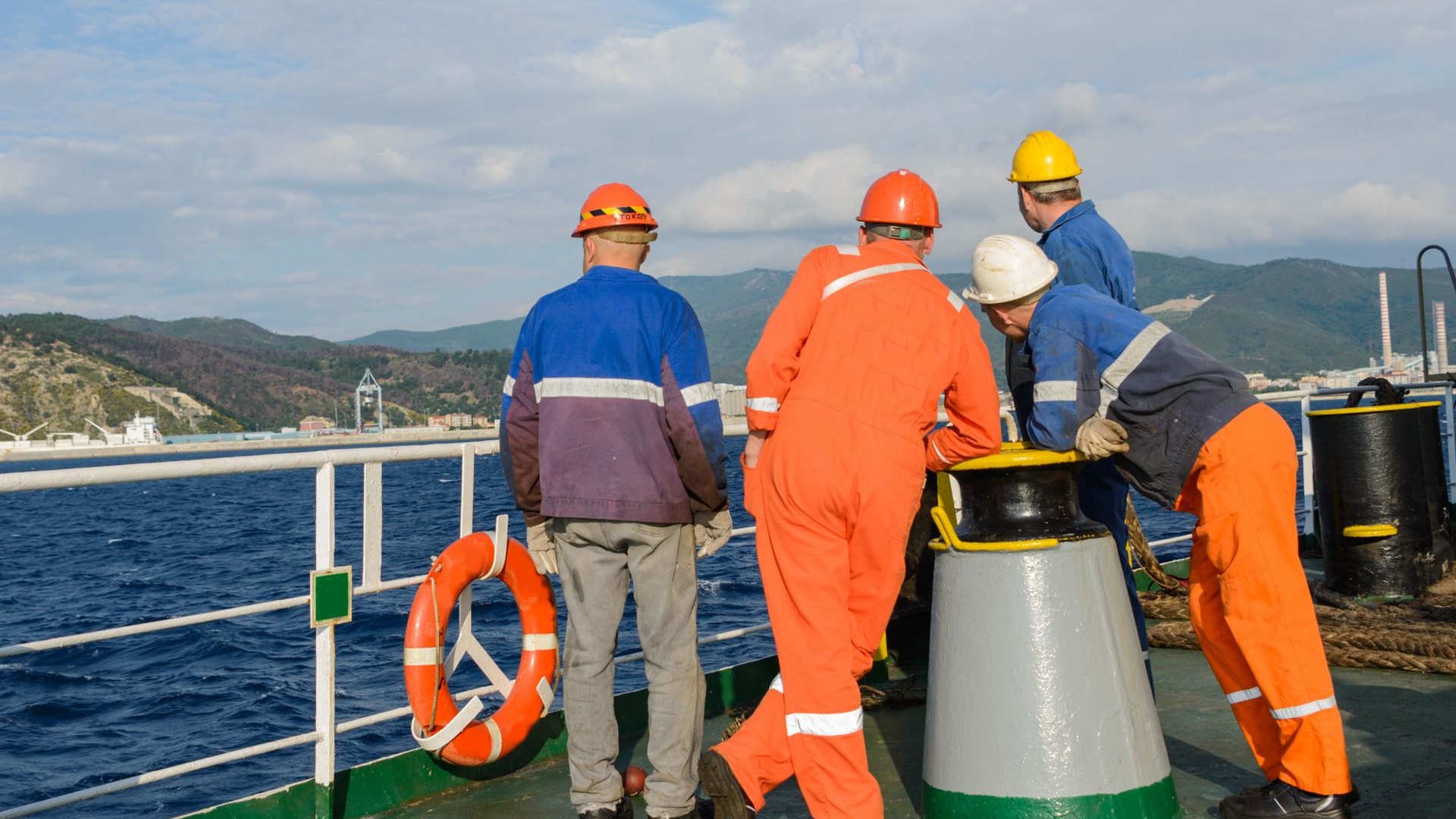

Source: Lloyd's List

Related articles
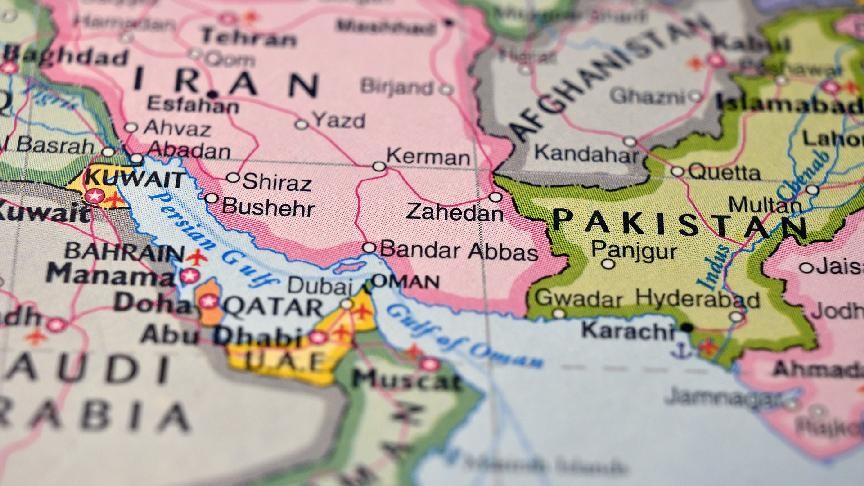
Sea newsFreedom of navigation under fire as Iran strikes tanker in Hormuz
Sea newsGolden Week schedules push capacity across major trade lanes to record levels
Sea newsGerman port workers begin vote on indefinite strike action after pay offer rejection
Sea newsSuez Canal recovery gathers pace as Hormuz disruption boosts traffic, but Bab el Mandeb revival stalls
Sea newsRed Sea and Hormuz crises reshape thinking on port resilience
Sea newsDP World spending $100m a month keeping dormant Jebel Ali port going