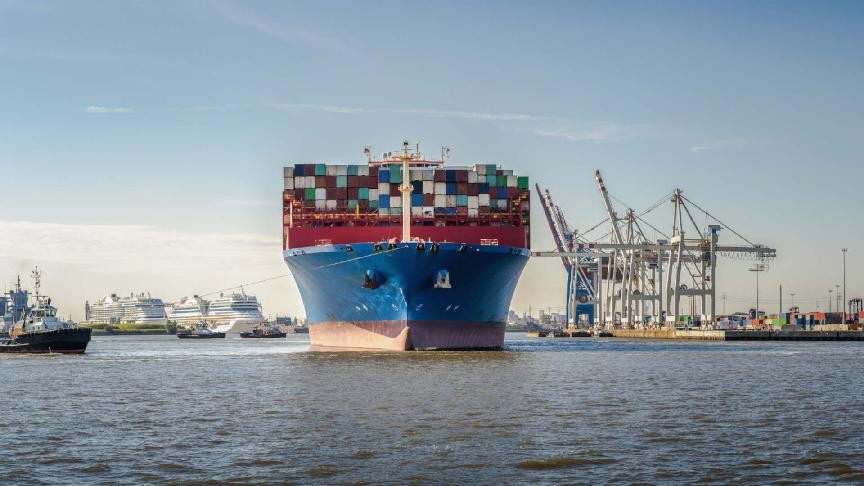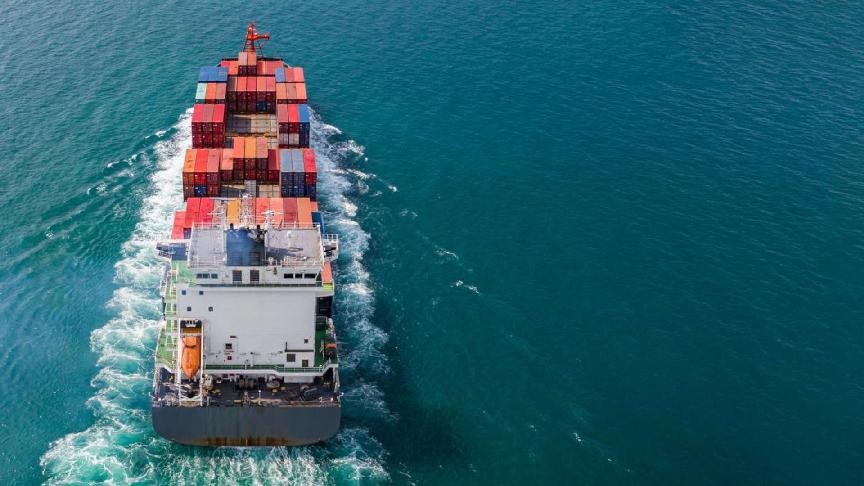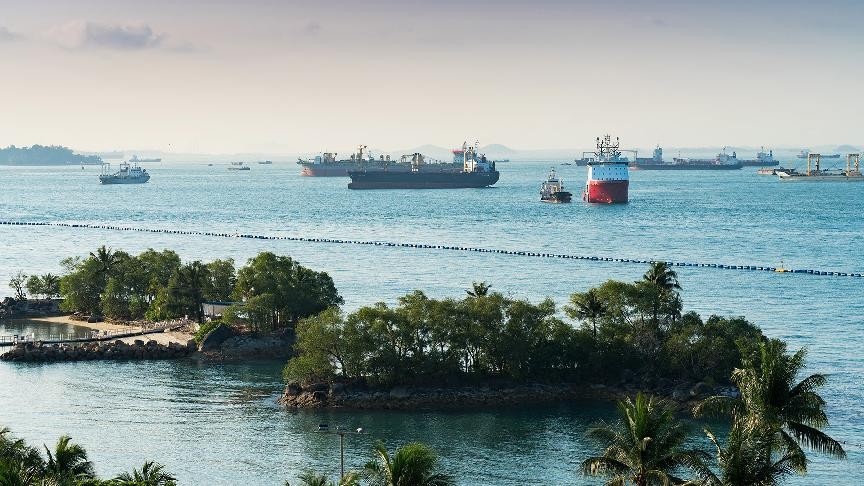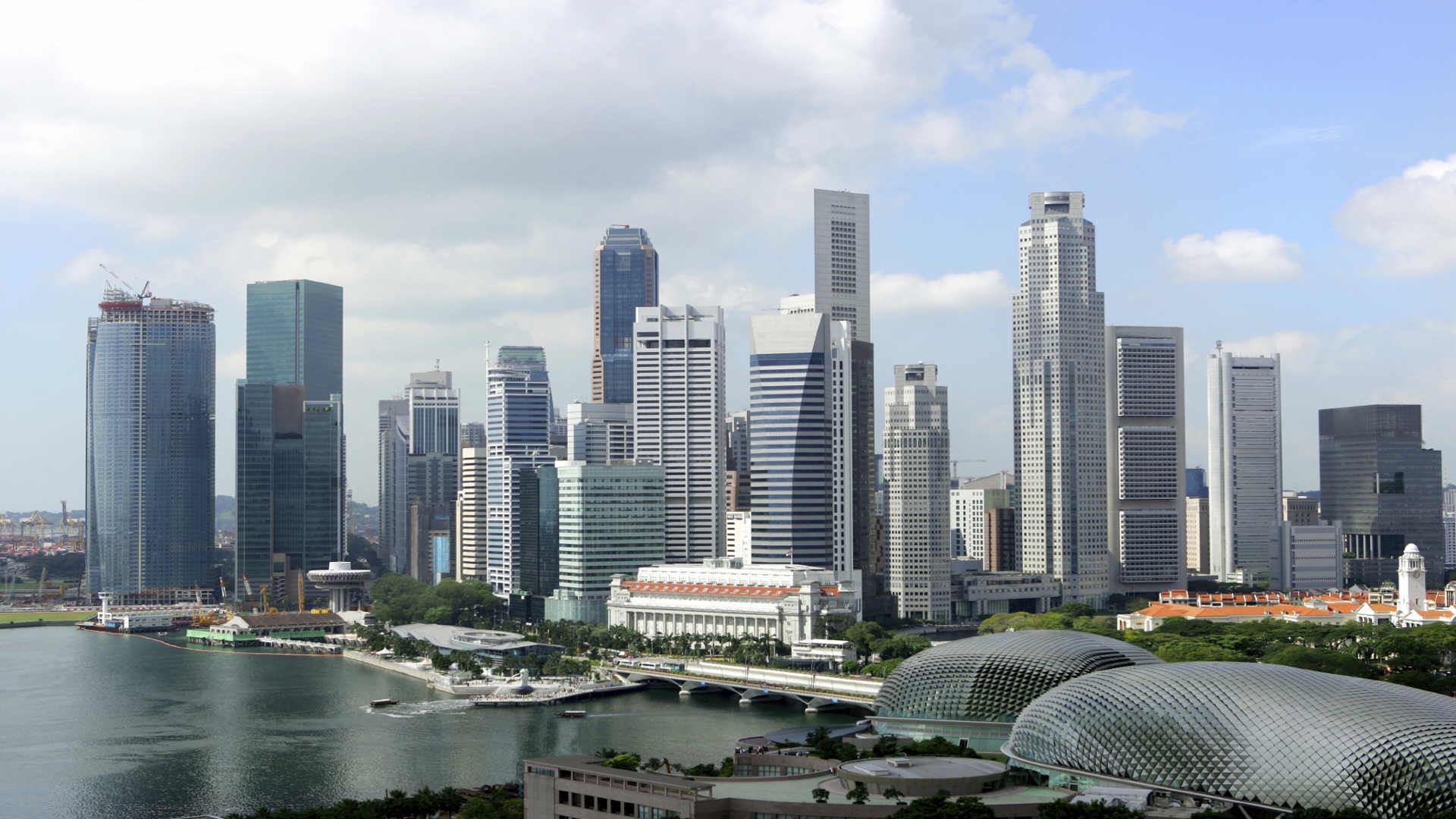

IF THERE is one place that captures the state of global trade in the mid-2020s, it is Singapore. Its trade flows chart the forces reshaping supply chains, from rising protectionism to the spread of multi-leg routeing across Southeast Asia.
Earlier this month, the world’s premier transhipment hub reported its fastest box volume growth in more than a decade, rising 8.7% to a record 44.7m teu in 2025.
To put that into perspective, that additional throughput alone was roughly equivalent to the annual volume of Felixstowe, the UK’s largest port.
But the headline number tells only part of the story.
Volume growth in Singapore, where transhipment accounts for up to 85% of container throughput, reflects several converging forces: the escalation of tariff regimes, particularly between the US and China; the prolonged disruption of the Red Sea corridor; the rapid rise of new manufacturing hubs beyond China; and shifts in China’s own export strategy.
Each of these dynamics has reshaped global shipping in distinct ways, and Singapore’s trade flows capture them with unusual clarity.
Tariffs redraw the map
The most visible changes stem from the tariff upheaval reshaping Asia’s shipping landscape. As US-China tensions intensified, exporters moved beyond short-term workarounds and began redesigning their supply chains altogether. Direct sailings from Chinese ports to Western markets are increasingly giving way to multi-step routes through Southeast Asia, where transhipment, consolidation or light processing provide alternative pathways that help exporters navigate tariff pressures.
Singapore’s inbound flows make this shift unmistakable. Vessel capacity from China, which is by far the largest source of ships calling at the port and more than four times that of second-ranked Thailand, rose another 14.5% last year, adding more than 3m teu on top of 2024’s 5.6% increase, according to Lloyd’s List Intelligence vessel-tracking data.
The more revealing question is where this cargo goes next. LLI data indicates the most visible example lies in transhipment to Vietnam and similarly India. Vessel capacity from Singapore to Vietnam grew nearly 70% in 2025, while flows to India more than doubled from 1.6m teu to 3.3m teu.
This surge, at least in part, reflects China’s rapid diversification of its production footprint under the ‘China+1’ strategy. To reduce risk, contain costs and mitigate tariff pressures, Chinese manufacturers have poured billions of dollars into expanding assembly and processing operations into neighbouring markets.
Vietnam has emerged as a natural extension of China’s manufacturing network. Not only is it close geographically, but is tightly integrated into regional supply chains. India, by contrast, represents a vast and rapidly expanding alternative, as a market capable of supporting both large-scale production and rising domestic consumption.
These developments align with broader structural shifts highlighted in a December 2025 briefing by Oxford Economics. Emerging manufacturing hubs such as India and Vietnam require substantial volumes of components, machinery and industrial inputs — goods that China is uniquely positioned to supply.
Intermediate products already accounted for 40% of China’s exports in 2024, up from 27% in 2010, and tariff pressures are accelerating this trend. This strategy continues to provide Chinese exporters with a strong growth platform while gradually reducing their exposure to the US market.
However, this is not solely a China-driven story. The surge in outbound trade flows from Vietnam and India — which rose at levels comparable to their inbound vessel calls, according to LLI data, emphasises the rapid expansion of their own export bases.
Both countries are scaling up manufacturing and production under domestic industrial policies and are positioning themselves as credible, reliable export hubs on the global stage, and as meaningful alternatives to China.
Tariff driven detours push more US cargo through Singapore
Like their Chinese counterparts, US exporters are also adjusting to the increasingly heated tariff environment. As tariffs raise the cost of Chinese goods shipped directly into the US, some American firms are turning to indirect routes to reduce their exposure. Once again, Singapore’s vessel movements offer a useful window into these shifting trade behaviours.
Vessels with a US origin entering Singapore surged by nearly 30%, according to LLI figures. This rise is far from accidental. American exporters are increasingly adopting the same tactics as Asian shippers, routeing goods into Southeast Asia before moving them onward, including into China, through more flexible and less politically sensitive channels.
Singapore fits this profile well. Its decision not to impose reciprocal tariffs on US imports, despite, of course, its own exports facing a 10% baseline tariff in the US, has further strengthened its appeal as an entry point for American shippers seeking to avoid additional costs.
Similarly, LLI data shows clear evidence of an increase in cargoes heading to the US via Singapore, rising more than 10% last year on 2024 levels.
While much of these cargoes will come from new markets, as again US importers look to limit exposure to the heavily-tariffed Chinese goods. There is evidence that Chinese cargoes are still getting through via multi-leg channels.
Analysis conducted by Oxford Economics last year on exports out of China, which included 1,200 product categories paired with US imports of the same goods from key third country partners, showed a “high degree of overlap” between these flows which strongly suggests that some Chinese goods are being rerouted through third countries with minimal value added.
“Southeast Asia and India sit at the centre of this pattern, benefiting from lower tariffs and well-established trade links with the US,” said the London-based economic advisory group.
Carrier consolidation and Cape diversions push more direct traffic into Singapore’s orbit
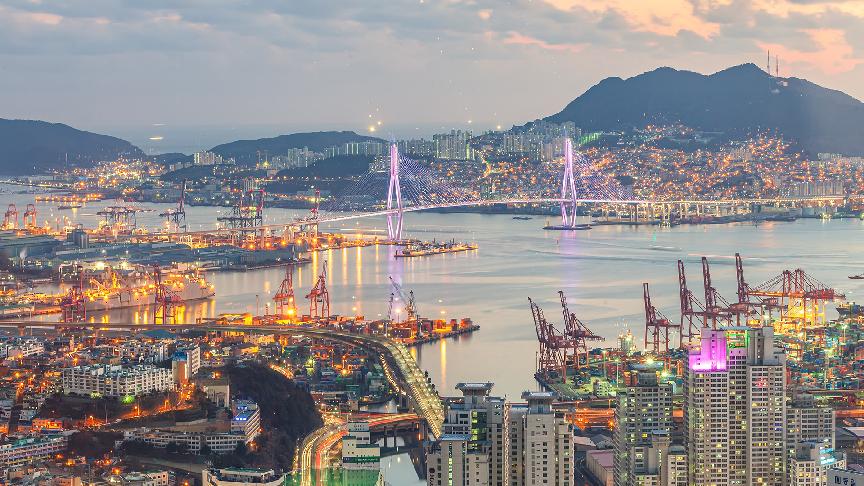
While tariff-driven trade shifts continue to shape Singapore’s traffic flows, the most pronounced drop in vessel arrivals comes from countries hosting rival transhipment hubs. LLI data shows significant declines in calls to and from Hong Kong, Malaysia, and South Korea, with the latter two home to major hubs Port Klang and Busan.
This reflects a broader strategic shift among carriers, who have been consolidating alliance calls and reducing port dispersion. Singapore has emerged as a clear beneficiary.
According to Alphaliner, it gained six additional weekly Asia-North Europe calls following major alliance reshuffles planned for 2025. New rotations from the Gemini Cooperation and the Premier Alliance have strengthened Singapore’s connectivity and reinforced its position as the region’s leading hub and spoke operation.
These alliance changes have coincided with the operational fallout from the Red Sea crisis. Singapore, together with Port Klang and Indonesia’s Tanjung Pelepas for example, has become a critical re-handling node where carriers load and reload containers to maintain regional coverage as vessels take longer detours around the Cape of Good Hope.
Singapore’s trade flows again highlight how the industry has adapted. The largest increases in vessel traffic, by both origin and destination, stem directly from Red Sea rerouting.
Belgium, France, and the UK, for example, have seen major shifts in annual calls due to the rise of direct Asia-Europe sailings, which have eliminated traditional waypoint or transhipment stops in the Red Sea and Mediterranean on both headhaul and backhaul legs.
Similarly, Ghana has recorded a surge in direct calls as it emerges as a waypoint in its own right on Asia-Europe routes. Additional significant increases have come from Pakistan, Saudi Arabia, and Oman, all of which have seen substantial growth in calls into Singapore over the past year as carriers work to maintain eastbound coverage from the Red Sea, the Middle East Gulf, and the wider Indian subcontinent.
A reconfigured trade landscape
Taken together, these patterns signal the emergence of a more decentralised trade geography.
Goods are moving along longer, more intricate routes, and Singapore has become a pivotal node in this evolving system.
Protectionism has forced exporters to rethink their networks, driving up intra-Asian flows and elevating the role of transhipment. What is emerging goes well beyond short-term adjustments. The consolidation of alliance calls and Singapore’s reinforced hub status point to supply chains quietly rewiring themselves.
As production footprints spread across South Asia, the shifts visible in Singapore’s vessel traffic data look increasingly like early evidence of deeper structural change, where gradual re-anchoring of manufacturing and sourcing will shape regional trade for years.
Ultimately, Singapore’s trade flows offer more than a snapshot of port activity. They map how global commerce is adapting to a world where politics reshapes routes, chokepoints redefine networks, and Southeast Asia becomes the new centre of gravity for redistributed trade. In this sense, Singapore is not merely absorbing global upheaval, it is the clearest window into how the modern trading system is being rebuilt in real time.