CHINA’S Pinglu Canal is more than a shortcut to the sea. Its strategic goal is to redraw southwest China’s supply chains around Southeast Asia.
The canal, in Guangxi, allows cargo to move between Asean and China’s southwestern hinterland by water, in larger quantity and at lower cost. Shippers will no longer have to send as much freight east by road or rail to ports in neighbouring Guangdong before reaching the sea.
Official estimates put the annual saving in transport costs at more than $770m. That looks like a mediocre return on an investment of $10.8bn. Nor would all the traffic be new. Some would merely be diverted from Guangdong’s ports. However, Beijing’s bigger wager is that cheaper logistics will change where companies source materials, build factories and sell their products. Simply put, China wants Pinglu Canal to carry new supply chains, not just old cargo.
The canal should aim to “complement rather than compete”, said Liu Yunzhong, a researcher at the Development Research Centre of the State Council.
Pinglu needs to “avoid head-to-head competition” with Guangdong, but target Asean markets with a focus on intermediate goods and basic raw materials, Liu told state-backed China Youth Daily.
Car manufacturing offers a glimpse of this model. SAIC-GM-Wuling is transporting vehicle components from its headquarter city of Liuzhou through the canal to Can Tho port in Vietnam, linking Chinese suppliers more efficiently with factories abroad, according to China Economic Herald.
Such intermediate-goods trade can bind southwest China more deeply into regional manufacturing networks, while Guangdong retains its strengths in global shipping.
Petrochemicals may show the pattern more clearly, as eastern China is retreating from bulk basic chemicals and the capacity is moving west, stage by stage, state-backed China Petroleum News reported.
“Asean countries are racing to rebuild their industries, and their demand for chemicals is rising fast,” Zhao Shuangliang, a professor of chemical engineering at Guangxi University, told the outlet.
Zhao said inland petrochemical firms should study what each Asean market buys, as those demands will pull southwest Chinese chemical industry forward.
“Asean as a whole takes a lot of the basics, sulphuric acid and methanol,” Zhao added. “Vietnam and Indonesia are building their electric-vehicle industries in a hurry, and want battery materials. Thailand’s appetite is for fine chemicals such as engineering plastics, coatings.”
The trade could also run in the opposite direction. The canal may reinforce a division of labour in which Southeast Asia supplies raw materials and China processes them, with Vietnamese woodchips, Thai rubber and Malaysian palm oil flowing north to factories in China’s southwestern hinterland, according to the Beijing News.
Yet the canal’s immediate challenge is one of sequencing. Cargo volumes, feeder infrastructure and operating services must develop together, said Lei Xiaohua, deputy director of the Institute of Southeast Asian Studies at the Guangxi Academy of Social Sciences.
“Switching transport mode means rebuilding a supply chain,” Lei told the Beijing News. “What Guangxi most needs to build up is its capacity to organise modern supply chains aimed at Asean.”
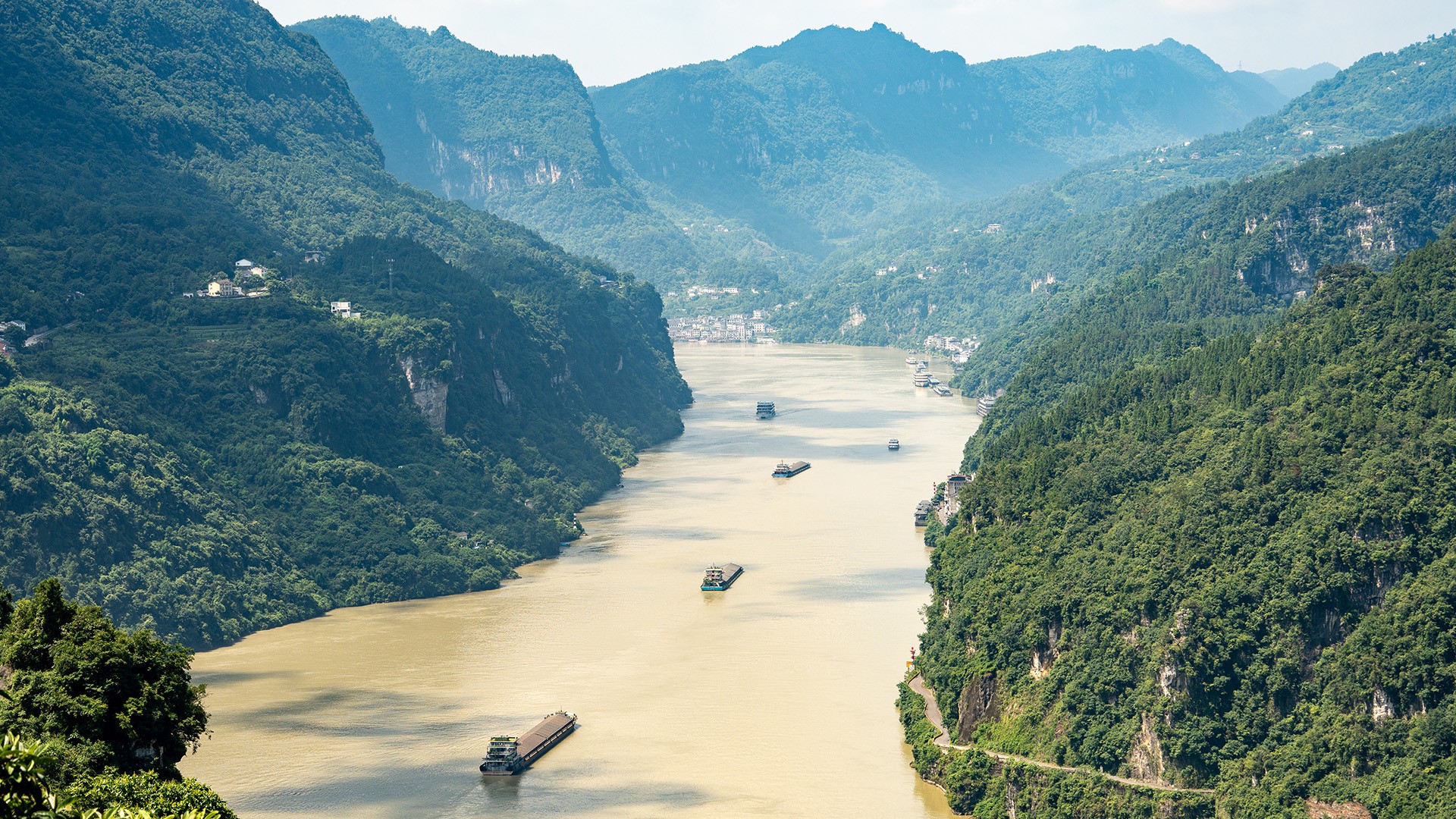
China’s Pinglu canal is meant to carry new supply chains, not just old cargo
The waterway’s bigger goal is to redraw southwest China’s supply chains around Southeast Asia

Source: Lloyd's List

Related articles
Sea newsAsian bunker supplies tighten with reduced Northeast Asian availability
Sea newsChina plus one strategy hangs in the balance amid US-Vietnam tariff discussions
Sea newsPort call data reveals China’s trade pivot as tariffs turbocharge rerouting

Sea newsChina military drills around Taiwan test shipping’s nerves

Sea newsDiversification key to avoiding overreliance on China

Sea newsNavigating the Dragon Year: Can shipping stay the course on China?