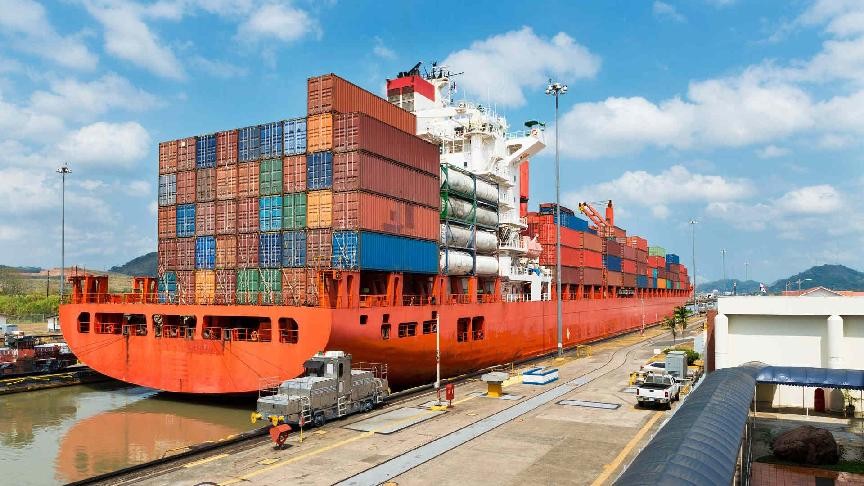

TRAFFIC in October and November, the first two months of the Panama Canal’s fiscal year, has been healthy but not unusually strong, in line with performance in FY25.
Meanwhile, the US political tone towards Panama continues to be ominous, as has been the case since the election of US President Donald Trump.
The Trump administration released its new National Security Strategy on December 4, which implies more strong-arm tactics to come.
Trump has reembraced the Monroe Doctrine, which declares the Western Hemisphere to be America’s “sphere of influence”. The NSS mandates a “Trump Corollary” to the Monroe Doctrine.
Several of the assertions in the NSS would seem to apply to Panama’s canal and ports.
The administration said it will “deny non-hemispheric competitors the ability…to own or control strategically vital assets” and will pressure Western Hemisphere nations “through various means” to “discourage their collaboration with others”.
The NSS said “the terms of our alliances…must be contingent on winding down adversarial outside influence” related to “ports and key infrastructure”.
The NNS further asserted that US companies should receive special preference on contracts. “The terms of our agreements…must be sole-source contracts for our companies,” it said.
An early test will be in Panama, where the Panama Canal Authority (ACP) is in the process of preparing concession packages for two new terminals, one on the Pacific side of the canal and one on the Atlantic, as well as a bidding process for the construction of an Atlantic-to-Pacific liquefied petroleum gas pipeline.
Coinciding with the NSS release, the US is being much more forceful in Latin America, positioning the USS Gerald R. Ford aircraft carrier in the Caribbean, conducting controversial lethal strikes against boats off Venezuela that were allegedly carrying drugs, and seizing a crude tanker off Venezuela on Wednesday.
Panama Canal transit trends
There was an average of 33.5 transits per day through both locks of the Panama Canal in November, according to the data released by the ACP*. This is relatively unchanged from the previous two months.
Transits have still not rebounded to levels recorded prior to the drought, which heavily curtailed transits in the fourth quarter of 2023 and first half of 2024.
Average transits per day last month were down 8% versus average transits in November 2022, pre-drought.
While the average daily transits for the Panama Canal where steady in November versus October, there were fluctuations for individual segments in each locks system.
There were 273 transits through the larger neopanamax in November, down 11% month on month (m/m).
The decline was primarily driven by lower transits of very large gas carriers, which were down 17% m/m.
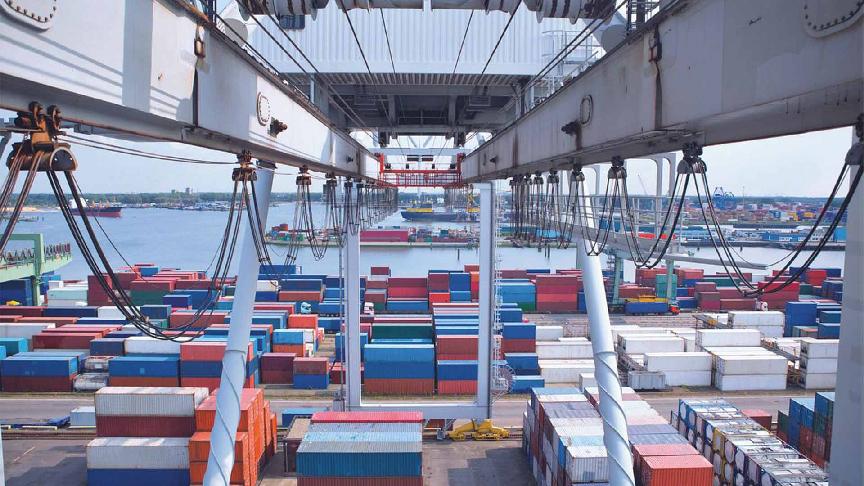
There were 173 containership transits through neopanamax locks last month, flat (down one transit) versus the month before.
Despite tariffs instituted by Trump, neopanamax containership transits have remained strong. Tariffs have negatively affected US businesses, yet containerised cargo continues to flow.
There were 733 transits through the panamax locks in November, relatively unchanged — up 1.5% m/m. Gains for chemical tankers, ro-ros and crude and product tankers were counterbalanced by declines for bulkers, containerships, refrigerated vessels and general cargo ships.
Dry bulk has traditionally been the most important segment for the panamax locks, and there are some challenges ahead, as China buying of US soyabeans remains muted despite the much-ballyhooed trade deal.
Dry bulk carrier usage of both locks of the Panama Canal remains well below pre-drought levels, primarily due to much lower bulker usage of the neopanamax locks.
In November, there were 176 bulker transits, 173 through the panamax locks and three through the neopanamax locks. That is down 25% from November 2022, pre-drought, when there was a total of 235 bulker transits, 182 via the panamax locks and 53 via the neopanamax locks.
* The ACP does not release monthly transit statistics by segment or statistics on total monthly transits. It releases fiscal-year-to-date transits by segment and fiscal-year-to-date total transits since October, the beginning of its fiscal year. Lloyd’s List calculates monthly transits by comparing each month’s cumulative fiscal-year-to-date statistics.