RAPID improvements in battery energy density, falling battery costs and advances in safety systems are making battery-electric and hybrid propulsion increasingly attractive to shipowners seeking to cut emissions. Yet despite the growing momentum, the battery revolution remains largely a shortsea story, with significant barriers still limiting deepsea application.
Orders for vessels capable of charging in port and using stored electrical energy at sea have increased steadily, particularly in the ferry sector. Battery propulsion is also gaining traction among containership operators on feeder, inland and regional routes, where relatively short distances make full-electric operation commercially and technically viable.
But as battery technology advances, vessels are getting larger and power requirements are rising. The question now is whether the same progress can eventually make battery propulsion viable for deepsea trades.
In June, Norwegian shipowner Eitzen Group ordered the largest fully electric containerships contracted to date from China’s Zhejiang Dongpeng Shiprepair & Building Co. Both vessels are expected to be delivered in 2028.
Each 900 teu vessel will feature battery packs able to provide a range of up to 600 nautical miles, which would allow them to operate between Oslo and Hamburg. The order represents a significant step up from the first generation of electric containerships.
The first was the 120 teu Yara Birkeland (IMO: 9865049), which entered commercial operation in 2022 and was designed to carry fertiliser between the Norwegian ports of Herøya and Brevik. Its battery system powers two azimuth propulsion pods, giving the 80-metre vessel a maximum speed of 10 knots.
The vessel was initially operated by a crew of three but has ultimately been designed for autonomous operation. The Norwegian government provided NOK133.6m ($13.9m) towards construction, some one-third of the total cost.
China is rapidly expanding the number of battery-electric containerships. Earlier this year, Ningbo Ocean Shipping took delivery of two 740 teu electric containerships from Jiangxi Jiangxin Shipbuilding. A total of 10 containerised battery units give the vessels a maximum speed of 11.5 knots on inland liner services.
In July, Cosco confirmed an order for a 240 teu fully-electric inland containership, following an earlier order for a 540 teu coastal electric vessel and the introduction of two 700 teu electric river-sea boxships during 2024.
In September, the world’s largest fully electric ship entered service when the 130 m long ro-pax China Zorrilla (IMO: 9916678) began operations between Buenos Aires, Argentina, and Colonia in Uruguay.
Built by Australia’s Incat for Buquebus, the aluminium hull vessel can carry 2,100 passengers and 225 cars at a service speed of 25 knots. Its integrated electric propulsion system was supplied by Wärtsilä.
Integrators such as Wärtsilä supply all of the equipment required for electric propulsion, which includes generators, propulsion converters, transformers, electric motors and energy and power management systems, with the exception of the batteries.
Wärtsilä is also supplying fully integrated electric propulsion and waterjet systems for three high-speed catamarans, which will have the largest battery-power output so far. These are also being built by Incat, for Danish ferry operator Molslinjen.
The 129 m long ships will each carry up to 1,500 passengers and 500 cars and will operate at speeds of up to 40 knots on the Kattegat route. They are scheduled to enter service during 2027 and 2028.
The projects demonstrate how rapidly the technology is moving into larger and more demanding applications.
Wärtsilä director of ship electrification solutions Torsten Bussow said one of the most important developments over the past decade has been the increase in vessel size and, consequently, the amount of electrical power required.
The Molslinjen ferries, for example, have a power requirement of 54 MWh, while the Eitzen containership order represents another significant increase in scale.
“In the last 10 years battery energy density has improved by 5% each year while there has been a technology switch from Nickel Manganese Cobalt batteries to LFP batteries,” Bussow said.
The shift towards lithium iron phosphate (LFP) batteries is particularly important for marine applications.
LFP is generally regarded as offering better thermal stability and a lower risk of thermal runaway than some other lithium-ion chemistries. It can also withstand more charge and discharge cycles, giving it a potentially longer operating life.
That makes the chemistry attractive for ships, where batteries can be subjected to frequent charging and discharging throughout their operating lives.
DNV principal consultant for alternative fuels Hilde Bølstad said battery chemistry is increasingly being tailored to individual vessel operating profiles rather than shipowners simply selecting from a limited range of standard products.
“Of the three dominating chemistries LFP is becoming more popular as there are advantages in terms of depth of charge and longer life span,” she said.
Bussow said the growing number of marine battery applications, particularly in ferries, is also changing the economics of vessel design.
“There is no reason to build a ferry with a conventional engine any more for shortsea service,” he said.
The technology is now expanding into other shortsea applications, including general cargoships and small bulk carriers operating on fixed routes.
The technical ability to install large battery packs is only one part of the equation. Fully electric vessels require reliable access to shore power, meaning charging infrastructure has to develop in tandem.
The EU’s Fit for 55 programme, including requirements for ports to provide shore-side electricity, should help accelerate such development. But increasingly large electric ships will put significant demands on local electricity grids.
A vessel arriving at a small port and connecting a battery pack of hundreds of megawatt-hours can create a substantial spike in electricity demand.
As ships become larger, the question is therefore no longer simply whether a battery can power the vessel. It is whether the port, local grid and charging infrastructure can deliver the required energy quickly enough.
Battery production itself is also undergoing a major transformation.
Bølstad said one of the most significant developments has been the growing influence of Chinese battery manufacturers, following advances by major land-based producers such as BYD and their move into marine applications.
Battery-pack architecture has also evolved, allowing individual cells and modules to be stacked more efficiently while also enabling designers to make better use of the limited space available aboard ships.
The rapid expansion of lithium-ion batteries has also been accompanied by major advances in marine safety.
Lithium-ion batteries contain an electrolyte that can be flammable, toxic and corrosive. If a cell overheats, it can release gases and, at sufficiently high temperatures, those gases can ignite.
The principal objective is therefore to prevent overheating in the first place, through battery management systems, cooling arrangements and controls that prevent overcharging or excessive temperatures.
The industry has also learned from a series of battery incidents aboard Scandinavian ferries.
DNV introduced functional battery rules in 2012, when only a handful of electric vessels were being planned. Fire-safety requirements followed in 2015, with further changes made as experience progressed.
A 2019 battery fire aboard the Norwegian coastal ferry Ytterøyningen highlighted the danger of residual gases. Although the initial fire was extinguished, an explosion occurred 12 hours later after gases accumulated inside the vessel.
The incident prompted further changes to class guidance, including requirements concerning battery ventilation and firefighting methods.
A second incident occurred in 2021 aboard the ferry Brim in Oslofjord, where batteries caught fire but did not subsequently explode. A Norwegian investigation contributed to further recommendations for battery safety.
DNV senior principal engineer Sverre Eriksen said class rules have expanded dramatically as the technology has developed.
“As DNV was early to the market we got a leading market position,” he said. “Class rules have expanded from five pages 10 years ago to 30 pages today.”
Development is continuing, with new battery-related requirements being introduced as experience with larger installations grows.
Thermal runaway remains one of the most difficult challenges because the battery can effectively sustain its own fire. Consequently, considerable research is focused on cell packaging, cooling, ventilation and fire-extinguishing systems, including water-mist technologies.
Nevertheless, lithium-ion technology remains the dominant option as there is currently no obvious alternative offering the same combination of energy density, cost and availability.
The falling cost of batteries is another factor in its favour. Battery production is increasingly concentrated in China, where the enormous scale of the automotive market continues to drive improvements in technology and manufacturing.
More than 99% of battery demand is ultimately linked to land-based applications, meaning marine technology benefits from developments taking place in electric vehicles and other sectors.
Progress has been substantial, but there is still a fundamental physical limitation to expand battery-power to deepsea ships. A fully electric deepsea containership would require an enormous amount of stored energy space.
“If you have a large cargoship crossing the Atlantic then the whole cargo space will be filled with batteries,” Eriksen said. “There is also the question around the enormous charging infrastructure required.”
As a result, fully electric deepsea cargo vessels remain a distant prospect. That does not mean however that batteries do not have a role to play in deepsea shipping.
Hybrid systems are increasingly attractive because they do not have to provide all of a vessel’s propulsion energy. Instead, batteries can be used to reduce the load on engines, supply auxiliary power and manage peak electrical demand.
They can be particularly useful during port operations, when vessels may otherwise need to run auxiliary engines at berth or use large amounts of electric power for bow and stern thrusters.
Bussow expects this market to expand significantly across deepsea vessel sectors, with batteries increasingly being used as part of integrated hybrid power systems to optimise fuel consumption.
The longer-term question is what happens if battery energy density continues to improve.
Possibilities could eventually include charging while underway, although this remains highly speculative. Offshore wind farms could theoretically become energy hubs for vessels, allowing ships equipped with suitable systems to recharge at sea.
But such concepts remain many years away from commercial deployment.
Eriksen suggested that a more realistic route towards zero-emission deepsea operation could involve combining several technologies rather than relying solely on batteries.
Wind-assisted propulsion, for example, could provide part of the energy required to cross an ocean, while batteries could store energy and handle periods of high power demand.
Such a combination could reduce the amount of energy that needs to be carried as fuel without requiring a ship to devote cargo space capacity to batteries.
The technology has moved from small ferries and pilot projects to large ro-pax vessels, inland containerships and regional feeders. Energy density is improving, costs are falling, safety systems are becoming more sophisticated and battery packs are getting larger.
But the leap from a 600-nautical-mile electric containership to a fully electric vessel crossing the Atlantic is still enormous.
But German cruise shipbuilder Meyer Werft appears to be pushing the boundaries of battery propulsion with its recently unveiled Project Vision, a concept for what would be the world’s first fully battery-electric large cruiseship.
Announced in April, the design aims to cut greenhouse gas emissions by up to 95% compared with conventional cruise vessels. The project is being developed in partnership with Norway’s Corvus Energy, the world’s largest supplier of marine battery systems and a pioneer in electrification for the maritime sector.
The concept reflects how rapidly battery technology has progressed in recent years.
According to Corvus Energy senior vice president of sales Stein Ruben Larsen, the battery installation required for Project Vision would be around 10 times larger than the system supplied for Buquebus’ high-profile China Zorrilla ro-pax vessel. That ship is equipped with a 42 MWh battery system comprising 5,200 battery modules.
“If somebody had said in 2014 that in less than a decade you would deliver 42 MWh of battery power, nobody would have believed you,” Larsen said, noting that the largest vessels require around 40 times more energy than the first battery-powered ships supplied by Corvus more than a decade ago.
Project Vision is designed to operate on typical European cruise routes using battery power alone. Meyer Werft has highlighted the Barcelona to Civitavecchia route as one example, while pointing to the expected rollout of charging infrastructure at around 100 European ports by 2030.
The shipbuilder has also proposed hybrid variants, enabling longer voyages including transatlantic crossings.
Beyond emissions reductions, battery-electric propulsion offers potential benefits for passenger comfort. Eliminating conventional main engines would significantly reduce onboard noise and vibration levels.
Larsen said improvements in battery technology continue at a rapid pace. Corvus’ latest battery modules require 50% less space than earlier generations for the same power output while he expects energy density in maritime batteries to double by 2036.
Despite the advances, Larsen cautioned that fully battery-powered deepsea vessels remain unlikely in the foreseeable future because of the vast energy requirements involved.
Instead, he expects batteries to play an increasingly important role alongside alternative energy sources.
“Nuclear power will be a solution in the future for deepsea, but it will take a lot of time to develop,” Larsen said.
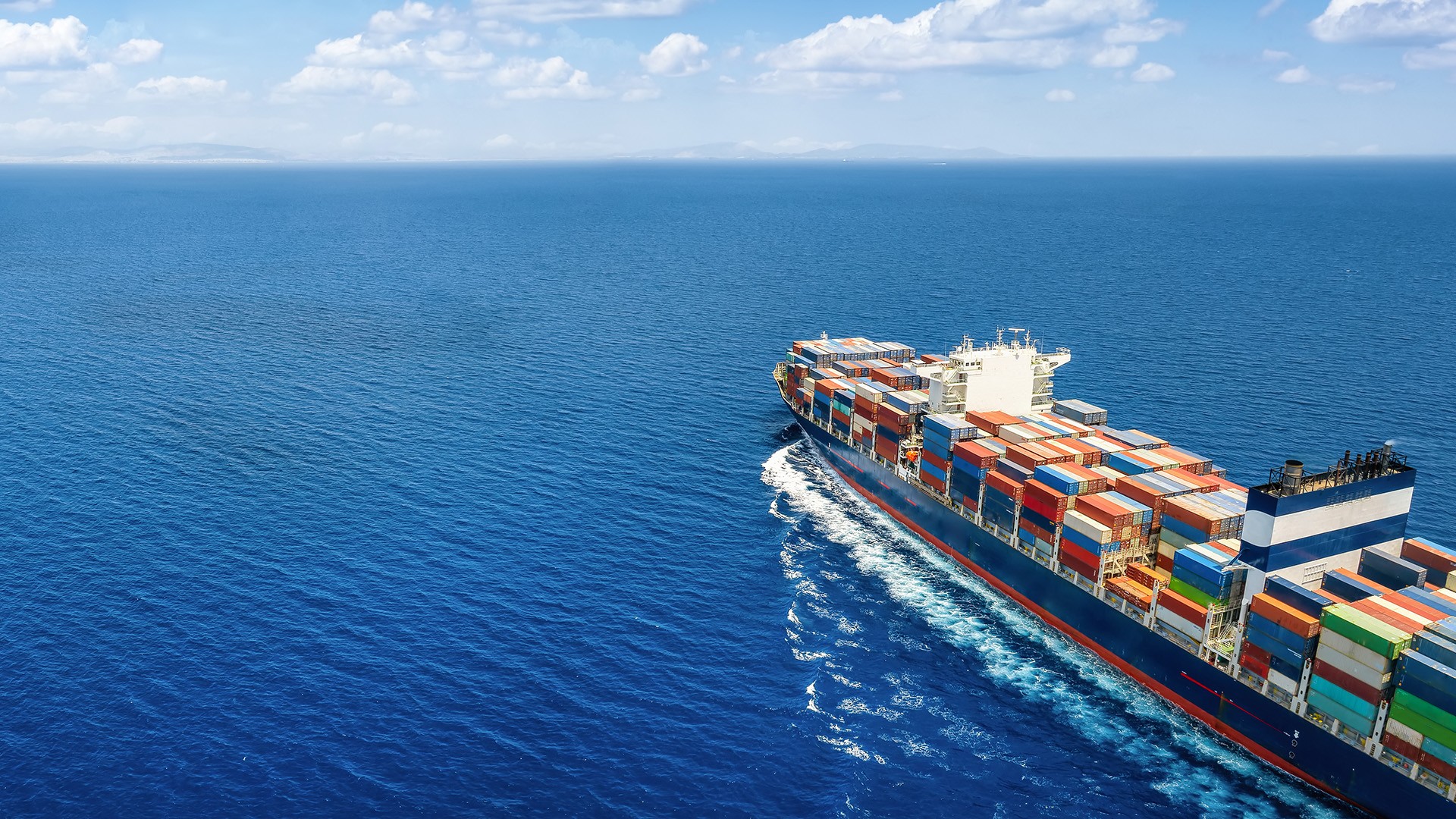
Battery-powered fleet expands as deepsea sector awaits breakthrough
Battery-electric propulsion is rapidly expanding across the maritime sector as battery energy density improves, costs fall and safety systems become more sophisticated

Source: Lloyd's List

Related articles
Sea newsContainer carriers reduce reliance on shared deep-sea networks
Sea newsContainerships continue to dominate alt fuel newbuildings

Sea newsPorts not ready to process captured carbon from shipping

Sea newsPanama ports and trucking continue normal operations after earthquake

Sea newsseaexplorer Schedule Reliability Report – September 2026
Sea newsHormuz ship attacks hit record as Iran broadens campaign against commercial shipping