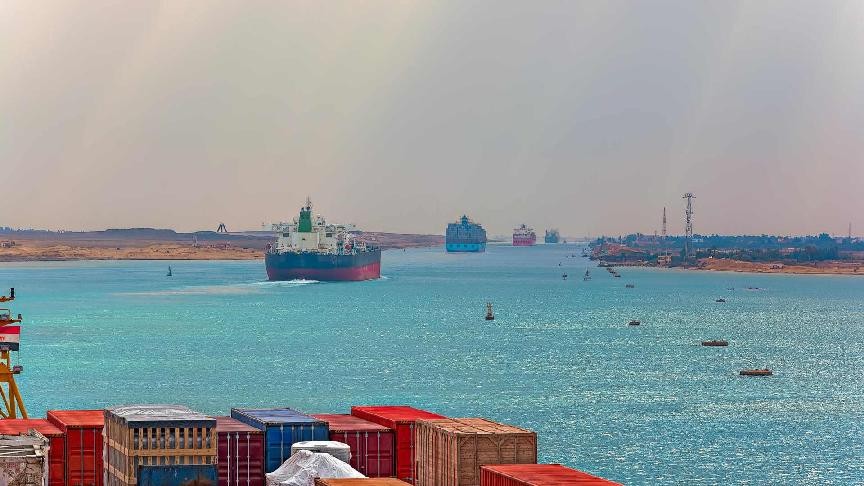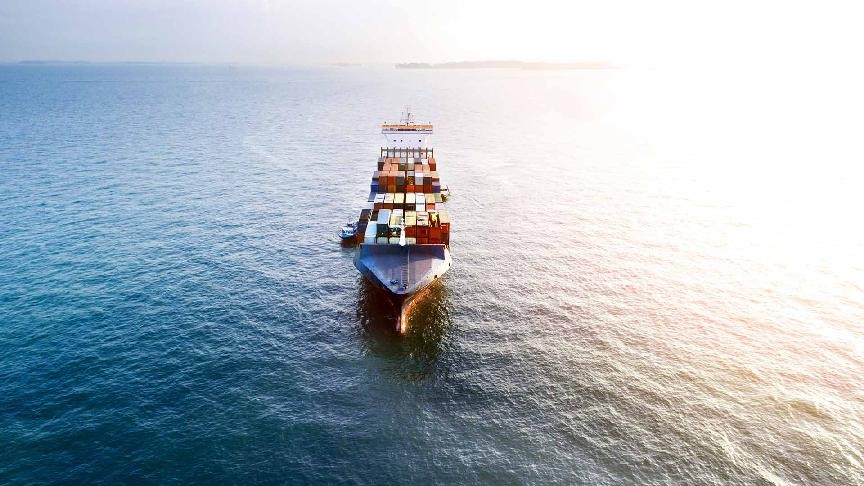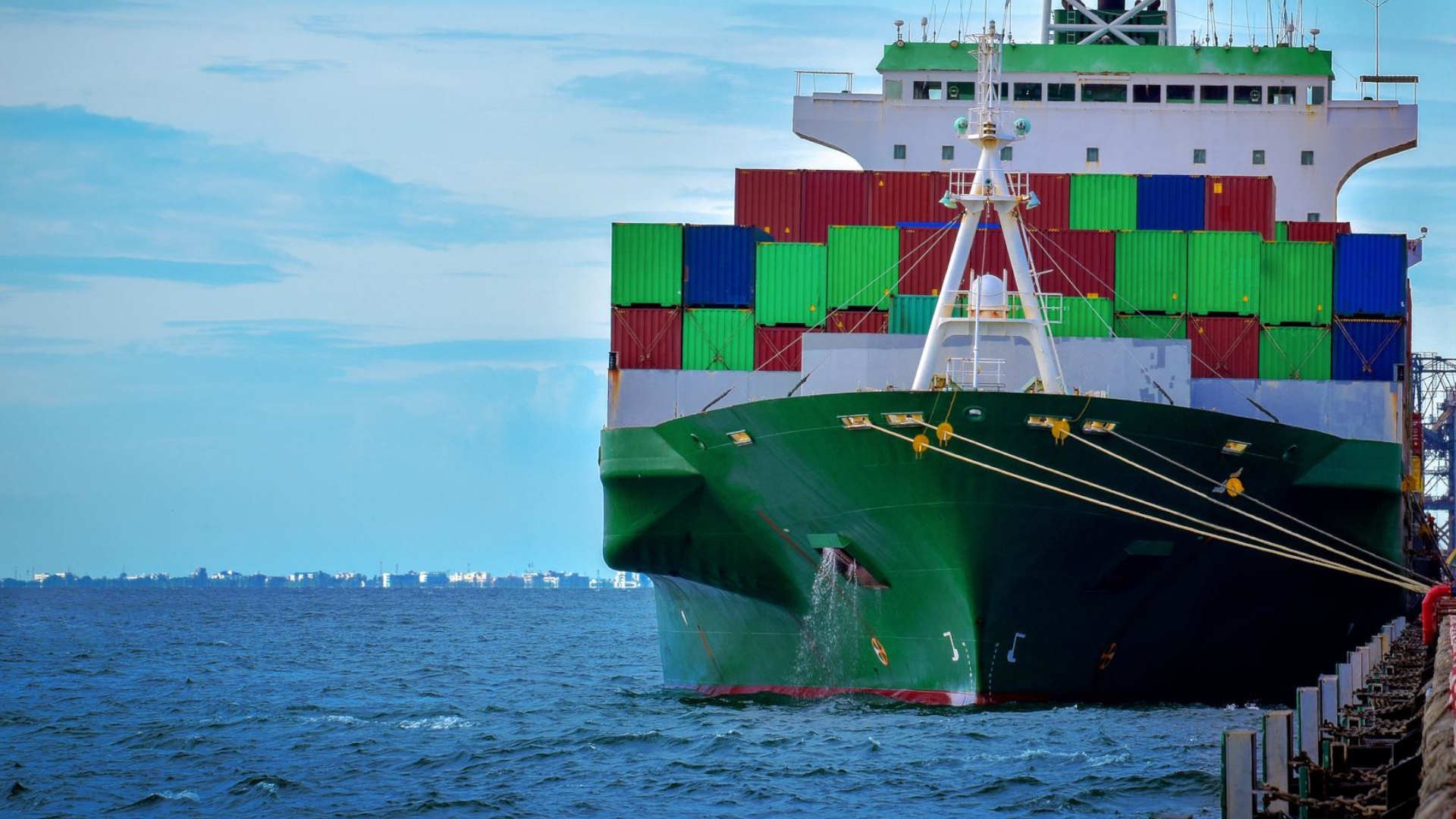

EVERGREEN is preparing to return to the Red Sea, ending its near three-year absence from the route as the container shipping sector’s shift back to the Suez Canal gathers pace.
The Taiwanese carrier will become the last Ocean Alliance partner to resume Suez transits, with several Evergreen vessels now scheduled to return to the traditional Asia-Europe route.
Linerlytica said Evergreen would begin Suez transits this week, including the 16,556 teu Ever Eon (IMO: 1025215) and Ever Edit (IMO: 1025239) on Ocean Alliance’s NEU7/CES service on November 7 and November 11, respectively.
The 20,124 teu Ever Gifted (IMO: 9786827) is then scheduled to transit Suez later in November as part of the alliance’s Asia-Mediterranean MD2 service.
Evergreen’s own schedule for Ever Gifted shows the eastbound backhaul voyage departing Valencia on November 13, where it will then journey east ahead of its planned Suez Canal transit on November 17.
Evergreen confirmed to Lloyd’s List that the sailing forms part of its strategy “to align with the Ocean Alliance’s service planning”.
“We will continuously monitor the situation and make adjustments to our sailing schedules as becomes necessary for the safety of crews, their vessels and our customers’ cargo,” the carrier said.
The return represents a significant change for Evergreen, which had remained notably cautious even as its Ocean Alliance partners progressively restored Red Sea sailings.
Evergreen’s last containership transit through the Bab el Mandeb before the prolonged diversion around the Cape of Good Hope was on December 19, 2023.
Linerlytica separately reported that Evergreen would relaunch its China-Red Sea OGRD service from November 12, initially deploying four ships of 7,000-9,000 teu on a fortnightly basis.
Suez comeback accelerates
Evergreen’s return comes as the wider restoration of Red Sea services gathers pace. Gemini Cooperation has already returned all of its Asia-Mediterranean services to Suez, while Mediterranean Shipping Co in addition to the Ocean Alliance has also restored the majority of their networks, while the Premier Alliance is adding further Suez sailings in November, leaving only a handful of key services on the trade still routing around the Cape of Good Hope in both directions.
The network shift is increasingly evident in Suez traffic. Nearly 3.4m teu of containership capacity passed through the canal during the four weeks to late October, according to Lloyd’s List Intelligence data, more than double August levels.
Volumes nevertheless remain well short of pre-crisis levels. Around 5.5m teu transited the canal in October 2023, before attacks on commercial shipping prompted the widespread rerouting of liner services around the Cape of Good Hope.
Increasingly, however, the return is being led by the sector’s largest vessels.
Lloyd’s List Intelligence latest vessel figures showed 24 megamax containerships of more than 20,000 teu transited Suez during October, almost double the 13 recorded in September.
A further 65 vessels in the 16,000-19,999 teu range used the canal during October, the highest monthly total on record for ships of this size, while 71 vessels of 10,000-15,999 teu transited, the most since December 2023.
That continues a trend evident since September. Nearly 140 containerships of at least 16,000 teu passed through Suez between the beginning of September and late October, already exceeding the 99 recorded throughout 2025 and the first eight months of 2026 combined.
Schedules point to a further sharp increase during November as carriers restore additional services.
Capacity consequences
That presents carriers with a more complicated supply-side challenge.
MDST estimates that more than 70% of Asia-Europe sailings now transit the Red Sea in at least one direction, although the speed of the return differs substantially between carriers and services.
MSC has been among the most aggressive in restoring sailings, while Ocean Alliance has been more cautious on the headhaul. Premier Alliance has only more recently accelerated its return.
The London-based analysts estimate that rerouting Asia-Mediterranean services in both directions could release around 300,000 teu without carriers cutting weekly sailings below levels maintained during the Cape of Good Hope diversions.
If Ocean Alliance and MSC follow with further services, around another 950,000 teu could be released from the trade over the subsequent three months, according to the analysis.
The timing is particularly significant because that additional capacity is is returning just as the effects of the congestion that constrained vessel availability earlier in 2026 start to ease.
Sea-Intelligence has similarly warned that the shorter Suez routing is adding effective supply to a market already dealing with schedule distortions. It said the combination of easing demand and vessel space released by the return to Suez risked pushing the trade towards oversupply.
For much of the Red Sea crisis, Cape diversions absorbed large amounts of tonnage by extending round voyages by roughly two weeks. As that effect unwinds, carriers will have to work harder to keep capacity in check.
Evergreen’s return removes one of the most conspicuouos holdouts and reinforces how quickly that unwinding is now taking place.