
ASIAN bunker supplies remain squeezed as the Hormuz crisis continues to restrict flows while regional availability shrinks from a mix of bad weather conditions and curtailed refinery output.
The Baltic Exchange’s bunker price assessments showed very low sulphur fuel oil, high sulphur fuel oil and marine gasoil prices rising over the past week.
Bunker traders attributed elevated fuel oil prices to rising crude prices — caused by increased attacks in the Strait of Hormuz.
Fuel oil prices began correcting this week as demand subsided, with buyers staying cautious in the current high-priced environment. The correction in crude futures yesterday also contributed to the fall in fuel oil prices in Singapore and Zhoushan.
But prices remain higher than pre-Hormuz conflict levels. Access to Middle East Gulf fuel oil is still blocked, with recent attacks dashing hopes of a return to normalcy in the near term.
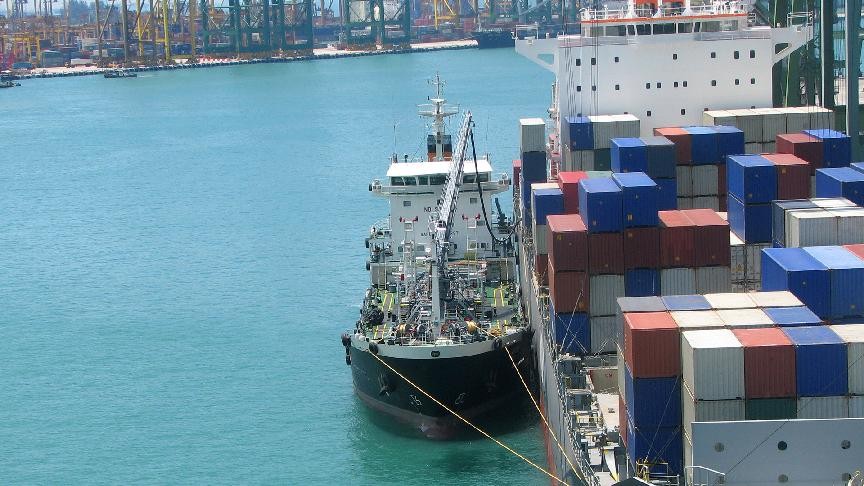
Lead times in Singapore remain high, with bunker players estimating around one-to-two weeks for VLSFO cargoes. HSFO cargoes have been harder to secure with limited availability in the region.
“Very few suppliers are able to offer cargoes in Singapore this month, and the ones they can are offering cargoes at insane premiums,” a bunker trading executive told Lloyd’s List.
Northeast Asia squeeze
A bunker analyst told Lloyd’s List that China had been snapping up more HSFO cargoes recently, leaving fewer cargoes available for other Asian countries.
Russian fuel shortages have also caused more tightness across various fuel oil bunkers in the rest of Asia.
“Far East Russia is importing oil and oil products from China and South Korea these days as opposed to exporting,” the executive said. “Overall product availability in the market is quite tight.”
The executive noted that some Asian importers are able to get supplies from the UAE without issues.
Synergy Asia Bunkering director Steven Low told Lloyd’s List that fuel oil supplies have also been tight in Singapore and Hong Kong. “There have been no availabilities from China lately,” he said.
Bunker players cite two key reasons for the lack of cargoes from China.
Firstly, refineries in China have been unable to maximise run rates because of limited crude arrivals. Crude arrivals are, however, starting to approach pre-crisis levels. Time will be needed to reach sufficient fuel oil production to offset the current tightness.
Secondly, logistical constraints are affecting China’s export ability. Typhoon Shampi has forced Chinese ports to halt operations altogether, preventing exports of bunker cargoes to other regions.
Bunkering activities were also halted in Zhoushan’s outer anchorages because of the typhoon. The analyst told Lloyd’s List, “Strong winds have halted bunkering in Shanghai since October 20 and at two outer anchorages in Zhoushan, with no clear restart date,” she said, adding that some deliveries were cancelled. “Suppliers had to cut offers to attract new demand.”
The supply squeeze was also seen in the rest of Northeast Asia. Bunker analytics platform Engine reported that supply availability in South Korea has been strained, especially in HSFO where availability is subjective.
“At western ports, including Incheon, Daesan, Dangjin, Pyeongtaek and Taean, VLSFO lead times can stretch to 15 days, while HSFO supplies remain limited,” the firm said.
Only Busan, Ulsan, Masan, Onsan, Yeosu and Kwangyang are seeing better availabilities in VLSFO, with lead times of 3-6 days required.
Japanese ports are also facing supply constraints. “Prolonged refinery maintenance and the prioritisation of domestic power generation limit the country’s bonded bunker fuel allocations,” Engine said.
Spot volumes have emerged only when term cargoes are cancelled. Supply allocations for November have yet to be announced as well.
MGO availabilities tightened further this week, with MGO prices in Singapore and Zhoushan rising over the last couple of days in contrast to the fall in fuel oil prices brought on by tepid demand.
“Supplies from Hyundai Oil in South Korea were delayed at the start of last week, with arrivals only expected this weekend,” an MGO seller told Lloyd’s List.
The impact on Singapore was more severe as South Korea is a key supplier of MGO there. Zhoushan saw a smaller uptick in prices and remain below Singapore prices.
Higher prices to linger
Shipping has had to deal with elevated bunker prices since the US-Iran war began at the end of February this year. Shipowners were forced to pass on the incremental costs to charterers.
The impact is seen in container markets where shipowners like CMA CGM have had to impose fuel surcharges to manage the rise in fuel costs.
Vespucci Maritime chief executive Lars Jensen expects elevated bunker prices to persist with a resurgence of attacks in the Strait of Hormuz.
Citing Ship & Bunker data, Jensen noted that the current global average price for HSFO is “almost at an all-time high now”, standing at $798 per tonne compared to March’s peak of $846 per tonne.
“If the situation continues with a high level of attacks, we might well see bunker fuel eventually exceed the peak from March,” he said, warning that shippers should brace for further increases in bunker surcharges in Q1 2027.